



The three dental X-rays you are most likely to have are bitewings, periapicals and a panoramic OPG, and each shows something different. A bitewing looks for decay between the teeth, a periapical shows a single tooth from crown to root tip, and an OPG captures the whole jaw in one image. All of them use very low doses of radiation. Knowing what each one is for helps the next set of X-rays make sense. This guide explains the differences in plain terms.
Key takeaways
- Bitewings show the crowns of upper and lower back teeth to spot decay between them.
- Periapicals show one or two whole teeth, including the root and surrounding bone.
- Panoramic (OPG) images capture all the teeth and both jaws in a single wide view.
- Doses are very small; intraoral films are on the order of a few microsieverts, similar to a day or so of natural background radiation.
- Your dentist chooses the type based on what needs to be seen, and takes X-rays only when they add useful information.
Why dentists use X-rays at all
Around a third of a tooth sits below the gum, and the surfaces where teeth touch are hidden from view. X-rays let a dentist see decay between teeth, infection at a root tip, bone levels, and teeth that have not yet come through. Many problems are far easier and cheaper to treat when caught early on an X-ray than when they finally cause pain.
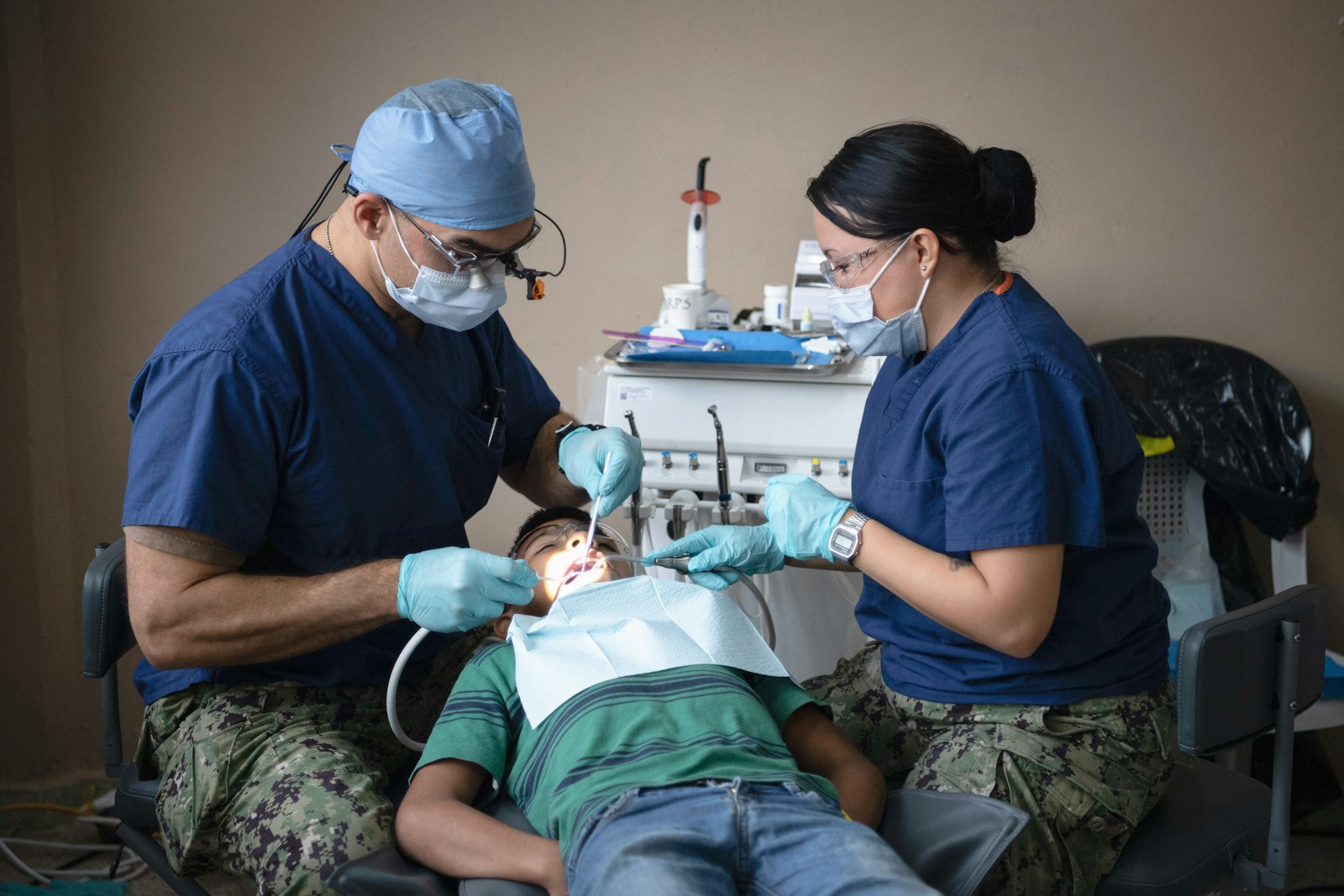
Bitewing X-rays
A bitewing is the most common check-up X-ray. You bite on a small tab and the film captures the crowns of the upper and lower back teeth on one side. Bitewings are excellent for finding decay between teeth and checking the fit of existing fillings and crowns. They are usually taken at intervals your dentist judges appropriate for your decay risk, rather than on a fixed schedule.
Periapical X-rays
A periapical image shows one or two teeth in full, from the biting surface down to the tip of the root and the bone around it. This is the go-to X-ray when a specific tooth is causing trouble. It reveals infection at the root tip, cysts, root fractures and the state of a root canal. If you have a painful tooth, a periapical is often the first image taken.
Panoramic (OPG) X-rays
A panoramic X-ray, often called an OPG, uses a machine that rotates around your head to capture every tooth and both jaws in a single broad image. It is ideal for seeing the big picture: wisdom teeth, jaw joints, the sinuses, and planning for braces, implants or extractions. It shows less fine detail than a bitewing or periapical, so it complements rather than replaces them.
How the types compare
| Type | What it shows | Common use | Relative dose |
|---|---|---|---|
| Bitewing | Crowns of back teeth | Decay between teeth | Very low |
| Periapical | One tooth, crown to root tip | Toothache, root and infection | Very low |
| Panoramic (OPG) | All teeth and both jaws | Wisdom teeth, planning, overview | Low |
Are dental X-rays safe?
Dental X-ray doses are small. Intraoral films such as bitewings and periapicals deliver on the order of a few microsieverts, roughly comparable to a day or so of the natural background radiation everyone receives. A panoramic OPG is somewhat higher but still low. Dentists follow the principle of taking X-rays only when they will change or confirm your care, using protective measures and modern low-dose digital sensors. Our detailed guide covers how safe dental X-rays are and how often they are needed, and there is a separate guide on X-ray safety for children.
Frequently asked questions
How often should I have dental X-rays?
There is no fixed schedule. The interval depends on your decay risk, gum health and history. Some people need bitewings every year or two, others less often.
Which X-ray finds cavities?
Bitewings are the best for spotting decay between back teeth, where cavities often start out of sight. A periapical can show decay on a single tooth in more detail.
Do I need an OPG at every visit?
No. An OPG is taken when a broad view is needed, such as assessing wisdom teeth or planning treatment, not as a routine check-up image.
Are digital X-rays lower dose?
Digital sensors generally use less radiation than old film and give an instant image, which is why most practices now use them.
Can I refuse X-rays?
You can discuss your concerns with your dentist. Be aware that without X-rays, some problems between teeth or below the gum cannot be detected until they are advanced.
The bottom line
Bitewings, periapicals and OPGs each answer a different question, and all use very low doses of radiation. Your dentist chooses the right one for what needs to be seen. To book a check-up that includes appropriate imaging, see our current offers or visit our check-up guide to learn what a routine visit includes.
This article is general information and not a substitute for personal dental advice. Please see a dentist for care tailored to your situation.

