Australians absorb about 1.7 millisieverts of natural radiation every year, from rocks, soil, air, food and space. That is roughly 4 to 5 microsieverts a day. A single small dental X-ray is typically in the range of 1 to 8 microsieverts, so it adds about as much as a day or two of simply being alive.
That is the reason dental X-rays are regarded as low risk. It is not a reason to take them casually, and good practice still asks two questions before every image: is it needed, and can the dose be kept lower?
How each type of dental image compares
Dental imaging covers a range, from a small film-sized sensor inside the mouth to a full 3D scan. The International Atomic Energy Agency publishes typical effective doses for each, shown below beside the Australian natural background figure from ARPANSA, the national radiation safety agency.
| Image | What it is used for | Typical effective dose |
|---|---|---|
| Bitewing or periapical (intraoral) | Decay between back teeth, a single root or tooth, early bone loss | About 1 to 8 microsieverts |
| Panoramic (OPG) | The whole jaw, wisdom teeth, developing teeth in children | About 4 to 30 microsieverts |
| 3D scan (CBCT), small or medium area | Implant planning, complex roots, impacted teeth | About 50 microsieverts or less |
| 3D scan (CBCT), large area | Both jaws and surrounding structures | Around 100 microsieverts |
| Natural background in Australia | Everyday life | About 1,700 microsieverts a year |
Even a 3D scan, the highest dose image in dentistry, is roughly equal to a few days to about three weeks of natural background, depending on how much is scanned. Exact doses depend on the machine, its settings and how much of the head is included, so these are ranges for context. Our guide to bitewing and OPG X-rays explains what each image looks for in more detail.

What the dose buys you
Much of each tooth sits below the gum, and the surfaces where neighbouring teeth touch are hidden from view. An X-ray shows decay starting between teeth, infection at the tip of a root, bone loss from gum disease, cysts, impacted wisdom teeth and, in children, the teeth still forming under the gums.
Catching these early tends to keep treatment smaller. Decay found on a bitewing while it is still in the outer layer of the tooth may need only a filling, while the same lesion found years later because of pain can need an onlay, crown or root canal treatment.
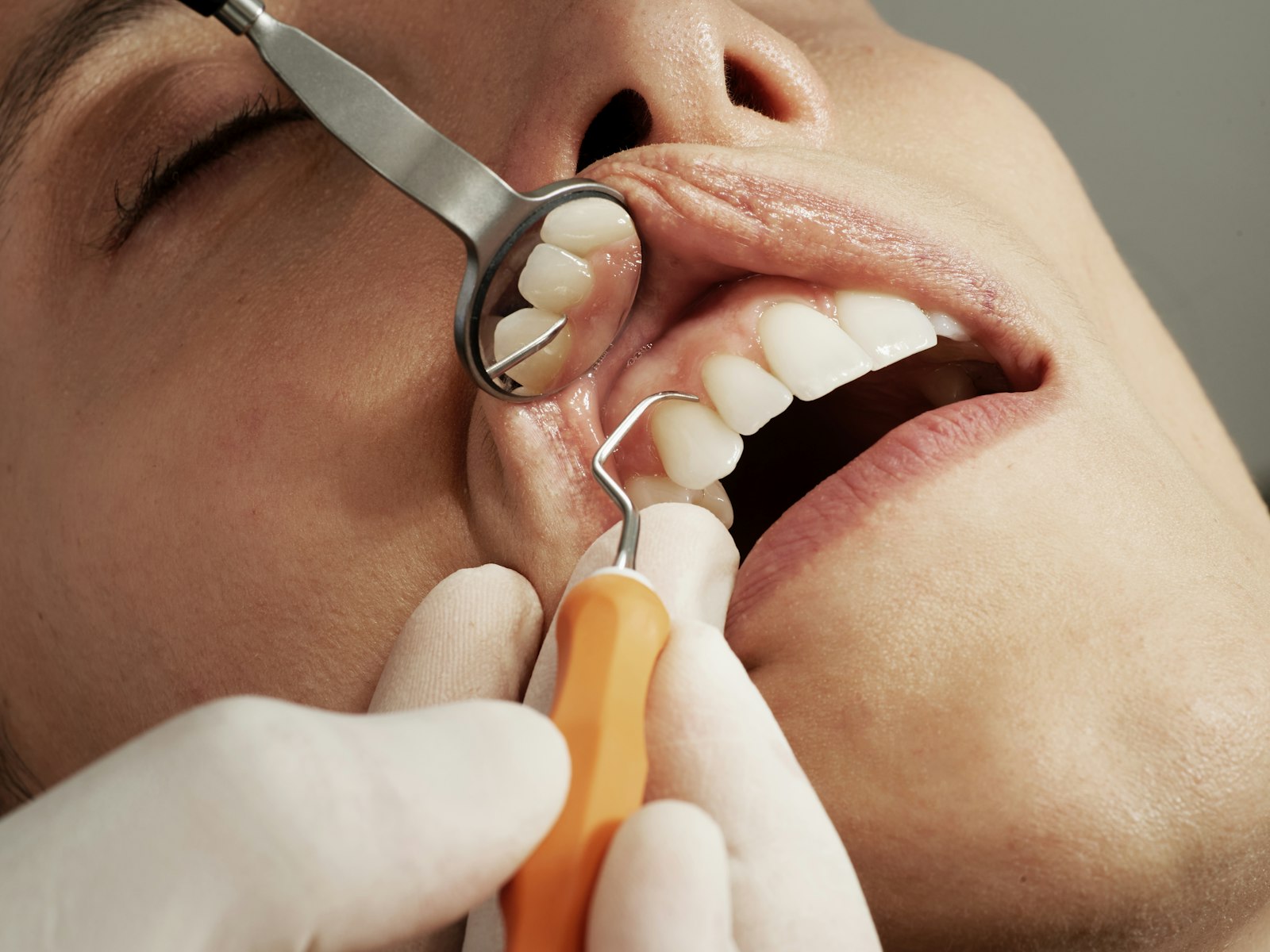
Keeping the dose as low as it can reasonably be
Several things bring the dose down without losing the information the image is meant to give:
- Digital sensors. Studies comparing digital intraoral systems with film have found meaningful reductions in patient dose.
- Tight beam shaping. Rectangular collimation narrows the beam to the size of the sensor. A 2019 systematic review in the International Dental Journal (Shetty and colleagues) reported dose reductions of 40 to 92 per cent compared with a round beam.
- Taking only what is needed. The most effective dose reduction is an image that is never taken because it would not change the plan.
- Sharing previous images. Recent X-rays from another practice can often be used instead of repeating them.
Lead aprons and thyroid collars are no longer part of routine dental imaging. ARPANSA's dental code describes routine use of protective aprons as unnecessary given the very low doses, and the American Dental Association's 2024 recommendations (Benavides and colleagues, Journal of the American Dental Association) no longer recommend aprons or thyroid collars for any patient. A collar can also block part of the image and lead to a retake. At Lumi Dental we do not use them.
How often you need them depends on you
There is no set yearly X-ray. Widely used selection criteria from the American Dental Association and the US Food and Drug Administration suggest that adults at low risk of decay may only need routine bitewings every two to three years, while people with active decay, gum disease or a dry mouth need them more often until things are stable. Children at higher risk may need them every 6 to 12 months because decay moves faster in baby teeth. Our article on how often dental X-rays are needed goes through the intervals by age and risk.
Pregnancy and breastfeeding
ARPANSA advises that dental X-rays can be taken at any stage of pregnancy with a negligible dose to the baby, so there is no radiation reason to delay an image that is needed to diagnose pain or infection. Many people still choose to leave routine check-up X-rays until after the birth, which is reasonable when there are no symptoms. Tell your dentist if you are or might be pregnant. Our pregnancy dental care guide and our article on X-ray safety in pregnancy cover this further.
Breastfeeding is not affected. An X-ray leaves nothing radioactive behind and does not change breast milk.
What patients ask about X-ray safety
Can I refuse an X-ray?
Yes. It is your choice. Your dentist should explain what the image is meant to show and what might be missed without it, so the decision is an informed one.
Is a 3D scan much riskier than a normal X-ray?
It is a higher dose than a bitewing, which is why 3D scans are kept for specific questions such as implant planning or a complicated root. The dose is still in the range of a few days to about three weeks of natural background.
Does a child need different settings?
Children are more sensitive to radiation than adults, so settings are reduced for their smaller size and images are taken only when they will help.
If you are due for a check-up, a general dentist at Lumi Dental in Melrose Park can talk you through which images, if any, make sense for you. You can also see our current offers.