
Dentures vs All-on-X is a trade-off: dentures cost far less and usually need no surgery, while All-on-X full-arch implants give you a fixed set of teeth that does not come out or move when you eat. All-on-X means a fixed bridge screwed onto however many implants a jaw needs, commonly four to six per arch. The deciding factor is often bone. Healthdirect notes that before any implant is placed, the dentist has to confirm there is enough bone to hold it.
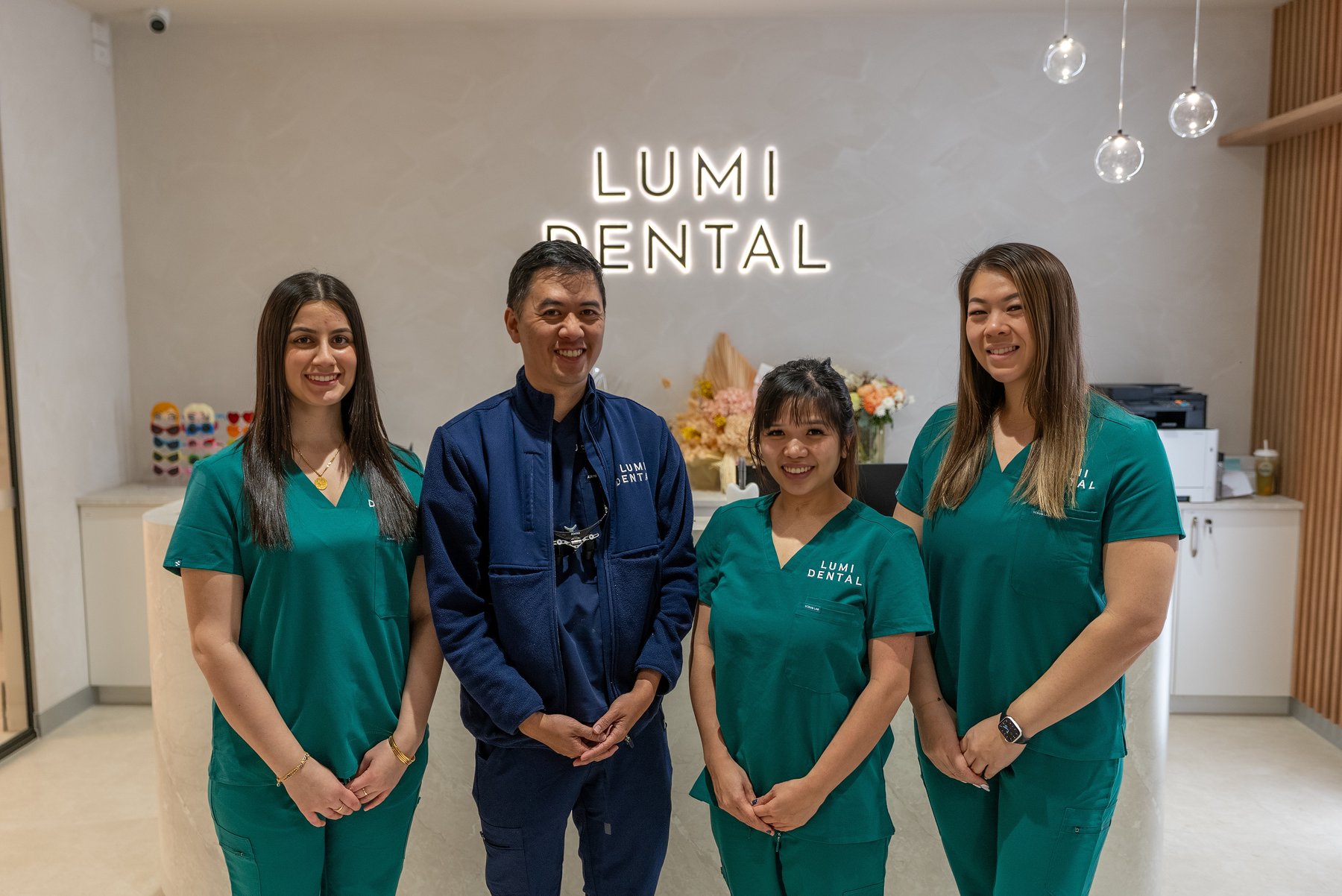
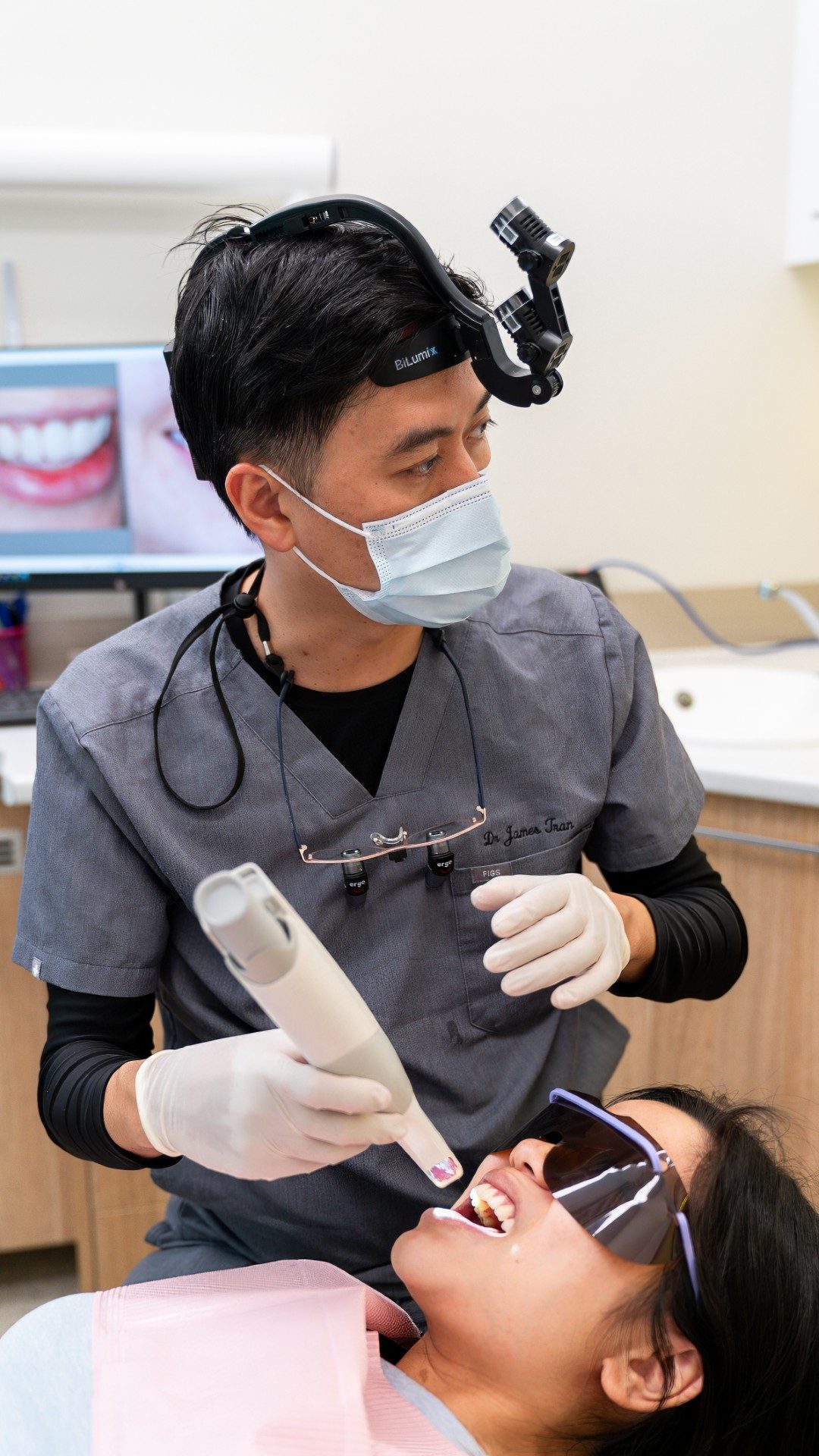
Written by Dr James Tran, general dentist at Lumi Dental, Melrose Park. BDent (University of Sydney), Graduate Diploma in Oral Implants.
This is a decision piece, not a surgical explainer. Below, the two options sit side by side the way they would at a consult: bone, cost, speed, eating, cleaning, upkeep and comfort.
The short version
- A conventional denture rests on the gums and comes out for cleaning. It suits people who want the lowest outlay or who are not suited to surgery.
- All-on-X is fixed on implants. Only the dentist removes it.
- Bone volume is the first thing to check, and a 3D X-ray shows it clearly.
- There is a middle path: implant-supported dentures that clip onto two to four implants.
- Look at upkeep across the years, not just the first payment, and get a written quote after an examination.
Two very different ways to replace a full arch
A full denture is a removable acrylic plate with teeth set into it. It stays put through suction, the shape of the gums and, for many lower dentures, the patient's own tongue and cheek muscles learning to hold it. An upper denture covers the roof of the mouth.
All-on-X uses implants placed in the jaw to carry a fixed bridge. There is no plate over the palate, and nothing to take out at night. For single teeth and partial gaps, the comparison looks a little different again.
| Factor | Conventional dentures | All-on-X full-arch implants |
|---|---|---|
| Bone needed | Little or none | Enough to hold implants, confirmed on a 3D X-ray |
| Surgery | None, unless teeth need removing | Implant placement, often with extractions on the same day |
| Time to teeth | Immediate dentures on extraction day, or a conventional set once the gums settle | A fixed temporary bridge often within about a day, the final bridge after several months of healing |
| Eating | Soft foods are easier; firm or sticky foods can lift the plate | Closer to natural biting, with a few very hard foods still best avoided |
| Palate | Upper denture covers it, which can dull taste and temperature | Upper bridge is usually open under the palate |
| Cleaning | Out twice a day to clean, out overnight | Cleaned in place with brushes, floss and a water flosser, plus professional reviews |
| Upkeep | Relines and eventual replacement as the jaw changes | Reviews, occasional repairs to the bridge teeth, implant checks |
| Stability | Can shift or rub, lower dentures most of all | Fixed, no plate |
Bone decides more than anything else
Once teeth are gone, the bone that held them is no longer loaded by chewing, and it slowly shrinks. The Australian Dental Association describes how the distance between nose and chin can get smaller over time when a full jaw of teeth is not replaced. A denture sits on top of that shrinking ridge, which is why a denture that fitted well at the start often loosens.
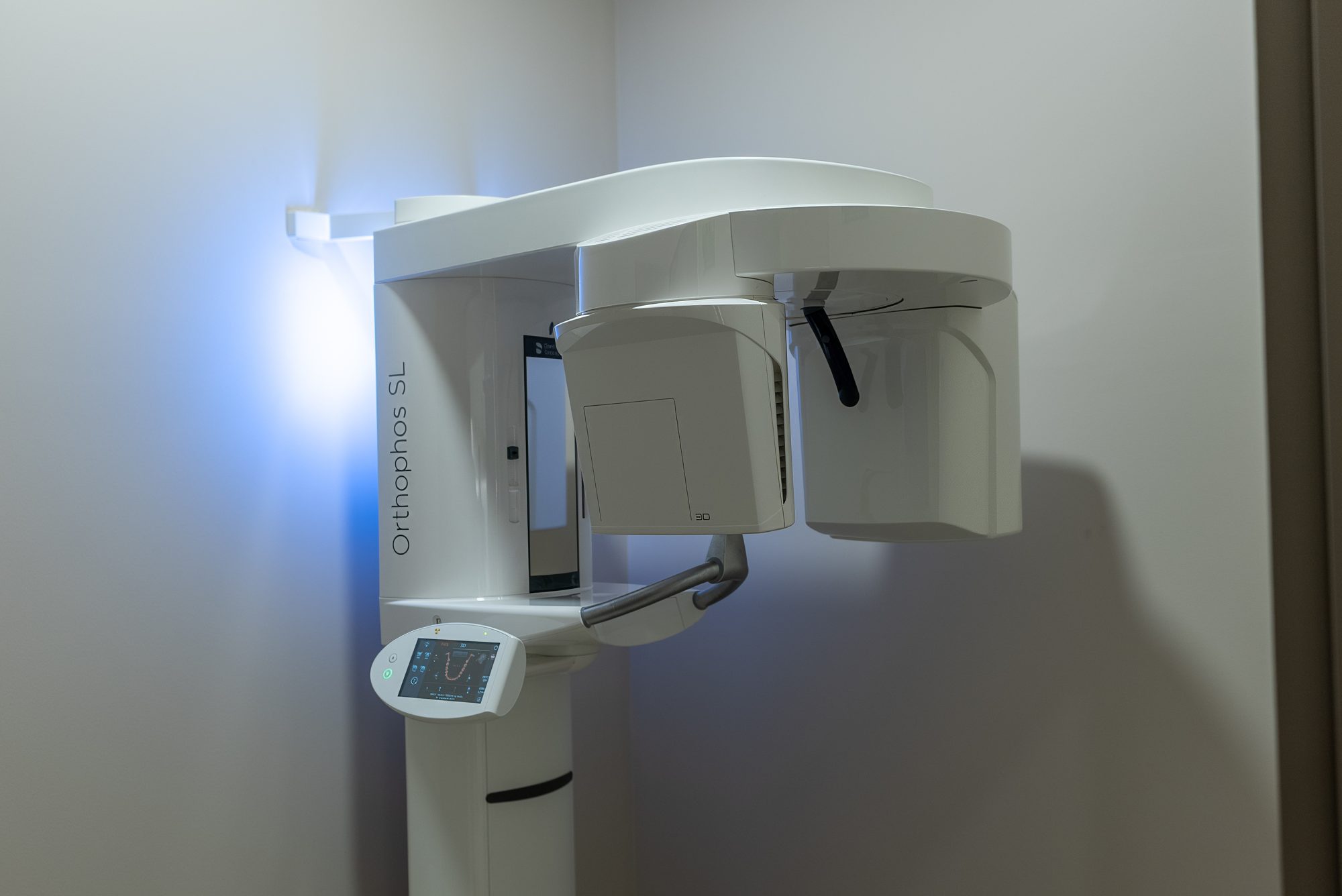
Implants need enough height and width of bone. A normal flat X-ray cannot show width, so a 3D scan is taken. On screen we can scroll through the jaw slice by slice and measure where implants could go and where nerves and sinuses sit. The scan itself takes well under a minute, and you stand still while the arm rotates around your head.
Plenty of people with moderate bone loss can still have a fixed arch, sometimes with implants angled to reach denser bone. Where bone is very thin, grafting may be discussed, or an implant-retained denture may suit better. The article on what happens to dentures years later explains the slow changes under a denture.
Comparing cost without a headline number
Cost often decides this, so it helps to compare the whole picture. The fees for any full-arch treatment depend so heavily on the individual mouth that a generic figure tends to mislead, which is why we give a written quote after an examination and scan. Healthdirect makes the same point about implants: get a quote from your dental practitioner, and check what your health fund will cover.
| Cost element | Conventional dentures | Implant-supported denture | All-on-X fixed bridge |
|---|---|---|---|
| Upfront outlay | Lowest | Moderate | Highest |
| Ongoing costs | Relines, repairs, adhesives, eventual replacement | Clip or attachment replacement, relines, reviews | Professional reviews, bridge repairs over time |
| What changes the quote | Materials, immediate versus conventional, number of fittings | Number of implants, attachment type | Number of implants, extractions, grafting, bridge material, sedation |
Speed, eating and comfort
Speed
Dentures can be quick. Immediate dentures go in on the day the teeth come out, though they need adjusting as the gums heal and shrink. See immediate dentures explained for how that works. All-on-X involves surgery, but a fixed temporary bridge is often attached the same day or the next, and the final bridge follows once healing allows.
Eating
A common thing denture wearers tell me is that they have quietly dropped steak, nuts, crusty bread and raw apples. Fixed teeth anchored in bone usually allow firmer biting. Either way, the first weeks call for soft food.
Comfort
Lower dentures move more than upper ones, because the tongue pushes against them and there is less gum to grip. Sore spots and clicking are common complaints. A fixed bridge has no plate to slip, though the new shape takes a few weeks to get used to, especially for speech.
Cleaning and upkeep
Dentures come out twice a day to be brushed with a soft brush and mild soap, then stay out overnight so the gums can rest. Healthdirect advises cleaning them twice a day, and the ADA advises not sleeping in them. The gums underneath need cleaning too.
A fixed bridge is cleaned in place: a soft brush around the teeth, a water flosser or threader floss underneath. At review appointments the bridge can be unscrewed so the implants and the underside are cleaned and checked. Neither option is maintenance free. Dentures need relining as the ridge shrinks, and acrylic bridge teeth can chip or wear. Smoking and diabetes can raise the risk of implant problems, and healthdirect lists both among factors that may increase complications.
If X, start with Y
A rule of thumb, not a diagnosis. The examination decides.
- If the lowest upfront outlay matters most, start with conventional dentures.
- If bone is very thin and you want to avoid grafting, start with dentures or an implant-supported denture.
- If your lower denture keeps lifting, start with an implant-supported denture on two to four implants.
- If you want fixed teeth and have enough bone, start with an All-on-X assessment.
- If you are unsure, start with a consult and 3D scan, so the decision rests on your own jaw.
How we approach this at Lumi Dental
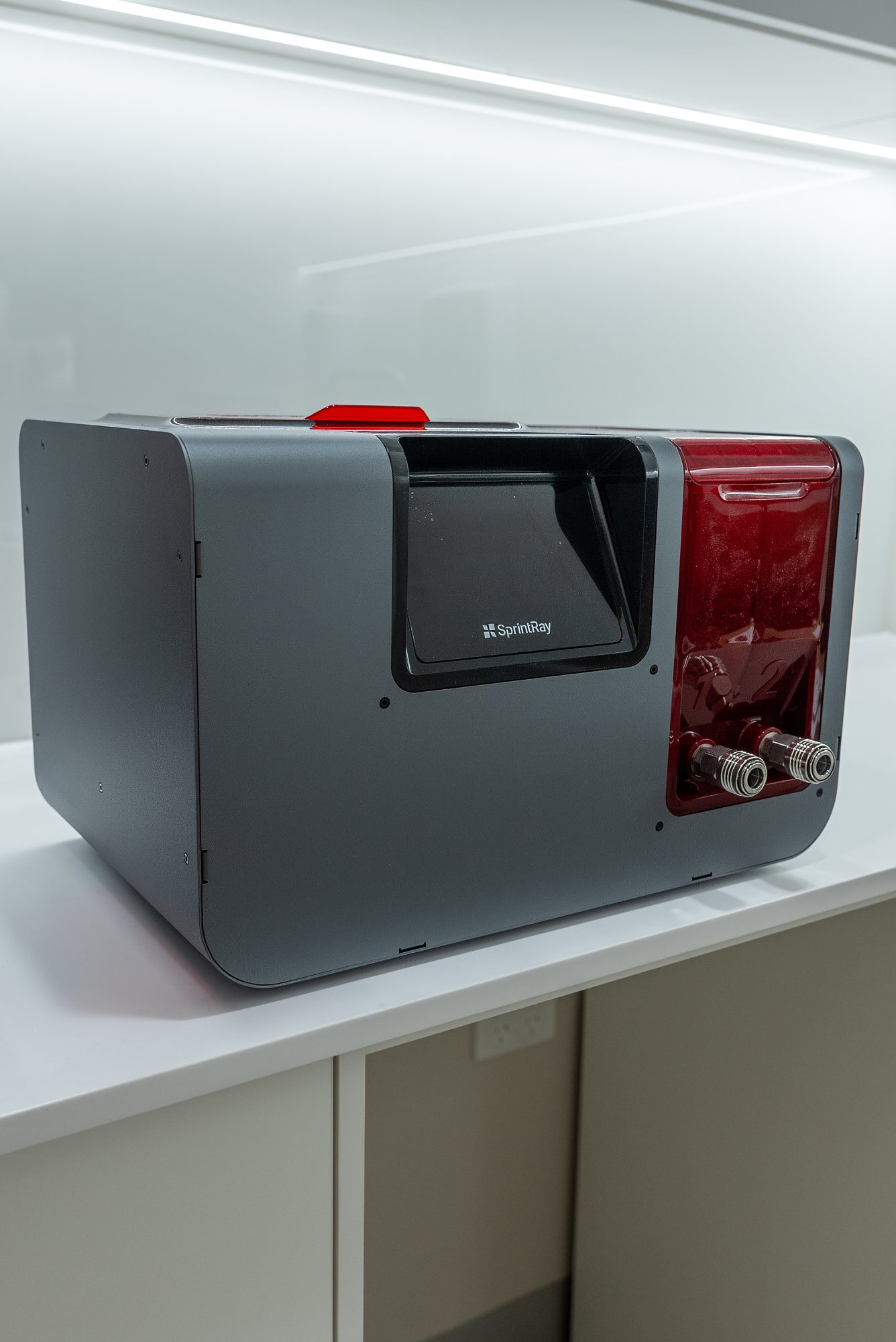
Full-arch planning at Lumi Dental starts with an examination, a conversation about what matters to you, and imaging. Our Orthophos 3D X-ray unit takes OPG and 3D scans, and a 3D intraoral scan records your teeth and gums without trays of impression material. Planning models can be produced with our in-house 3D printing.
I am a general dentist with a Graduate Diploma in Oral Implants. IV sedation is available at the practice for people who would like to feel more relaxed during surgery. When a case needs a registered specialist, for example a prosthodontist or oral surgeon, we refer.
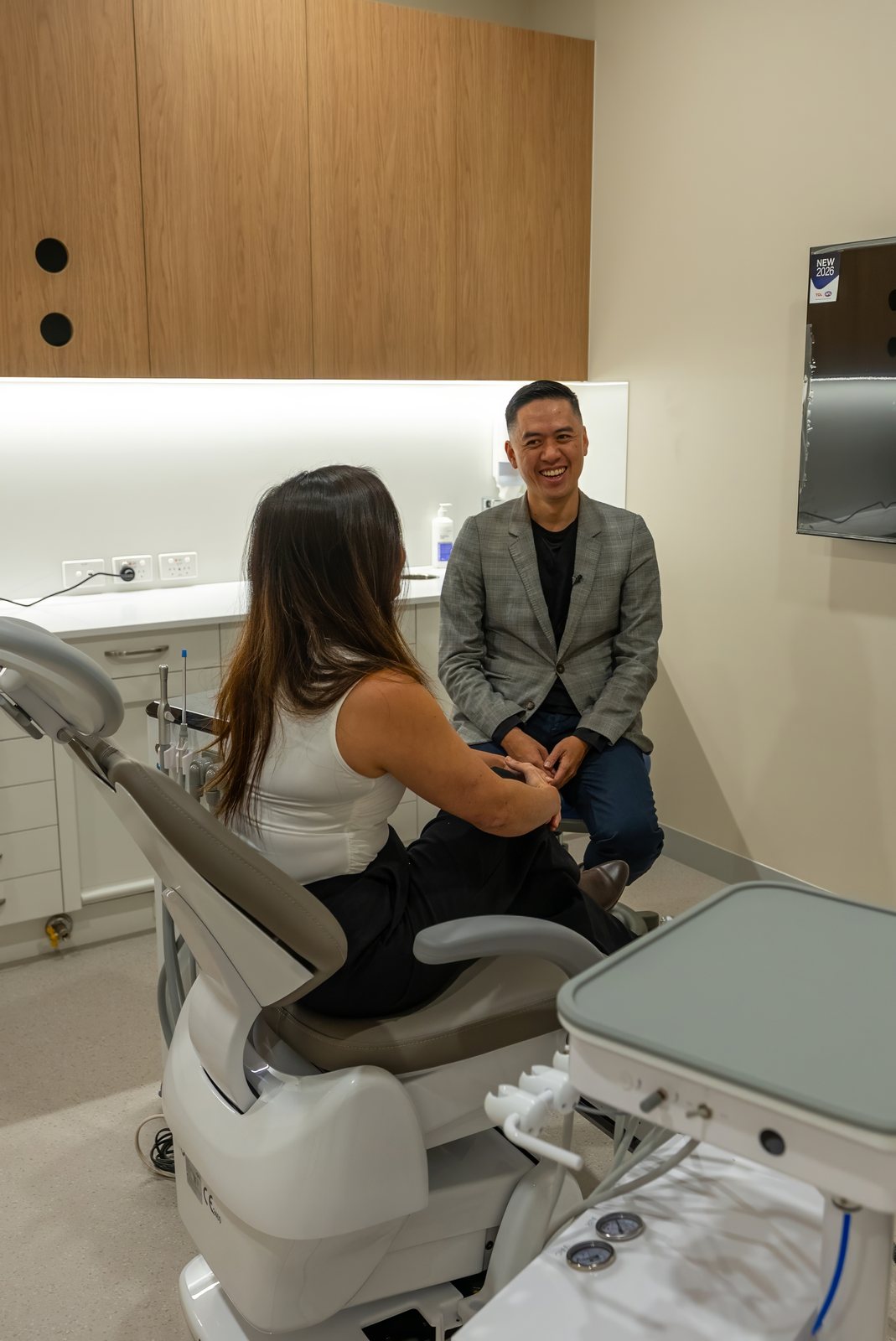
Questions patients ask
Is All-on-X better than dentures?
Not for everyone. All-on-X is fixed and stable but needs enough bone and a larger investment, while dentures cost less and avoid surgery but can move and need relining.
Is All-on-X the same as All-on-4?
Not quite. All-on-4 is a treatment concept trademarked by Nobel Biocare that uses four implants, while All-on-X describes a fixed arch on however many implants a jaw needs.
Can I switch from dentures to All-on-X later?
Often yes, if there is enough bone. A well-fitting denture can even help guide the new design, as described in converting dentures to implants.
Will I be without teeth during treatment?
Usually not. Immediate dentures or a fixed temporary bridge are normally fitted so you leave with teeth.
What if I do not have enough bone?
Options include grafting, angled or additional implants, an implant-supported denture or a well-made conventional denture. A 3D scan shows which are realistic.
Book a free consult
The team at Lumi Dental at Melrose Central, Melrose Park, offers a free consult to talk through dentures, implant-supported dentures and All-on-X, with an examination and scans so the advice is based on your own jaw. You can read about All-on-X full-arch implants and dental implants at Lumi Dental first, or book a free consult. A written quote follows the examination.
Sources
About the author
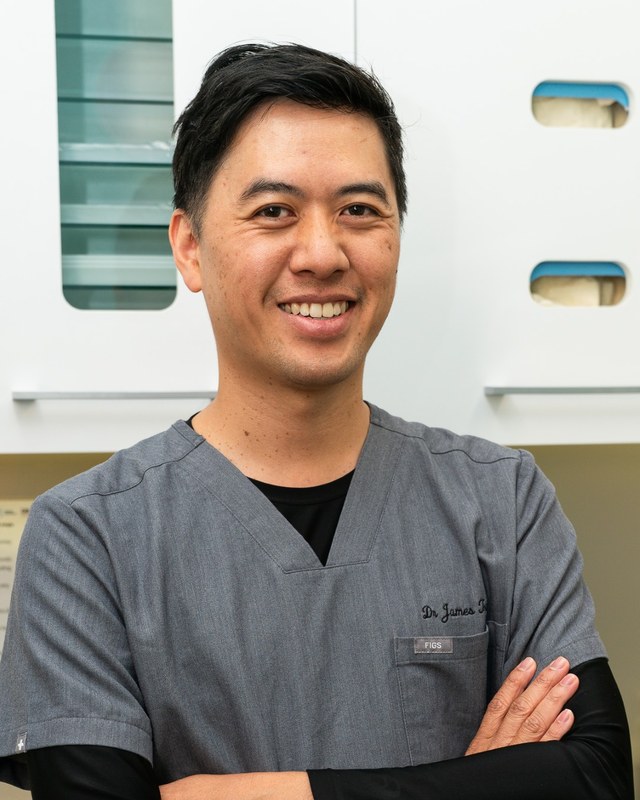
Dr James Tran is a general dentist at Lumi Dental in Melrose Park, Sydney, and is registered with the Dental Board of Australia. He holds a Bachelor of Dentistry from the University of Sydney and a Graduate Diploma in Oral Implants, is a Member of the International Congress of Oral Implantologists (MICOI), and is part of the General Dental Residency faculty. Read more about Dr James.
This article is general information and is not a substitute for advice from your own dentist after an examination. All dental treatment carries risks, and individual results vary.