Book Online

All health funds accepted · Payment plans from $0 deposit · CDBS bulk billing

All health funds accepted · Payment plans from $0 deposit · CDBS bulk billing

Book Online

Does lipstick make teeth look whiter?

Does lipstick make teeth look whiter?

Dr James Tran, dentist at Lumi Dental Melrose Park

Dr James Tran

September 1, 2026 · Cosmetic Dentistry · 8 min read

Yes, lipstick does make teeth look whiter, but nothing about the teeth changes. The effect is entirely in the eye of whoever is looking. A cool, blue based red sitting next to enamel pushes the enamel perceptually away from yellow, so the same tooth reads brighter. Swap to a warm coral and the same tooth reads more yellow. Published dental research has tested exactly this and found tooth colour is perceived as whiter with cool toned lipstick. The measured colour of the tooth is identical either way. Understanding the difference between looking whiter and being whiter is genuinely useful, because the two have completely different solutions.

Key takeaways

  • A study on lipstick influence on tooth colour appearance found teeth are perceived as whiter with cool toned lipstick and with anything that raises lip to tooth contrast.
  • The mechanism is simultaneous contrast, a standard property of human colour vision in which a surface shifts perceptually away from the colour surrounding it.
  • No cosmetic product applied to the lips changes the colour of enamel or dentine. Only how the tooth is perceived changes.
  • Skin tone interacts with tooth shade through the same contrast effect, which is why the same tooth is judged differently against different complexions.
  • Real colour change comes from surface stain, from structural change inside the tooth, or from peroxide, and the Cochrane review of 71 whitening trials rated the evidence low to very low certainty.
  • Under the Australian Poisons Standard, whitening products above 6% hydrogen peroxide or 18% carbamide peroxide are restricted to registered dental practitioners.

The short answer, and what is really happening

Lipstick changes the frame, not the picture. Research published on lipstick influence on tooth colour appearance found that observers rated the same teeth as whiter when the lips were a cool tone and when the lipstick increased the contrast between lip and tooth. Warm lipsticks reduced that effect. Nothing was done to the teeth in either condition.

This is a styling observation with a real perceptual basis behind it. It is not dentistry, and it is worth being straight about that. A lipstick will not remove a coffee stain, will not lighten dentine, and will not undo the gradual darkening that comes with age. What it will do is change what your eye compares the tooth against, which is not nothing.

There is a neat way to describe the gap. Dentistry uses agreed 50:50 thresholds for colour difference, with perceptibility at 0.8 and acceptability at 1.8, established by Paravina and colleagues. A lipstick can shift the perceived shade across those thresholds while an instrument reading of the tooth stays exactly the same. Real to your eye, unchanged to the spectrophotometer.

Simultaneous contrast, without the jargon

Simultaneous contrast means a colour looks different depending on what sits beside it. Put a grey square on a dark background and it looks light. Put the same square on a white background and it looks dark. The square never changed. Your visual system judges colour relative to its surroundings rather than absolutely, and it does this constantly and automatically.

The blue and yellow channel

Human colour vision encodes a blue to yellow opponent channel. When a cool, blue shifted hue sits directly beside a surface, perceived yellowness in that surface is suppressed. Blue and yellow sit opposite each other, so a blue based red neutralises perceived warmth in enamel. An orange based red does the opposite, because it sits close to enamel's own hue and gives the eye nothing to push against.

Lightness contrast does work too

Hue is only half of it. A dark berry or plum lip is much lower in lightness than the teeth, and that gap in lightness makes the teeth read brighter regardless of hue. This is why a deep wine lip and a bright blue red can both work, for slightly different reasons. The honest caveat is that no study has run a controlled comparison of matched blue red and orange red lipsticks on the same person under the same light. The colour theory is stronger than the direct dental evidence.

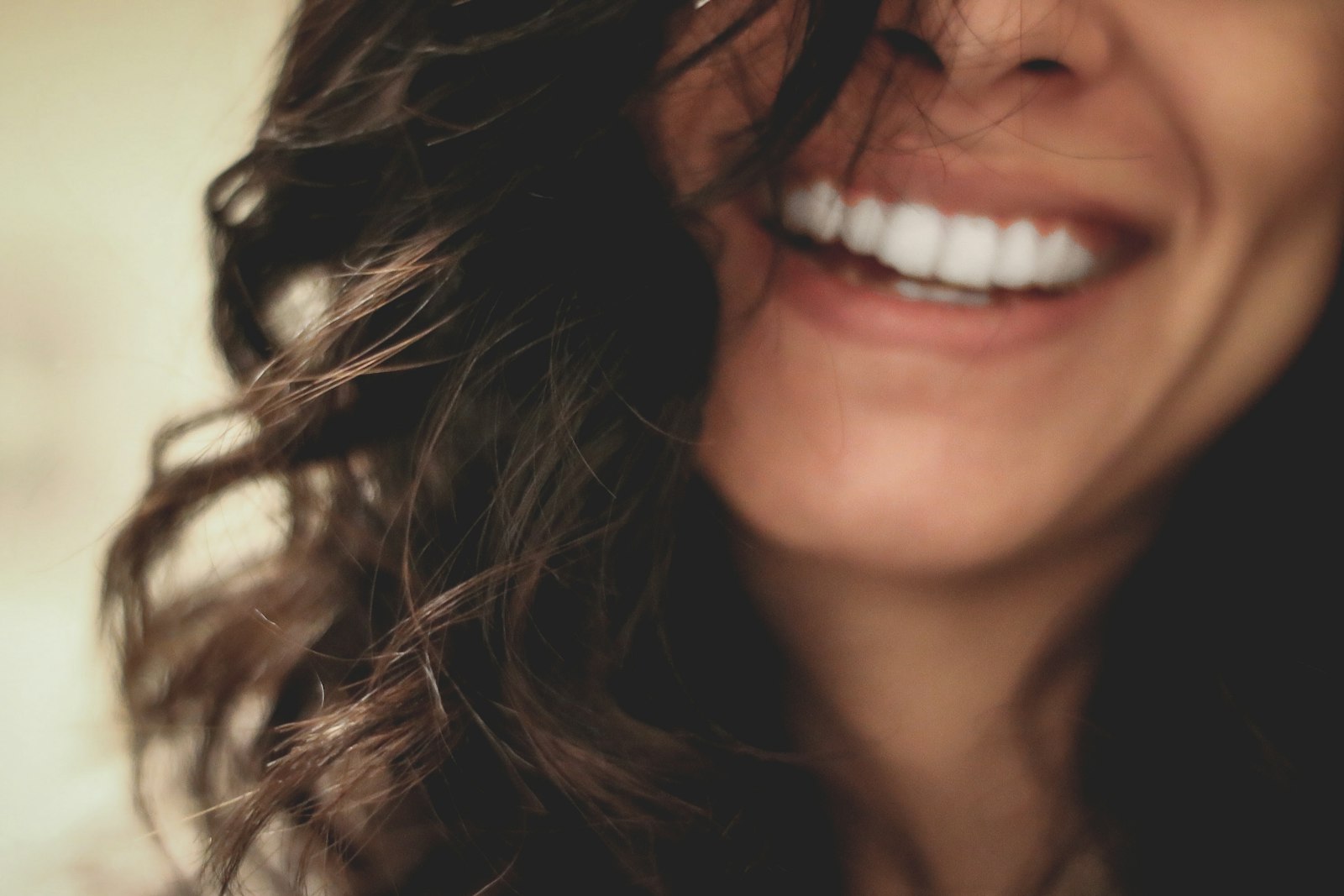
Close view of a smile showing how lipstick undertone changes whether teeth look whiter
Lip colour changes the surround your eye compares the teeth against, which is why the same tooth can read warmer or brighter.

Why nude and coral shades make teeth look yellower

Warm nudes and corals sit close to enamel's own hue, which removes the contrast that was masking the yellow. Enamel is not white. It is a warm, translucent layer over dentine that is itself yellow, and the overall colour of a natural tooth always contains some warmth. A cool lip hides that warmth by comparison. A warm lip stops hiding it.

That is a styling observation and not advice about what anyone should wear. Plenty of people prefer a nude lip and are not remotely bothered by half a shade of warmth in a tooth nobody else is auditing. The point of naming the effect is so that you do not mistake it for your teeth having changed overnight.

Lip colour, undertone and what it does to your teeth

The table sets out the common options and why each behaves the way it does.

Lip colour or productUndertoneEffect on how teeth lookWhy
True red with a blue baseCoolTeeth read whiterSimultaneous contrast suppresses perceived yellow in the adjacent enamel
Berry, plum or wineCool and darkTeeth read brighterAdds a large lightness gap on top of the hue contrast
Cool pinkCoolMildly whiterSame direction as a blue red but less saturated, so less contrast
Orange red or brickWarmTeeth read slightly yellowerThe lip sits near enamel's own hue, so there is little contrast to mask warmth
CoralWarm and brightTeeth read yellowerWarm hue plus high lightness raises the comparison point the eye uses
Nude or beige near your skin toneWarm, low contrastTeeth read yellowerRemoves almost all lip to tooth contrast
Clear glossNeutralLittle colour changeNo hue shift; the shine draws the eye to the lip surface rather than the tooth
Violet toned colour correcting toothpaste or glossCoolTemporary optical maskingDeposits a violet tint that offsets yellow optically, then rinses away

Skin tone is part of the same effect

Skin acts as another surround, and it works on the same principle. Image rating studies assessing complexion alongside tooth shade found that variation in skin colour changed perceived smile attractiveness for most tooth shades. For the brightest tooth shades, darker skin images tended to be rated lowest, and as tooth brightness fell, fair skin images were rated most poorly. The authors put this down to optical contrast between skin and tooth value.

Those studies rated photographs, often with small or non representative observer panels, and colour preference is culturally patterned. Treat them as evidence that the contrast effect exists, not as a rule about what suits anyone. The practical takeaway is that a tooth shade does not have a fixed appearance. It always appears in the company of a lip and a face.

Dental shade tab held near the lips to show why lipstick makes teeth look whiter only by contrast
Shade is recorded with lipstick removed and a neutral background for exactly this reason.

Why the trick disappears in a photograph

The effect can vanish in a photo because the camera changes the surround. A phone applies its own white balance, and flash adds a cool light that shifts both lip and tooth. Portrait processing on many devices adjusts saturation and skin tone before you ever see the image. The lip and tooth relationship that looked balanced in the bathroom mirror can come out quite differently on screen.

Shade matching practice already accounts for all of this. Dental colour literature notes that surrounding soft tissue, lips, facial skin, wall colour, clothing and makeup all influence shade perception, which is why lipstick is removed and a neutral grey bib used before a shade is recorded. If a shade is being chosen for a crown or a veneer, that is not fussiness. It is the only way to get a reading that will still be right when you walk outside.

What actually changes the colour of a tooth

Real colour change comes from three places, and none of them is a cosmetic on the lip.

Surface stain

Extrinsic stain is deposited on the outside of enamel by chromogens in tea, coffee, red wine, tobacco and some foods, and also by chlorhexidine mouthwash, liquid iron preparations, some liquid antibiotics and some essential oils. By definition it can be removed by professional cleaning. Our article on coffee, wine and tea staining goes through the everyday sources, and intrinsic versus extrinsic staining explains how a dentist tells the two apart. A professional clean returns a tooth to its own shade. It does not lighten the tooth beyond that.

Changes within the tooth

Intrinsic causes include fluorosis, amelogenesis imperfecta and enamel hypoplasia in the enamel, and tetracycline incorporation during tooth development, dentinogenesis imperfecta and nerve death after trauma in the dentine. Ageing produces its own version: enamel thins with wear while dentine thickens and yellows, so more dentine colour shows through. That is a structural change rather than a stain, and cleaning will not touch it.

Peroxide whitening does work on many of these, with an important caveat. The Cochrane review by Eachempati and colleagues pooled 71 trials, comparing bleaching against placebo in 26 studies with 1,398 participants and head to head in 51 studies with 2,382 participants. Bleaching whitened teeth compared with placebo, but at low to very low certainty, and only two of the 71 trials were at low overall risk of bias. The review could draw no conclusion about which concentration, product or application time is superior. Tooth sensitivity and gum irritation are the commonest adverse effects. Our comparison of professional and at home whitening sets out what that means in practice, and whether whitening toothpaste works covers the everyday products.

The Australian rules worth knowing

Australia regulates whitening agents by concentration. Under the Poisons Standard, hydrogen peroxide between 3% and 6% is Schedule 5 and above 6% is Schedule 6, while Schedule 10 restricts teeth whitening products containing more than 6% hydrogen peroxide or more than 18% carbamide peroxide to sale, supply and use by registered dental practitioners as part of dental practice. The Australian Dental Association addresses this in Policy Statement 2.2.8 on teeth whitening by persons other than dental practitioners, and ADA NSW publishes its own information sheet.

If you are weighing up a shopping centre kiosk or a salon booth, you can check whether anyone involved is a registered practitioner on the Ahpra public register at ahpra.gov.au. Our piece on salon teeth whitening and what is legal works through the detail.

Common questions

Does lipstick actually make your teeth look whiter?

It changes how white they appear, through simultaneous contrast, without changing the tooth. A blue based red suppresses perceived yellow in the enamel beside it. A spectrophotometer measuring the same tooth before and after would read no change at all.

What lipstick colour makes teeth look whitest?

Cool, blue based reds, berries and cool pinks maximise the contrast, while warm corals, oranges and peachy nudes reduce it. Darker cool shades add a lightness gap as well as a hue shift. This is a styling observation rather than dental advice, and it is entirely a matter of what you like wearing.

Does lipstick stain or damage teeth?

No. Lipstick sits on the vermilion of the lip, and any transfer onto enamel wipes off. It has no effect on enamel structure or on measured tooth colour. It is worth removing before a shade is taken for a crown or veneer, because it will otherwise skew the match.

Why do my teeth look more yellow with nude lipstick?

Because a warm nude sits close to enamel's own hue and removes the contrast that was masking the warmth. Natural enamel is translucent over yellow dentine, so some warmth is always present. A cool lip conceals it by comparison and a warm lip lets it read through.

Can a clean make my teeth whiter?

A professional clean removes extrinsic stain and returns teeth to their own natural shade, which often looks like whitening if a lot of stain had built up. It does not lighten the underlying tooth. If the colour you dislike is coming from within the tooth, cleaning will not shift it and a different conversation is needed.

If you are curious whether the colour you see is stain, structure or simply the lipstick, a check up and a shade assessment under a corrected light will answer it quickly. The team at Lumi Dental in Melrose Park can explain which category your teeth sit in and what the realistic options are, with a written quote before anything starts. Current new patient offers are on current deals, you can book online, and our teeth whitening page covers what is involved.

This article is general information only and is not personal advice. Tooth colour has many causes and only an in person examination can tell you which applies to you. Please see a dental or medical professional about your own situation.


Dr James Tran — Lumi Dental, Melrose Park

Written by Dr James Tran

Dr James Tran (BDS, University of Sydney) is the founder of Lumi Dental in Melrose Park. He is committed to providing clear, evidence-based dental information to help patients make informed decisions about their care.

Ready to book your visit?

New patients welcome. Comprehensive first visit including exam, x-rays and treatment plan — just $149.

Book now