

For most people with healthy teeth and yellow or brown staining, professional whitening is worth it. A dentist or oral health therapist checks the teeth before anything starts, the trays are made to fit, and the gel is stronger than anything sold in shops, so the result is more even and easier to hold. It is less worth paying for when the problem is surface stain that a clean would remove, when the front teeth are mostly crowns or veneers, or when the discolouration is grey or deep inside the tooth.
This article goes through what the extra cost actually pays for, the situations where it makes sense, and the ones where your money is better spent elsewhere.
What the extra money pays for
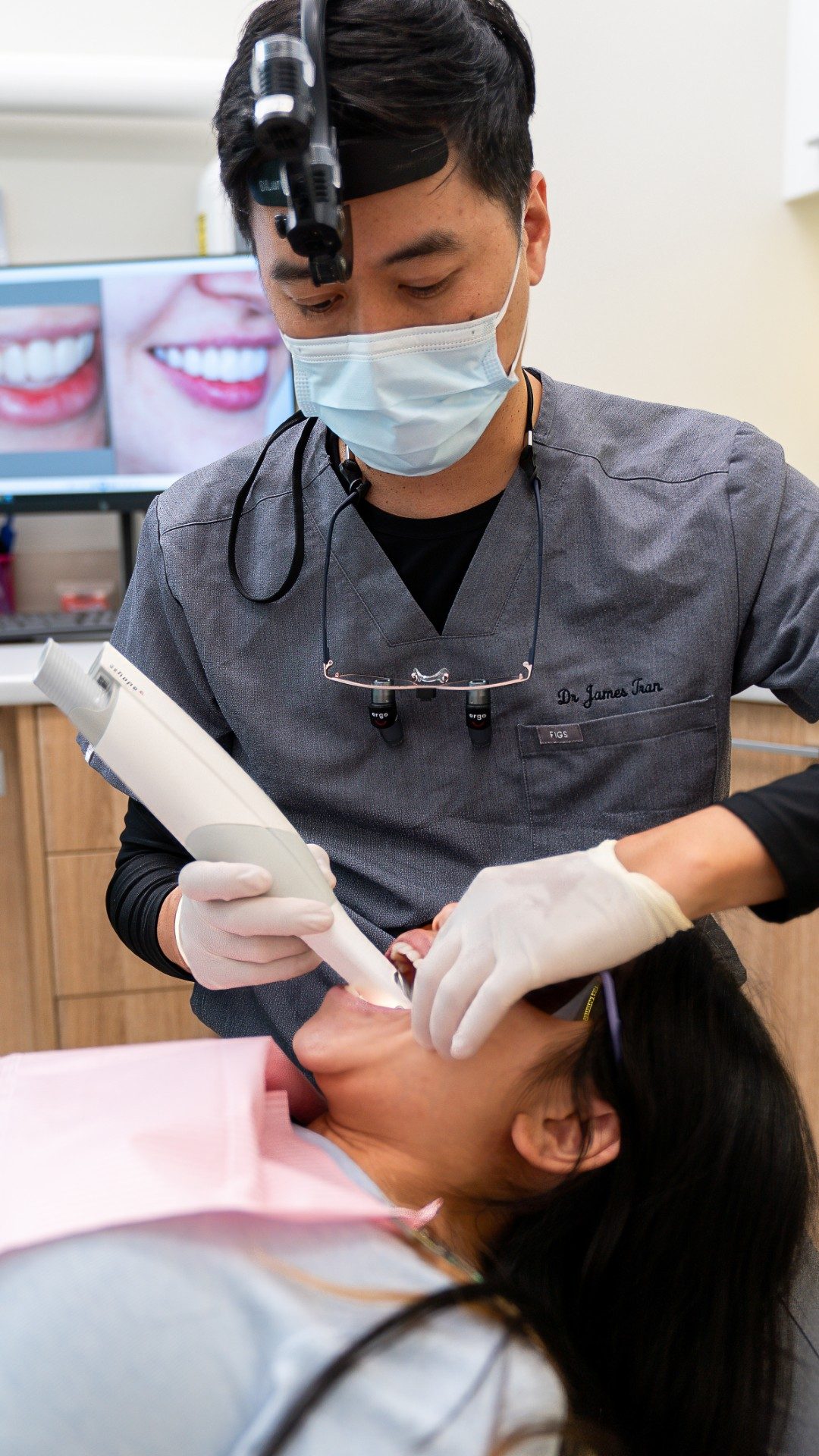
A check before you start
Whitening gel passes through enamel into the dentine underneath. On a healthy tooth that is how it works. On a tooth with a cavity, a crack or gum recession exposing the root, the same gel can cause sharp pain. An examination picks these up, and it also spots tooth-coloured fillings on the front teeth that will not change colour. Knowing that at the start means the plan can allow for it.
The check also tells you what kind of staining you have. Yellow and brown tones usually respond well. Grey staining, staining from certain antibiotics taken in childhood, and a single dark tooth after a knock or root canal behave differently, and some of them need a different approach altogether.
Trays made from a scan of your teeth
Custom trays hold a thin layer of gel evenly against every tooth and keep it off the gums. Strips and generic trays tend to miss the edges and the teeth further back, which is a common reason shop results look uneven, and gel that spreads onto the gums causes the white, stinging patches many people notice.
Stronger gel and longer contact
How far teeth lighten depends on the strength of the gel and how long it stays on the tooth. Dentist-supplied gel is stronger than shop products, and a course of take-home whitening adds up to many hours of contact over ten to fourteen nights. That combination reaches the deeper yellow tones that strips rarely shift.
Someone to adjust things if it is sensitive
Sensitivity during whitening is common and usually settles within a day or two. With professional whitening, the gel type, wear time and number of nights can be changed, and desensitising toothpaste can be started beforehand. With a shop kit, the only option is usually to stop.
Trays you keep
Patients keep their trays. When the colour starts to drift, a few nights of gel brings it back without starting over. Over several years that is where much of the value sits.
When professional whitening is usually worth it
It tends to be good value if your teeth and gums are healthy, the staining is yellow or brown, most of your front teeth are natural, and you would like a result that is even and can be maintained. It is also the sensible route if a shop kit has given you patchy results or sore gums before, or if you have sensitive teeth and want the strength and wear time set for you.
It also makes sense before cosmetic work. If you are planning bonding or veneers, whitening first means new work can be matched to the lighter shade.
When it may not be worth paying for
- The staining is only on the surface. Coffee, tea and smoking stain that sits on the outside of the tooth often comes off with a professional clean. Our guide to stain removal versus teeth whitening explains how to tell which you need.
- Most of the front teeth are crowns, veneers or large fillings. These do not whiten, so lightening the few natural teeth around them can make the mismatch worse. Our article on whitening with fillings or bonding covers the options.
- The discolouration is grey or banded. Staining from tetracycline antibiotics responds slowly and sometimes only partly. Our guide to tetracycline and intrinsic stains explains why.
- Only one tooth is dark. A single dark tooth after trauma or a root canal usually needs internal bleaching rather than whitening the whole smile.
- There is untreated decay or gum disease. These come first. Whitening can wait.
Is a $500 whitening treatment worth it?
It depends on what the $500 includes. A take-home course with an examination, custom trays and enough gel for two weeks is a reasonable buy at around that price, and it is in line with what many practices charge. An in-chair session on its own at a similar price is a different thing. Teeth often look lighter when you leave the chair, but part of that change comes from the teeth drying out and settles back over the next few days. Without trays to follow up, people often feel the result faded within a week. Our article on why in-chair whitening alone will not get you all the way explains this in detail.
Our teeth whitening cost guide lists typical price ranges for each type and what a quote should cover.
How Lumi Dental approaches it
Before any whitening at Lumi Dental, a dentist or oral health therapist checks your teeth and gums and talks through what kind of staining you have and what is realistic. Every whitening option includes custom take-home trays, and patients keep them. The options and current fees are on the teeth whitening page and the current deals page, and a free consult can confirm whether whitening is worth it for your teeth before you commit to anything.
Questions we are often asked
Is dentist whitening safer than a shop kit?
It is supervised, which is the main difference. In Australia, products containing more than 6% hydrogen peroxide or 18% carbamide peroxide may only be supplied or used by registered dental practitioners, according to the Dental Board of Australia. A check beforehand and trays that keep gel off the gums reduce the most common problems, which are pain from unrecognised decay and gum irritation.
Does professional whitening work better than strips?
Usually yes, mainly because of the stronger gel, the fit of custom trays and the longer total contact time. Strips can lighten mild yellowing but often struggle with deeper tones and with teeth that are not perfectly straight.
Is take-home whitening from a dentist as good as in-chair?
For overall colour change, often yes. A systematic review by de Geus and colleagues (Operative Dentistry, 2016) found no meaningful difference in final colour between at-home and in-office bleaching. In-chair whitening mainly adds a faster start.
Will professional whitening damage my enamel?
Used as directed, current evidence does not show lasting harm to enamel. Our article on whether whitening damages enamel covers the research.