
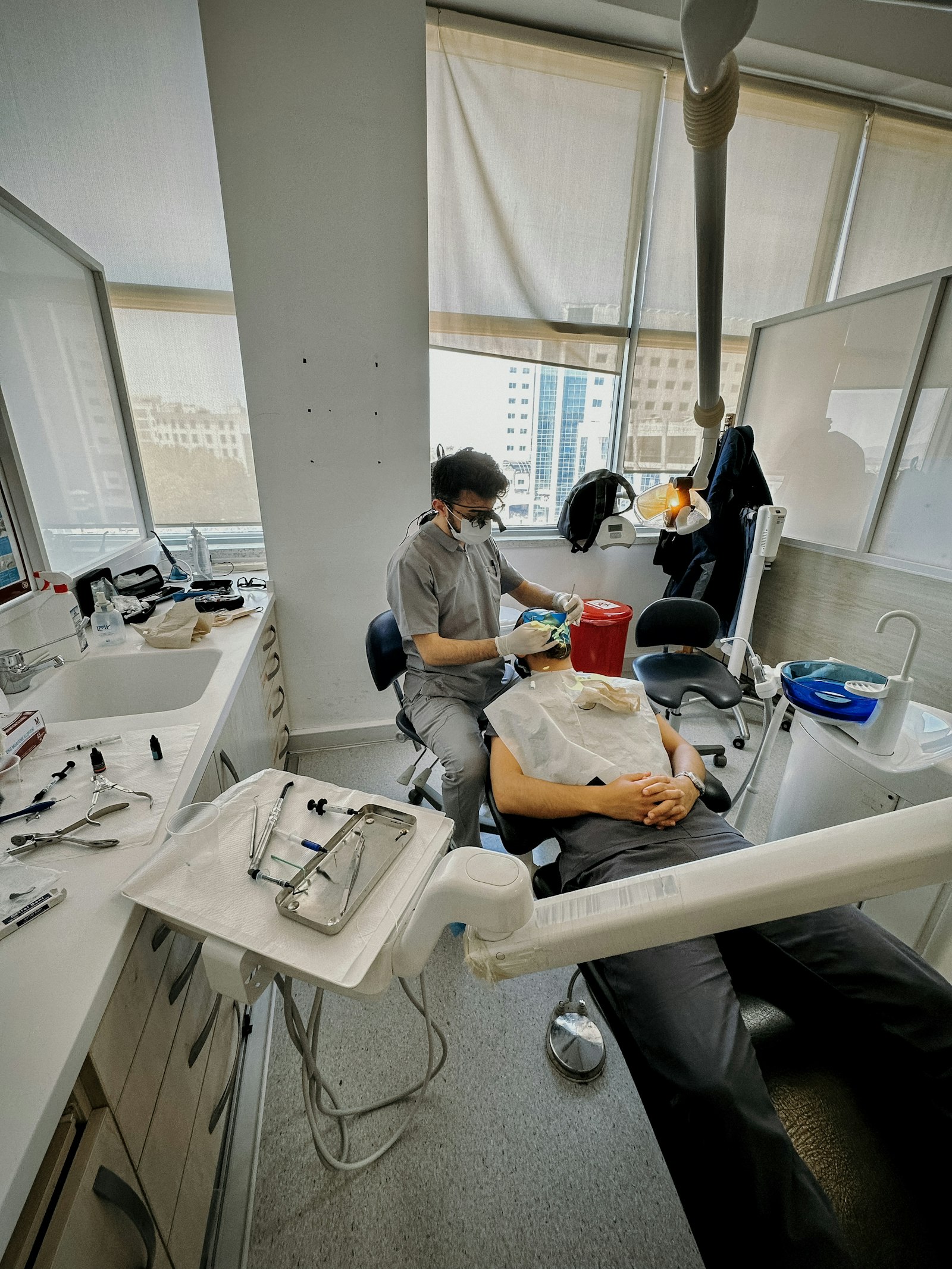

Most people do not need an endodontist for a root canal: in Australia, general dentists carry out the majority of root canal treatment, and a specialist is usually recommended only when the tooth is complex, has been treated before, or the source of pain is unclear. When patients ask me about "endodontist vs dentist", the real question is usually whether their particular tooth needs extra expertise. An endodontist is a registered specialist who has completed an additional three years of full-time university training after qualifying and working as a general dentist, so their skills are focused almost entirely on the inside of the tooth. This guide explains the difference, how to tell which suits your case, what it typically costs in Sydney, and how a dental referral works if you do need one.
Key Takeaways
- General dentists perform most root canal treatment in Australia, including many front teeth and molars.
- An endodontist holds specialist registration with AHPRA after an extra three years of full-time postgraduate training.
- Complex anatomy, retreatment of a failed root canal, surgery such as an apicoectomy and unexplained pain are common reasons to see a specialist.
- Specialist fees are typically higher; see our root canal cost guide for typical Sydney ranges.
- You do not need a GP referral to see an endodontist, but a referral from your dentist helps share X-rays and history.
The Simple Rule
The simple rule: uncomplicated front teeth and many molars can be treated by a general dentist, while complex cases, retreatment and unclear pain are good reasons to consider a specialist.
This is not about one practitioner being "better" than another. It is about matching the difficulty of the tooth to the training, equipment and time each case needs. A well-trained general dentist who does root canals regularly can achieve very good outcomes on routine teeth. A dentist who recognises when a tooth falls outside routine care, and refers early, is also doing exactly what they should.
What Is an Endodontist?
"Endodontics" comes from the Greek for "inside the tooth". An endodontist focuses on the dental pulp (the nerve and blood vessels inside the tooth), the root canal system, and the tissues around the root tip. In Australia, the title "endodontist" is protected. To use it, a dentist must hold specialist registration with the Dental Board of Australia through AHPRA, which requires a further three years of full-time university study in endodontics after their general dental degree and a period of practising as a general dentist.
Because they work on root canals all day, endodontists typically see a high volume of difficult cases: teeth with curved or blocked canals, teeth that have failed after earlier treatment, cracked teeth, and situations where the diagnosis itself is uncertain. Specialist practices commonly use operating microscopes as standard and often have access to CBCT 3D scans, which show the root canal anatomy in far more detail than a standard X-ray.
If you would like to see how endodontists fit alongside periodontists, orthodontists and other specialists, our overview of dental specialists explained covers each one in plain language.

What a General Dentist Can Treat
General dentists learn root canal treatment as part of their degree and many continue with further courses throughout their careers. In my experience, a large share of the root canals patients need are well within general practice, particularly:
- Front teeth (incisors and canines): these usually have a single, fairly straight canal that is easier to access and clean.
- Premolars: often one or two canals and generally manageable.
- Many molars: molars have three or four canals (sometimes more), but when the canals are visible on X-ray and not severely curved or calcified, they are commonly treated by general dentists.
- Emergency pain relief: even if a tooth is later referred, a general dentist can often start treatment to relieve pain and remove infected pulp.
Our article on the difference between front tooth and molar root canals explains why molars take longer and cost more.
Lumi Dental offers root canal treatment as part of its general dentistry services, and the team refers to specialist endodontists when a case needs it.
When an Endodontist Is Often Recommended
Your dentist may suggest a specialist when one or more of the following applies:
- Complex anatomy: canals that are sharply curved, very narrow, calcified (partly blocked with hard tissue), or extra canals that are hard to locate, which is common in upper molars.
- Retreatment: a tooth that has had a root canal before but has become painful or infected again. Retreatment means removing the old filling material and cleaning the canals again, which is technically demanding. Our root canal retreatment guide explains the process.
- Surgical endodontics: procedures such as an apicoectomy, where the root tip is accessed through the gum, are usually performed by specialists.
- Persistent or unclear pain: when it is not obvious which tooth is causing the problem, or pain continues after treatment, a specialist's diagnostic tools can help.
- Medically complex patients: people with certain medical conditions or medications may benefit from specialist management.
- Complications during treatment: such as a blocked canal, a separated instrument or a perforation.
Studies have found that specialist outcomes can be slightly better in complex cases, which is part of why referral makes sense for difficult teeth.
Endodontist vs Dentist: Side-by-Side Comparison
| Factor | General dentist | Endodontist |
|---|---|---|
| Training | Dental degree plus ongoing professional development | Dental degree, practising experience, then an extra 3 years of full-time specialist training |
| Registration | General registration with AHPRA | Specialist registration with AHPRA |
| Typical cases | Front teeth, premolars, many molars, emergency pain relief | Complex anatomy, retreatment, surgery, unclear pain, complications |
| Equipment | Digital X-rays, magnification, rotary instruments (varies by practice) | Operating microscope commonly standard, CBCT often available |
| Molar root canal fee (typical Sydney range, excluding crown) | About $1,200 to $2,500 | About $1,800 to $3,500 or more |
| Crown afterwards | Often placed by the same dentist | Usually placed by your general dentist after treatment |
These are general Sydney market ranges and vary by tooth, number of canals, complexity and practitioner. For pricing at Lumi Dental, see current deals or ask for a written quote after an examination.
Cost and Health Fund Considerations
Root canal treatment is usually billed in stages: assessment and X-rays, removal of the pulp and cleaning of the canals, then filling the canals. Back teeth almost always need a crown afterwards to protect them from cracking, which is a separate fee. When comparing quotes, check whether the crown and any core build-up are included.
Private health extras cover typically falls under "major dental", and benefits apply whether you see a general dentist or an endodontist, as long as the item numbers are covered on your policy. Because specialist fees are higher, your out-of-pocket gap is often larger. Asking for a written quote with item numbers lets you check your rebate with your fund before you start.

How the Referral Process Works
You can book directly with an endodontist without a GP or dentist referral. In practice, though, most patients are referred by their dentist, and this usually makes the process smoother. A referral letter typically includes:
- Your recent X-rays, so you may not need to repeat them.
- A summary of your symptoms, tests performed and the tooth in question.
- Any treatment already started, such as an emergency pulp removal.
- Your relevant medical history and medications.
After treatment, the endodontist normally sends a report back to your dentist, who then places the final filling or crown. You remain free to choose which specialist you see.
Questions to Ask Before Your Root Canal
- How many canals does this tooth have, and are any curved or calcified?
- Do you see anything on the X-ray that makes this case more complex than usual?
- How often do you perform root canals on this type of tooth?
- Will I need a crown, and is it included in the quote?
- If something unexpected happens during treatment, would you refer me?
Frequently Asked Questions
Do I need an endodontist for a root canal?
Usually not, because general dentists perform most root canal treatment in Australia. A specialist is typically recommended for complex anatomy, retreatment, surgery or pain with an unclear cause.
Is an endodontist better than a dentist for root canals?
An endodontist has more specialised training, which can make a difference in complex cases. For routine teeth, an experienced general dentist can often achieve similar results, so the right choice depends on the tooth.
Why would a dentist refer me to an endodontist?
A dentist may refer you when the tooth has difficult canal anatomy, has failed after a previous root canal, needs surgery, or when the source of pain is uncertain. Referral is a sign of careful planning, not a problem with your dentist.
Is a root canal more expensive at an endodontist?
Yes, specialist fees are typically higher. In Sydney, a molar root canal at a specialist often falls around $1,800 to $3,500 or more, compared with about $1,200 to $2,500 at a general dentist, excluding the crown, though fees vary.
Can I see an endodontist without a referral?
Yes, you can book directly in Australia. A referral from your dentist is still helpful because it passes on X-rays, history and any treatment already done.
Getting the Right Care for Your Tooth
If you have a toothache, a tooth that is sensitive to hot or cold, or a dentist has told you a root canal may be needed, the first step is a thorough assessment with X-rays. That tells you whether the tooth is suitable for treatment in general practice or would be better managed by a specialist. The team at Lumi Dental in Melrose Park can examine the tooth, explain your options, provide root canal treatment where appropriate and arrange a referral when a case needs specialist care. Book an assessment through our general dentist page, and see current deals for pricing information and a written quote after your examination.
This article is general information only and is not a substitute for personalised advice from a registered dental practitioner.


