
Gum contouring is a procedure that reshapes the soft tissue around your teeth, either to even out an uneven gum line or to expose more of the tooth surface for a fuller-looking smile. It's typically done under local anaesthetic, most cases take under an hour, and healing is usually straightforward. If you've been told you have a gummy smile, or you've simply noticed your gum line looks uneven from tooth to tooth, gum contouring is one of the more predictable cosmetic procedures on offer. Here's what actually happens, from the first consult through to the healed result.
Key takeaways
- Gum contouring (also called gingival sculpting or gingivectomy) reshapes gum tissue using a laser or a scalpel, depending on the case and the clinician's preference.
- It can be purely cosmetic, to even out a gum line or reduce a gummy smile, or functional, to expose more healthy tooth structure before a crown or filling (this version is called crown lengthening).
- Initial healing generally takes one to two weeks, though full tissue maturation can take several months.
- Not everyone is a candidate. Active gum disease usually needs to be treated first, and some gummy smiles are actually caused by the jaw or lip, not the gums.
- Mild discomfort and some gum sensitivity are normal for the first few days. Severe pain or heavy bleeding is not, and should be checked promptly.
What causes an uneven or gummy smile in the first place
Before reshaping anything, it helps to know why the gum line looks the way it does. A few common causes:
- Excess gum tissue covering more of the tooth crown than usual, sometimes called altered passive eruption.
- Gum overgrowth linked to certain medications, orthodontic treatment, or long-term plaque buildup along the gum line.
- Uneven eruption where some teeth came through with more gum coverage than others.
- A short or hyperactive upper lip, which can make the gums look more prominent when you smile even though the gum tissue itself is completely normal.
That last point matters. If the gumminess is coming from lip movement rather than excess tissue, gum contouring on its own won't fully solve it, and your dentist should talk through that during the assessment rather than moving straight to treatment. Our related guide on gummy smile causes and treatment options goes into this in more depth.
Laser or scalpel: how the tissue is actually removed
Gum contouring can be done with a soft-tissue laser or a traditional scalpel and sutures. Both are established techniques, and the choice usually comes down to the case, the amount of tissue involved, and clinician preference.
| Method | How it works | Bleeding | Typical initial healing |
|---|---|---|---|
| Soft-tissue laser | Removes and seals tissue at the same time | Minimal, laser cauterises as it goes | 1 to 2 weeks for the surface to settle |
| Scalpel and sutures | Tissue is trimmed with a blade, sutures may be placed | More than laser, controlled with pressure and normal clotting | 1 to 2 weeks, sometimes slightly longer |
Research comparing the two techniques generally finds that laser gingivectomy involves less bleeding and less post-procedure discomfort, with faster initial soft tissue healing, while scalpel techniques remain a reliable and widely used option, particularly for larger areas of tissue. Full biological maturation, where the gum has completely settled into its new shape, can take several months either way, even though the tissue looks healed within a couple of weeks.
Cosmetic reshaping vs crown lengthening: not the same procedure
People often use gum contouring as a catch-all term, but there's an important distinction between a purely cosmetic reshape and a functional procedure called crown lengthening.
| Cosmetic gum contouring | Crown lengthening | |
|---|---|---|
| Main goal | Even out the gum line or reduce gum show for appearance | Expose more sound tooth structure so a crown, filling, or bridge can be placed properly |
| Involves bone? | Usually soft tissue only | Sometimes a small amount of bone is reshaped as well as gum tissue |
| Typical trigger | Wanting a more even or less gummy smile | A tooth that has broken below the gum line, or not enough tooth left for a crown to grip onto |
| Who does it | General or cosmetic dentist | General dentist or periodontist, depending on complexity |
If your dentist has recommended crown lengthening ahead of a crown or bridge, it's a functional step rather than a cosmetic one, even though the technique overlaps with gum contouring. It's worth asking which category your case falls into, since it changes what success looks like and how the tooth is treated afterwards.
What happens during the appointment
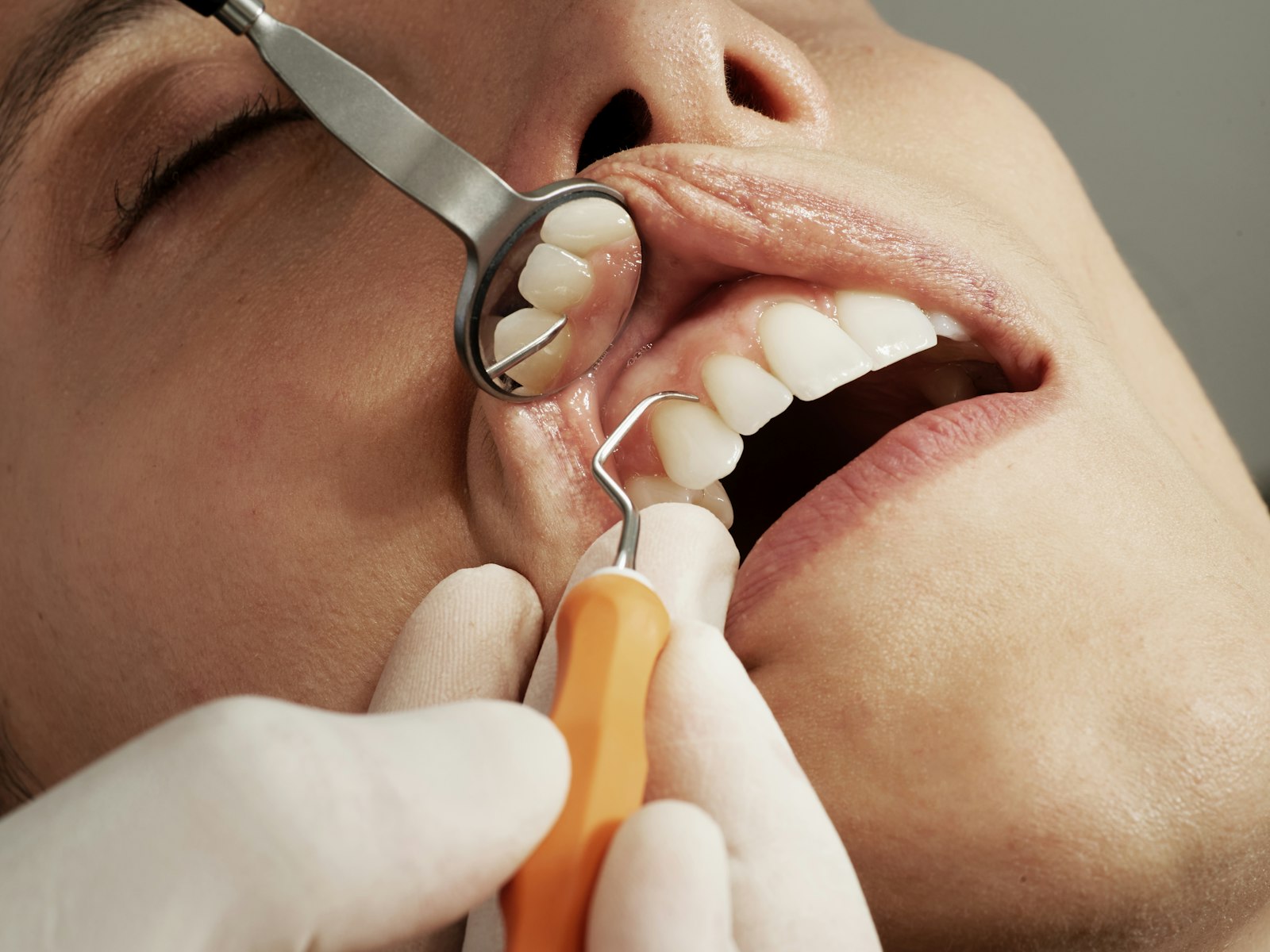
A typical visit looks something like this:
- Assessment first. Your dentist checks for active gum disease, measures gum levels, and maps out exactly how much tissue needs to change and where.
- Local anaesthetic. The area is numbed, so the procedure itself is generally not painful, though you may feel some pressure.
- Reshaping. Using a laser or scalpel, the dentist trims the excess tissue to the planned new gum line.
- Aftercare instructions. You'll be given guidance on eating, brushing around the area, and what's normal to expect over the following days.
Most straightforward cosmetic cases are done in a single visit. More involved cases, particularly ones that touch multiple teeth or involve some bone reshaping, may need a bit longer in the chair or a follow-up review.
Healing and aftercare
Some tenderness, mild swelling, and sensitivity to hot or cold are normal for the first few days. Most people find over-the-counter pain relief, if needed, is enough to manage it. A soft diet for the first day or two, avoiding anything very hot, spicy, or crunchy near the treated area, tends to make things more comfortable. Gentle brushing away from the surgical site is fine, and your dentist will usually advise when it's safe to floss normally around the area again.
By the two-week mark, most people are back to their normal routine and the gums look settled, though the tissue continues to firm up and mature for a few months after that. If you notice heavy bleeding, worsening pain, pus, or a fever, that's not typical healing and should be checked promptly.
Who's a good candidate
Gum contouring tends to suit people with healthy gums who simply have more tissue than they'd like, or an uneven gum line from tooth to tooth. It's usually not the first step if there's active gum disease present. Bleeding, swollen, or receding gums generally need to be assessed and treated before any cosmetic reshaping, since operating on inflamed tissue gives a less predictable result and doesn't address the underlying problem. If you're noticing bleeding when you brush, our guide on bleeding gums causes and treatment is a useful starting point. Where there isn't enough gum tissue rather than too much, the relevant procedure is usually a gum graft rather than contouring, covered in our guide to gum graft surgery.
Some people considering a smile makeover ask whether gum contouring alone will get them the result they're picturing, or whether it should be combined with veneers or composite bonding. That's a reasonable question, and it's worth comparing options directly with our article on composite bonding vs veneers.
Frequently asked questions
Is gum contouring painful?
The procedure itself is done under local anaesthetic, so it's not typically painful at the time. Some tenderness and sensitivity afterwards is normal and usually manageable with simple pain relief.
How long does gum contouring take?
A straightforward cosmetic case usually takes well under an hour. More complex cases involving several teeth or some bone reshaping can take longer.
Is gum contouring permanent?
The reshaped gum line is generally stable once healed, though gum position can shift slightly over time with ageing, orthodontic movement, or gum recession, the same as any gum tissue.
Does gum contouring hurt more with a scalpel than a laser?
Studies comparing the two generally report less bleeding and mild discomfort with laser techniques, though both are established and well-tolerated approaches when performed properly.
Can gum contouring fix a gummy smile caused by my lip, not my gums?
Not on its own. If lip movement is the main driver, your dentist may discuss that separately, since reshaping the gums alone won't change how the lip moves.
Will my gums grow back after contouring?
Some minor tissue rebound can happen, but a well-planned procedure on healthy tissue generally holds its new shape long-term.
Is gum contouring covered by private health insurance?
Cover depends on your policy and whether the procedure is classed as cosmetic or functional, like crown lengthening. It's worth checking directly with your insurer before booking.
If you're weighing up gum contouring, the best first step is a proper assessment rather than guessing from photos online. The team at Lumi Dental offers a complimentary cosmetic consult to talk through whether contouring, a gum graft, or something else entirely is the right fit, and you can see current offers on the deals and offers page.
This article is general information and isn't a substitute for individual dental advice. Your own situation should be assessed in person before deciding on treatment.