

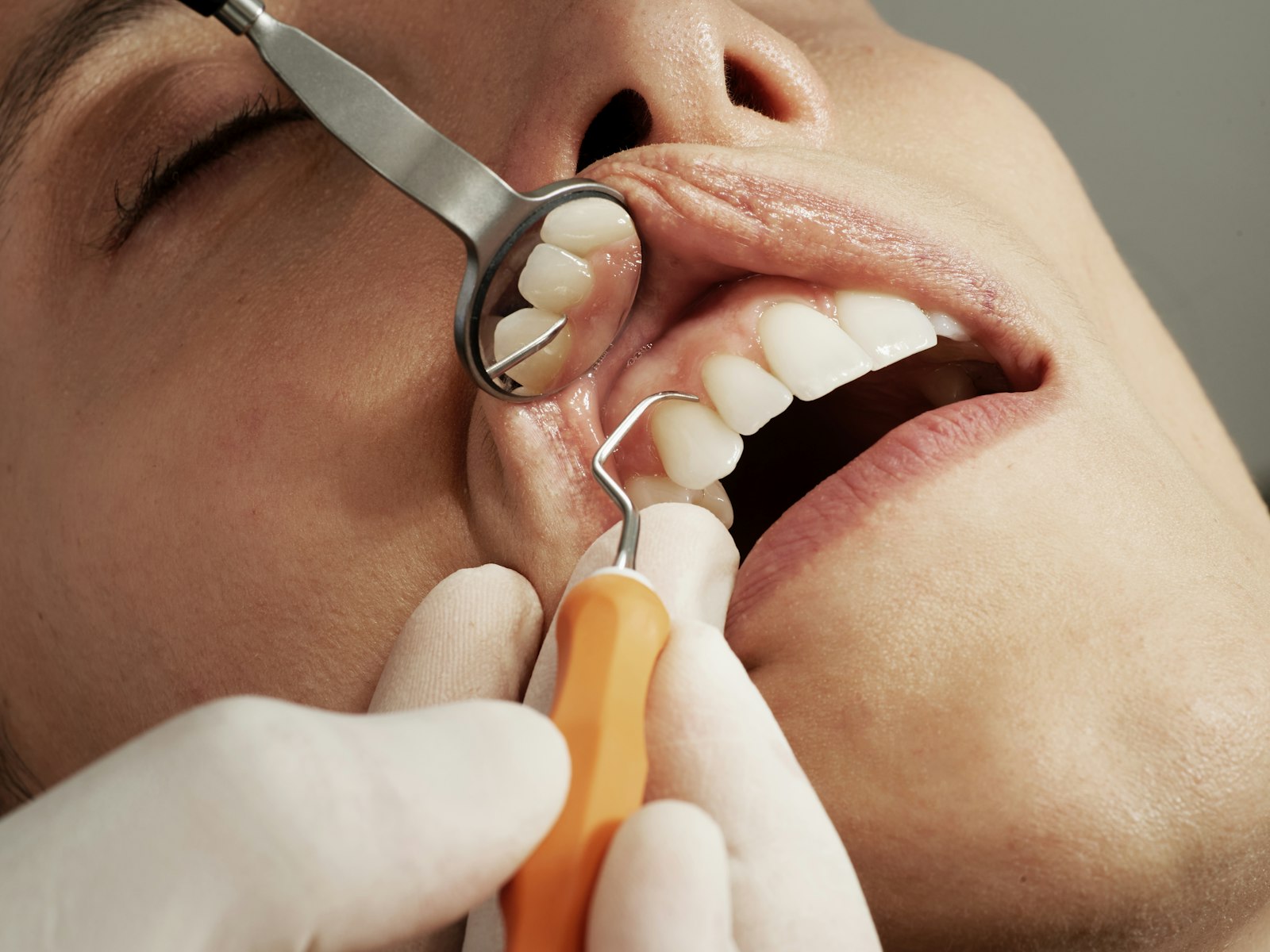

A white composite filling sets hard within seconds under the dentist's curing light, so it is fully set before you leave the chair, while a silver amalgam filling feels solid straight away but takes around 24 hours to reach full strength. If you are wondering how long a filling takes to set, the honest answer depends on the material. This guide explains the difference between composite and amalgam setting times, when you can eat, and what is normal in the days that follow.
Key takeaways
- Composite (white) fillings are set hard by the curing light during your appointment.
- Amalgam (silver) fillings set enough to bite on quickly but harden fully over about 24 hours.
- You can usually eat once numbness wears off with composite, and after about 24 hours of gentle care with amalgam.
- Mild sensitivity for a few days up to about two weeks can be normal.
- Sharp pain, a high bite or a filling that feels loose is worth a call to your dentist.
Composite fillings: set before you leave
Composite resin is the tooth-coloured material used for most fillings today. The dentist places it in soft layers and hardens each layer with a blue curing light, which triggers the resin to set in seconds. By the time the filling is shaped and polished, it is fully set. In practice this means a composite filling is at full hardness when you walk out, and the only reason to wait before eating is the local anaesthetic. Our guide to getting a filling, step by step walks through the whole appointment.
Amalgam fillings: solid fast, fully hard in a day
Silver amalgam is a longer-standing material still used in some situations. It sets through a chemical reaction rather than a light. Amalgam becomes firm enough to bite on within the first hour, but it continues to harden and reach full strength over roughly 24 hours. For that reason dentists often suggest avoiding hard or sticky foods on that side for the first day. If you would like to compare materials, see our article on whether silver amalgam fillings are safe.

Setting times at a glance
| Filling type | Set enough to bite | Fully hardened | When to eat |
|---|---|---|---|
| Composite (white) | Immediately, cured by light | Fully set at the appointment, continues to strengthen 24 to 48 hours | Once numbness fades |
| Amalgam (silver) | Within about 1 hour | About 24 hours | Soft foods for the first 24 hours |
Why the numbness matters more than the filling
With a composite filling, the material is not what makes you wait to eat. It is the local anaesthetic. Chewing while your lip, cheek or tongue is numb makes it easy to bite yourself without feeling it. Waiting until sensation returns, often one to a few hours, is the safest approach. Our guide on how long dental numbness lasts explains what to expect, and our eating after a filling article covers the first day in detail.
What is normal after a filling
Some sensitivity to cold, sweet things or pressure can be normal for a few days and sometimes up to about two weeks as the tooth settles. This usually eases on its own. What is not typical is a filling that feels too tall so your teeth hit it first, sharp pain when biting, or a piece that feels loose or rough. Any of those is worth a quick check. A filling that has broken is covered in our guide on what to do about a broken filling.
Frequently asked questions
Can I eat straight after a white filling?
The filling itself is set, so you can eat once the numbness wears off. Chewing while numb risks biting your cheek or tongue.
How long should I wait to eat after a silver filling?
Stick to soft foods and avoid chewing hard or sticky items on that side for about 24 hours while the amalgam reaches full strength.
Why does my filling still feel sensitive after a few days?
Mild sensitivity as the tooth settles can last a few days and sometimes up to two weeks. If it worsens or becomes a sharp or lingering pain, see your dentist.
Does a filling harden more after I leave?
Composite is fully cured at the appointment but keeps gaining a little strength over 24 to 48 hours. Amalgam does most of its hardening in the first 24 hours.
What if my bite feels off after a filling?
A filling that feels too high can usually be adjusted in a short follow-up visit. It is worth sorting out early, as a high filling can cause ongoing discomfort.
Booking a check-up
If a tooth is sore or you think you may need a filling, an early check-up often means a simpler fix. The team at Lumi Dental can help. See current new-patient options on our offers page or learn about our general dental care.
This article is general information only and is not a substitute for personal dental advice. Please see a dentist to discuss your own situation.

