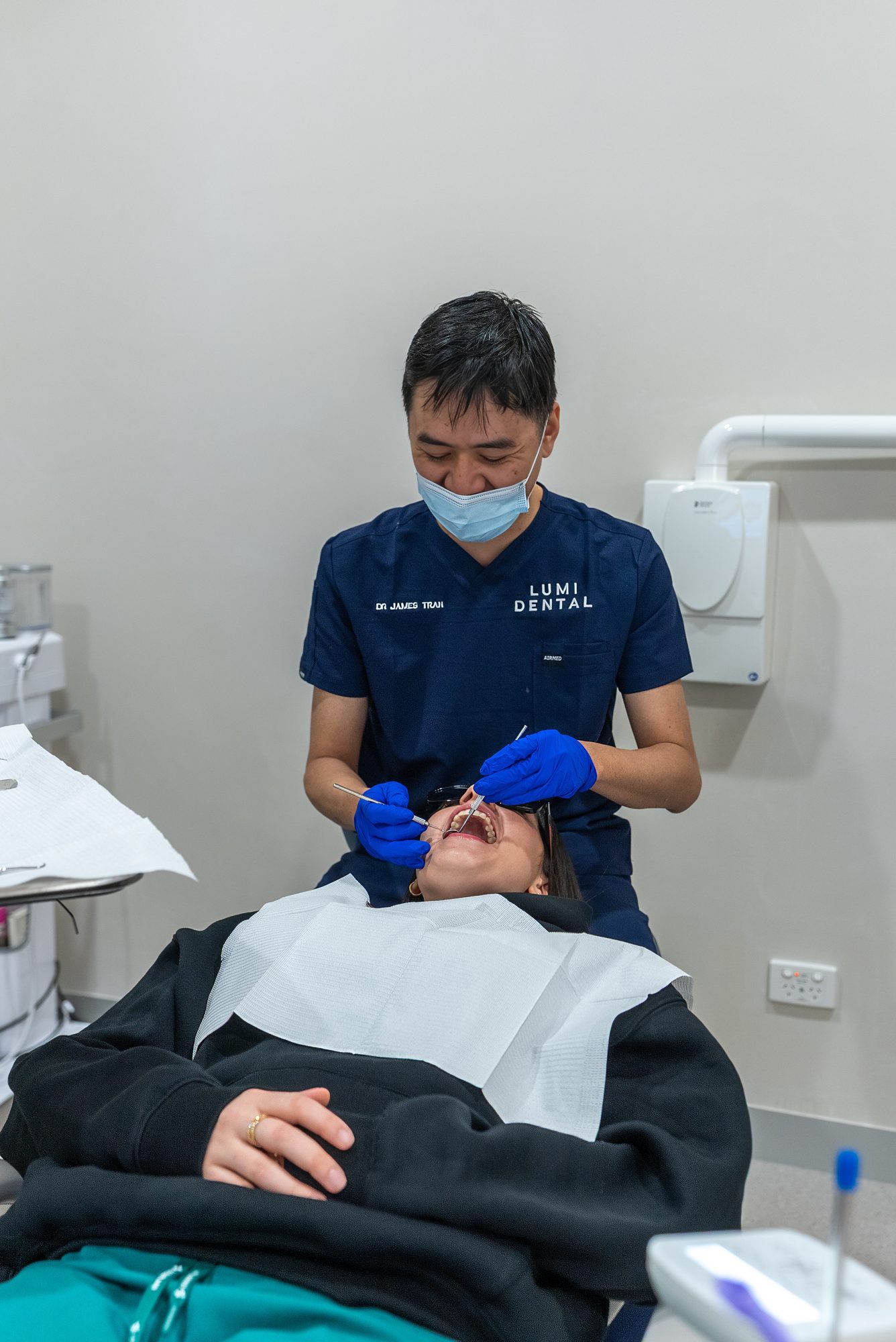

There is no single safe interval for whitening your teeth again, because the right gap depends on your enamel, your gums and how your teeth responded last time. When patients ask how often you can whiten your teeth, I would rather give them a method than a number. Around 1 in 5 Australian adults have whitened their teeth, according to an Australian Dental Association survey, and the same survey noted that whitening is not without risks. Repeating a course too soon is where most of the avoidable problems start.
Written by Dr James Tran, general dentist at Lumi Dental in Melrose Park (BDent, University of Sydney; Graduate Diploma in Oral Implants).
The short version
- There is no universal safe interval. Your dentist can set one after looking at your enamel, gums and any restorations.
- A first course is usually followed by occasional top-ups rather than back-to-back courses.
- Whitening again because the colour has faded a little is different from whitening again because you want to go lighter than your teeth can go.
- Sensitivity, gum soreness or a chalky, see-through look at the biting edges are signs to stop and have the teeth reviewed.
- Strong gels are restricted by law to registered dental practitioners, so higher-strength products should come from a dental practice. Our guide to professional and at-home whitening explains the difference.
- Good habits between courses usually stretch the gap further than extra bleaching does.
Why there is no fixed number
Whitening works by peroxide gel releasing oxygen that breaks down the coloured molecules inside enamel and the dentine beneath it. Each person's teeth respond differently to that process. Thick, even enamel tends to tolerate repeated courses well. Thin enamel, exposed root surfaces or old cracks in the enamel may not.
The reason a calendar rule fails is that the real question is not "how long since last time". It is "what is left to gain, and what will it cost my teeth and gums to chase it". A person who stained from coffee and tea over a year or two may be a good candidate for a refresh. Someone whose teeth are already as light as their natural dentine allows will mostly collect sensitivity.
What regulators and health bodies say
The Dental Board of Australia states that products with more than 18% carbamide peroxide or 6% hydrogen peroxide may only be used or supplied by registered dental practitioners, who must carry out an appropriate assessment and examination first. Healthdirect makes the same point, and lists sensitivity to cold and irritation of the lips, gums and tongue among the possible side effects. If irritation continues for more than a day or two, it advises seeing a dental professional.
Neither source sets a number of days or months between courses. In my experience that is deliberate, because a safe interval is an individual decision made after an examination. Anyone quoting a fixed schedule for every patient is simplifying.
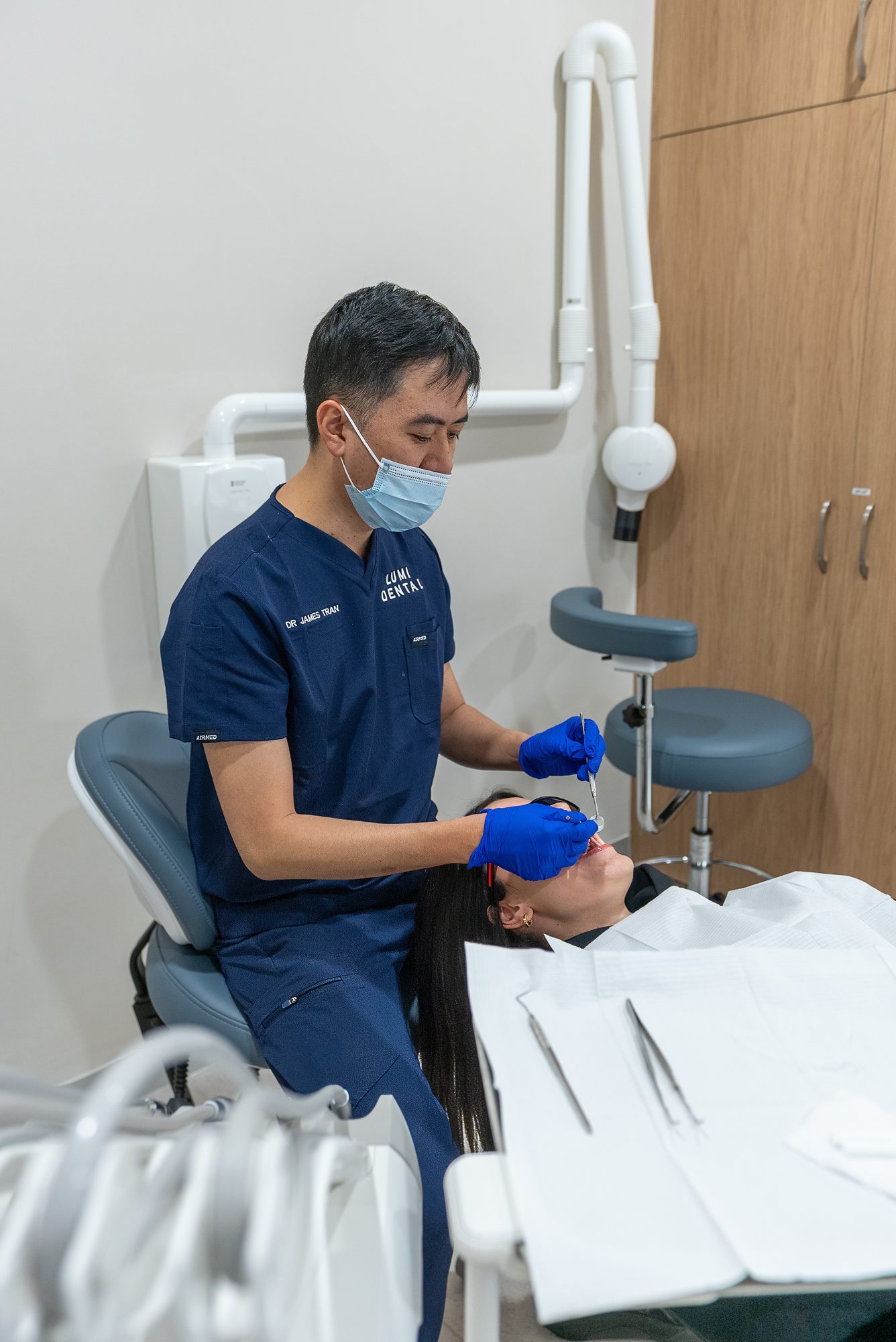
What happens when whitening is repeated too soon
Sensitivity that builds instead of settling
Mild, short-lived sensitivity is common during a course. When courses follow each other without a break, the teeth may not settle between them, and cold air or drinks can start to bother you more each time. Our article on whitening sensitivity, its causes and relief covers what usually helps.
Gum irritation
Gel that touches the gum can leave white patches and soreness. A loosely fitting tray or too much gel makes this more likely, and repeated exposure gives the tissue less time to recover. There is more in our guide to gum irritation after whitening.
A grey or glassy look
Enamel is partly translucent. Dehydrated, over-bleached enamel can look chalky straight after a course, and thinner biting edges can look slightly see-through against the darker mouth behind them. That is not a result most people want, and extra bleaching does not fix it. If you are worried about enamel itself, our answer on whether whitening damages enamel goes through what is known.
A simple rule: wait for the stain, not the calendar
The rule I give patients is this. Consider another course only when three things are true: your teeth have visibly drifted darker than the shade you reached, your teeth and gums feel normal again, and your dentist has had a look and agreed it is suitable. If one of those is missing, wait.
Most people who follow that rule end up whitening far less often than they feared. The shade you reach usually settles over a couple of weeks, and what it does next depends heavily on what you drink and on smoking. For the usual pattern, see how long teeth whitening lasts.
How the decision usually looks
| Your situation | What a dentist may suggest | Why |
|---|---|---|
| First course, no sensitivity history | Supervised course, then a review once the shade has settled | Gives a baseline to measure later changes against |
| Colour has faded a little, teeth feel comfortable | A short top-up with the same trays or a similar plan | Maintains the result without a full course |
| Teeth already at the light end of their range | No further whitening | More gel adds sensitivity, not colour |
| Ongoing sensitivity or sore gums | Pause and review before any further course | Tissues need time to settle |
| Visible crowns, veneers or fillings | Plan whitening first, then match restorations | Restorations do not change colour with gel |
| Receding gums or exposed roots | Extra care, often lower strength or shorter wear | Root surfaces are more sensitive |

Making the result last between courses
Habits do more than extra bleaching. Rinsing with water after coffee, tea or red wine, using a straw for dark drinks, and keeping up regular professional cleaning all help. Stopping smoking helps more than any gel. Our piece on trays, strips and pens compares the home options people usually weigh up for top-ups.
Over-the-counter strips and pens are sold at lower strengths. They are not risk free either, and repeating them frequently carries the same cautions as any other course.
When to hold off altogether
Pause and have your teeth checked first if you have untreated decay, cracked or leaking fillings, painful gums, active gum disease or unexplained sensitivity. Whitening gel can reach the nerve through decay or a crack and cause sharp pain, so problems should be treated before bleaching, not after. Whitening is also generally avoided in pregnancy and breastfeeding, and is not recommended for young children.
How we approach this at Lumi Dental
The team at Lumi Dental offers teeth whitening as part of general and cosmetic dental care in Melrose Park. A whitening plan starts with an examination, so any decay, gum problems or restorations are known before gel goes near your teeth. Your dentist can then talk through the option that suits you, how long to expect a result to hold and when a top-up could reasonably be considered. We record your starting shade so later changes are measured and not guessed. If whitening is unlikely to reach what you want, we say so and talk through alternatives such as composite bonding or veneers.
Questions patients ask
How often can I safely whiten my teeth?
There is no single safe interval for everyone, and a dentist who has examined your teeth is the right person to set one. For many people a supervised course followed by occasional top-ups, spaced out, is the usual pattern, not repeated courses one after another.
Can you whiten your teeth every month?
That is generally more often than needed and may increase sensitivity and gum irritation. A short top-up may sometimes be reasonable, but monthly full courses are not something I would normally suggest.
Can whitening too often damage your teeth?
Overuse can cause lasting sensitivity, gum irritation and a dull, translucent look at the edges. Research on enamel damage from correctly supervised whitening is more reassuring, but overuse and unsupervised strong products are where problems tend to arise.
How long should I wait between whitening treatments?
Wait until your teeth and gums feel normal and the colour has visibly faded, then ask your dentist before starting again. Many people find that is months, not weeks.
Are take-home whitening kits safer to repeat than in-chair whitening?
Lower-strength products release their effect more gradually, but frequency still matters. Whichever method you use, the limit is set by your teeth and gums, not by the product. Comparing options is easier once a dentist has examined your teeth.
Book a Whitening Review at Lumi Dental
If you have whitened before and are wondering about a top-up, or you are considering a first course, the team at Lumi Dental in Melrose Park can look at your teeth and talk through a sensible schedule. Book a complimentary cosmetic consult, or read more about teeth whitening at Lumi Dental. Patients visit from Ryde, Parramatta, Ermington, Rydalmere and nearby suburbs.
Sources
- healthdirect: Teeth whitening
- Dental Board of Australia: Teeth whitening products
- Australian Dental Association: Teeth Whitening Habits of Australian Adults
About the author

Dr James Tran is a general dentist at Lumi Dental in Melrose Park. He holds a BDent from the University of Sydney and a Graduate Diploma in Oral Implants, is a Member of the International Congress of Oral Implantologists (MICOI) and teaches on a General Dental Residency program.
This article is general information only and is not a substitute for an examination and individual advice from a registered dental practitioner. Suitability for any treatment varies from person to person.