

LED light teeth whitening puts a blue lamp over the whitening gel, but the peroxide in the gel does the lightening, and reviews of the research have not found that the light reliably improves the final result. One systematic review in the Journal of Dentistry found no difference in whitening from adding a light when higher-strength gels were used, and more tooth sensitivity in the light groups. A later umbrella review reached a similar view. So before paying extra for a lamp, it helps to know what it does and what it does not do.
Written by Dr James Tran, general dentist at Lumi Dental, Melrose Park. BDent (University of Sydney), Graduate Diploma in Oral Implants.
The short version
- Peroxide gel whitens teeth with or without a light.
- Published reviews have reported no consistent gain in the final shade when a light is added to professional-strength gel.
- Some reviews have linked light activation to more sensitivity, and high-powered lamps can warm the tooth.
- Home LED kits pair a small, low-powered light with a weaker retail gel, so expectations should be modest.
- Our comparison of professional and at-home whitening sets out the main options side by side.
What the lamp is supposed to do
The sales pitch is that the light "activates" the gel. Heat and light can speed up some chemical reactions, so the idea sounds reasonable. Some brochures go further and say the light pushes the whitening deeper or makes it last longer.
The lamps come in a few forms. Blue LED units are the most common now. Older set-ups used halogen or plasma arc lights, and some clinics use lasers.
A common question at whitening consults is whether the light is the part doing the work. It is not. The gel is.
How the gel lightens a tooth
Professional whitening gels contain hydrogen peroxide or carbamide peroxide, which breaks down into hydrogen peroxide in the mouth. The peroxide moves through the enamel into the dentine underneath and breaks large stain molecules into smaller ones that reflect less colour. The tooth looks lighter because the stain is less visible, not because the surface has been bleached away.
That reaction happens in the dark. What changes the result is the strength of the gel, how long it stays on, how many sessions you do and what kind of stain you have. Yellow-brown staining from tea, coffee and ageing tends to respond well. Grey staining, including some from certain medications taken in childhood, is slower and less predictable. Our article on what to expect from in-chair whitening walks through a typical appointment.
What the research has found
Researchers have been testing light-activated whitening against the same gel without a light for a long time. A systematic review and meta-analysis published in the Journal of Dentistry pooled eleven controlled trials. With higher-strength hydrogen peroxide gels, in the range of 25 to 35%, it found no difference in whitening between light and no light, either straight after treatment or in the short term. With weaker gels, around 15 to 20%, the light groups did show a better immediate result, though the authors said more rigorous studies were needed there. The same review found tooth sensitivity was more common in the light groups.
A more recent umbrella review in the Journal of Esthetic and Restorative Dentistry looked across ten systematic reviews. It concluded that laser or light activation did not improve final whitening, that sensitivity was not reduced, and that high-energy activation raised temperature concerns that depend on how the device is set up.
None of this proves a light can never make any difference. It does mean the extra fee for a lamp is hard to justify on the evidence. When I explain this to patients, I usually put it simply: you are paying for the gel, the protection of your gums and the supervision, not the glow.
| What you may be told | What the evidence suggests |
|---|---|
| The light activates the gel | Peroxide works without a light. Reviews have not shown a consistent improvement in the final shade. |
| The light makes it faster | One review found a better immediate result with weaker gels only. With professional-strength gels, no difference was found. |
| The light makes results last longer | How long whitening lasts depends mostly on diet, smoking and upkeep. There is little evidence the light changes it. |
| The light reduces sensitivity | Reviews have reported sensitivity was not reduced, and in some studies it was more common with a light. |
| The light is harmless | High-energy lamps can warm the tooth, so settings, timing and gum protection matter. |
Sensitivity, heat and your gums
Sensitivity is the side effect most people notice. It usually feels like a short, sharp zing with cold air or a cold drink, often starting that evening. For most people it settles within a day or two. healthdirect notes that teeth may be sensitive to cold straight after treatment and that gums and the inside of the mouth may feel irritated.
Stronger gels and longer contact times are the usual causes. A lamp adds warmth on top. Before any in-chair whitening, the gums are covered with a protective barrier that sets on the gum line, and the lips and cheeks are held back. You should not feel burning. If you do, say so, and the gel comes off.
If your teeth are already sensitive, or you have receding gums or worn enamel, read our guide to whitening sensitivity and how to manage it first. Our article on whether whitening damages enamel covers the other common worry.
Home LED kits
Plenty of retail kits come with a small LED mouthpiece that plugs into a phone or runs on a battery. The light is low powered. The gel is also much weaker than a dentist-supplied gel, because retail products are limited in how much peroxide they can contain.
Given what the reviews found for professional lamps, a small LED is unlikely to add much. With these kits, the gel, how evenly it sits on the teeth and whether you use it as directed matter far more. Our overview of trays, strips and pens compares the home formats. A dentist-made tray usually fits more closely than a one-size mouthpiece, which keeps gel on the teeth and off the gums.
Questions to ask before you pay for a light
- Is the gel the same with and without the light, and what strength is it?
- Is the light an extra charge, and what is it meant to add?
- How will my gums and lips be protected?
- What happens if my teeth become sensitive during or after the session?
- What is causing my discolouration, and is it likely to respond?
- Will any of my fillings, crowns or veneers stay the same colour?
The last one catches people out. healthdirect points out that whitening will not work on crowns, veneers or fillings, so a front filling can look darker once the teeth around it lighten. That is far better found at the exam than after the whitening.

How we approach whitening at Lumi Dental
At Lumi Dental, the oral health therapists, Sabrina Tran and Jennifer Nguyen, see patients for cleans, gum care, children's dentistry and whitening, alongside the dentists. The first step is checking the teeth and gums. Untreated decay, gum disease or cracks need attention before any gel goes on, and healthdirect lists these as reasons whitening is not recommended.
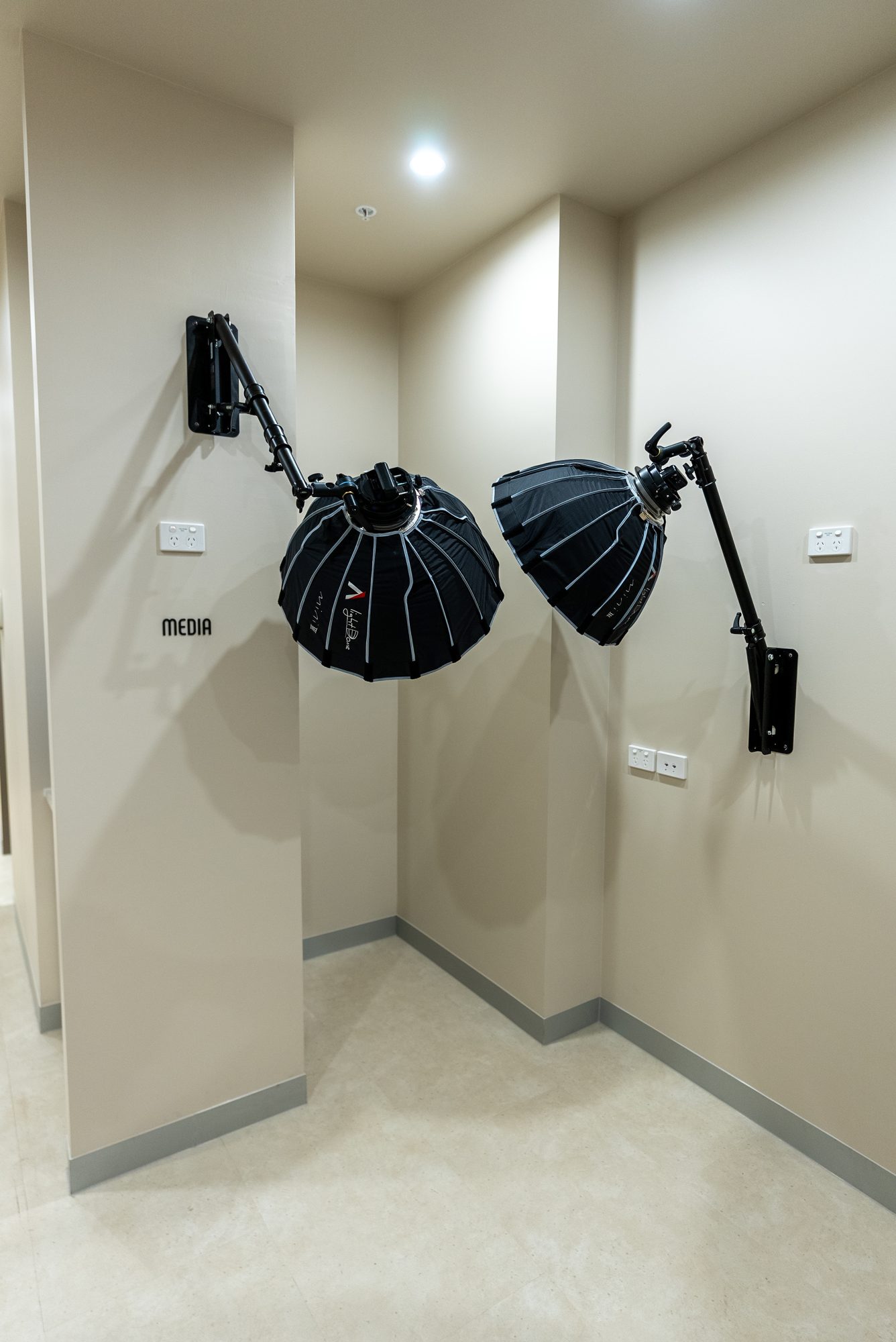
We record your starting shade and take photos in the clinical photography area, which has consistent studio lighting. Repeating those photos afterwards gives a fair comparison, rather than relying on how your teeth look under the treatment light or a bathroom mirror.
If the main concern is a single dark tooth, a worn edge or an old filling, whitening alone may not fix it, and we will say so before you start. You can read about our teeth whitening service for more detail.
Questions patients ask
Does LED light make teeth whitening work better?
Not reliably. Published reviews have reported no consistent improvement in the final shade when a light is added to professional-strength gel, while one found a better immediate result with weaker gels.
Is blue light teeth whitening safe?
It is generally considered safe when a dentist supervises it, but high-energy lamps can warm the tooth. Gum protection, sensible settings and an exam beforehand reduce the chance of problems.
Do home LED whitening kits work?
They can lift some surface stain, but the effect comes from the gel, and retail gels are weaker than professional ones. The small LED is unlikely to add much on its own.
Can LED whitening cause sensitivity?
Yes. Sensitivity can follow any whitening, and some reviews have found it more common when a light is used. It usually settles within a day or two, and a desensitising toothpaste or gel can help.
How long do whitening results last?
It varies with diet, smoking, tea and coffee, and how well you look after your teeth. Results usually fade gradually, and there is little evidence that a light changes how long they last.
Sources
- healthdirect: Teeth whitening
- PubMed: The effects of light on bleaching and tooth sensitivity during in-office vital bleaching, a systematic review and meta-analysis (Journal of Dentistry)
- PubMed: Do laser and light activation improve in-office dental bleaching outcomes? An umbrella review (Journal of Esthetic and Restorative Dentistry)
Talk to us about whitening in Melrose Park
If you are weighing up whitening, the team at Lumi Dental at Melrose Central, Melrose Park can check your teeth and gums, record your starting shade and explain what is likely to suit you, with a written quote after the exam. See what is available on our current deals page. Results vary from person to person and are not guaranteed.
About the author

Dr James Tran is a general dentist at Lumi Dental in Melrose Park, Sydney, and is registered with the Dental Board of Australia. He holds a Bachelor of Dentistry from the University of Sydney and a Graduate Diploma in Oral Implants, is a Member of the International Congress of Oral Implantologists (MICOI), and is part of the General Dental Residency faculty. Read more about Dr James.
This article is general information and is not a substitute for advice from your own dentist after an examination. All dental treatment carries risks, and individual results vary.


