

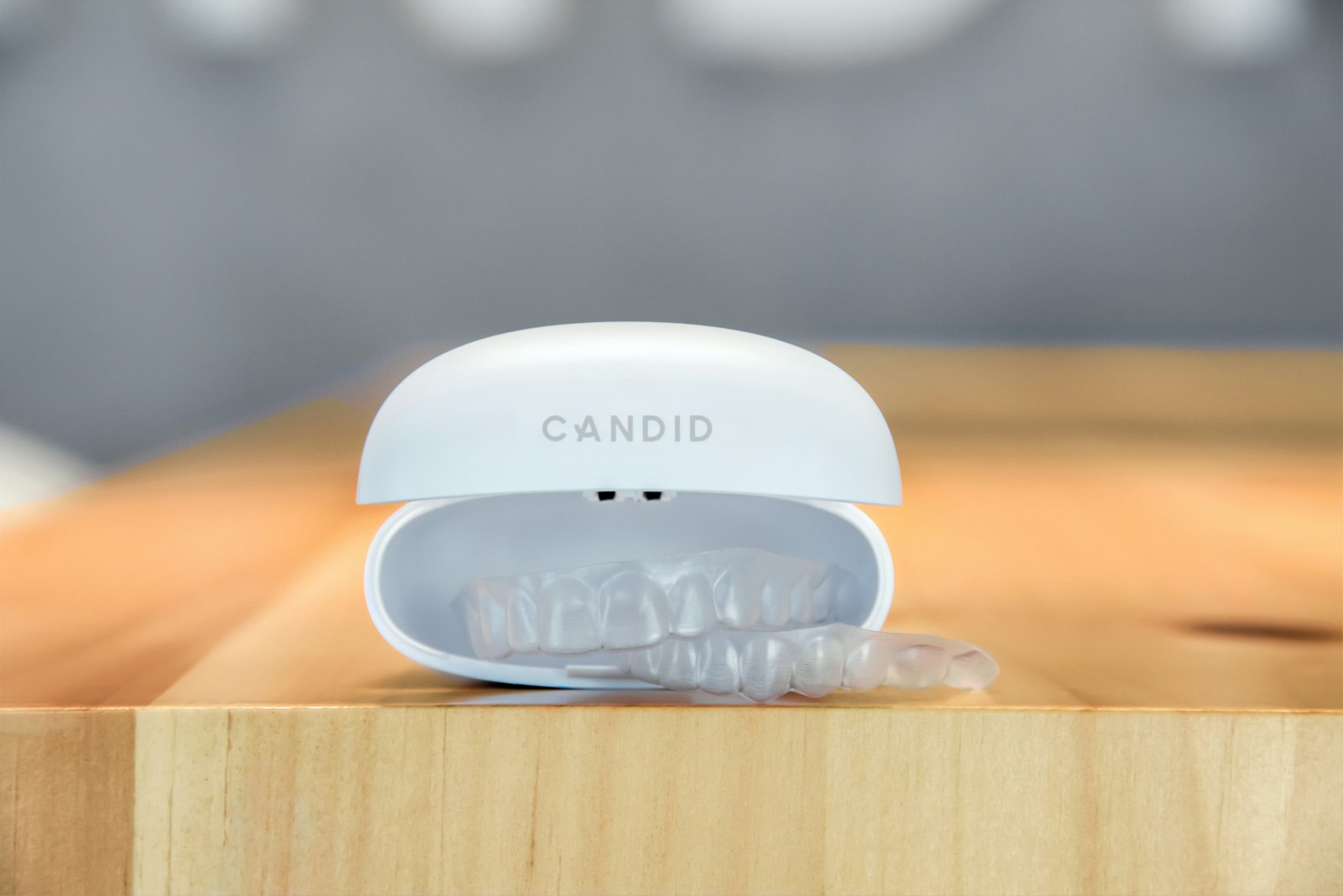

A mandibular advancement splint and a CPAP machine both treat snoring and sleep apnoea, but they work in completely different ways and suit different people, which makes the cost and comparison question one of the most common ones patients raise with their dentist. Snoring is reported by a very large share of Australian adults, and for some of them the underlying issue is simple vibration of soft tissue, while for others it is a sign of obstructive sleep apnoea, a condition where breathing repeatedly stops during sleep. Choosing between a splint and a CPAP machine is not really a lifestyle preference. It depends on what a sleep study actually finds, how severe the condition is, and what a person can realistically wear every night. This guide sets out how each device works, general Australian cost ranges, and the questions worth asking before you commit to either option.
Key takeaways
- A mandibular advancement splint (MAS) is a custom-made oral device that holds the lower jaw slightly forward to keep the airway open.
- CPAP (continuous positive airway pressure) uses a mask and pump to hold the airway open with a steady stream of air.
- Diagnosis with a sleep study should always come before treatment, since the right option depends on how severe the sleep apnoea is.
- Splints are typically used for mild to moderate obstructive sleep apnoea or simple snoring, while CPAP is generally the first choice for moderate to severe cases.
- General Australian cost ranges differ between the two, and neither should be chosen on price alone without medical guidance.
- Comfort and consistent nightly use matter more than which device looks more effective on paper, because a treatment that is not worn does not help.
What a mandibular advancement splint actually does
A mandibular advancement splint, sometimes called a mandibular advancement device or MAD, is a custom-fitted oral appliance that clips over the upper and lower teeth. It holds the lower jaw in a slightly forward position throughout the night. This forward posture pulls the tongue and soft tissues away from the back of the throat, which can reduce or prevent the airway narrowing that causes snoring and obstructive breathing pauses.
Unlike an over-the-counter boil-and-bite mouthguard, a properly fitted splint is made from a dental impression or scan, so the amount of jaw advancement can be adjusted gradually and precisely. This matters clinically, because too little advancement may do very little, while too much can cause jaw discomfort. A dentist with training in dental sleep medicine typically manages this fitting process in coordination with the referring sleep physician.
Who tends to do well with a splint
Splints are generally considered for people with primary snoring or mild to moderate obstructive sleep apnoea, particularly those who cannot tolerate a CPAP mask, who travel frequently, or whose apnoea is worse when lying on their back. People with a very small airway, severe obstructive sleep apnoea, or significant jaw joint problems are usually not ideal candidates, so a proper assessment matters more than personal preference.
How CPAP works and where it fits
A CPAP machine sits beside the bed and delivers a continuous stream of pressurised air through a mask worn over the nose, or the nose and mouth. The constant air pressure acts like a splint made of air, holding the airway open so it cannot collapse during sleep. CPAP has the largest body of clinical evidence behind it for treating moderate to severe obstructive sleep apnoea and is generally recognised as the first-line treatment recommended by sleep physicians for those cases.
The tradeoff is the equipment itself. A mask, tubing and a bedside unit are more cumbersome to travel with than a splint, and some people find the sensation of the mask or the airflow difficult to get used to at first. Adjusting mask type, humidification and pressure settings with a sleep physiologist can resolve many of these early issues, and most people do adapt within a few weeks.

Cost comparison: general Australian market ranges
Prices vary depending on the provider, the complexity of the device, and whether any part of the cost is offset by private health insurance extras cover or a Medicare-supported sleep pathway. The figures below reflect general ranges reported across the Australian market and are not a quote from any particular provider.
| Treatment option | Typical upfront cost (AUD) | Ongoing costs |
|---|---|---|
| Over-the-counter boil-and-bite device | $30 to $150 | Replacement every few months, limited adjustability |
| Custom-made mandibular advancement splint | $1,500 to $3,000 | Periodic review and re-fitting, occasional replacement |
| CPAP machine, mask and setup | $1,200 to $3,000 | Mask replacement, filters, humidifier water, occasional servicing |
Health insurance extras cover often contributes toward both options, and some sleep services offer machine hire before purchase so a person can trial CPAP before committing to buying. A sleep physician or dentist can point you toward what is typically claimable, though the exact benefit always depends on your individual policy. Whatever option you consider, ask for a written quote before proceeding. Our article on informed financial consent and written quotes explains what you are entitled to see before agreeing to any dental treatment plan.
Pros and cons at a glance
| Factor | Mandibular advancement splint | CPAP |
|---|---|---|
| Best suited to | Mild to moderate obstructive sleep apnoea, simple snoring | Moderate to severe obstructive sleep apnoea |
| Portability | Fits in a small case, easy to travel with | Requires a power source and more luggage space |
| Comfort adjustment period | Usually shorter | Can take several weeks to settle into mask and pressure |
| Effectiveness for severe cases | Generally less effective than CPAP | Considered the more effective option for severe cases |
| Maintenance | Periodic dental review | Regular mask and filter replacement |
Why a sleep study should always come first
Neither a splint nor a CPAP machine should be chosen before a proper diagnosis. Our companion article on telling snoring apart from sleep apnoea explains how a sleep physician uses an overnight sleep study to measure how often breathing is interrupted, reported as the apnoea hypopnea index. This number, along with symptoms like daytime sleepiness, high blood pressure or witnessed breathing pauses, guides which treatment path is appropriate. A dentist who fits a splint without a diagnosis in hand cannot know whether it is the right tool for the underlying problem, and self-treating snoring that is actually moderate to severe sleep apnoea can leave a more serious condition unmanaged.
According to the Australian Institute of Health and Welfare, sleep apnoea is thought to affect a substantial and likely under-diagnosed proportion of Australian adults, with risk increasing with age, body weight and other health factors. healthdirect and the Dental Board of Australia both note that dental oral appliances for sleep apnoea should be provided as part of a coordinated plan between a dentist and the treating sleep physician, not as a stand-alone purchase.

Signs it may be time to revisit your treatment choice
Some people start on a splint and later find their symptoms are not improving, or start on CPAP and find they simply cannot tolerate the mask despite trying different types. In both cases, it is worth returning to your sleep physician rather than assuming the condition is untreatable. A change in weight, an update to your prescription, or a switch to a different mask or splint design can sometimes resolve issues that seemed like a dead end. If jaw soreness, clicking or bite changes develop while using a splint, your dentist can adjust the device or investigate further, and our article on the connection between teeth grinding, clenching and headaches is useful background if you also notice jaw tension. If mask discomfort or general nervousness about starting either treatment is holding you back, our guide on overcoming dental anxiety has practical strategies that also apply to getting used to new medical equipment.
Frequently asked questions
Can I choose a mandibular advancement splint instead of CPAP just because I prefer it?
You can discuss preference with your sleep physician, but the choice should be guided by the severity of your condition. Splints are typically considered appropriate for mild to moderate obstructive sleep apnoea, while CPAP is usually recommended first for more severe cases.
Does a mandibular advancement splint stop snoring completely?
It can significantly reduce or eliminate snoring for many users, though results vary from person to person depending on jaw anatomy and the degree of airway narrowing.
Is a dentist or a doctor responsible for diagnosing sleep apnoea?
A doctor, usually a sleep physician, diagnoses sleep apnoea through a sleep study. A dentist may fit and adjust an oral appliance once a diagnosis has been made, working alongside your medical team.
Can I use a mandibular advancement splint if I have jaw joint problems?
This depends on the nature and severity of the jaw joint issue, so it needs a clinical assessment first. Some people with jaw joint sensitivity may need a different approach or closer monitoring during splint use.
Will private health insurance cover a splint or CPAP machine?
Many extras policies contribute toward oral appliances and CPAP equipment, but coverage and rebate amounts vary widely between insurers and policy tiers, so it is worth checking your own policy directly.
How long does a mandibular advancement splint typically last?
With reasonable care, a custom-made splint can often last a few years, though this varies with how heavily it is used and how well it is cleaned and stored.
If you snore, have been told your breathing pauses at night, or you have tried CPAP and struggled with it, the first step is a conversation about what your symptoms actually suggest. The team at Lumi Dental can discuss whether a custom mandibular advancement splint may be appropriate once you have a diagnosis, and can talk you through a written quote rather than a guess. Visit our current deals page to see what is currently available, or book a consultation with the general dentist team to start the conversation.

