



A hospital stay for surgery or illness can raise your risk of tooth decay and gum problems within days, mainly because normal brushing routines slip and the mouth often runs drier than usual. This is a different situation from a dental emergency that sends someone to hospital. It is about looking after an ordinary, healthy mouth while admitted for something unrelated to the teeth at all, whether that is a planned operation, a serious illness, or a longer stay in a general ward or intensive care. Reduced mobility, medications, oxygen therapy and simply not feeling well enough to stand at a sink all interrupt the basic habits that keep a mouth healthy, and hospitals themselves have become far more aware of just how much oral hygiene matters to overall recovery, not only to teeth.
Key Takeaways
- Being admitted to hospital for surgery or illness, not a dental problem, can still raise short-term decay and gum-disease risk because ordinary brushing routines are disrupted.
- Reduced saliva from mouth breathing, oxygen therapy, dehydration or certain medications leaves teeth and gums with less natural protection.
- Hospitals increasingly treat oral care as a genuine patient safety issue, since a build-up of bacteria in the mouth is linked to a higher risk of pneumonia in unwell or immobile patients.
- A simple bag packed before admission, a soft brush, alcohol-free mouthwash, lip balm and sugar-free gum, makes it far easier to keep up basic hygiene on a ward.
- Family and visitors can genuinely help by prompting oral care and assisting a patient who is too unwell or drowsy to manage it alone.
- This is separate from the situation covered in our article on when to go to hospital for a dental problem, which is about a dental emergency serious enough to need emergency hospital care.
Why a Hospital Stay Changes Your Oral Hygiene Risk
Most people do not think about their teeth as a hospital concern. But several ordinary parts of being admitted, whether for a planned surgery, an infection, or a longer medical stay, chip away at the habits that normally protect the mouth. A patient recovering from surgery may be groggy, in pain, or simply too exhausted to stand at a basin and brush properly. Someone who is nil by mouth ahead of a procedure loses the natural rinsing and buffering effect of eating and drinking. IV lines, drowsiness from pain relief, and general discomfort all make a two-minute brushing routine feel like a much bigger task than it is at home.
None of this means hospital care is doing anything wrong. It simply means the mouth's usual defences, saliva, regular brushing, normal eating patterns, are temporarily reduced at exactly the time the body is under more strain than usual. A short admission is unlikely to cause lasting damage, but a longer stay, or repeated admissions, can allow plaque to build up, gums to become inflamed, and existing sensitivity to worsen.
Mouth Breathing, Oxygen Therapy and Dry Mouth in Hospital
Dry mouth is one of the most common and most overlooked issues during a hospital stay. Nasal congestion from illness, or simply lying flat and sleeping with the mouth open, pushes many patients toward breathing through the mouth rather than the nose. Supplemental oxygen delivered by mask or nasal prongs, particularly at higher flow rates, is also drying to the mouth and throat. Some of the medications commonly used in hospital, including certain pain relief, sedatives and blood pressure medicines, list dry mouth as a known side effect.
Saliva does more than keep the mouth comfortable. It buffers acid, washes away food debris and helps prevent the overgrowth of bacteria that contribute to both decay and gum disease. When saliva flow drops for several days in a row, as it commonly does during a hospital admission, the mouth loses a layer of protection right when a patient has the least capacity to compensate with brushing and rinsing. Patients who already manage dry mouth at home, including those who use a CPAP machine overnight, often notice this effect more strongly in hospital. Our article on CPAP machines and dry mouth covers a similar mechanism outside the hospital setting.
Why Hospitals Now Take Oral Care Seriously
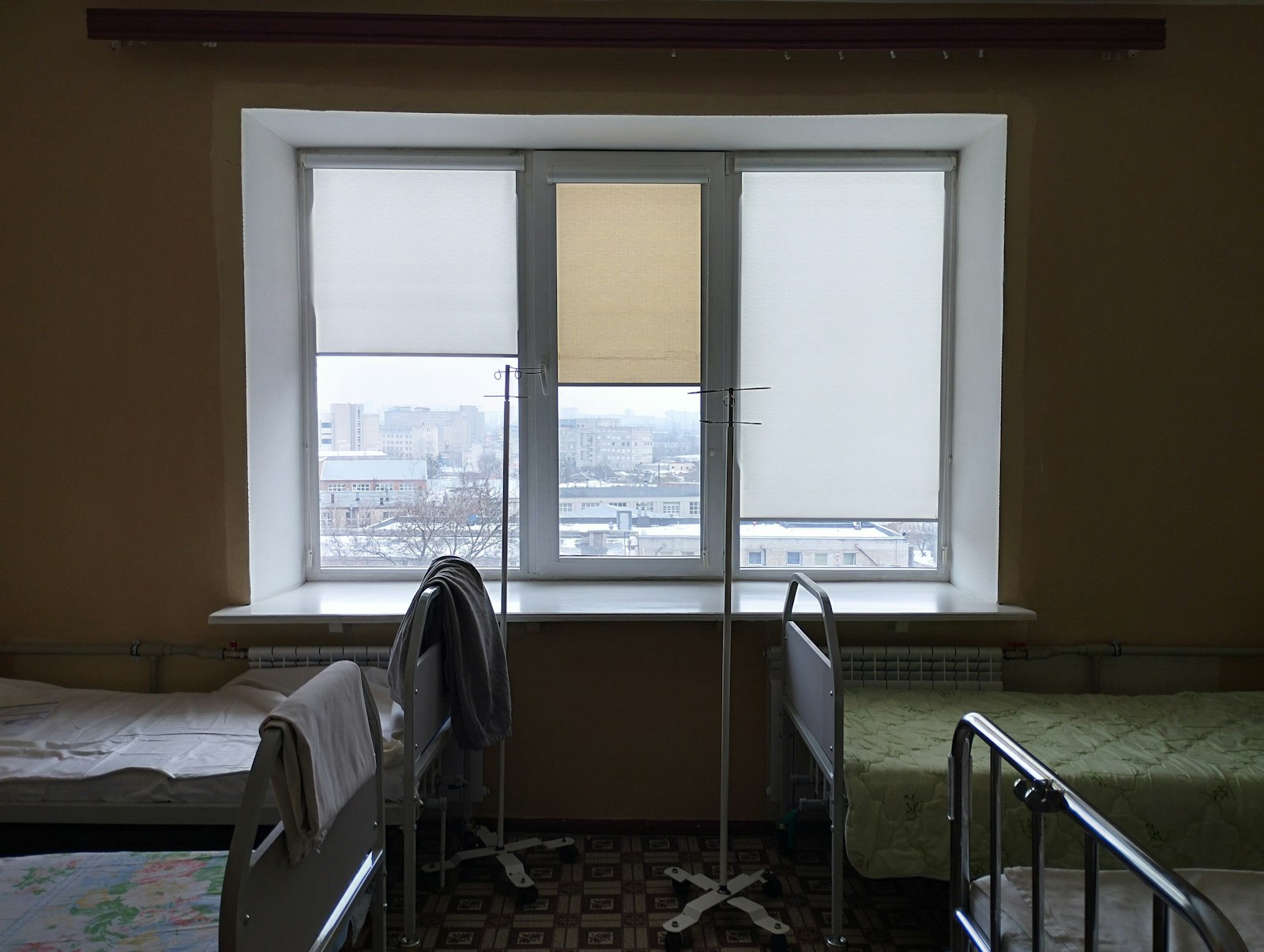
Oral hygiene in hospital is not simply about comfort or fresh breath. Over the past decade, hospitals and nursing bodies have paid growing attention to the link between the bacteria that build up in an unclean mouth and the risk of pneumonia in patients who are unwell, immobile or unable to manage their own oral care. When oral bacteria are inhaled, or aspirated, into the lungs, they can contribute to a chest infection, a risk that rises the longer a patient goes without proper mouth care and the less mobile or alert they are. Several hospital-based studies and reviews have found that structured oral care programs for general ward and intensive care patients, not just those on a ventilator, are associated with a meaningfully lower rate of hospital-acquired pneumonia. This is part of why many hospitals now include a mouth care check as a routine part of nursing observations, particularly for older, post-surgical or critically unwell patients.
This does not mean every patient is at high risk, and it is not a reason for alarm. It is simply the clinical reasoning behind why nurses may ask about, or assist with, oral hygiene during a stay that has nothing to do with the teeth at all.
What to Pack: A Simple Hospital Mouth Care Kit
A little preparation before a planned admission, or a quick bag brought in by family for an unplanned one, makes ordinary oral hygiene far easier to keep up on a ward.
| Item | Why it helps | Notes |
|---|---|---|
| Soft-bristled toothbrush | Gentle on gums that may be more sensitive during illness or after surgery | A smaller travel-size head is easier to manage in bed |
| Fluoride toothpaste (small tube) | Helps protect enamel while saliva flow is reduced | A low-foam formula is more comfortable if lying flat |
| Alcohol-free mouthwash | Freshens breath and helps rinse debris without further drying the mouth | Alcohol-based rinses can worsen dryness and are best avoided in hospital |
| Lip balm | Prevents cracked, dry lips from mouth breathing or oxygen therapy | A plain, unscented balm is usually best tolerated |
| Sugar-free gum or lozenges | Stimulates saliva flow between meals, where the patient is able to eat | Only if cleared by the treating team, particularly around surgery |
| A small handheld mirror and cup | Makes it easier to check and rinse without needing to get up | Useful for patients with limited mobility |

How Family and Visitors Can Help
A patient who is drowsy, in pain, or recovering from anaesthesia is not always able to manage their own oral hygiene, and this is an area where family and visitors can make a genuine difference. Gently prompting a loved one to brush, offering a small sip of water, or helping hold a mirror and cup can matter more than it seems. For a patient who is unable to brush independently, nursing staff can usually assist or advise on suitable products, and it is always reasonable to ask. If a patient is taking regular medication known to affect saliva or gum tissue, such as an oral corticosteroid, it is worth mentioning this to the ward team so oral care can be adjusted if needed. Our article on prednisone and other oral corticosteroids explains this mechanism in more detail. Anyone unsure whether their private health cover includes dental support around a hospital admission may also find our comparison of hospital cover versus extras cover for dental treatment useful background reading.
After Discharge: Catching Up on Any Ground Lost
Most patients find that a short hospital stay has little lasting effect on their teeth once normal brushing, eating and drinking resume. A longer admission, or one involving several days of reduced hygiene, dry mouth or nil-by-mouth periods, is more likely to leave behind some tenderness, mild gum inflammation or a build-up of plaque that a home routine alone will not fully clear. This is a reasonable thing to mention at a regular dental check-up rather than something to worry about urgently, unless new pain, swelling or bleeding develops.
Common Questions
Does a hospital stay actually affect your teeth?
Yes, a hospital stay can raise short-term decay and gum-disease risk because normal brushing routines are often disrupted and saliva flow can drop due to illness, medication or oxygen therapy.
Is this the same as needing to go to hospital for a dental emergency?
No, this is a different situation entirely. It is about maintaining everyday oral hygiene while admitted for surgery or illness unrelated to the teeth, not about seeking emergency hospital treatment for a dental problem.
Why does oxygen therapy dry out the mouth?
Supplemental oxygen delivered through a mask or nasal prongs reduces humidity in the airway and mouth, and combined with mouth breathing during illness, this lowers saliva's natural protective effect on teeth and gums.
Why do hospitals care about oral hygiene if a patient is not there for a dental problem?
Because bacteria that build up in an unclean mouth can be inhaled into the lungs, and hospital-based research has linked structured oral care programs to a lower rate of pneumonia in unwell or immobile patients.
What should I pack for a planned hospital admission?
A soft toothbrush, a small tube of fluoride toothpaste, alcohol-free mouthwash, lip balm and, if your care team agrees, sugar-free gum are a practical, simple kit to bring in.
Should I be worried if my gums feel sore after a hospital stay?
Mild tenderness after a short stay is common and usually settles once normal brushing and eating resume, but it is worth mentioning at your next dental check-up, or sooner if you notice swelling, bleeding or persistent pain.
If a recent hospital stay has left you with sore gums, sensitivity or a mouth that simply feels neglected, it is worth having it looked at rather than waiting. The team at Lumi Dental can assess where things stand, offer a free consult and written quote for any treatment needed, and help you get your routine back on track. See our general dentist page to book a check-up, or visit current deals for current offers.

