



Finding a lump inside your mouth is unsettling, but most mouth lumps are harmless. The single most common solid growth in the mouth is an oral fibroma, a firm, smooth, painless bump that affects an estimated 1 to 2 percent of adults. It is not a tumour in any worrying sense. It is more like a small scar that forms where the cheek, lip or tongue has been rubbed or bitten repeatedly. Knowing the typical features helps you tell an ordinary fibroma from the small number of lumps that genuinely need prompt attention.
Key takeaways
- An oral fibroma is the most common benign lump in the mouth, caused by chronic rubbing or biting.
- It is typically firm, smooth, dome-shaped, the same colour as the surrounding lining and not painful.
- The usual sites are the inner cheek along the bite line, the lip and the side of the tongue.
- Treatment, when needed, is a simple removal, and the lump can come back if the source of irritation is not fixed.
- Any lump that lasts more than two weeks, bleeds, grows quickly or feels hard and fixed should be examined.
What an oral fibroma actually is
A fibroma is a build-up of fibrous scar tissue. When a spot in the mouth is irritated again and again, by a sharp tooth edge, a cheek-biting habit, a rough filling or an ill-fitting denture, the body lays down extra collagen to protect the area. Over time that repair tissue forms a small firm nodule. Because the cause is mechanical, fibromas tend to appear exactly where the friction happens, which is why the bite line on the inner cheek is such a classic location.

How to recognise one
A typical fibroma is firm to touch, smooth-surfaced, dome-shaped and usually a few millimetres across, though some grow larger. It is normally the same pink as the rest of the mouth lining, sometimes paler if it has thickened, and it does not hurt unless you bite it. It tends to stay the same size for a long time rather than growing quickly. None of these features alone is a diagnosis, which is why a quick examination is the only reliable way to be sure.
| Feature | Typical fibroma | Worth checking promptly |
|---|---|---|
| Texture | Firm but not hard, smooth | Hard, fixed, irregular surface |
| Pain | Painless | Painful, numb or bleeding |
| Growth | Stable over months | Growing over weeks |
| Colour | Same as lining, sometimes paler | Red, white or speckled patch |
| Duration | Long-standing, unchanged | New and lasting over two weeks |
The two-week rule for any mouth lump
Here is the simple safety rule that covers every lump and patch in the mouth. If something new appears and does not resolve within two weeks, have it examined. Most lumps that persist are still harmless, but two weeks is long enough for ordinary trauma to heal, so anything lasting beyond that earns a look. This is the same threshold used in our guide to oral cancer screening, and it is the safest habit you can build.
Other common mouth lumps
Fibroma is the usual answer, but it is not the only one. A soft, fluid-filled, bluish swelling on the lip is often a mucocele, a blocked minor salivary gland. A similar swelling under the tongue can be a ranula. Lumps on the gum near a tooth can relate to infection or to overgrowth from irritation. White or red patches that are flat rather than raised belong to a different group, covered in our article on white and red patches. Each has its own pattern, which is why a dentist looks at site, texture, colour and history together.
How fibromas are treated
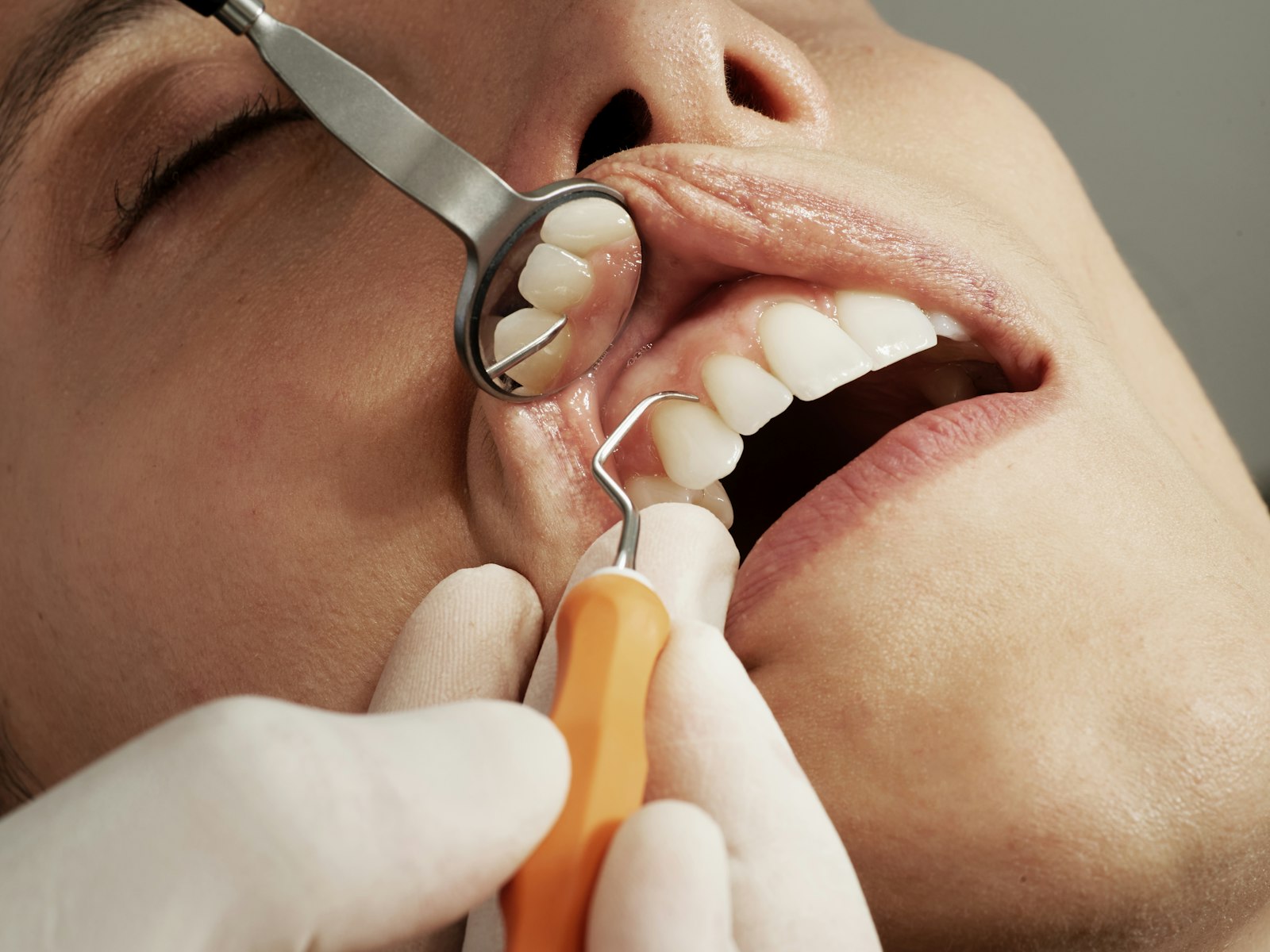
Many fibromas need no treatment at all if they are small, stable and not in the way. When a fibroma is repeatedly bitten, interferes with chewing or a patient simply wants it gone, it is removed with a minor procedure under local anaesthetic, either with a scalpel or a soft-tissue laser. The removed tissue is usually sent for routine testing to confirm the diagnosis. Healing is quick and discomfort is mild. The important second step is fixing whatever caused the rubbing in the first place, such as smoothing a sharp tooth, adjusting a denture or addressing a cheek-biting habit.
Why they sometimes come back
A fibroma can return after removal if the source of irritation is still there. This is not a failure of the procedure. It simply means the friction that created the first lump is still creating scar tissue. That is why your dentist treats the cause alongside the lump, and why a denture review or a small adjustment to a tooth often matters as much as the removal itself.
Frequently asked questions
Is an oral fibroma cancer?
No. A fibroma is a benign build-up of scar tissue and does not turn into cancer. The reason to have any lump checked is to confirm what it is, since a few lumps that look similar are not fibromas.
Will it go away on its own?
Usually not. Because it is scar tissue, a fibroma tends to stay rather than shrink. Removing the irritation stops it growing, but the existing lump generally needs a minor procedure if you want it gone.
Does removal hurt?
The procedure is done under local anaesthetic, so you should not feel it. Afterwards the area is mildly tender for a few days and heals quickly.
Can I just leave it?
If your dentist has confirmed it is a stable fibroma and it does not bother you, leaving it is reasonable. Have it reviewed if it changes.
Why does it keep coming back?
Because the rubbing that caused it has not stopped. Identifying and fixing the source, whether a sharp tooth, a denture or a biting habit, is the key to preventing a return.
The bottom line
A firm, painless, long-standing lump inside the cheek or lip is very often a harmless oral fibroma, but the only way to be sure is to have it examined, especially if it has been there more than two weeks. The team at Lumi Dental can check the lump, treat it if needed and address the cause so it does not return. New patients can see current options on our current offers page or book with our general dentistry team. This is general information, not a diagnosis, and Lumi Dental does not list its own prices here.

