


For mild to moderate crowding or spacing, a general dentist with clear aligner training can often treat you well, while bite problems that come from the jaw bones are usually better managed by a specialist orthodontist. The orthodontist vs dentist for Invisalign question comes up often, and the answer depends far more on your case than on the brand of aligner. Orthodontics is one of 13 dental specialties recognised by the Dental Board of Australia, and a specialist orthodontist completes around three years of full-time postgraduate training after their dental degree. This guide sets out which cases commonly suit which provider, so you can choose with confidence.
Key Takeaways
- General dentists and specialist orthodontists can both legally provide clear aligners and braces, within their own training and competence.
- "Specialist orthodontist" is a protected title in Australia, and you can confirm any practitioner's registration on the AHPRA public register.
- Mild to moderate crowding, spacing and minor relapse after previous braces are commonly treated by general dentists with aligner experience.
- Skeletal bite problems, impacted canines, growing children and jaw surgery cases are commonly referred to an orthodontist. Our guide to dental specialists in Australia explains how each specialty fits in.
- A good provider of either kind explains what aligners can and cannot achieve, plans with 3D scans and includes retainers.
- The most useful question is not "who is better?" but "is my case within this provider's scope?"
What Is the Difference Between an Orthodontist and a General Dentist?
Every dentist in Australia completes a dental degree and registers with the Dental Board of Australia. A general dentist then works across the whole mouth: check-ups, fillings, gum therapy, crowns, extractions, implants and, for many, orthodontic treatment such as clear aligners. Plenty of general dentists complete additional courses and mentoring in aligner planning, and some treat a large number of aligner cases.
A specialist orthodontist completes the same dental degree, then around three years of full-time postgraduate study focused only on orthodontics. That training covers facial growth, the relationship between the upper and lower jaws, complex tooth movement, and planning combined cases with oral and maxillofacial surgeons. After that, they are registered by the Dental Board as specialists.
Both pathways can produce good aligner results. The difference shows up mainly at the complex end of the spectrum, where jaw growth, skeletal shape or surgery come into play.
How to Check the AHPRA Register
The title "specialist orthodontist" is protected by law. Only a practitioner with specialist registration in orthodontics can use it. You can search the AHPRA public register by name, and it will show whether someone holds general registration, specialist registration, or both. Terms such as "aligner provider" or a brand tier refer to training or treatment volume with a manufacturer, not to specialist registration.
For clarity: Dr James Tran is a general dentist, and the team at Lumi Dental provides clear aligners as general dentists, not as specialists. When a case needs an orthodontist, the team refers to one.
Can a General Dentist Do Clear Aligners?
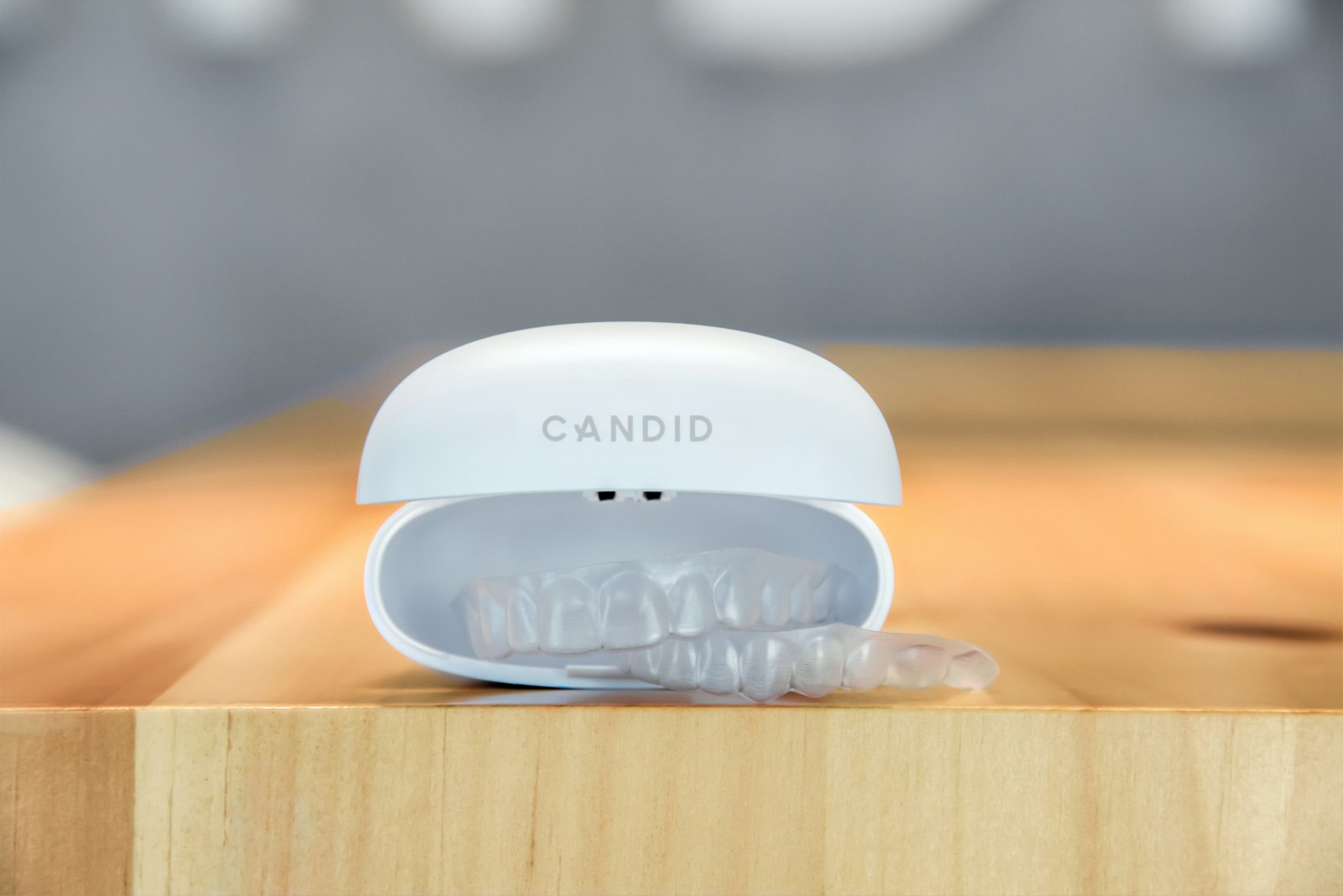
Yes. A general dentist can legally provide clear aligner treatment within their training and competence. In practice, aligner treatment involves a detailed exam, a 3D intraoral scan, a digital plan that sets out each stage of tooth movement, small tooth-coloured attachments, sometimes minor reshaping between teeth, and a series of refinement scans to fine-tune the result.
Cases that commonly suit a general dentist with aligner experience include:
- Mild to moderate crowding or spacing of the front teeth
- Minor relapse after previous braces, where teeth have drifted because a retainer was not worn
- Pre-restorative alignment, such as straightening teeth before veneers, crowns, composite bonding or an implant so the final work is more conservative
In my experience, the aligner cases that go well are the ones where the limits were discussed at the very first appointment. If you are still weighing up appliance types, our comparison of braces vs aligners for adults covers comfort, visibility and control.
Which Cases Suit Which Provider?
The table below is a practical guide to how cases are commonly managed. It is not a rule book, and your own assessment may differ once an exam, scans and X-rays are done.
| Case type | General dentist with aligner training | Orthodontist referral |
|---|---|---|
| Mild crowding or spacing | Commonly suitable | Usually not needed |
| Moderate crowding | Often suitable after assessment | Considered if extractions or complex movements are needed |
| Minor relapse after previous braces | Commonly suitable | Usually not needed |
| Alignment before crowns, veneers or implants | Commonly suitable | Considered if the bite also needs major correction |
| Large overbite or underbite from jaw size | Usually referred | Commonly recommended |
| Impacted canine | Usually referred | Commonly recommended |
| Growing child needing growth modification | Usually referred | Commonly recommended |
| Jaw surgery case | Not suitable alone | Recommended, working with an oral and maxillofacial surgeon |
| Severe open bite | Usually referred | Commonly recommended |
| Complex extraction case or many missing teeth | Usually referred | Commonly recommended |
An impacted canine is a good example of why referral matters. The tooth is stuck in the bone and often needs coordinated surgical exposure and careful traction, which sits well outside a typical aligner plan. Our article on the impacted canine tooth explains how these are found and treated.
If the Problem Is in the Jaw Bones, Not Just the Teeth, See an Orthodontist
This is the simplest rule in the whole decision. Aligners and braces move teeth through the bone that holds them. They do not change how large the upper or lower jaw is, or where the jaws sit relative to each other. When a bite problem is skeletal, moving teeth alone may hide the issue rather than fix it, and the result may be less stable.
Signs that a bite may have a skeletal component include:
- Lower front teeth that sit in front of the upper front teeth
- A large horizontal gap between the upper and lower front teeth
- Front teeth that do not meet at all when the back teeth are together
- A noticeably long, short or asymmetrical lower face
None of these signs is a diagnosis on its own. A proper exam, and sometimes specific X-rays, is needed to tell a dental problem from a skeletal one. Some mild skeletal cases can be managed by moving teeth alone, but that decision is better made with an orthodontist's input.
For children, timing matters even more, because growth can sometimes be guided while it is still happening. The Australian Society of Orthodontists recommends a first orthodontic check at around age 7 to 8. Our guide to the first orthodontic check explains what that visit involves.
What a Good Aligner Provider Should Do
The quality of care depends on the person planning it, not just the letters after their name. A careful provider, general or specialist, should:
- Check for decay and gum health before any teeth are moved
- Take a 3D scan and show you a digital plan of the expected tooth movements
- Explain clearly what can and cannot be achieved, including any compromise
- Discuss wear time, attachments, refinements and how often you will be reviewed
- Include a long-term retainer plan, since teeth can drift back without one
- Refer you to an orthodontist when the case is outside their scope
Questions Worth Asking at a Consult
- Is my problem in the teeth, the jaws, or both?
- What result is realistic for my case, and what will stay the same?
- How many aligner cases like mine have you planned?
- What happens if the teeth do not track as planned?
- At what point would you refer me to a specialist orthodontist?
If a referral is suggested, our explainer on how a dental referral works covers who chooses the specialist and what happens next.
Cost: General Market Ranges
The fees below are general market ranges, which vary with complexity and provider; a written quote follows an exam. They are not Lumi Dental's prices.
| Treatment | General Australian market range | What affects the fee |
|---|---|---|
| Clear aligners | Around $3,000 to $9,000 | Number of aligners, refinements, case complexity, retainers |
| Fixed braces | Around $6,000 to $10,000+ | Length of treatment, appliance type, case complexity, provider |
Specialist fees are often at the higher end, reflecting the complexity of the cases they see. Our breakdown of how much braces cost covers health fund cover and payment options. For current offers at Lumi Dental, see current deals.
Common Questions
Is an orthodontist better than a dentist for Invisalign?
Not automatically. For mild to moderate crowding or spacing, a general dentist with aligner training can typically achieve a good result, while complex bites, skeletal problems and growing children are usually better suited to an orthodontist.
Can a general dentist call themselves an orthodontist?
No. "Specialist orthodontist" is a protected title, and only practitioners with specialist registration can use it. A general dentist can provide orthodontic treatment but must not present themselves as a specialist.
Do I need a referral to see an orthodontist?
No, you can book directly with a specialist orthodontist in Australia. Many patients are referred by their general dentist, which can help because the dentist can send records and explain the concern.
Are clear aligners as effective as braces?
For suitable mild to moderate cases, clear aligners can achieve results similar to braces. Fixed braces typically give more control for complex movements, rotations of some teeth and larger bite corrections.
What happens if my case is too complex for a general dentist?
A good general dentist will explain why and refer you to a specialist orthodontist. The team at Lumi Dental refers complex cases to registered orthodontists rather than stretching an aligner plan beyond what it can safely do.
Book a Complimentary Aligner Consult in Melrose Park
If you are wondering whether your smile suits clear aligners, the team at Lumi Dental in Melrose Park, Sydney, offers a complimentary aligner consult. It includes an assessment of your teeth and bite, a discussion of what aligners can and cannot achieve for you, and a clear recommendation, including a referral to an orthodontist if your case needs one. You will receive a written quote before any treatment begins. Learn more about clear aligners at Lumi Dental, or contact the team to book your consult.


