


Attending a dental appointment with a prosthetic limb or another mobility device usually comes down to logistics rather than anything the dental team cannot manage. The Australian Institute of Health and Welfare estimates that hundreds of thousands of Australians live with limb loss or limb difference, and many more use mobility aids such as walking frames, crutches or scooters day to day. For most of these patients, a well-prepared dental visit is no different in outcome to any other appointment. What changes is the planning that happens before you sit in the chair.
Key takeaways
- Letting the practice know in advance about a prosthetic limb or mobility device allows staff to plan transfers, timing and room access properly.
- Transferring safely into the dental chair is usually straightforward with a short discussion about your preferred method beforehand.
- Appointment length and positioning can often be adjusted for comfort, particularly for longer procedures.
- Parking and step-free access are worth confirming ahead of time rather than discovering on arrival.
- This is distinct from wheelchair-specific access considerations, which involve their own separate logistics.
Why telling the practice in advance makes the biggest difference
The single most useful thing a patient with a prosthetic limb or mobility device can do is mention it when booking the appointment, not after arriving. This gives the practice time to think through transfer needs, allocate a treatment room with enough space, and schedule appropriately, rather than working it out on the spot with a patient already waiting. A short phone call or note on a booking form covering the type of device, whether you use a wheelchair, walking frame, crutches or a lower-limb or upper-limb prosthesis, and whether you need assistance transferring, is generally all that is required.
Dental teams that regularly see patients with mobility devices tend to build simple routines around this: allowing extra time at the start of the appointment, keeping a clear path from the waiting area to the treatment room, and having staff available to assist with transfers if needed. None of this requires special equipment in most cases, just forward planning.

Transferring to the dental chair
For patients with a lower-limb prosthesis, transferring to the dental chair is often similar to transferring to any other chair, and many patients manage this independently with the chair positioned at a comfortable height and locked in place before the transfer. Some patients prefer to remove a prosthesis before treatment for comfort, particularly for longer appointments, while others prefer to keep it on throughout. Either approach is fine, and it is worth telling the dental assistant your preference so the room and timing can be arranged accordingly.
For patients using crutches, a walking frame or another mobility aid, the main practical consideration is having somewhere secure and out of the way to store the device during treatment, and having staff nearby if assistance is needed getting in or out of the chair. Patients with an upper-limb prosthesis generally do not need any change to the transfer process itself, though it is worth mentioning if the prosthesis affects grip, balance or the ability to hold a rinse cup, so the team can adapt accordingly.
If you use a wheelchair for mobility, note that this article focuses on prosthetic limb users and general mobility-device logistics rather than wheelchair-specific transfer and access considerations, which involve their own distinct planning and are worth discussing separately with your practice.
Appointment length and positioning considerations
Longer dental procedures, such as multiple fillings, deep cleaning or more involved restorative work, can mean an extended period in one position. For some prosthetic limb users, particularly those managing residual limb sensitivity, skin integrity around a socket, or discomfort from being seated in an unfamiliar chair for a long stretch, this is worth flagging before treatment starts. Many practices are happy to build in short breaks during longer appointments, adjust the chair angle for comfort, or split more extensive treatment across shorter visits if that works better for the patient.
It is also reasonable to ask about the total expected appointment time when booking, so you can plan removal or adjustment of a prosthesis, medication timing, or your own transport arrangements around it.
Parking, access and getting into the practice
Before the day of the appointment, it is worth confirming a few practical details: whether there is accessible parking nearby, whether the entrance and treatment rooms are step-free, and whether lifts or ramps are available if the practice is not on the ground floor. Most practices can answer these questions over the phone in a couple of minutes, and doing this ahead of time avoids an unnecessary complication on the day, particularly for patients travelling some distance or relying on a mobility scooter that needs specific parking or charging arrangements.
If you use a mobility scooter, ask whether there is space to store it safely during your appointment, separate from general waiting area seating, so it is not in the way of other patients or staff.

Bringing a support person
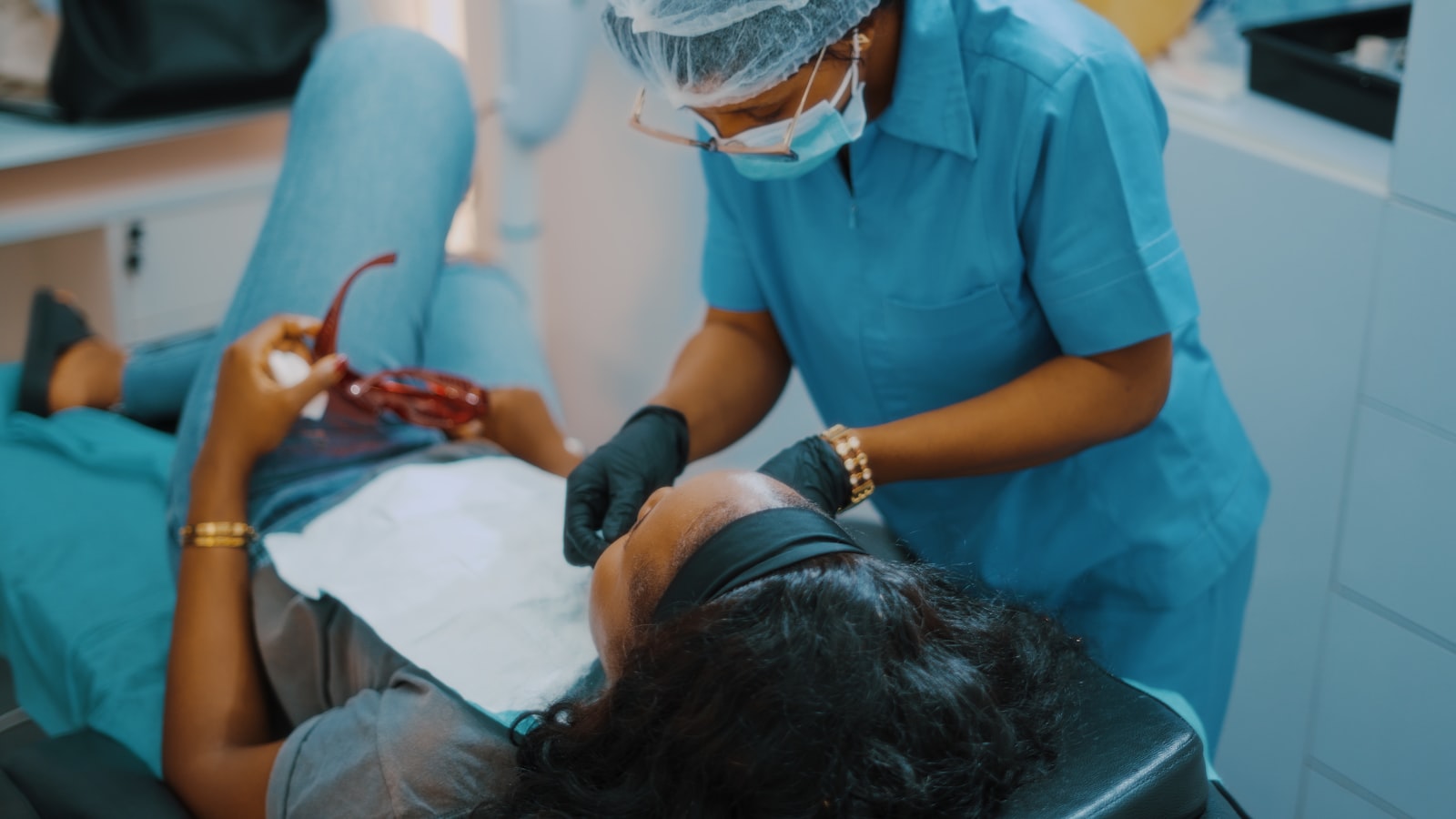
Many patients with a prosthetic limb or mobility device attend appointments independently, but if you would feel more comfortable bringing a support person for transfers, carrying equipment or simply company in the waiting room, most practices are happy to accommodate this. Mentioning it in advance means the practice can plan seating and room space accordingly.
Frequently asked questions
Do I need to remove my prosthetic limb for a dental appointment?
Not necessarily. Some patients remove a prosthesis for comfort during longer procedures, while others keep it on throughout. It is a personal preference worth mentioning to the dental team so they can plan the room and timing accordingly.
How much notice should I give a dental practice about a mobility device?
Mentioning it at the time of booking is ideal, since this gives the practice time to plan transfer assistance, room allocation and appointment length. Even a day or two of notice is generally enough for most routine visits.
Can dental staff help me transfer into the chair?
Most practices can provide assistance with transfers if needed. It is worth discussing your preferred transfer method in advance so staff know how best to help without causing discomfort.
Are dental appointments longer for patients with mobility devices?
Not always, but some practices build in extra time at the start of an appointment for transfers and settling in, particularly for a first visit. Ask when booking if you would like this factored in.
What if the dental practice isn't fully accessible?
Ask specific questions about parking, entrance access and treatment room layout before booking. If a particular location is not suitable for your needs, most practice groups can suggest an alternative location or discuss workarounds.
Is this different from wheelchair access at the dentist?
Yes. Wheelchair access involves its own specific considerations around ramps, doorway widths and chair transfer equipment, which are worth discussing separately if that applies to you. This article focuses on prosthetic limb users and general mobility-device logistics.
If you use a prosthetic limb or mobility device and want to talk through appointment logistics before you book, the team at Lumi Dental is happy to plan around your needs. Check current deals for general dentistry, or visit the general dentist page to get in touch and arrange your visit with a written quote in advance.
Related reading: Sensory impairment and dental visits, overcoming dental anxiety, what a dental treatment coordinator does, and understanding your dental treatment plan.

