
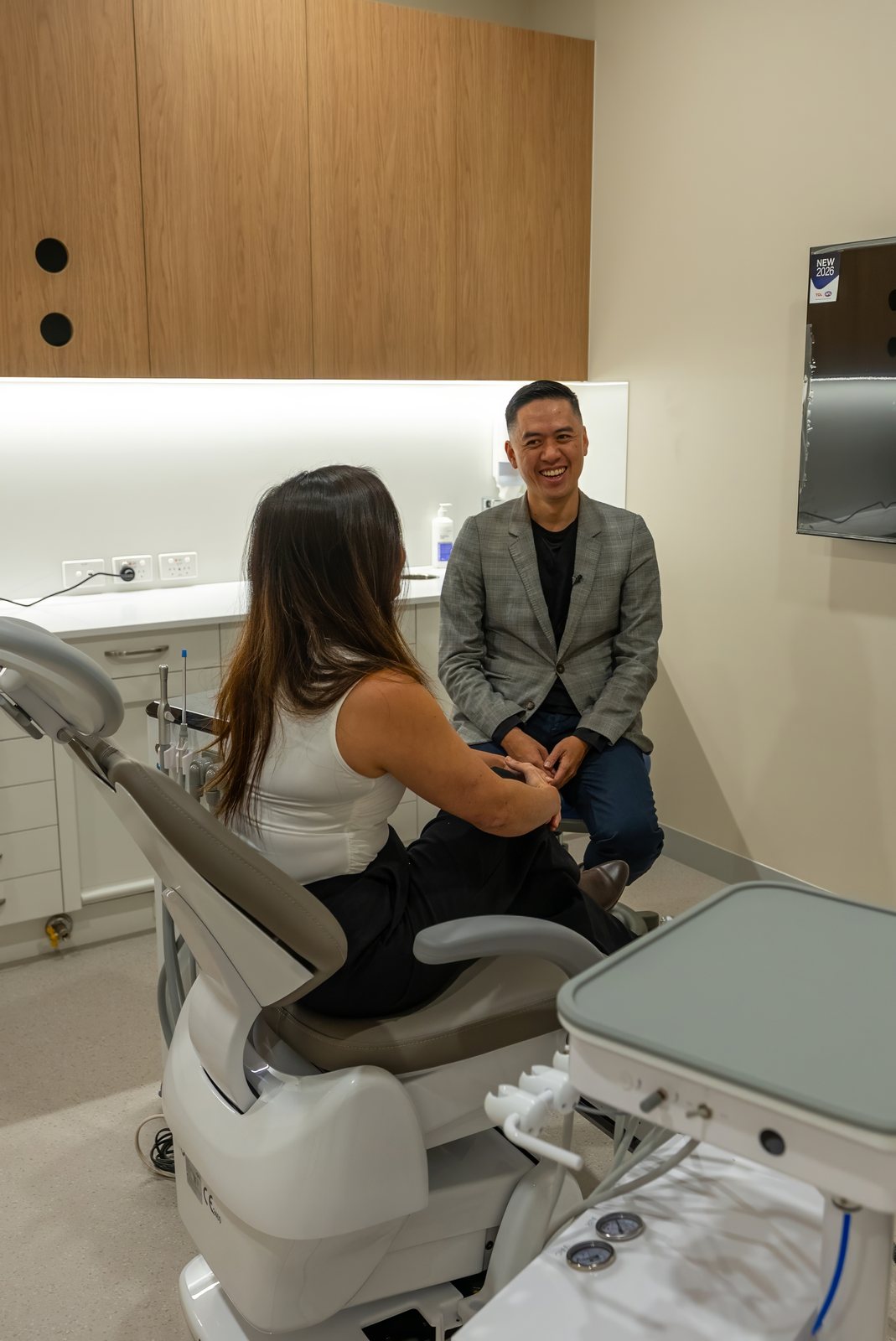

A general dentist provides most crowns, bridges, dentures and single implant crowns well, and a prosthodontist adds the most value when many teeth, the bite, or previous failed work make the plan complex. The prosthodontist vs dentist question is less about who can make a crown and more about how many moving parts the treatment has. Prosthodontics is one of 13 dental specialties recognised by the Dental Board of Australia, and a specialist prosthodontist typically completes around three years of full-time postgraduate training after a dental degree and some years in general practice. This guide explains what a prosthodontist does, what general dentists do well, and when a specialist opinion is worth asking for.
Key Takeaways
- Prosthodontists specialise in replacing and restoring teeth: complex crowns and bridges, dentures, implant-supported teeth and full-mouth rehabilitation.
- General dentists provide most crowns, bridges, veneers, dentures and single implant crowns as routine care.
- A specialist opinion is commonly considered for severe wear needing the bite raised, many missing teeth, repeated failure of previous work, and congenital or post-surgical cases.
- "Specialist prosthodontist" is a protected title, and you can confirm registration on the AHPRA public register.
- A referral is not legally required, but it helps the specialist plan. Our guide to dental specialists explained covers all 13 specialties.
- Specialist fees are usually higher, so a clear reason for referral matters.
What Does a Prosthodontist Do?
A prosthodontist focuses on rebuilding and replacing teeth so that they look natural, function well and fit together comfortably. After a dental degree, most work in general practice for some years, then complete around three years of full-time specialist training, commonly a Doctor of Clinical Dentistry. Their training concentrates on planning across the whole mouth rather than one tooth at a time.
Typical areas of prosthodontic work include:
- Complex crowns and bridges, particularly where many teeth are restored together.
- Complete and partial dentures, including difficult cases with little bone support.
- Implant-supported teeth, from single units to full arches.
- Full-mouth rehabilitation, where most or all teeth are restored as one coordinated plan.
- Bite (occlusion) problems and severe tooth wear.
- Congenital conditions such as missing teeth or ectodermal dysplasia.
- Maxillofacial prostheses after cancer surgery, often as part of hospital teams.
What General Dentists Do Well
Restorative dentistry is the core of general practice. Patients I see every week have crowns on cracked molars, bridges to replace a single missing tooth, veneers, partial and full dentures, and crowns on single implants. These are routine procedures for a trained general dentist, and in most cases there is no clinical reason to involve a specialist.
General dentists also know your history over many years, which helps when deciding which tooth to treat first and how to maintain the result. If you are weighing up materials, our article on types of dental crowns explains the common choices.
Where a general dentist adds particular value is continuity. The same clinician who places a crown also sees it at every check-up, notices early chipping or gum changes, and can adjust a denture as your mouth changes over time. Before any larger restorative plan, it is reasonable to ask a few questions: how many teeth the plan involves, whether the bite will be changed, how long the restorations are expected to last, and what the alternatives are. If the answers point to a coordinated plan across most of the mouth, that is a natural moment to discuss whether a specialist opinion would help.
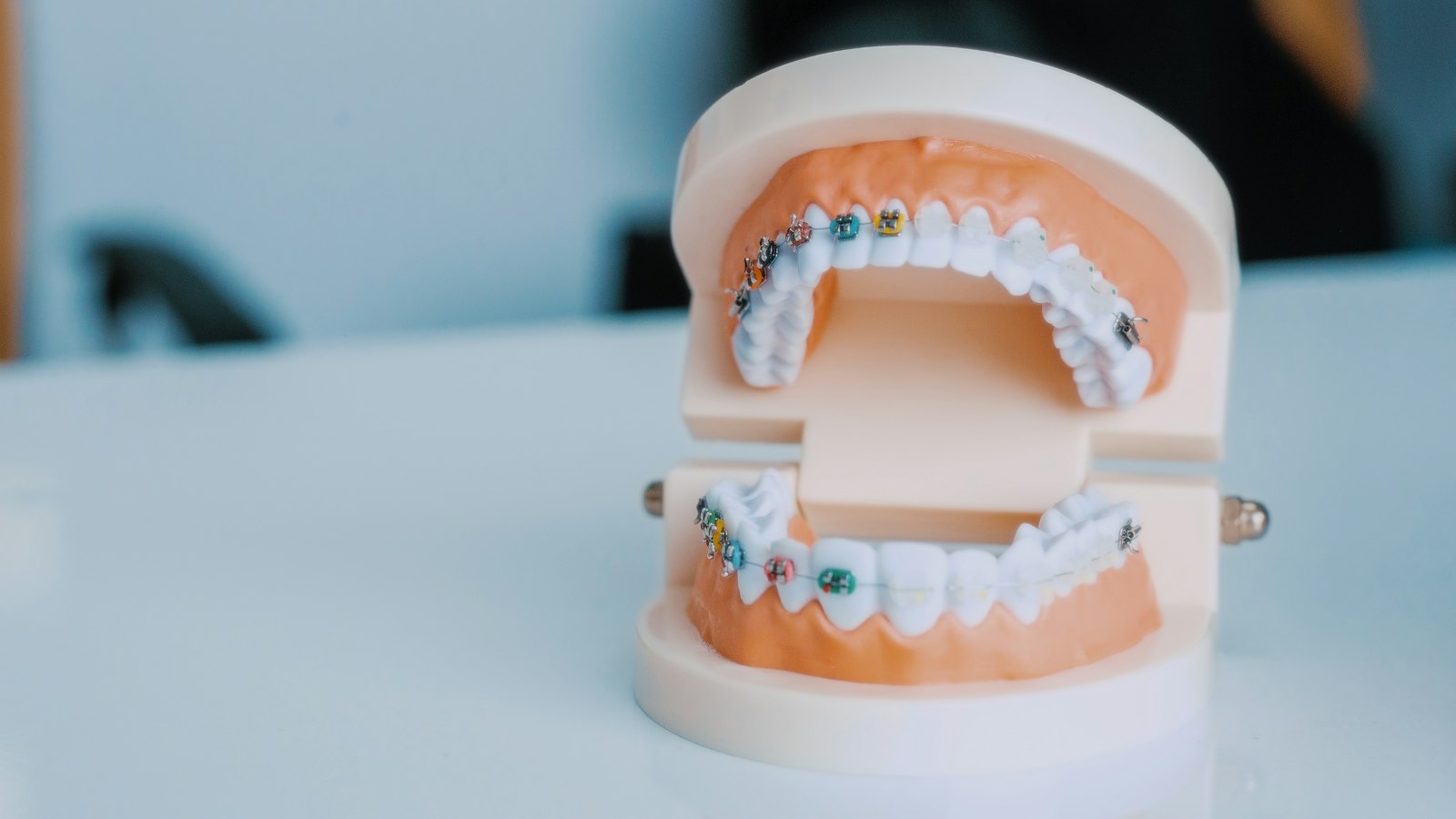
When a Prosthodontist Is Often Considered
A specialist adds the most value where the plan affects many teeth at once or where earlier attempts have not lasted.
Severe wear and a collapsed bite
Grinding, acid erosion and age can wear teeth down until the bite closes and there is little tooth left to restore. Rebuilding often means raising the bite across many teeth together, which takes careful testing with temporary restorations first. Our guide to restoring worn-down teeth covers the options.
Many missing teeth with complex planning
When several teeth are missing across both jaws, the choice between bridges, partial dentures and implants interacts with the bite, the bone and the remaining teeth. For full-arch replacement, our comparison of implant-supported dentures vs regular dentures sets out the trade-offs.
Repeated failure of previous work
Crowns that keep breaking, bridges that keep loosening or dentures that never feel stable usually point to an underlying problem with the bite, the design or the foundation. A specialist review can identify why, before the same work is repeated.
Congenital and post-surgical cases
Conditions such as multiple congenitally missing teeth or ectodermal dysplasia, and reconstruction after surgery for oral cancer, are classic prosthodontic territory and are often managed with a wider medical team.
A Decision Table: General Dentist or Prosthodontist
Every case is individual, but this reflects how restorative care is commonly divided in Australian practice.
| Situation | General dentist usually | Prosthodontist often considered |
|---|---|---|
| Single crown on a cracked or heavily filled tooth | Yes | Rarely |
| Bridge to replace one missing tooth | Yes | Rarely |
| Crown on a single implant | Yes | Rarely |
| Veneers on front teeth with a stable bite | Yes | Sometimes, for complex cases |
| Standard full or partial denture | Yes | For difficult cases with little bone support |
| Severe wear needing the bite raised across many teeth | Sometimes | Yes |
| Many missing teeth needing a combined plan | Sometimes | Yes |
| Repeated failure of previous crowns, bridges or dentures | Initial review | Yes |
| Congenital conditions or reconstruction after cancer surgery | Supportive care | Yes, often within hospital teams |
If Treatment Involves Changing the Bite on Most of Your Teeth, a Specialist Opinion Is Reasonable
This is the single rule worth keeping in mind. Restoring one or two teeth works within your existing bite. Changing the bite across most of the mouth alters how the jaws meet, how the muscles and joints behave, and how every new restoration is loaded. It is a bigger undertaking, often staged over months, and the cost of getting it wrong is higher.
A specialist opinion in that situation does not mean your general dentist cannot be involved. Often the prosthodontist designs the plan and carries out the complex stages, while your regular dentist continues with check-ups, hygiene and maintenance. Our full-mouth reconstruction guide explains how these cases are usually staged.

Fees, Referral and How to Check a Prosthodontist
Specialist fees are usually higher than general dental fees, reflecting the additional training and the planning time complex cases require. Health fund extras rebates vary by policy and item number, so ask for a written treatment plan with item numbers and check with your fund.
You do not legally need a referral to book with a prosthodontist, but one helps. A referral letter with your X-rays, scans and history means the specialist can focus on planning rather than repeating records. Our article on how a dental referral works explains who chooses the specialist.
Because "specialist" is a protected title in Australia, a practitioner can only call themselves a specialist prosthodontist if they are registered in that specialty. You can search their name on the AHPRA public register. A general dentist may have a strong interest in restorative work, but they cannot use the specialist title.
Common Questions
What does a prosthodontist do?
A prosthodontist is a registered specialist in restoring and replacing teeth. Their work includes complex crowns and bridges, dentures, implant-supported teeth, full-mouth rehabilitation and bite problems.
Do I need a prosthodontist for a crown or implant crown?
Usually not, because single crowns and single implant crowns are routine for general dentists. A specialist is more often involved when many teeth or the overall bite are being changed.
Is a prosthodontist better than a dentist for dentures?
For most standard dentures, a general dentist provides good care. A prosthodontist is often considered when there is very little bone support, dentures have repeatedly failed, or the case involves congenital or post-surgical changes.
How do I know if someone is a real prosthodontist?
Search their name on the AHPRA public register. A specialist prosthodontist will be listed with that specialty against their registration.
Do I need a referral to see a prosthodontist?
No, a referral is not legally required. It is still helpful, because it gives the specialist your records and the reason for the visit.
Talk Through Your Options at Lumi Dental
If you are considering crowns, veneers, dentures or implants, the first step is a thorough exam and a clear explanation of your options. The general dentists at Lumi Dental in Melrose Park, Sydney, provide routine restorative care and refer to registered specialists when a case needs one. For cosmetic or complex restorative questions, you can book a complimentary consult and receive a written quote. For everyday care such as check-ups, see our current deals.


