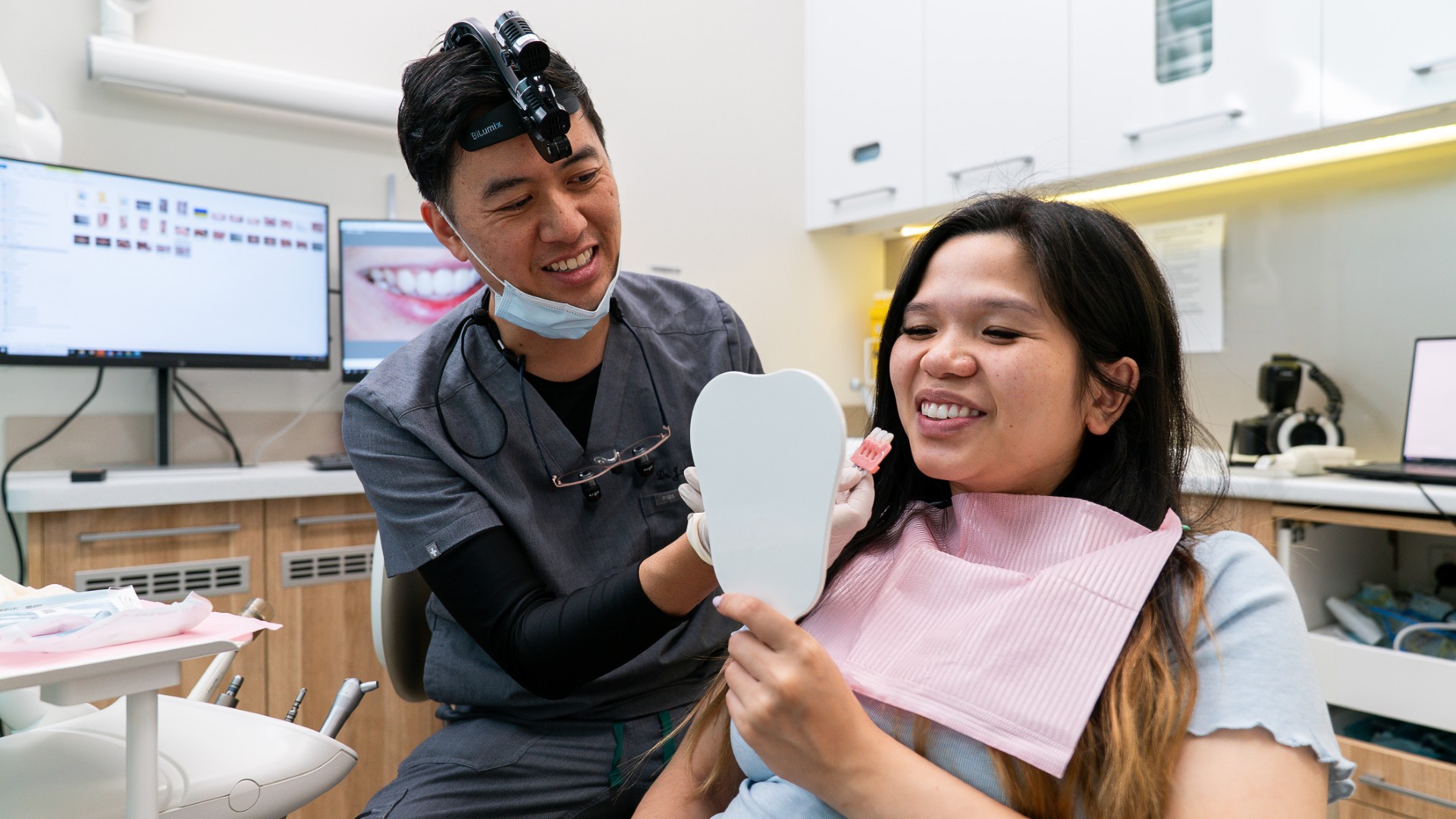
A same-day crown usually costs about the same as a conventional crown, typically somewhere around $1,500 to $2,500 per tooth in the Australian market. What you are paying for with the same-day approach is not a cheaper crown but fewer visits: the tooth is scanned, the crown is designed and milled in the practice, and it is bonded before you leave, so there is no temporary crown and no second appointment. Whether that suits your tooth depends on where it is, how much of it is left and how demanding the colour match needs to be.
Where the time saving comes from
With a conventional crown, the dentist prepares the tooth, records its shape, and sends that record to a dental laboratory. You wear a temporary crown while the lab makes the final one, then come back to have it fitted. The wait between visits is often a couple of weeks.
A same-day crown replaces the lab step with chairside CAD/CAM, short for computer-aided design and computer-aided manufacturing. CEREC is one well-known brand of this kind of system, which is why the two terms are often used interchangeably. The crown itself is still a permanent restoration; only the way it is made changes.
What happens at the appointment
The tooth is numbed with local anaesthetic, any decay or weak old filling is removed, and the tooth is shaped so a crown can fit over it. This part is the same for both types of crown.
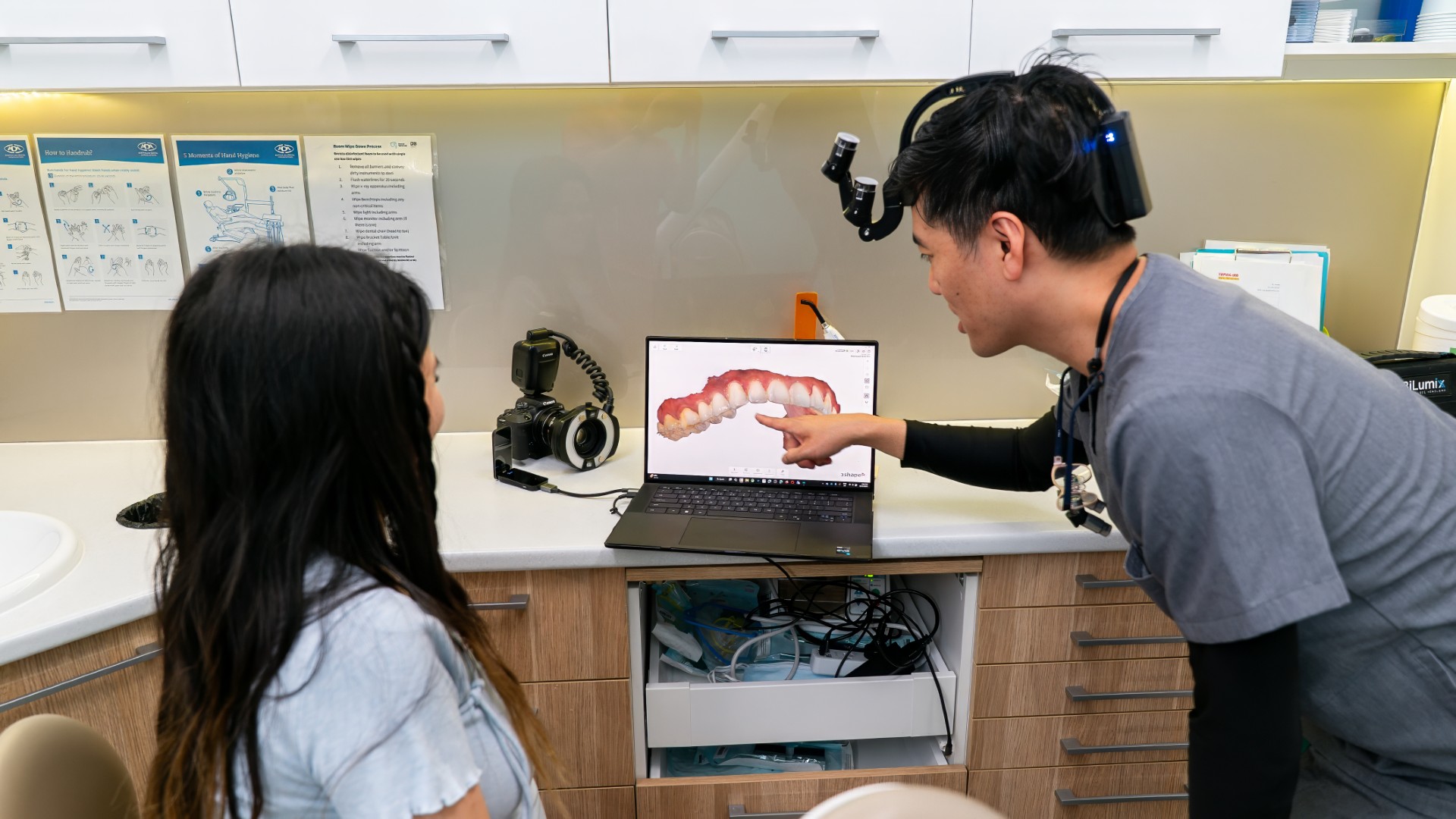
Instead of a tray of impression putty, a small handheld scanner records the prepared tooth, its neighbours and your bite in 3D. Many people find this more comfortable, particularly if they gag easily. Software is then used to design the crown on screen, and a milling unit cuts it from a solid block of ceramic while you wait. The dentist tries it in, checks how it meets the opposing teeth, polishes or glazes it, and bonds it in place. The visit is noticeably longer than a normal appointment, but it is one visit rather than two.

Typical market cost of a crown
As a typical Australian market range, a single crown costs about $1,500 to $2,500. Same-day crowns generally sit within that same range, because the fee reflects the clinical work and materials more than the speed. These are general market figures, not Lumi fees.
Several things push a fee towards the higher or lower end: the tooth involved, the type of ceramic, whether the tooth needs a core build-up first, and whether other treatment such as a root canal is needed. Crowns are listed under item numbers in the 600 range of the ADA schedule, and asking for the item numbers on your quote lets you check your rebate with your health fund before you go ahead.
Crowns usually fall under major dental cover. Major dental waiting periods are commonly 12 months, but each fund sets its own, so check with yours. Medicare does not cover routine crowns for most adults. Our dental crown cost guide goes into the different crown materials and their price ranges in more detail.
Comparing the two ways of making a crown
| Same-day (chairside) crown | Laboratory-made crown | |
|---|---|---|
| Visits | Usually one longer visit | Usually two, with a gap of a couple of weeks |
| Recording the tooth | Digital scan | Digital scan or putty impression |
| Temporary crown | Not usually needed | Worn between visits |
| Material | Milled from a single ceramic block | Wider range, including layered ceramic, porcelain fused to metal and gold |
| Colour detail | Shaded and glazed in the practice | A technician can layer porcelain by hand for subtle effects |
| Typical market cost | $1,500 to $2,500 | $1,500 to $2,500 |
The main trade-off is appearance on front teeth. A crown milled from one block can look very natural, particularly on back teeth, but a skilled technician layering porcelain by hand can sometimes reproduce the translucency and colour changes of a front tooth more closely. If you are replacing a front tooth that sits next to natural teeth, your dentist may suggest a lab-made crown for that reason. Our guide to inlays, onlays, crowns and fillings also explains when a smaller restoration might be enough instead of a full crown.
How long chairside crowns last
Long-term data on chairside crowns comes mostly from small studies, so it is sensible to treat any single number with some caution. In one prospective study, Rauch and colleagues (Clinical Oral Investigations, 2018) followed chairside-made lithium disilicate crowns on back teeth for about ten years and reported a survival rate of 83.5%, with all of the failures and complications occurring on molars. The authors considered the results satisfactory for long-term use on back teeth.
For any crown, how long it lasts depends heavily on the tooth underneath, your bite, gum health and day-to-day care. Clenching or grinding puts extra load on crowns, particularly ceramic ones, and a night guard may be recommended if you grind. Decay can still start at the edge of a crown, so brushing and cleaning between the teeth matter as much as ever.
Teeth that suit a same-day crown
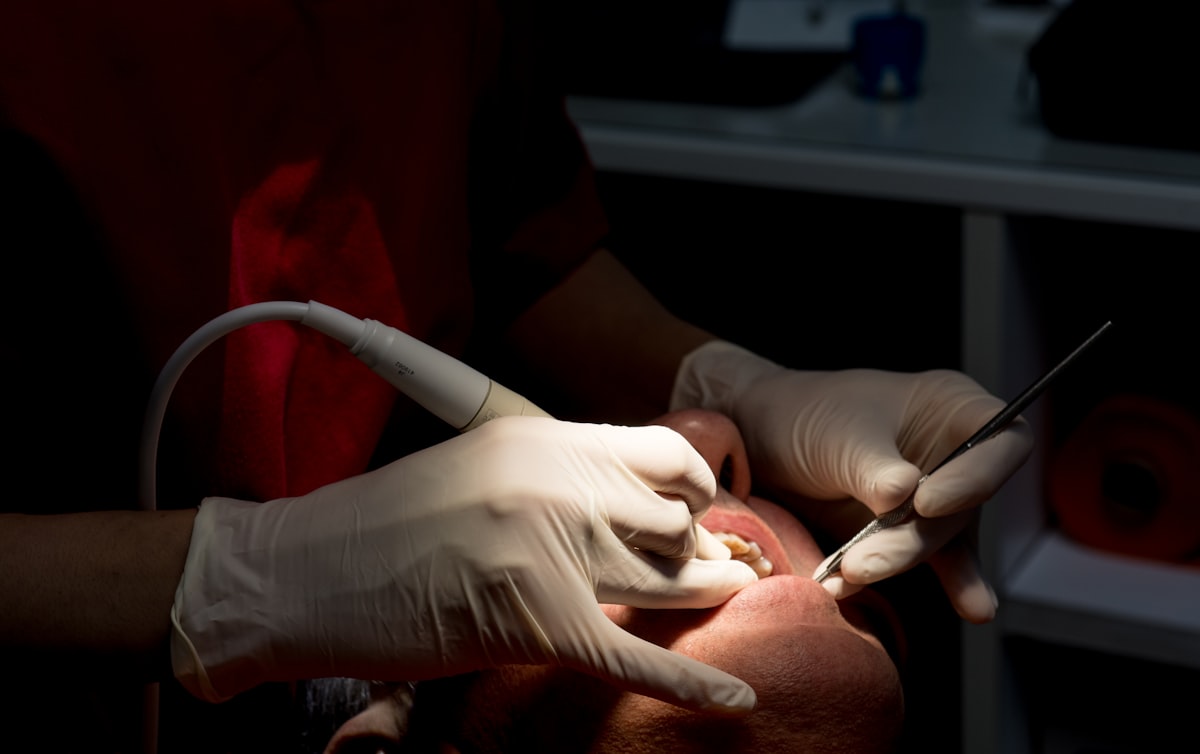
Same-day crowns tend to work well for a single back tooth that is cracked, has a large filling that keeps breaking, or has had root canal treatment and needs protection. People who travel for work, find it hard to take time off, or dislike temporary crowns often appreciate having it done in one visit.
A conventional lab-made crown may be the better choice when:
- the gums around the tooth need treatment first, or the edge of the preparation sits well below the gum line
- several front teeth are being crowned and need to match each other closely
- the bite is complex or the tooth needs a metal or gold crown for strength
- the tooth first needs a core build-up or root canal treatment
An examination and X-rays are what decide which approach makes sense for a particular tooth.
After the crown is fitted
Some sensitivity for a few days is common as the tooth settles, and the gum around it may feel tender where it was handled. You can usually eat once the numbness wears off, but it is sensible to chew carefully on that side for the first day. If your bite feels high, or the tooth aches more over time rather than less, contact your dentist so it can be checked and adjusted.
Questions about same-day crowns
Will a same-day crown look like my other teeth?
It is made from tooth-coloured ceramic and can be shaded to blend in. Results on back teeth are usually very natural. For a highly visible front tooth, a hand-layered lab crown may match more closely.
Is a same-day crown cheaper?
Not usually. In the Australian market, same-day and lab-made crowns generally fall in the same typical range of about $1,500 to $2,500 per tooth.
Does it hurt?
The tooth is numbed, so the procedure itself is usually comfortable. Mild sensitivity for a few days afterwards is common and generally settles on its own.
Can every tooth have a same-day crown?
No. Teeth that need gum treatment first, some front-tooth cosmetic cases and teeth with complex bite problems may be better suited to a lab-made crown.
Talking through your options
At Lumi Dental we use a 3D intraoral scanner to record teeth digitally and have an in-house lab, and we can explain which type of crown suits your tooth and why. If you have a cracked, worn or heavily filled tooth, you can book a consultation at our Melrose Park practice through our new patient offer.