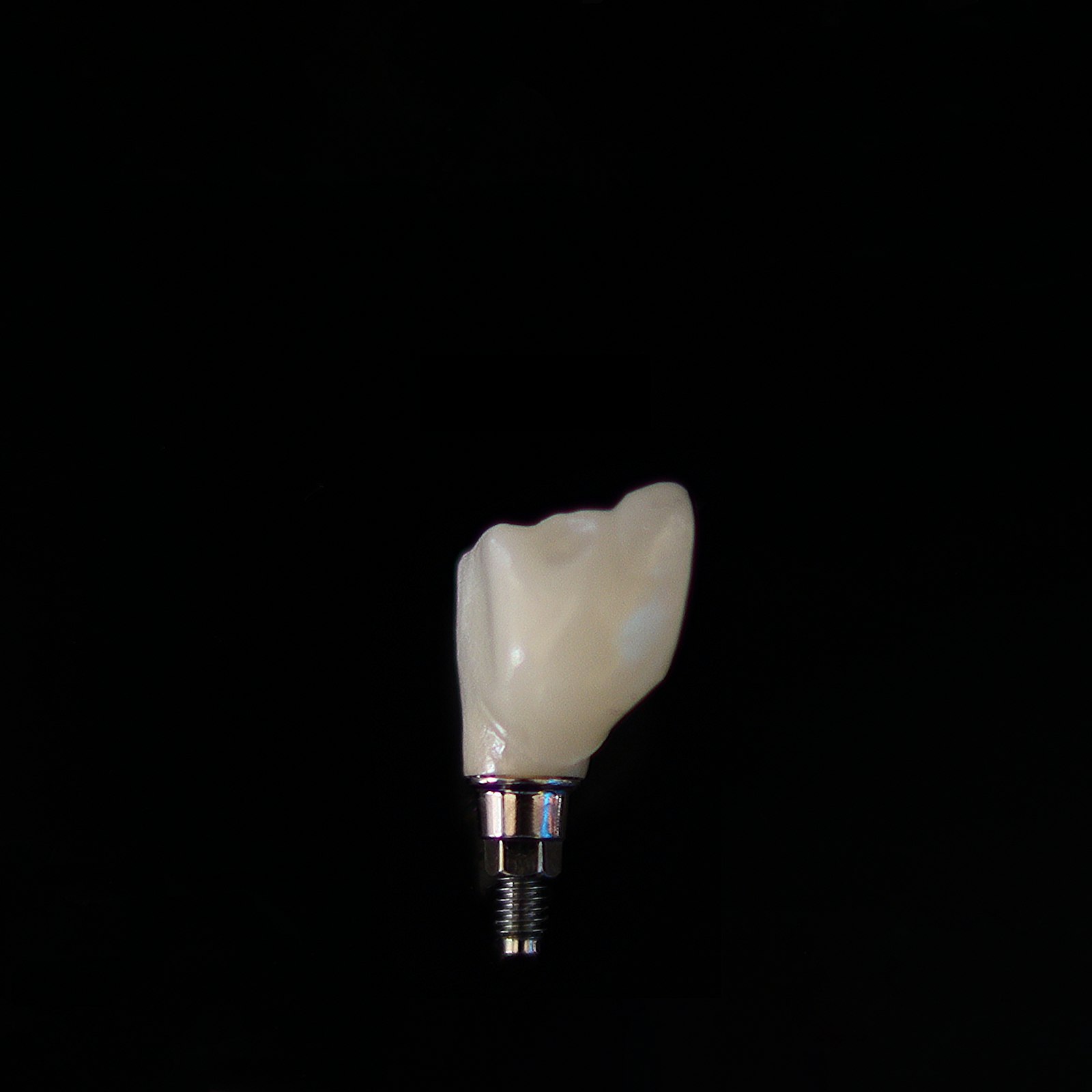

The tooth you leave with on the day of a same-day implant is almost always a temporary. It is fixed in place and looks like a tooth, but it is shaped to avoid heavy chewing while the implant heals, and the final crown or bridge comes a few months later. What "same day" really saves you is the time spent with a gap or a removable plate.
The decision to fit a tooth on the day of surgery is made in the chair, not in advance. Here is what that decision depends on, who it tends to suit, and how it plays out for a single tooth compared with a full arch.
A tooth can only go on if the implant is firmly held
As an implant is placed, the dentist can feel and measure how tightly it is gripped by the bone. This is called primary stability. An implant that is held firmly can usually support a light temporary tooth straight away. One that is not held firmly enough could move slightly under load, and small movements during healing can stop the bone from growing onto its surface.
That is why a plan for a same-day tooth always comes with a fallback. If the implant is not stable enough on the day, the dentist may place it, cover it and let it heal before anything is attached. That is a sensible call, not a failure, and it gives the implant its best chance.
How same-day implants compare with waiting
With the conventional approach, the implant heals undisturbed for a few months and the crown is fitted afterwards. With immediate loading, a temporary is attached within a week of surgery, often on the same day. The end result can be the same; the path and the requirements differ.
| Immediate loading | Conventional loading | |
|---|---|---|
| Fixed tooth | On the day or within a week | After a few months of healing |
| Stability needed at surgery | High | Less critical |
| Bone and gum conditions | Firm bone, no active infection | Suits a wider range of cases |
| What you wear while healing | A fixed temporary | Nothing, a removable tooth or a bonded temporary |
For single implants, the research is encouraging. A 2026 meta-analysis in the Journal of Prosthetic Dentistry (Pachiou and colleagues) pooled 40 randomised trials covering more than 1,200 single implants and found no meaningful difference in implant survival between immediate and conventional loading at one, two, three or five years, with moderate certainty. The authors were careful to add that this applies when immediate loading is used in suitable clinical conditions, which is the whole point of patient selection.
Full-arch treatment is where same-day teeth are most common
When a whole jaw of teeth is being replaced, four or more implants are joined together by one fixed bridge. Splinting the implants spreads the biting force across all of them, which is a big part of why a fixed provisional bridge is so often fitted on the day of surgery or shortly after. This approach is often called All-on-X, and the costs and planning are covered in our guide to full-arch implant costs.
The provisional bridge is usually made from an acrylic or similar resin, which is lighter than the final bridge and easy to adjust while the gums settle. You eat soft food in the early weeks, and the final bridge is made once healing is complete.
Who suits same-day loading
People who do well with immediate loading usually have enough dense bone where the implant is going, healthy gums with no active infection, and no heavy grinding or clenching. Smoking raises the risk of implant problems in general, and many dentists are more cautious about attaching a tooth straight away in people who smoke. Poorly controlled diabetes and recent infection at the site also weigh in favour of waiting.
Grinding is worth raising at your consult, as night-time forces can overload a healing implant; our article on teeth grinding explains the signs. If there is not enough bone, a graft or sinus lift may be needed first, which changes the timeline. Our guide to bone grafts and sinus lifts covers when those are used.
A 3D X-ray before surgery shows bone height, width and nearby structures, so the dentist can tell you at the planning stage whether a same-day tooth is realistic, and what the backup plan is if stability on the day is lower than hoped.
Looking after a same-day tooth while it heals
The first weeks matter most. Your dentist will give you instructions for your own case, and they usually include:
- soft food only, and no biting into firm food with the new tooth
- gentle but thorough cleaning around the temporary, using the method you are shown
- not smoking, ideally for good
- keeping review appointments so the bite on the temporary can be checked
Once the implant has integrated, the final crown or bridge is made to fit. After that, daily cleaning and regular checks keep it healthy; our guide to implant aftercare covers the long term.
What it may cost
As a typical Australian market range, a single implant with its crown costs about $4,000 to $7,000, and same-day loading may add the cost of a temporary. Full-arch treatment depends on the number of implants, bridge material and any grafting, so a written, itemised quote after an examination is the only reliable figure. These are general market figures, not Lumi fees. Our comparison of implants, bridges and dentures can help you weigh up the options.
What patients ask about same-day implants
Is the procedure painful?
The surgery is done under local anaesthetic, and many people find the recovery easier than they expected, managing with over-the-counter pain relief. If you are nervous, Lumi offers happy gas, inhaled pain relief, oral sedation and IV sedation for implant surgery. Our article on dental anxiety has more on how we help anxious patients.
Can I have a same-day implant if I smoke?
Smoking lowers the success of implants, and many dentists prefer not to attach a tooth immediately in people who smoke. Your dentist may suggest the staged approach, or stopping before surgery. Our article on smoking and oral health explains why.
What if the implant does not take?
If an implant fails to integrate, it is removed and the site is left to heal. A new implant can often be placed later. Careful selection and following the healing instructions make this less likely.
To find out if a same-day tooth suits you, start with a consult at our Melrose Park practice. You can read more about dental implants at Lumi and full-arch implants at Lumi, contact the team, or see what is on the current deals page.