
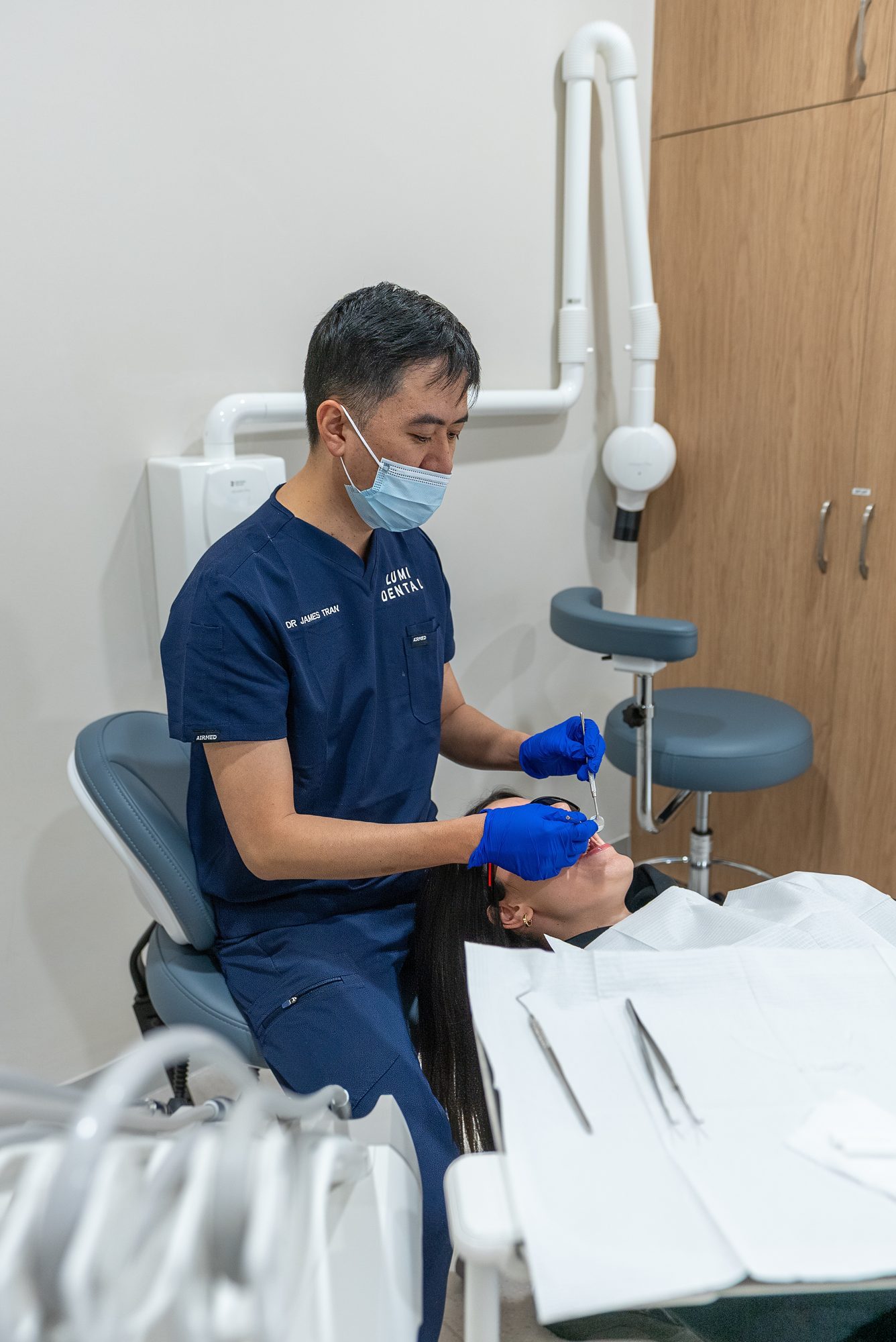

If you rely on one denture to eat, speak and leave the house, a spare denture is worth discussing with your dentist before a long trip, and before the one you wear gets old. A spare is often made as a copy denture, a duplicate of a denture that already works for you, so it feels familiar from the first day. A published review of duplicate dentures notes that they can be used as spares and are useful when a denture is lost through an accident.
Written by Dr James Tran, BDent (University of Sydney), MICOI, GradDip (Oral Implants), general dentist at Lumi Dental in Melrose Park.
The short version
- A copy denture reproduces the shape of a denture you already like, which can make it easier to switch to than a new design.
- A spare suits long trips, public-facing work and older dentures.
- A copy also reproduces any looseness in the original unless the fit is recorded again, so it may need a reline.
- Pack your denture in a hard case in your carry-on bag, never wrapped in a napkin or in checked luggage.
- If a denture cracks while you are away, keep every piece and avoid glue. Our guide to what to do with a broken denture explains why.
The single rule: if one denture does everything, ask about a spare
Most people who wear a denture own exactly one, which works until it cracks the night before a wedding or slips off a hotel basin overseas. If your denture is the only thing between you and eating normally, speaking clearly and feeling comfortable in public, plan a spare before you need it rather than after.
Timing matters: a denture is easiest to copy while it is whole and still fits well.
What a copy denture is
A copy denture, also called a duplicate or replica denture, is a second denture made to match the shape of one you already wear. The tooth positions, bite and outer shape are reproduced. A case report on a three-visit duplicate technique notes that duplicate dentures were first made to be used as spares, and that the method suits a person who is happy with an existing denture but needs a backup in case it is broken, lost or away for repair.
Why the familiar shape helps
Your tongue, lips and cheeks learn the shape of a denture over months, and a new design has to be learned again. The review notes that older people may find it hard to adjust to a new denture even when its shape is appropriate, and a duplicate that reproduces the shape they are used to tends to feel more familiar and less stressful. In my experience this is the main reason long-term denture wearers ask for a copy rather than a fresh design.
How a copy is made
In the traditional method, the existing denture is set in a mould so the lab can pour a replica, usually over a few visits. Where the fit needs refreshing, the dentist takes a thin wash impression inside the existing denture so the copy fits the gums as they are now. Digital methods scan the denture and mill or 3D print the copy. The review reports that digital methods compare well with conventional methods on working time and cost, and that the denture shape can be saved as data, so a lost denture can be duplicated more easily later.
The limits of a copy
A copy reproduces the good and the bad. If the original rocks, is worn flat or has slipped as the gums shrank, a straight copy will do the same. The review also notes that only a few studies have tested the clinical effectiveness of duplicate dentures, so the evidence is mostly technique papers and case reports. For partial dentures, clasps and metal frameworks add complexity, so a second partial is often made as its own denture. If your current denture is loose, our article on relines versus new dentures covers whether to reline first.
When a spare denture makes sense
A spare is not essential for everyone. Patients I see most often find one useful in these situations:
- Long or remote travel. Weeks overseas, cruises and places with limited dental care.
- Work that depends on your smile or speech. Teaching, sales and public speaking.
- An older denture. A copy made while it is still sound protects you if it fails.
- A history of breakage. Lower dentures, thin areas and dentures that have already been repaired.
- Reduced dexterity or memory. A dropped or misplaced denture is more likely.
What to pack when travelling with dentures
Keep everything for your denture in one small pouch inside your carry-on bag.
| Item to pack | Why | Tip |
|---|---|---|
| Hard denture case | Protects the denture from being crushed or thrown away | Never wrap a denture in a tissue or napkin at a restaurant |
| Spare denture, in its own case | A backup if the main one breaks or is lost | Pack it in a different bag from the one you wear |
| Soft denture brush | Daily cleaning without scratching | Clean over a basin with some water in it or over a towel |
| Denture cleaning tablets | Overnight cleaning away from home | Solid tablets are easy to carry; follow the packet directions |
| Denture adhesive | Extra hold if the fit changes or you are eating unfamiliar food | Keep a travel-size tube in your carry-on for international flights |
The Better Health Channel advises cleaning dentures in the morning and at night with a denture brush and mild soap or a denture cleaning solution, and notes that toothpaste is not recommended because it can scratch. It also warns never to use hot water, because it can change the shape and fit of a denture. Hotel taps can run very hot. Our guide to denture cleaning tablets, soaks and brushing covers the routine in more detail.
Flying, airport security and time zones
You can wear your dentures on a plane. Denture adhesive is the item most likely to be stopped at screening. Sydney Airport's security information says that if you are heading overseas you can only take 100 mL of liquid through security, and that international flights restrict liquids, aerosols, gels and some powders. Domestic flights within Australia are not subject to these limits for carry-on bags, except when departing from the international terminal. An adhesive cream is likely to be treated as a gel, so keep a tube within the limit in your carry-on and pack larger tubes in checked luggage. Check your airline before you fly, since transit airports overseas can apply their own screening.
Better Health advises taking dentures out at night to rest the mouth and help prevent fungal infection. If you are unsure what to do on an overnight flight, our article on whether to sleep with dentures in covers the reasons.
If a denture breaks or goes missing away from home
A crack or a broken tooth
Keep every piece in its case. Do not use superglue or a home repair kit. Household glues are not made for use in the mouth, and a repair that sets the pieces slightly out of line changes the bite and makes a proper lab repair harder. If you have a spare, wear it and bring the broken denture home for repair.
Finding help in another place
Look for a local dentist or dental prosthetist, who can often repair an acrylic denture quickly. Keep the receipts. Travel insurance policies differ in what dental treatment they cover, and some exclude dentures. Read our article on travel insurance and dental treatment before you leave, and check your own policy wording.
Sore spots on holiday
Unfamiliar food can bring on a sore spot. Keep the denture clean and leave it out for a time if you can; Better Health lists ulcers lasting more than two weeks among the reasons to see a dental practitioner.
How we approach this at Lumi Dental
Lumi Dental makes dentures and denture relines, and the dentist checks the fit, your gums and any remaining teeth before suggesting a spare. If your current denture fits and you like it, a copy may suit. If it is loose or worn, the team usually suggests fixing the fit first. The practice uses 3D intraoral scanning for records. Fees are set out in a written quote after the examination. Read more about general dental care at Lumi Dental.
For people tired of a loose lower denture, implants can also be discussed. In my experience that conversation often starts with the travel question.
Questions patients ask
Can I get a spare set of dentures made?
Yes, a spare can usually be made, either as a copy of a denture you already wear or alongside a new denture. A copy suits people who are happy with the shape and fit of their current denture.
Is a copy denture the same as a new denture?
Not quite. A copy keeps the shape you are used to, while a new denture may change tooth positions, the bite or the outline. Both may need small adjustments after fitting.
Can I take denture adhesive in my hand luggage?
On flights within Australia carry-on liquids and gels are not restricted, except from the international terminal. On international flights, keep each tube within the 100 mL limit for liquids and gels, and check your airline and any transit airport before you fly.
What should I do if my denture breaks on holiday?
Keep the pieces, avoid glue, and find a local dentist or dental prosthetist. Our guide to dental emergencies while travelling overseas explains how to find care abroad.
Do implant-retained dentures need a spare too?
They can be lost or damaged like any denture, so the same thinking applies. Ask your dentist what to pack for your attachments, because each system has its own parts.
Planning a replacement tooth? Complimentary implant consult in Melrose Park
If you are planning a trip, a spare denture or a more secure option such as implants, the team at Lumi Dental in Melrose Park can check your current denture and talk through what suits you. Contact Lumi Dental to book, or read about dental implants at Lumi Dental if you would like a complimentary implant consult. Patients visit from Ryde, Parramatta, Ermington and Rydalmere, with on-site parking at Melrose Central.
Sources
- Japanese Dental Science Review: Clinical use of duplicate complete dentures, a narrative review
- Cureus: Three-appointment technique to fabricate duplicate denture from patient's existing denture
- Better Health Channel: Dentures
- Sydney Airport: Security screening
About the author

Dr James Tran is a general dentist at Lumi Dental in Melrose Park. He holds a BDent from the University of Sydney and a Graduate Diploma in Oral Implants, and is a Member of the International Congress of Oral Implantologists (MICOI).
This article is general information only and is not a substitute for an examination and individual advice from a registered dental practitioner. Suitability for any treatment varies from person to person.








