


Teeth whitening for smokers usually works, but the result is far more even when the tar and nicotine film is cleaned off first and the gums are checked. Most smoking stain sits on the surface of the enamel, so a good scale and polish often removes more colour than people expect. The Australian Dental Association notes that the nicotine and tar in tobacco smoke stain teeth, and that surface stain may need a professional clean to shift. Whitening then lightens what is left.
Written by Dr James Tran, general dentist at Lumi Dental, Melrose Park. BDent (University of Sydney), Graduate Diploma in Oral Implants.
This is written for people who smoke, people who vape and people who have stopped. Nobody at the chair is going to lecture you. The aim is to explain what we see, what tends to work, and what to expect afterwards.
The short version
- Tobacco stain is mostly on the surface, so a scale and clean comes before any whitening gel.
- Smoking can hide gum disease, so the gums get checked first. More on that in the article on smoking and oral health.
- Whitening lightens natural enamel. It does not change crowns, veneers or fillings.
- If you keep smoking or vaping, new stain comes back sooner, so maintenance matters more than the strength of the first treatment.
- Vaping produces no tar, but dry mouth and sweet liquids still affect teeth and gums.
Where the colour comes from
Tar is dark and sticky. Nicotine has no colour of its own, but it turns yellow-brown once it reacts with oxygen. Between them they coat the enamel and settle into the tiny pits and grooves on its surface.
When I look at a smoker's teeth under the light, the pattern is usually predictable. The darkest band sits along the gum line and on the tongue side of the lower front teeth, where tartar builds up fastest and the brush reaches least. The biting edges are often lighter.
Dentists sort stain into two kinds. Extrinsic stain is on the outer surface. Intrinsic stain is inside the tooth. Tobacco starts as extrinsic, but after many years some pigment can work its way deeper, and that part responds more slowly. The article on intrinsic and extrinsic tooth staining goes through the difference.
Why the clean comes first
Whitening gel needs to touch enamel. If there is a layer of tartar or heavy stain in the way, the gel works unevenly and you can end up with lighter patches next to darker ones.
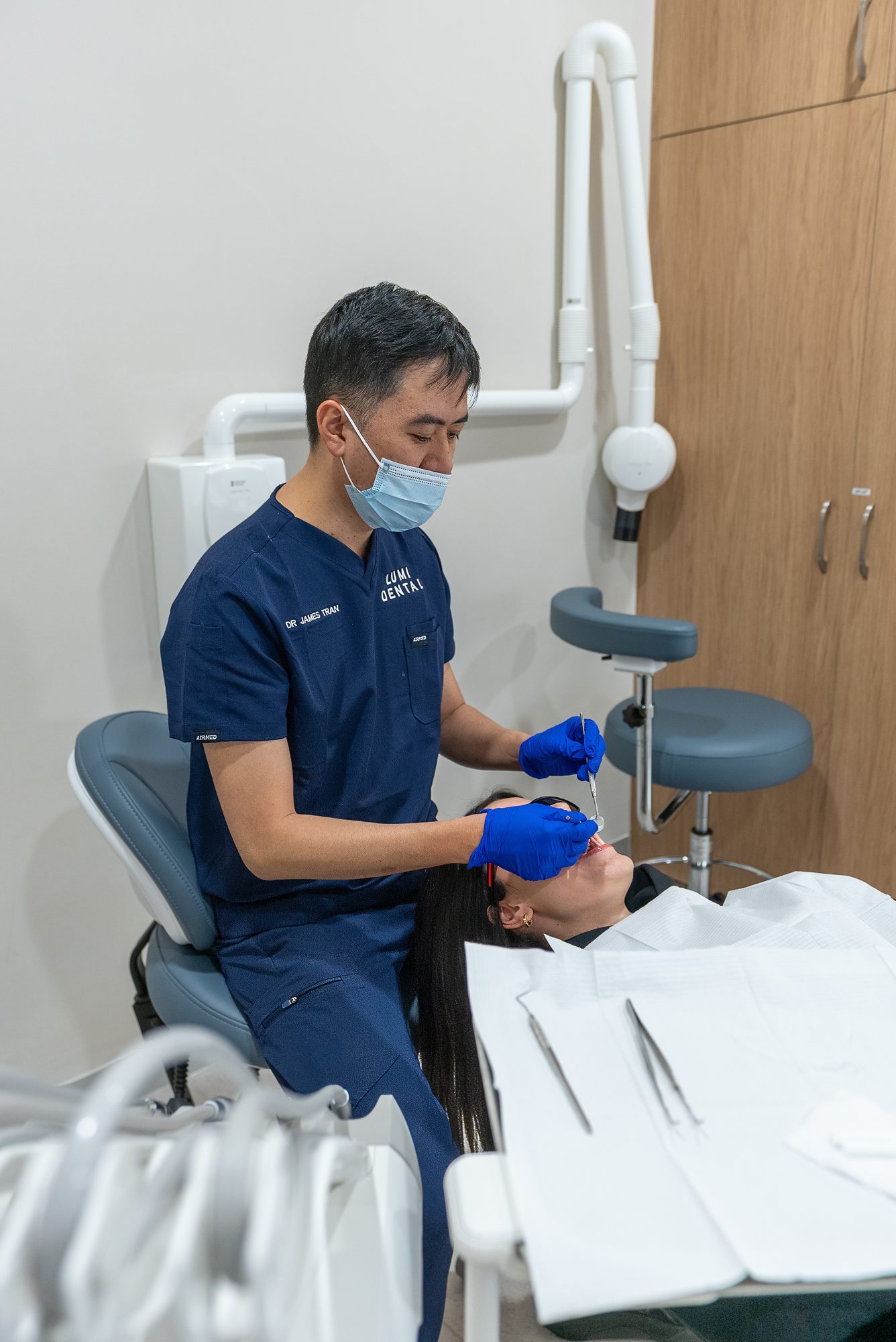
A scale and clean takes the tartar off with an ultrasonic scaler and hand instruments, then the teeth are polished. You will hear a high-pitched hum and feel some vibration and water spray. If the gums are tender, numbing gel or local anaesthetic can be used. For some patients the clean alone lightens the teeth enough that they decide to wait on whitening.
It also lets us see the true starting shade, which is the only fair way to talk about what whitening may achieve. You can read what the visit involves in what to expect from a scale and clean.
Your gums may look healthier than they are
Bleeding when you brush is one of the early warning signs of gum disease. Smoking reduces blood flow to the gums, so that warning often goes quiet. The ADA points out that smokers have less blood supply to their gums, which makes early gum disease harder to spot, and that smoking raises the risk of severe gum disease (periodontitis).
So I do not rely on how the gums look. We measure the small space between gum and tooth with a probe, take X-rays where needed, and check for any loose teeth. If there are deeper pockets, gum therapy comes before cosmetic work. Whitening gel on inflamed gums can sting, and the result looks better against healthy pink tissue anyway.
What whitening can change, and what it cannot
Whitening uses a peroxide gel to break down pigment in and on the enamel. On tobacco, tea and coffee stain it can lighten the overall shade. It cannot change the colour of crowns, veneers or tooth-coloured fillings, so a front filling that matched before may look darker afterwards. We point those out before you start.
Heavily stained teeth sometimes need a combination of an in-chair session and take-home trays, or a few more nights at home. Nobody can promise an exact shade. We record the starting shade with photographs so you can compare later.
Sensitivity
Smokers often have some gum recession, and exposed root surfaces can be sensitive. A lower-strength gel, shorter sessions or a desensitising paste in the week before usually keeps it manageable. Mention any sensitivity at the start rather than putting up with it.
| What you see | What is usually behind it | What tends to help |
|---|---|---|
| Dark band along the gum line | Tar and tartar built up where brushing is hardest | Scale and clean, then whitening if suitable |
| General yellow-brown shade | Nicotine stain on and just under the enamel surface | Whitening after the clean, with maintenance cleans |
| Rough, crusty deposits behind the lower front teeth | Calculus (tartar) that traps more stain | Scale and clean, gum therapy if the gums are inflamed |
| Sticky film with vaping | Sweetened liquids and a dry mouth feeding plaque | Water through the day, thorough brushing, regular check-ups |
| Grey or deep stain that does not shift | Pigment inside the tooth | Partial change with whitening, or bonding or veneers as a cosmetic option |
Vaping is different, not stain-free
Vapes do not produce tar, so the brown film is usually lighter. The Better Health Channel notes that additives in vaping liquids can still discolour teeth, and that the main problem is dry mouth, which increases the risk of decay.
Saliva is the mouth's own rinse. With less of it, plaque sticks more easily and sweet or flavoured liquids sit on the teeth for longer. Sipping water, choosing unsweetened liquids where you can and keeping up with check-ups all help. The article on vaping and oral health covers what is understood so far.

How long the result lasts
For most people, whitening lasts from several months to a couple of years. If you keep smoking or vaping, expect the shorter end, because new stain can start building within weeks. That does not make whitening pointless. It means the plan after whitening matters more than the first session.
- Regular cleans, so surface stain is polished off before it hardens into tartar.
- Occasional top-ups with take-home trays, as advised, rather than repeated strong treatments.
- A rinse with water after smoking or vaping, and gentle brushing with a soft brush.
- No hard scrubbing or harsh smokers' toothpastes, which can wear the surface.
The article on how long teeth whitening lasts covers typical timeframes and what shortens them.
How we approach this at Lumi Dental
A whitening visit starts with an examination, not the gel. Dr James Tran or one of our oral health therapists, Sabrina Tran and Jennifer Nguyen, checks the teeth and gums and takes X-rays if they are due. Our oral health therapists see patients for cleans, gum care and whitening, so the clean and the whitening plan are often handled by the same person.
We use a clinical photography area to record your starting shade and your progress, which takes the guesswork out of comparing before and after. Instruments are processed in a dedicated sterilisation room. Lumi Dental is mercury-free, so if old fillings need replacing for cosmetic reasons, tooth-coloured materials are used.
If an examination shows a problem that needs a registered specialist, we refer.

If you are thinking about cutting back
Any reduction helps your mouth. Quit lists a whiter smile for longer, better saliva flow, better healing after dental treatment and fresher breath among the benefits of stopping. The ADA notes that research has found the risk of periodontitis in people who quit becomes similar to people who have never smoked.
You do not have to quit before whitening. If you want help, your GP or the Quitline can support you, and we can plan cleans around whatever you decide.
Questions patients ask
Can smokers get their teeth whitened?
Yes, in most cases. The gums are checked first and a scale and clean is usually done beforehand so the gel works evenly.
Will whitening remove nicotine stains?
It often lightens them well. Surface nicotine and tar stain responds to cleaning and peroxide gel, while stain that has worked deeper may only lighten partly.
How long will whitening last if I keep smoking?
Usually months rather than years. Regular cleans and the occasional take-home top-up can stretch it out, and cutting back helps most.
Is whitening safe for my gums if I smoke?
It is generally safe once the gums are healthy. If there is gum disease, gum therapy comes first, because the gel can irritate inflamed tissue.
Does vaping stain teeth?
Less than smoking, as a rule, but some liquids can discolour teeth and the dry mouth that vaping causes raises the risk of decay. Regular check-ups still matter.
Book a whitening consult
The team at Lumi Dental at Melrose Central, Melrose Park, can examine your teeth and gums, tell you whether a clean should come first and talk through the whitening options that may suit you. Current whitening offers are on the current deals page, and you can read more about teeth whitening at Lumi Dental. You will get a written quote before you commit to anything.
Sources
- Australian Dental Association: Smoking
- Better Health Channel: Effects of smoking and vaping on oral health
- Quit: Smoking and the health of your mouth, teeth and gums
About the author

Dr James Tran is a general dentist at Lumi Dental in Melrose Park, Sydney, and is registered with the Dental Board of Australia. He holds a Bachelor of Dentistry from the University of Sydney and a Graduate Diploma in Oral Implants, is a Member of the International Congress of Oral Implantologists (MICOI), and is part of the General Dental Residency faculty. Read more about Dr James.
This article is general information and is not a substitute for advice from your own dentist after an examination. All dental treatment carries risks, and individual results vary.


