
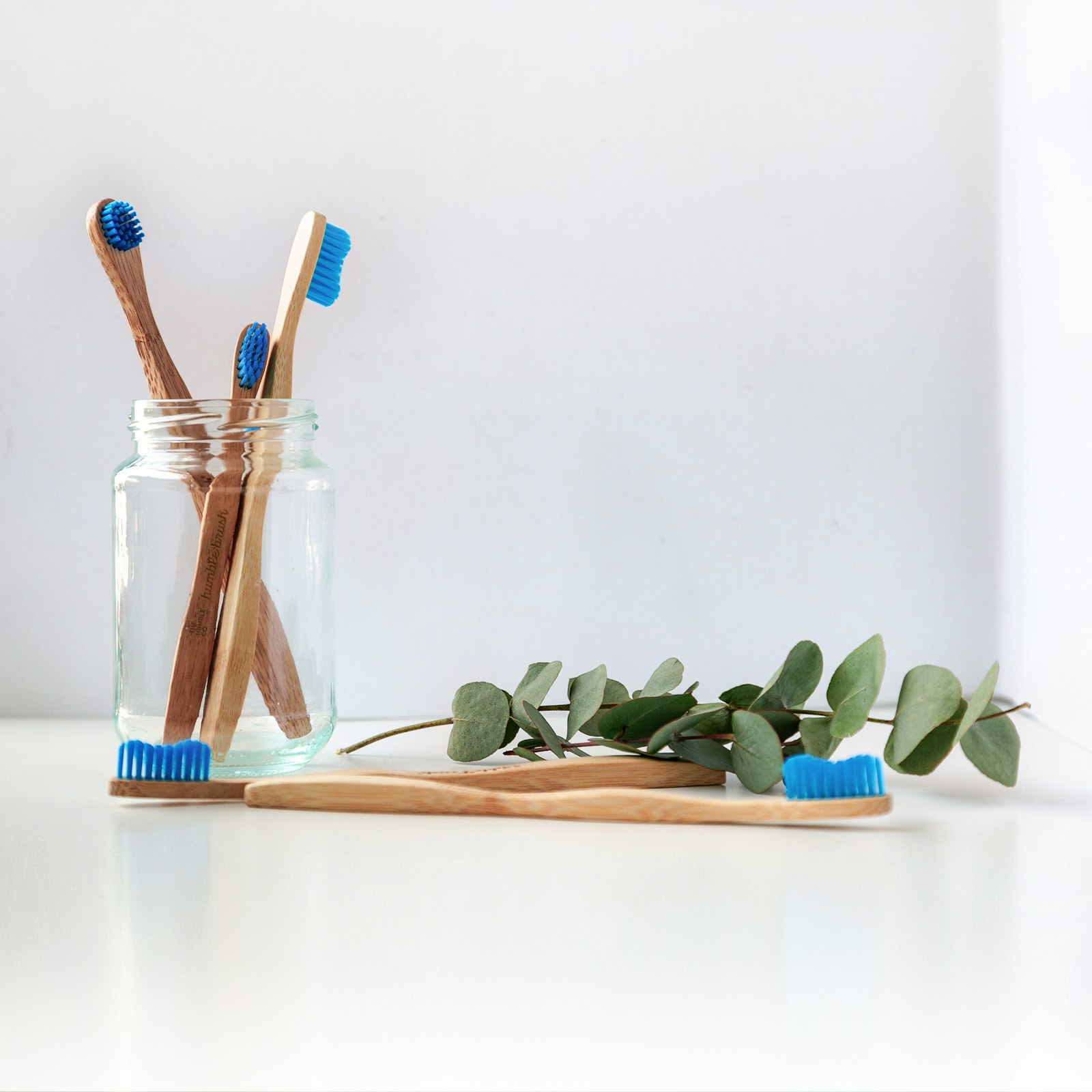

Tongue cleaning is the single most effective thing most people can add to their routine for bad breath, because the tongue is where the majority of the smell is actually produced. Roughly 85 to 90 percent of persistent bad breath originates inside the mouth rather than in the stomach, and within the mouth the top surface of the tongue is the main site. The bacteria living in that coating break down proteins and release volatile sulphur compounds, chiefly hydrogen sulphide and methyl mercaptan, which together account for up to about 90 percent of oral volatile sulphur compounds. If your gums are healthy and your breath is not, the tongue is the first place to look, not the mouthwash aisle.
Key takeaways
- Most intra-oral halitosis is produced by bacteria on the back two thirds of the tongue.
- Tongue coating is measurably thicker in people with bad breath than in people without.
- A Cochrane review found tongue scrapers reduced volatile sulphur compounds significantly more than a toothbrush, though the effect was short lived and the trials were very small.
- Treat tongue cleaning as reliable short-term control, not a cure for an underlying cause.
- Alcohol based mouthwash dries the mouth and can make breath worse over the course of a day.
Where bad breath actually comes from
The stomach theory is stubborn and almost always wrong. The oesophagus is a closed tube most of the time, and unless you are actively belching or refluxing, very little air travels from the stomach to the mouth. When surveys track down the source of persistent bad breath, they land in the mouth roughly 85 to 90 percent of the time. The remainder splits between ear, nose and throat causes such as chronic sinusitis and tonsil stones, reflux disease, and a small number of systemic conditions.
Within the mouth, three sources dominate: the tongue coating, active gum disease, and specific local problems like a failing filling, an infected tooth or food trapping between teeth. The tongue is the most common of the three and the easiest to fix.
Why the tongue, specifically
The top of the tongue is not a smooth surface. It is covered in papillae, which create an enormous number of tiny valleys and crevices. Those crevices are low in oxygen, which is exactly what anaerobic bacteria prefer, and they collect shed cells, food debris, mucus from the nose and proteins from saliva.
Those bacteria feed on the sulphur containing amino acids in that debris and release volatile sulphur compounds as waste. Hydrogen sulphide smells like rotten eggs. Methyl mercaptan is the more offensive of the two and smells closer to rotting cabbage. Together they make up the great majority of the odour.
The important detail is location. The front third of the tongue gets cleaned incidentally by the palate, food and drinking. The back two thirds does not, and that is where the thickest coating sits. A quick swipe across the tip achieves very little.
What actually works
Here is where the evidence needs to be presented honestly. A Cochrane review of tongue cleaning for halitosis found that tongue scrapers produced a statistically significant reduction in volatile sulphur compounds compared with a toothbrush. The effect was short term, and the review included only two trials with 40 participants in total. That is a small evidence base. What it supports is that scraping helps and that a dedicated scraper appears to beat a toothbrush. What it does not support is any claim that scraping cures halitosis or works for hours on end.
| Method | What the evidence shows | Rough cost in Australia | Best used for |
|---|---|---|---|
| Plastic or metal tongue scraper | Significant short term reduction in volatile sulphur compounds versus a toothbrush, from small trials | About $5 to $20, metal versions last years | Daily first line control, the best value item in the category |
| Toothbrush used on the tongue | Reduces coating but less effectively than a scraper, and more likely to trigger gagging | Already owned | Better than nothing if you have no scraper |
| Tongue gel or paste | Limited evidence of additional benefit over mechanical cleaning alone | About $10 to $25 per tube | Optional add-on if the coating is heavy and persistent |
| Zinc containing mouthwash | Zinc ions bind sulphur compounds and can reduce odour for a few hours | About $8 to $18 per bottle | Short term cover before an event, alongside scraping |
| Chlorhexidine mouthwash | Strong antibacterial effect, reduces odour, but causes staining and taste disturbance with prolonged use | About $10 to $20 per bottle | Short courses only, and only when a dentist recommends it |
| Sugar-free gum | Stimulates saliva flow, which clears debris and raises pH, with a modest and temporary effect on odour | About $3 to $6 per pack | Between meals and when the mouth feels dry |
What is conspicuously missing from that table is alcohol based mouthwash. It gives a strong sensation of freshness for perhaps twenty minutes, then leaves the mouth drier than it was. Since dry mouth is itself a major cause of bad breath, regular use can leave you worse off. Choose alcohol-free formulations if you use a rinse at all.
How to clean your tongue properly
The technique takes under a minute once you have done it a few times.
- Do it once a day, ideally in the morning, when the coating is thickest after a night of reduced saliva flow.
- Stick your tongue out and relax it. Tensing makes gagging more likely.
- Place the scraper as far back as is comfortable, not as far back as you can bear.
- Pull forward in one smooth stroke with light pressure. You are lifting a film off, not sanding a surface.
- Rinse the scraper under running water between strokes, otherwise you are redistributing what you just removed.
- Repeat four to six times, covering the middle and both sides.
Two warnings. Heavy pressure is counterproductive, since it can make the tongue sore and does not remove more coating than a light stroke. And do not aim to scrape the tongue pink and shiny, because a thin normal film is healthy tissue.
Working around the gag reflex
A strong gag reflex puts a lot of people off entirely, which is a shame because it is usually workable. Things that help: start further forward than you think you need and move back by a few millimetres each day over a week, breathe slowly out through your nose during the stroke, hum while you scrape, clench your left thumb inside your fist, or scrape before rather than after breakfast when the stomach is empty. Cold water on the scraper helps some people, warm helps others. If it still triggers you, a scraper with a lower profile head is worth trying.
When bad breath is not the tongue
If you scrape daily for two weeks and nothing improves, stop scraping harder and start looking elsewhere. The common alternatives are all identifiable at a dental appointment.
Gum disease
Periodontal pockets are anaerobic spaces holding bacteria that produce the same sulphur compounds, and often at higher concentration. Bleeding when brushing, gums that look puffy or have pulled back, or a persistent bad taste all point this way. Our guide to gum disease treatment covers what is involved in dealing with it.
Dry mouth
Less saliva means less clearance and more bacterial growth, so odour builds faster. Medicines are the usual culprit, along with mouth breathing, dehydration and some medical conditions. Our article on dry mouth causes and treatment explains how it is managed.
A failing filling or an infected tooth
An old restoration with a leaking margin, a cracked tooth or an abscess creates a sheltered space that harbours bacteria and traps food. This is often a one sided smell and taste, and it is usually obvious on examination and an x-ray.
Nose, sinus and tonsils
Chronic post-nasal drip feeds the tongue coating continuously. Tonsil stones, small calcified plugs in the tonsil crypts, produce a very distinctive odour and often go undiagnosed for years. A dentist can usually spot the pattern and refer appropriately.
What not to bother with
Oil pulling has a weak and inconsistent evidence base, as our review of whether oil pulling works sets out, and charcoal toothpaste carries a real abrasion trade off, discussed in our article on charcoal toothpaste safety. Neither removes the coating producing the smell.
The morning of something important
If you have an interview, a presentation or a first date, here is a practical sequence that works better than a handful of mints.
- Eat something. Skipping breakfast leaves the mouth dry and the coating undisturbed, and hunger breath is a real phenomenon.
- Brush, clean between the teeth, then scrape the tongue thoroughly.
- Rinse with an alcohol-free zinc containing mouthwash rather than a strong alcohol one.
- Drink water steadily in the hour beforehand and keep drinking through the event.
- Skip coffee immediately beforehand if you can, since it dries the mouth and lingers.
- Keep sugar-free gum on hand for the twenty minutes before, and take it out before you start talking.
When to see a dentist about it
Book an appointment if breath odour has persisted for more than two or three weeks despite good hygiene and daily tongue cleaning, if your gums bleed, if you have a persistent bad or metallic taste, if the smell seems to come from one specific area, or if a partner or family member has mentioned it more than once. Self assessment is genuinely unreliable, since you adapt to your own breath, so an outside opinion and a clinical examination are both worth having.
At the appointment expect a look at the tongue coating, gum measurements, a check of existing restorations and an x-ray if anything is suspicious. Our guide to the causes and treatment of halitosis covers the full diagnostic pathway.
Frequently asked questions
Should I use a tongue scraper or my toothbrush?
A dedicated scraper. The small amount of trial evidence available found scrapers reduced volatile sulphur compounds more than a toothbrush, and in practice a scraper covers more surface in fewer strokes and triggers gagging less. A toothbrush is better than doing nothing, but a metal or plastic scraper costs very little and lasts a long time.
How often should I clean my tongue?
Once daily is enough for most people, ideally in the morning when the coating is thickest. Twice daily is reasonable if you have a heavy coating, are a mouth breather or have persistent odour. More than that offers little extra benefit and increases the risk of soreness from over-scraping.
Why does my breath still smell after brushing?
Because brushing cleans about a quarter of the mouth's surfaces and leaves the tongue, which is where most odour is produced, largely untouched. It also does not reach into gum pockets or between the teeth. Adding daily tongue cleaning and interdental cleaning addresses the areas a brush cannot.
Is bad breath caused by my stomach?
Rarely. Around 85 to 90 percent of persistent bad breath comes from the mouth itself. The oesophagus stays closed most of the time, so stomach odours do not routinely reach the mouth. Reflux can contribute, but it is worth thoroughly excluding oral causes before assuming a gastric one.
Does mouthwash fix bad breath?
It masks it temporarily. Alcohol based rinses can make things worse over a day by drying the mouth, which encourages the bacteria responsible. Zinc containing and alcohol-free rinses give a few hours of genuine reduction. None of them replaces removing the coating and treating any gum problem underneath.
The bottom line
Bad breath is a mechanical problem far more often than a medical one. Removing the tongue coating daily with a scraper is the highest return two minutes you can add to your routine. It is short term control rather than a cure, so if it does not work within a fortnight the cause is elsewhere, most commonly gum disease, dry mouth or a failing restoration. The team at Lumi Dental in Melrose Park can check your gums and rule out an oral cause at a check-up and hygiene appointment, so have a look at our current offers or read about general dental care in Melrose Park. This article is general information and not a substitute for personal dental or medical advice.







