The one thing that decides whether veneers or Invisalign is right for crooked teeth: whether your teeth actually need to move, or just need to look different. Veneers change the colour, shape and apparent alignment of teeth by covering the front surface, but they do not move teeth or fix an underlying bite. Clear aligners like Invisalign actually move teeth into better positions and can also improve how the bite meets.
Key Takeaways
- Veneers cover the front of the tooth to change its look, but they do not move teeth or correct bite issues.
- Clear aligners genuinely move teeth and can improve alignment and bite over time.
- For noticeably crooked, crowded or rotated teeth, clear aligners are usually the right first step.
- Veneers over significantly misaligned teeth require removing more natural tooth structure, which is a less conservative approach.
- Many comprehensive smile makeovers use both, aligners first to move teeth, then veneers or bonding to refine shape and colour.
- Veneers are typically priced per tooth, while aligner treatment is usually a whole-course fee.
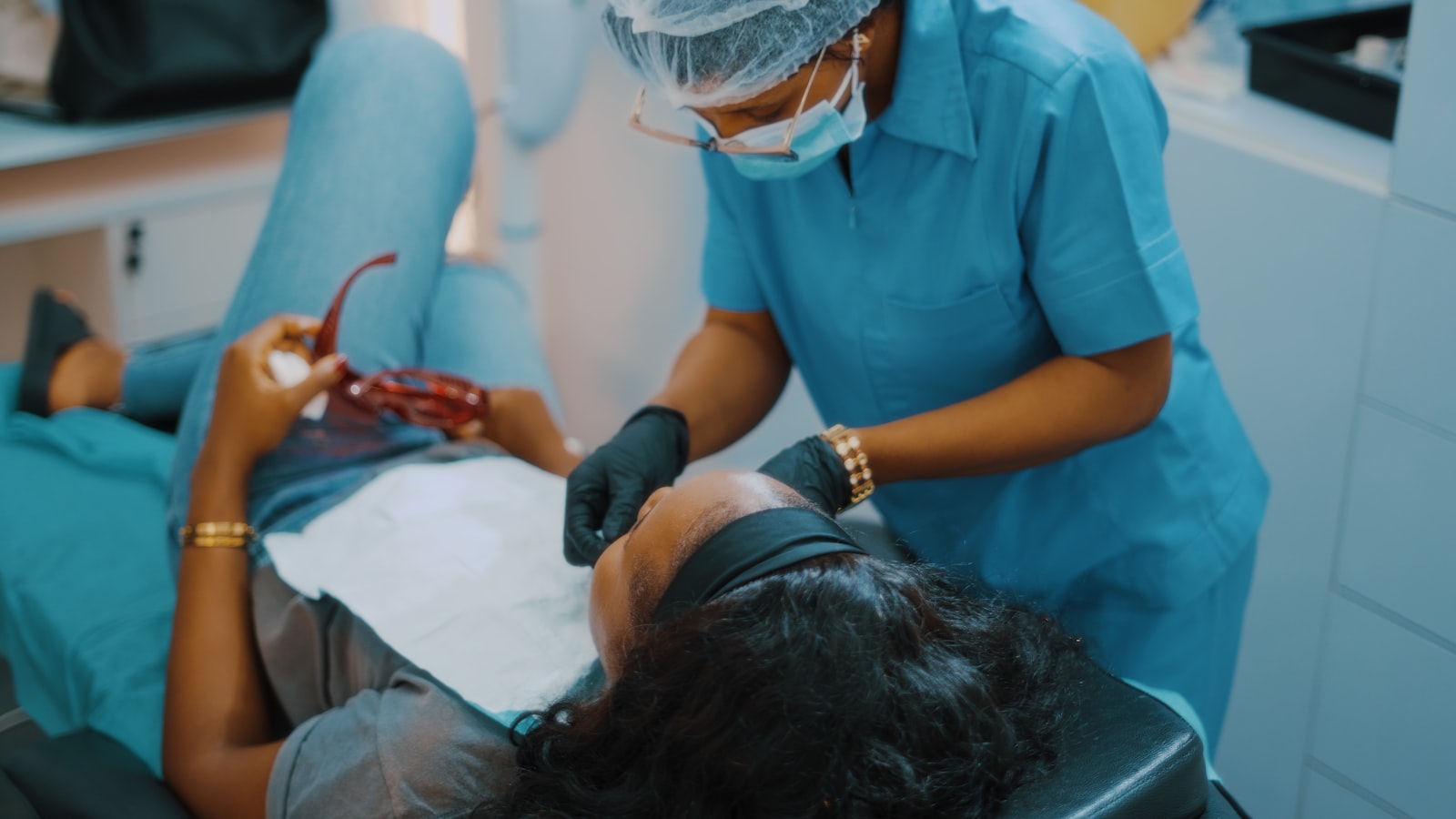
What veneers actually do
A veneer is a thin shell, usually porcelain or composite, bonded to the front surface of a tooth. Veneers are excellent at changing colour, shape, length and the apparent evenness of a smile, because they reshape what you see from the front. What they do not do is move the tooth itself. A tooth that is rotated, tilted, or sitting further back or forward than its neighbours will still be in that position underneath the veneer. For very mild, cosmetic-only misalignment, where the teeth are only slightly uneven and moving them is not really necessary, veneers can create the illusion of a straighter-looking smile without orthodontic treatment.
What clear aligners actually do
Clear aligners, including Invisalign and similar systems, apply gentle, controlled pressure over a series of custom trays to gradually move teeth into new positions. For genuinely crooked, crowded, rotated or gapped teeth, this addresses the actual position of the tooth, not just its appearance. Aligners can also improve how the upper and lower teeth meet, which veneers cannot do.
Why aligners are usually the better first step for crooked teeth
Covering a significantly misaligned tooth with a veneer to make it look straight generally requires removing more of the natural tooth structure underneath, so the shell can compensate visually for the misalignment. This is a less conservative approach than moving the tooth into a better position first, and it can compromise the long-term health of the tooth. For anything beyond very mild cosmetic unevenness, straightening with aligners before considering veneers is usually the more conservative and durable path.
Using both together
Many comprehensive smile makeovers actually combine the two in sequence. Aligners move the teeth into a good position first, addressing crowding, rotation or spacing. Once that is done, veneers or composite bonding are used afterward to refine shape, colour and any minor imperfections that aligners cannot address, such as tooth shade or slightly uneven edges. This combination often delivers a more conservative and longer-lasting result than veneers alone on crooked teeth.
Veneers vs Invisalign: side-by-side comparison
| Feature | Veneers | Clear aligners (e.g. Invisalign) |
|---|---|---|
| What it changes | Colour, shape, apparent alignment | Actual tooth position and bite |
| Best suited to | Colour, minor shape issues, very mild misalignment | Genuine crowding, rotation, gaps, bite issues |
| Tooth structure impact | Requires some enamel removal, more if correcting misalignment | No enamel removal |
| Typical cost basis | Priced per tooth, commonly around $900 to $2,500 per tooth | Whole-course fee, commonly around $3,500 to $9,000 depending on complexity |
| Typical longevity | Commonly around 10 to 15 or more years | Results typically permanent with consistent retainer wear |
| Insurance | Generally not covered, considered cosmetic | May attract some orthodontic extras cover depending on your policy |
Cost and longevity in more detail
A full course of clear aligner treatment is usually quoted as a single whole-treatment fee, commonly in the range of roughly $3,500 to $9,000 depending on how complex and lengthy the case is. Porcelain veneers are typically priced per tooth, commonly in the range of roughly $900 to $2,500 per tooth, so the total cost scales with how many teeth are treated. These are general Australian market ranges, and your own quote will depend on your specific case.
Porcelain veneers commonly last around 10 to 15 years or more before needing replacement, depending on how they are cared for. Aligner results are typically permanent, provided a retainer is worn consistently afterward, since teeth can gradually shift back without one. Veneers are generally not covered by health insurance, as they are considered a cosmetic treatment, while aligners may attract some orthodontic extras cover depending on your individual policy, so it is worth checking with your provider directly.
A simple way to decide
- If your teeth are genuinely crooked, crowded, rotated or gapped, start by discussing clear aligners.
- If your teeth are essentially well positioned but you want to change colour, shape or minor unevenness, veneers or composite bonding may be enough on their own.
- If you want both straighter teeth and a refined final look, ask about a combined plan using aligners first, then veneers or bonding.
For more detail on the difference between bonding and veneers specifically, see our guide to composite bonding vs veneers, and for more on straightening options generally, see crooked teeth: how to straighten them.
Frequently asked questions
Can veneers fix crooked teeth?
Veneers can create the appearance of straighter teeth for very mild misalignment, but they do not move teeth. For noticeably crooked or crowded teeth, clear aligners address the actual position and are usually the better first step.
Is it cheaper to get veneers or Invisalign?
It depends on how many teeth need treatment. Veneers are priced per tooth, commonly around $900 to $2,500 per tooth, while a full course of aligners is usually a single whole-treatment fee, commonly around $3,500 to $9,000. A smaller number of veneers may cost less than a full aligner course, but treating many teeth with veneers can add up to a similar or higher total.
Can I get veneers after Invisalign?
Yes, this is a common sequence. Aligners move the teeth into a good position first, and veneers or bonding are used afterward to refine shape and colour once the teeth are aligned.
Do veneers damage your teeth?
Veneers require some removal of enamel to fit properly, and more removal is generally needed if they are being used to visually correct misaligned teeth. This is one reason straightening first, where appropriate, is considered a more conservative approach.
How long does Invisalign take for crooked teeth?
For minor crowding, treatment often takes roughly 4 to 9 months. More complex tooth movement can take longer. Your dentist can give a more specific estimate after an assessment.
Work out the right path with a complimentary consult
Whether veneers, aligners, or a combination of both suits you best depends on your specific teeth and goals. The team at Lumi Dental offers a complimentary cosmetic consult to talk through your options honestly. If bonding might be part of your plan, see composite bonding Melrose Park. For a broader look at planning a full makeover, see our smile makeover timeline guide.