

A dental receptionist or practice manager is usually the first person you speak to when something goes wrong with your teeth, and they are trained to ask a lot of questions before telling you anything back, which can feel frustrating when you just want a straight answer. There is a good reason for that. Reception and practice management staff are not registered dental practitioners, so there are clear, sensible limits on what they can tell you over the phone, and understanding those limits actually explains why a good receptionist asks so many questions rather than guessing.
Key takeaways
- Reception and practice management staff are not registered with the Dental Board of Australia, so they cannot diagnose a problem or tell you how urgent a symptom is on their own judgement.
- They can discuss appointment logistics, general pricing ranges, practice policies and what to expect at a visit.
- They are trained to ask specific questions about pain, swelling, bleeding and trauma so they can pass an accurate picture to a clinician, rather than deciding themselves whether it can wait.
- A receptionist asking several questions on an urgent call is a sign the practice is triaging properly, not a brush-off.
- This is the natural admin-side companion to the clinical workforce scope series already on this site, covering dental assistants, oral health therapists and dental prosthetists.
Why reception staff have clear limits
Every registered dental practitioner in Australia, including dentists, oral health therapists, dental hygienists and dental prosthetists, is registered with AHPRA under the Dental Board of Australia and works within a legally defined scope of practice. Reception and practice management roles sit outside that system entirely. They are administrative and business roles, often held by people with excellent knowledge of how a practice runs and real experience recognising patterns in what patients describe, but without a clinical qualification or registration behind that experience.
This matters because diagnosis, in the legal and professional sense, is reserved for registered practitioners. A receptionist who tells a caller over the phone that their symptom is probably nothing or definitely needs an emergency appointment is making a clinical judgement they are not registered to make, even if their instinct happens to be right. Good practices train their front desk teams to avoid that kind of call entirely, and instead to gather information and escalate.
What reception staff can help you with
There is a wide range of genuinely useful things a receptionist or practice manager can tell you without needing a clinician involved at all.
- Appointment logistics, including availability, how long a visit is likely to take, and what to bring.
- General pricing ranges for common procedures, and how health fund claiming works at the practice.
- Practice policies, such as cancellation notice, payment options, and what happens if you are running late.
- What to expect at a particular type of appointment, in general terms, based on how the practice normally runs those visits.
- Whether a particular concern is the kind of thing typically seen by a dentist, an oral health therapist or another type of practitioner at the practice, as a scheduling question rather than a diagnosis.

What reception staff cannot do
They cannot diagnose a symptom, meaning they cannot tell you what is actually wrong with a tooth, gum or jaw based on your description over the phone. They cannot tell you with certainty whether a specific symptom is urgent or can safely wait, because that judgement depends on a clinical assessment, not a description read down the phone. They cannot give clinical advice, such as what medication to take, whether to apply heat or cold, or how to manage a symptom at home, beyond very general first-aid style information the practice has specifically trained them to pass on. And they cannot commit a dentist to a particular diagnosis or treatment plan before you have actually been seen.
Why this actually protects you
It is easy to hear all of this as an unhelpful list of things a receptionist will not do, but the pattern underneath it is protective. A symptom that sounds minor over the phone, described by someone without clinical training, can sometimes be more serious than it sounds, and the reverse is also true. Training reception staff to escalate rather than guess means fewer genuine problems get waved off with reassurance that was never clinically informed in the first place.
This is exactly why a receptionist taking an urgent call about pain, swelling, bleeding or trauma will usually ask several specific questions rather than simply booking the next available slot. Those questions are not idle curiosity. They are a structured way of getting enough information to a clinician quickly, so the right decision gets made by the right person.
Questions that mean the practice is triaging properly
- Where is the pain or swelling located, and how long has it been going on?
- Has there been an injury, a knocked-out or chipped tooth, or a blow to the face or jaw?
- Is there any swelling in the face or neck, and has it changed over the last few hours?
- Is there a fever, difficulty swallowing, or difficulty opening the mouth fully?
- Has this happened before, and what, if anything, has helped so far?
If a receptionist asks questions along these lines, it usually means the answers are being passed straight to a dentist or clinical staff member for a decision, often while you are still on the phone or shortly after. That is the system working as intended. Our dental emergency guide covers what happens once that call is escalated.
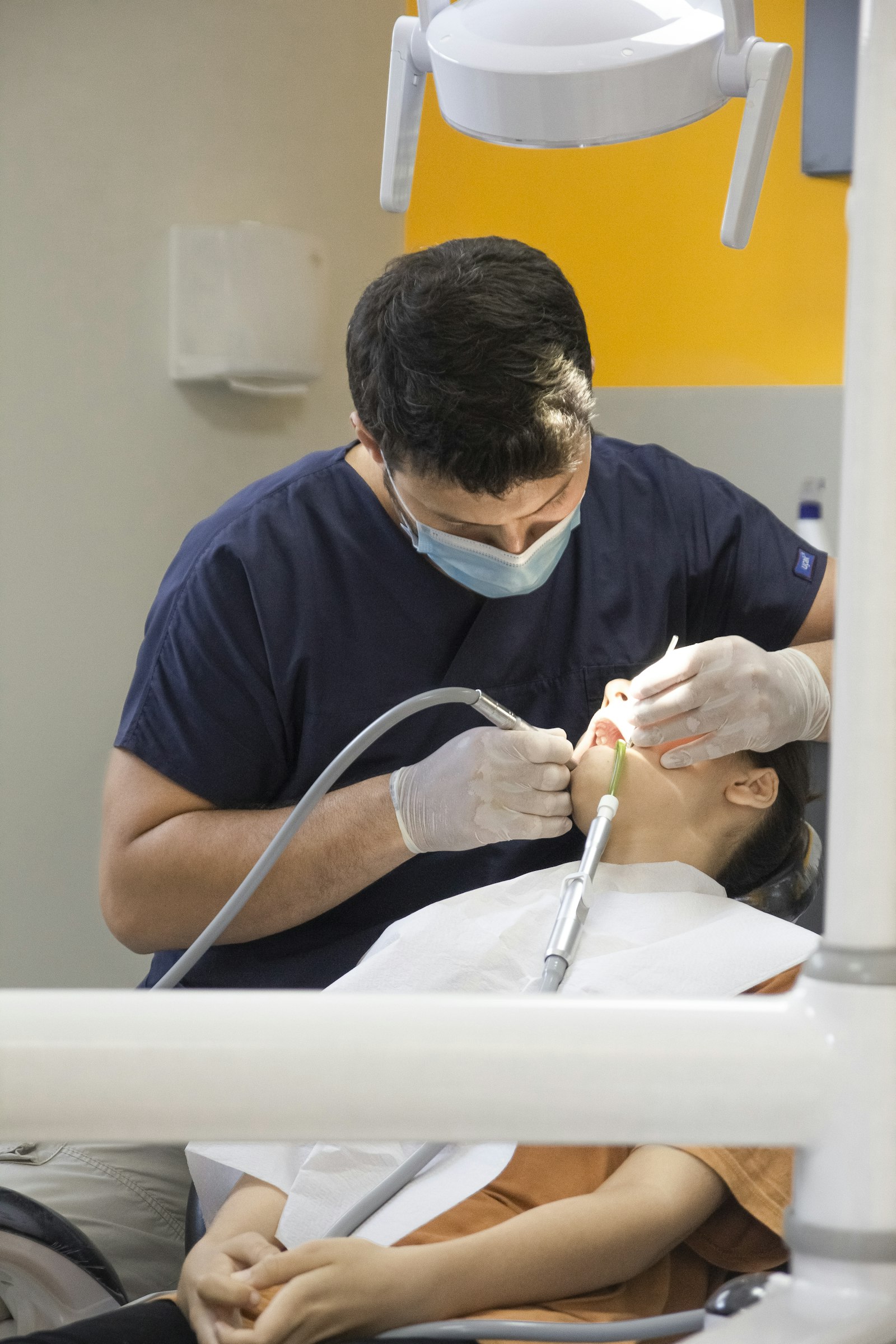
How a call to a dental practice is actually handled behind the scenes
In a well-run practice, a call describing pain, swelling, bleeding or trauma is treated differently from a call asking to book a routine check-up. The receptionist gathers the key details listed above, and depending on the practice's internal process, either puts the call through to a clinician directly, has a clinician call back promptly, or follows a set of practice guidelines developed with the dentists specifically for common urgent scenarios, such as a knocked-out tooth or a swollen face.
None of this replaces an actual clinical assessment. What it does is make sure the person deciding whether you need to be seen today, this week, or at your next routine visit, is making that decision with enough information and, ideally, with a clinician's input, rather than a guess made under time pressure at the front desk.
Comparing what different practice roles can tell you over the phone
| Role | Registered with AHPRA | Can diagnose a symptom | Can advise on urgency |
|---|---|---|---|
| Dental receptionist or practice manager | No | No | Passes details to a clinician rather than deciding alone |
| Dental assistant | No, works chairside supporting a dentist | No | No, refers clinical questions to the treating dentist |
| Oral health therapist or dental prosthetist | Yes, within a defined scope | Within their specific scope of practice | Within their scope, otherwise refers to a dentist |
For more on how these clinical roles differ from each other, see our guides to what a dental assistant can and cannot do and an oral health therapist's scope of practice. Denture-specific questions often go to a different role again, covered in our guide to what a dental prosthetist can and cannot do.
Frequently asked questions
Why won't the receptionist just tell me if my tooth problem is serious?
Because they are not a registered dental practitioner and are not trained or permitted to diagnose a symptom. Asking questions and passing your description to a clinician is the safer and more accurate path for you.
Is it rude to ask why the receptionist needs so much detail about my pain?
Not at all. Asking what the questions are for is completely reasonable, and a good practice will explain that the details help a clinician make the right call quickly.
Can a practice manager approve a discount or waive a fee?
This is a business decision some practice managers are authorised to make, separate from anything clinical, so it varies by practice and by situation.
What should I say when I call about a dental emergency?
Describe what happened, when it started, where the pain or swelling is, and whether there has been an injury, fever or swelling in the face. That gives the receptionist what they need to escalate quickly.
Can reception staff tell me what a filling or crown will cost before I come in?
They can usually give a general price range based on the practice's fee schedule, though an exact figure typically needs an assessment, since the actual treatment needed can only be confirmed once a dentist has looked at the tooth.
Do reception staff get any training for handling urgent calls?
Well-run practices train front desk staff on what questions to ask for common urgent situations and when to escalate a call to a clinician immediately, even though the staff member is not making the clinical decision themselves.
If you are ever unsure whether something needs to be seen sooner rather than later, calling and describing what is happening is always the right first step. The team will help work out the right next step from there. Current new patient offers are listed on our current deals page.