

A dental prosthetist is an AHPRA-registered oral health practitioner who can see you directly, without a referral, to make and fit full or partial dentures and some mouthguards or splints, but cannot diagnose oral disease, take out a tooth, place a filling or crown, or write a prescription. That split confuses a lot of people, because a prosthetist works in a clinical setting that looks a lot like a dental surgery, and the care they provide is genuinely clinical. Understanding where their scope starts and stops helps you work out who to see first, and when your denture care needs a hand-off to a dentist.
Key takeaways
- Dental prosthetists are registered with the Dental Board of Australia and can be seen without a referral for denture care.
- Their scope covers full dentures, partial dentures, and some mouthguards and occlusal splints.
- They cannot diagnose oral disease, extract teeth, place fillings or crowns, or prescribe medication.
- If a prosthetist finds decay, gum disease, or a suspicious lesion during an appointment, they are required to refer you to a dentist.
- Many patients use a prosthetist and a dentist together, with the dentist managing the remaining natural teeth and the prosthetist managing the denture itself.
- Checking a practitioner's registration on the AHPRA public register is a simple way to confirm what they are qualified to do.
What a dental prosthetist is registered to do
A dental prosthetist's core job is replacing missing teeth with a removable prosthesis. That means taking impressions or digital scans, designing and fitting full dentures for a patient with no remaining natural teeth, and partial dentures for a patient who still has some. It also covers denture repairs, relines, and adjustments as your gums and jaw change shape over time, which happens gradually for everyone who wears a denture.
Under the Dental Board of Australia's registration standard for scope of practice, a dental prosthetist is one of several registered oral health practitioner types, alongside dentists, dental hygienists, oral health therapists, and dental therapists. Each type has its own defined scope, and a prosthetist's scope is built specifically around removable prosthodontics rather than the full range of dental treatment.
Mouthguards and splints
Depending on their individual training, some dental prosthetists can also provide sports mouthguards and certain removable occlusal splints, such as a night guard for teeth grinding. This sits within the same removable appliance skill set as denture work, using similar impression and fitting techniques.
How a dental prosthetist trains and qualifies
To register as a dental prosthetist in Australia, a practitioner completes an accredited qualification specifically in dental prosthetics, followed by registration with the Dental Board of Australia through AHPRA. This is a distinct training pathway from a dentist's degree, built entirely around removable prosthodontics rather than the broader dental curriculum a dentist studies. Ongoing registration also requires continuing professional development, in the same way other registered dental practitioners are expected to keep their skills current.
What a dental prosthetist cannot do
A dental prosthetist cannot diagnose oral disease. That includes assessing whether a dark spot on a tooth is decay, deciding whether a red patch on the gum needs investigation, or working out why a tooth is aching. Diagnosis of disease is reserved for a dentist.
They also cannot carry out irreversible or invasive dental treatment. That rules out extractions, fillings, crowns, root canal treatment, and dental implant placement or restoration. Because they are not authorised to write scripts, they cannot prescribe antibiotics, pain relief, or any other medication, even if a patient mentions they are in pain.
This is not a grey area handled case by case. It is a defined boundary set out in the registration standard, and a prosthetist who steps over it is practising outside their scope.
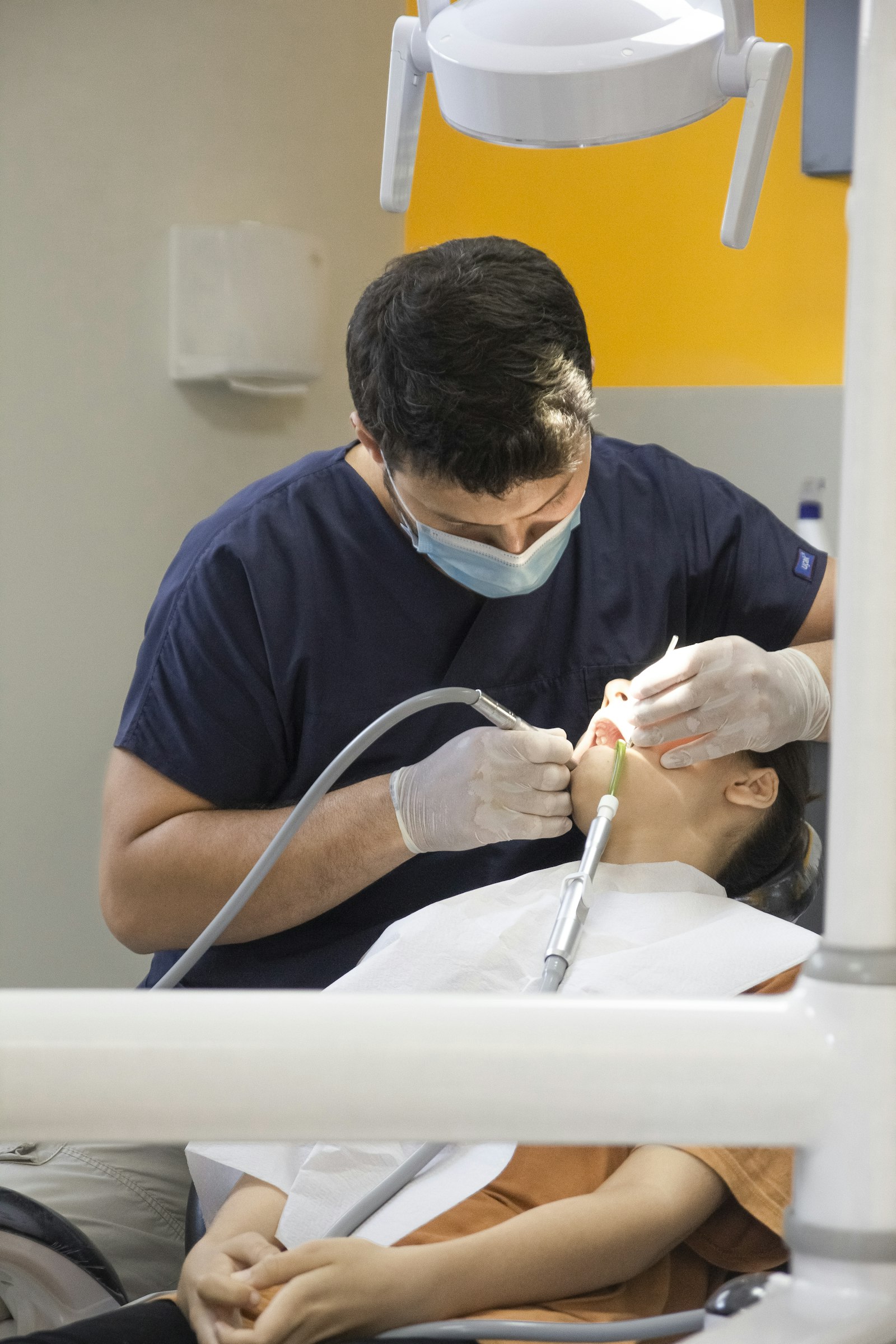
How a prosthetist and a dentist work together
Most people who wear a full or partial denture still need a dentist involved in their overall care, even if the prosthetist is doing the day-to-day denture work. If you have any natural teeth left, those teeth can still develop decay or gum disease, and only a dentist can assess and treat that.
A well-run denture appointment includes a visual check of the mouth, and a prosthetist who notices something that looks abnormal is required to refer you on rather than treat around it. In practice this two-practitioner model works well: the dentist manages the health of your remaining teeth and gums, and the prosthetist manages the fit, comfort, and function of the denture itself.
When to see a prosthetist directly
You do not need a referral to see a dental prosthetist. If your main concern is a denture that is loose, uncomfortable, chipped, or simply worn out, going straight to a prosthetist is often the most direct route. If you are not sure whether your problem is a denture issue or a tooth or gum issue, seeing a dentist first for an assessment is the safer starting point.
A denture reline, for example, which adjusts the fit of an existing denture as gum tissue changes shape, sits squarely within a prosthetist's scope and does not usually need a dentist involved at all. A denture that is causing a persistent sore spot, on the other hand, can sometimes point to an underlying issue with the gum or jawbone underneath, which is where a joint approach or a dentist's assessment first becomes useful.
Prosthetist, oral health therapist, or dental assistant: who does what
The table below is a quick way to compare three roles patients often mix up.
| Practitioner | Can they see you without referral | Core scope | Cannot do |
|---|---|---|---|
| Dental prosthetist | Yes | Full and partial dentures, some mouthguards and splints | Diagnose disease, extract, fill, crown, prescribe |
| Oral health therapist | Often yes, for preventive care | Cleaning, fissure sealants, preventive advice, defined restorative work under scope of practice rules | Complex restorative or surgical treatment outside their scope |
| Dental assistant | No, works chairside | Supporting the dentist during treatment, sterilisation, patient preparation | Any independent clinical treatment |
For a closer look at the other two rows, see our guides to an oral health therapist's scope of practice and what a dental assistant can and cannot do.

Checking a prosthetist's registration
Every dental prosthetist practising in Australia must be registered with AHPRA under the Dental Board of Australia. You can search the public register by name to confirm someone's registration type, whether it is current, and whether any conditions are attached to their practice. This is a reasonable thing to check before your first appointment, particularly if you found the practitioner online rather than through a referral. It only takes a couple of minutes, and it is the same check worth doing for any registered health practitioner you have not seen before.
If you are trying to work out whether your case is better suited to a prosthetist, a hygienist, or a specialist, our articles on hygienist vs dentist and dental specialists explained cover the other parts of that decision. If your denture involves a lab-made component, inside the dental laboratory explains what happens to your case once it leaves the clinic.
Frequently asked questions
Can a dental prosthetist make a denture without a dentist's involvement?
Yes, for the denture itself. A dental prosthetist can assess, design, and fit full and partial dentures directly, without a referral from a dentist, as long as no other dental disease needs diagnosis or treatment first.
Can a dental prosthetist fix a broken tooth under a denture?
No. Fixing a natural tooth, including a tooth being used to anchor a partial denture, falls outside a prosthetist's scope and needs a dentist.
Do I need a referral to see a dental prosthetist?
No. Dental prosthetists are directly accessible, similar to seeing a dentist, and you can book an appointment with one without going through another practitioner first.
Can a dental prosthetist prescribe pain relief or antibiotics?
No. Prosthetists are not authorised to prescribe medication. If pain relief or antibiotics are needed, you will be referred to a dentist or your GP.
What happens if a prosthetist finds a problem outside their scope?
They are required to refer you to a dentist for assessment and treatment. This is a normal, expected part of how the two roles work together, not a sign that something has gone wrong.
Is a dental prosthetist the same as a denturist?
In Australia, dental prosthetist is the registered title recognised by the Dental Board of Australia. Denturist is used in some other countries for a similar role, but the Australian qualification and registration pathway is specific to the dental prosthetist title.
If it has been a while since your denture was assessed, or you are weighing up your options for replacing missing teeth, the team at Lumi Dental offers a new-patient appointment that includes a full assessment, with current offers listed on the current deals page. This article is general information and does not replace individualised advice from a registered practitioner who has examined your mouth.