
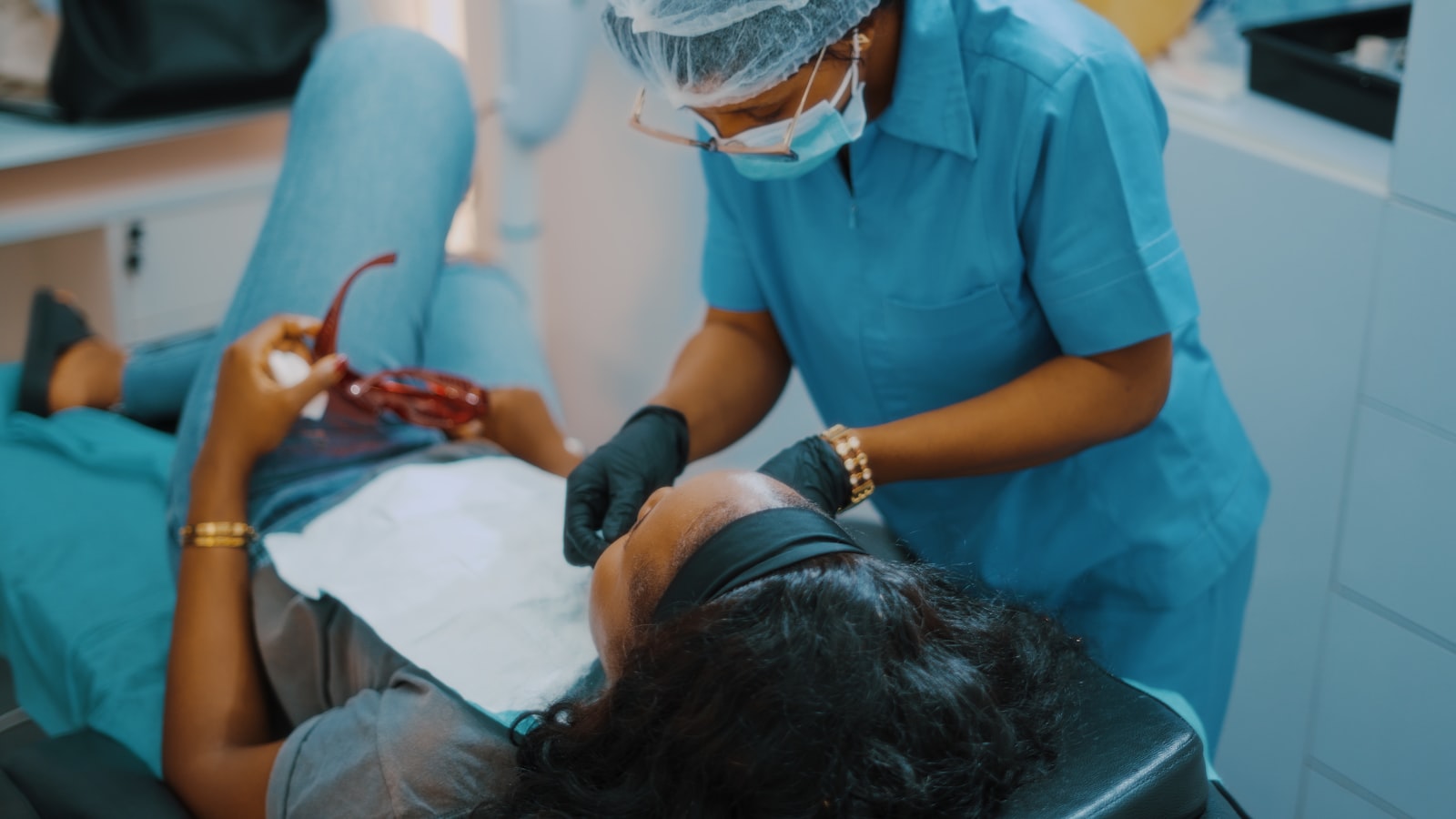

For wheelchair users, the hardest part of seeing a dentist is often getting in the door and into the chair, not the treatment itself. Surveys of wheelchair users repeatedly find the same barriers: buildings that are hard to enter, treatment rooms that are too tight, and staff who are unsure how to help with a transfer. Good accessible dental care is about much more than a ramp at the front. It is about space, equipment and a team that has thought the whole visit through.
This guide explains what genuine wheelchair accessibility looks like, the questions worth asking before you book, how transfers into the dental chair work, when treatment can be done in your own wheelchair, and when a home visit is the better answer.
Key takeaways
- True accessibility means step-free entry, a treatment room with room to manoeuvre, and a team confident with transfers, not just a ramp.
- The most useful thing you can do is call ahead and describe your access needs, so the clinic can prepare or tell you honestly if they cannot help.
- Transfers into the dental chair can be done with a slide board, a standing transfer, or a ceiling or mobile hoist, depending on the person.
- Some clinics can treat you in your own wheelchair using a tip-back platform, with no transfer at all.
- If leaving home is too difficult, home visit dentistry can bring basic care to you.
- Daily oral care still matters most. Reduced hand function and dry mouth from medicines both raise decay risk.
The one question that saves a wasted trip: ask before you book
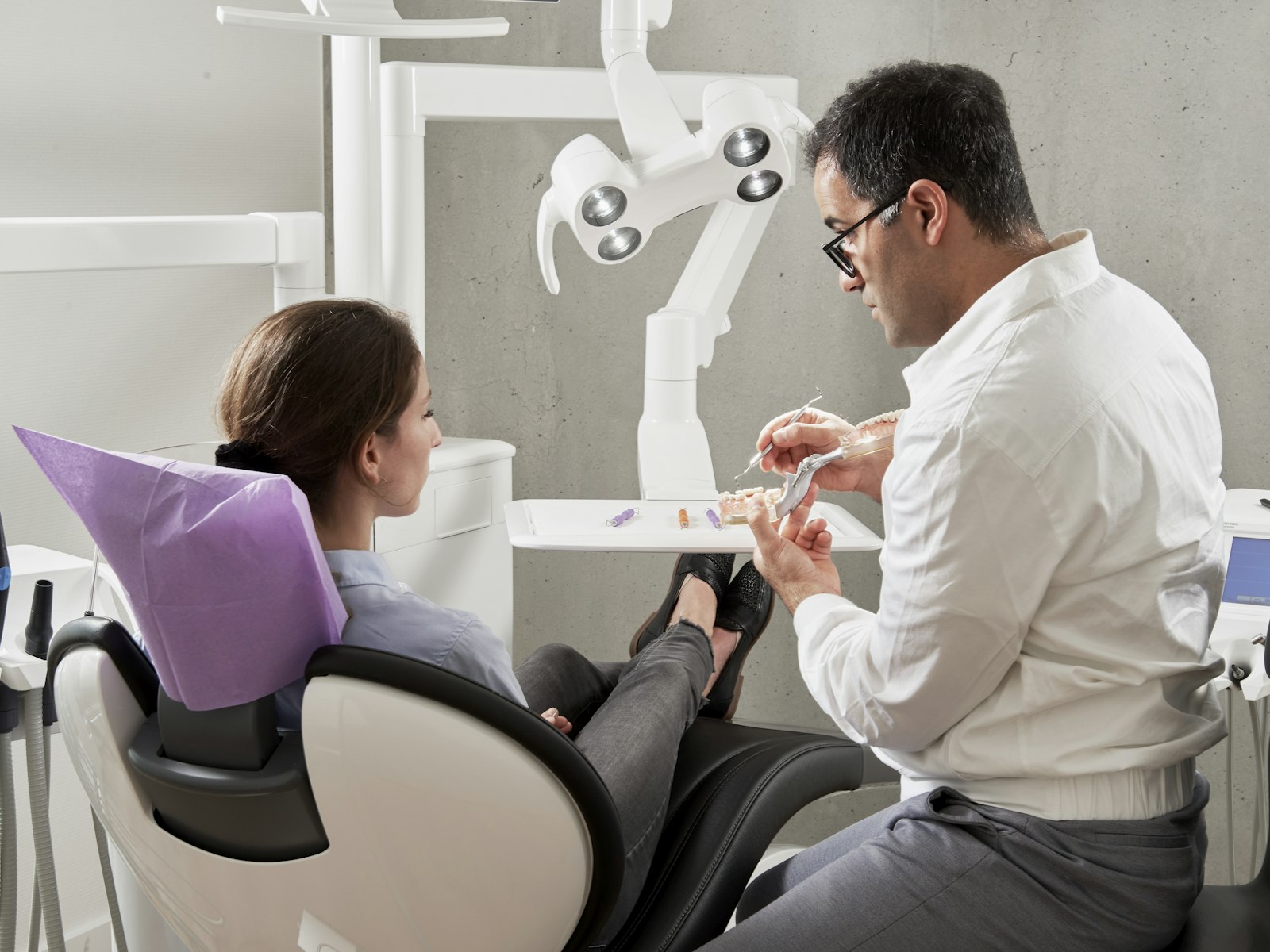
The most important step is to ring the practice before booking and describe exactly what you need. Tell them how you transfer, whether you can move from your wheelchair to the dental chair, whether you use a hoist, and how you arrive. A good clinic will either explain how they will manage it or be honest that they are not set up for it, which saves a difficult wasted journey. Accessibility you cannot confirm in advance is not accessibility you can rely on.
What to ask a clinic before booking
| Question | Why it matters |
|---|---|
| Is the entrance step-free, with parking close by? | A single step or gravel path can make entry impossible |
| Is there room to turn a wheelchair in the treatment room? | Tight rooms stop a wheelchair getting beside the chair |
| How do you manage transfers, and do you have a hoist or slide board? | Tells you whether you can be moved safely |
| Can I be treated in my own wheelchair if I prefer? | Some clinics have a tip-back platform that avoids any transfer |
| Can you allow extra appointment time? | Transfers and positioning take time that a rushed slot will not allow |
| Is there an accessible toilet? | Important for longer visits |
How transfers into the dental chair work
If you move from your wheelchair to the dental chair, there are a few safe ways to do it, chosen to match your strength and balance. A standing or pivot transfer suits people who can bear some weight. A slide board bridges the gap for a seated transfer. A ceiling or mobile hoist with a sling lifts a person who cannot weight-bear at all. The key points are that the team should ask how you usually transfer, follow your lead, never lift you in an unsafe way, and take their time. You know your body best, and a good clinician treats you as the expert on your own transfer.
Treatment in your own wheelchair
Not everyone needs to move at all. Some clinics use a wheelchair tip-back platform or recliner that holds your wheelchair and tilts it back into a treatment position, so the dentist can work without any transfer. This can be far more comfortable and dignified for people for whom transfers are painful or risky. If transfers are a problem for you, ask specifically whether in-wheelchair treatment is possible.

When a home visit makes more sense
For some people, the journey itself is the barrier that no clinic can remove. Home visit, or domiciliary, dentistry brings examinations, cleaning, simple fillings, denture care and advice to where you live. It cannot do everything a clinic can, because some procedures need fixed equipment, but it keeps basic oral health on track for people who cannot easily travel. Fees for home visits vary with the provider and the work involved. The team at Lumi Dental does not list its own prices here, and is happy to provide a written quote. Current new patient information is on our offers page.
Daily oral care still matters most
Whatever route you take to the dentist, the day to day matters more. Reduced hand or arm function can make brushing and flossing hard, and many medicines cause dry mouth, which raises decay risk. An electric toothbrush, a brush with a built-up or strapped handle, floss holders, and help from a carer for one clean a day can all keep the mouth healthier between visits.
Frequently asked questions
Is every dental clinic legally required to be wheelchair accessible?
Newer and renovated premises must meet access standards, but many older clinics fall short in practical ways even when they technically comply. This is exactly why calling ahead to confirm the specifics is so important.
Will I be charged more because my visit takes longer?
Fees are based on the treatment provided, not on the time a transfer takes. Ask any clinic for a written quote so you know in advance. Eligible people may also access public dental services.
Can I bring my carer or support worker into the room?
Yes. A carer who knows your transfers, communication and medical needs is welcome and often makes the visit safer and smoother.
What if I cannot keep my mouth open for long?
Tell the team. They can work in short bursts, use props and rests, and break treatment into several shorter visits rather than one long one.
Accessible dental care should feel straightforward, not like an obstacle course. If you or someone you support uses a wheelchair, the team at Lumi Dental in Melrose Park is happy to talk through your access needs before you book. Learn more about our general dental care, or read our related guides on spinal cord injury and oral care, cerebral palsy and dental care and vision and hearing impairment dental visits.
This article is general information and is not a substitute for personal dental or medical advice.


