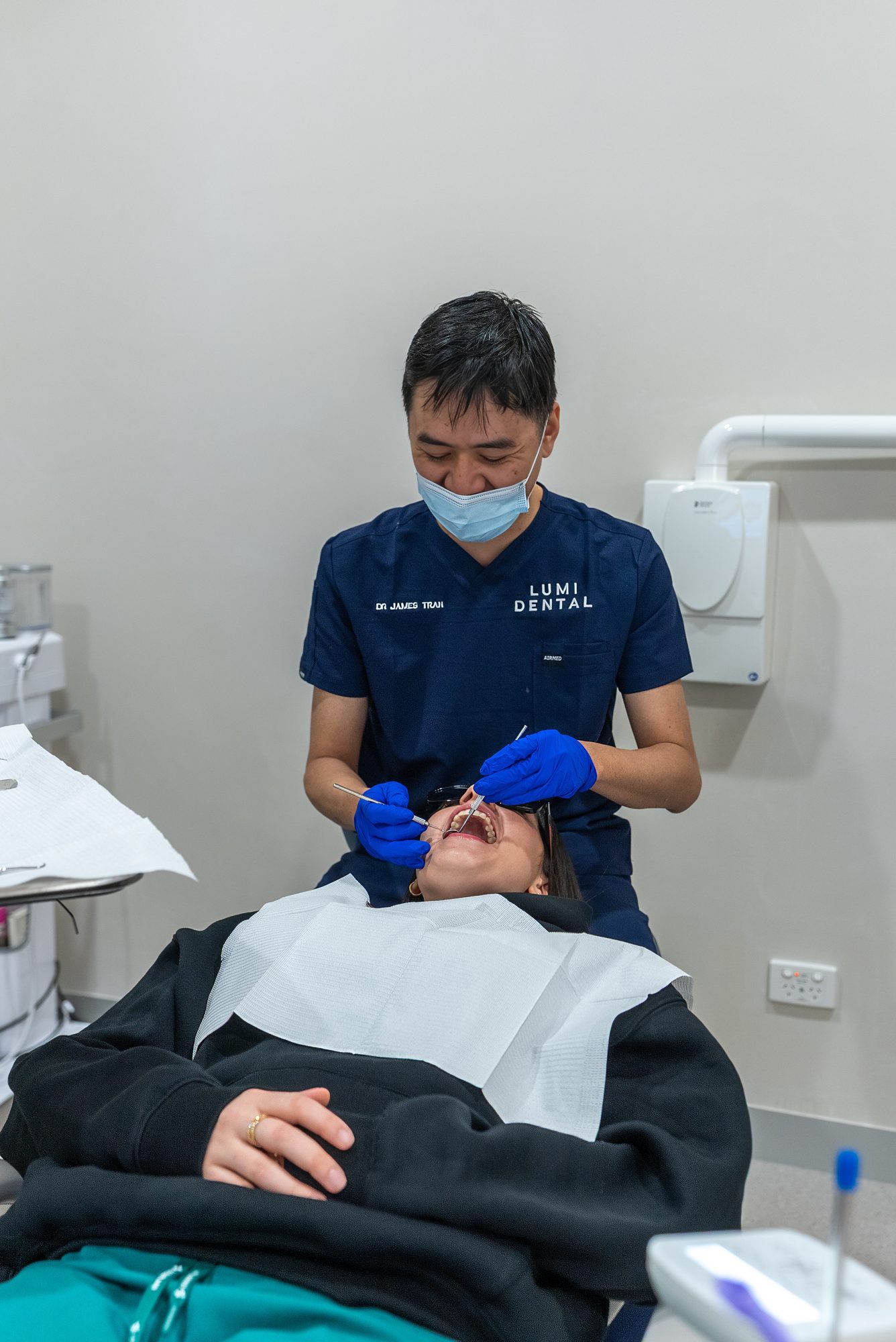

In most cases the scale and clean comes first and the whitening comes second, so the gel works on clean enamel rather than on plaque and calculus. If you are deciding whether to whiten teeth before or after a scale and clean, the usual order is a check-up, a professional clean, a week or two for the gums to settle, and then whitening. The gap can be shorter or longer. It depends mostly on how your gums look on the day and how sensitive your teeth are.
Written by Dr James Tran, general dentist at Lumi Dental, Melrose Park. BDent (University of Sydney), Graduate Diploma in Oral Implants.
The short version
- Clean first. Calculus and surface stain sit between the gel and the enamel and can leave the result patchy.
- A clean lifts stain from the outside of the tooth. Whitening changes the colour of the tooth itself. They do different jobs.
- Bleeding or puffy gums should settle before any whitening gel goes near them. Our article on sore gums after a scale and clean covers what is normal.
- A gap of about one to two weeks between the clean and the whitening is common, mainly so two rounds of sensitivity do not overlap.
- Fillings, crowns and veneers will not whiten, so we look at them before you start.
Why the clean goes first
Whitening gel is peroxide based. It soaks into the enamel and breaks down the pigment inside the tooth. For that to happen evenly, the gel has to sit directly on the tooth.
Calculus gets in the way. So does the brown film that builds up from tea, coffee and red wine, and the soft plaque that collects along the gumline. When I look at a patient who has whitened at home over old calculus, the pattern is often easy to spot: the exposed parts of the teeth have lightened and the strips that were covered have not. Once the calculus is removed, those darker bands show up.
There is a second reason. A clean mouth is much easier to examine. Small cavities, a leaking filling margin or an area of gum recession are far easier to see on clean teeth, and any of those can change whether whitening is a good idea right now.
What actually happens at a scale and clean
At many practices, including ours, the clean is done by an oral health therapist rather than the dentist. The appointment usually takes around 30 to 45 minutes. You will hear the ultrasonic scaler first. It buzzes, sprays a fine mist of water and shakes calculus loose. Hand instruments then tidy up what is left, followed by a gritty polish that takes off much of the surface stain.
The oral health therapist will also check your gums, measure any pockets if needed, and note areas that bleed. That record matters for whitening, because it tells us whether your gums are ready. If you would like the step by step, our guide to what to expect at a scale and clean walks through it.

A clean removes stain. It does not change tooth colour.
This is the part that surprises people. After a good clean your teeth often look brighter, and some patients decide that is enough. That brightness comes from removing extrinsic stain, the colour sitting on the outside of the tooth.
The underlying shade of the enamel and the dentine beneath it stays the same. Whitening is what lightens that. If you are not sure which kind of discolouration you have, our article on intrinsic versus extrinsic tooth staining explains the difference.
Two ways round, compared
| What we look at | Clean first, then whiten | Whiten first, then clean |
|---|---|---|
| Contact between gel and enamel | Even, because deposits are gone | Blocked wherever plaque or calculus remains |
| How even the result looks | Usually uniform | Darker patches can appear once deposits come off |
| Gum comfort | Gums can settle before the gel goes on | Inflamed gums may sting with the gel |
| Sensitivity | One round settles before the next starts | Two rounds can overlap |
| Finding problems | Decay or worn fillings picked up beforehand | Problems may only show up afterwards |
| How often we suggest it | The usual plan | Rarely |
If your gums bleed, whitening waits
Here is the simple rule. If your last clean was more than six months ago, or you can see calculus or stain, start with the clean. If you had a clean recently and your gums are healthy, we may be comfortable going ahead with whitening after a quick check.
Bleeding gums are the most common reason I ask a patient to hold off. Gums that bleed when you brush are already inflamed, and peroxide on inflamed tissue tends to sting and can leave white, tender patches for a day or so. healthdirect describes plaque as the cause of gum disease and notes that hardened tartar can only be removed by a dental professional. Treating that first, with a routine clean or with gum therapy if it has gone further, makes whitening more comfortable and the result more predictable.
Some tenderness for a day or two after a clean is normal. If it lasts longer than that, or a spot is swollen and throbbing, ring us.
How long to leave between the two
Both appointments can make teeth sensitive for a while. After a clean, root surfaces that were covered by calculus are suddenly exposed, and cold water can feel sharp. Whitening adds its own sensitivity because the gel makes the enamel more permeable for a short time. The healthdirect page on teeth whitening also mentions sensitivity to cold and gum irritation straight after treatment.
One to two weeks is usually enough for the first round to fade. If your teeth are already sensitive, I usually suggest a desensitising toothpaste for a couple of weeks beforehand and a gentler whitening plan. Our article on teeth whitening sensitivity and relief has more practical options.

Recording your shade before you whiten
Memory is unreliable with tooth colour. Two weeks into whitening most people cannot remember what their teeth looked like on day one, and that makes it hard to judge the change.
So before any whitening starts, we record the starting shade against a shade guide and take photographs under consistent lighting. When I take a shade, I do it after the clean and with the teeth still moist, because dried-out teeth read lighter than they really are. At the review we take the same photos again and put them side by side. That comparison is often more useful than the mirror.
It also matters for any dental work. Fillings, crowns and veneers keep the shade they were made in. If a front filling is likely to look darker after whitening, we tell you before you start, and any replacement is matched to your new shade once it has settled.
In-chair or take-home?
Both work better on clean teeth. In-chair whitening is done in one longer visit with the gums protected. Take-home whitening uses custom trays and a lower strength gel over a couple of weeks. Our guide to in-chair teeth whitening describes that appointment.
How we approach this at Lumi Dental
At Lumi Dental in Melrose Central, Melrose Park, cleans and whitening are often handled by our oral health therapists, Sabrina Tran and Jennifer Nguyen, who see patients for cleans, gum care, children's dentistry and whitening. If something needs a dentist, such as a cavity found during the clean, they will bring me in or book you a separate visit.
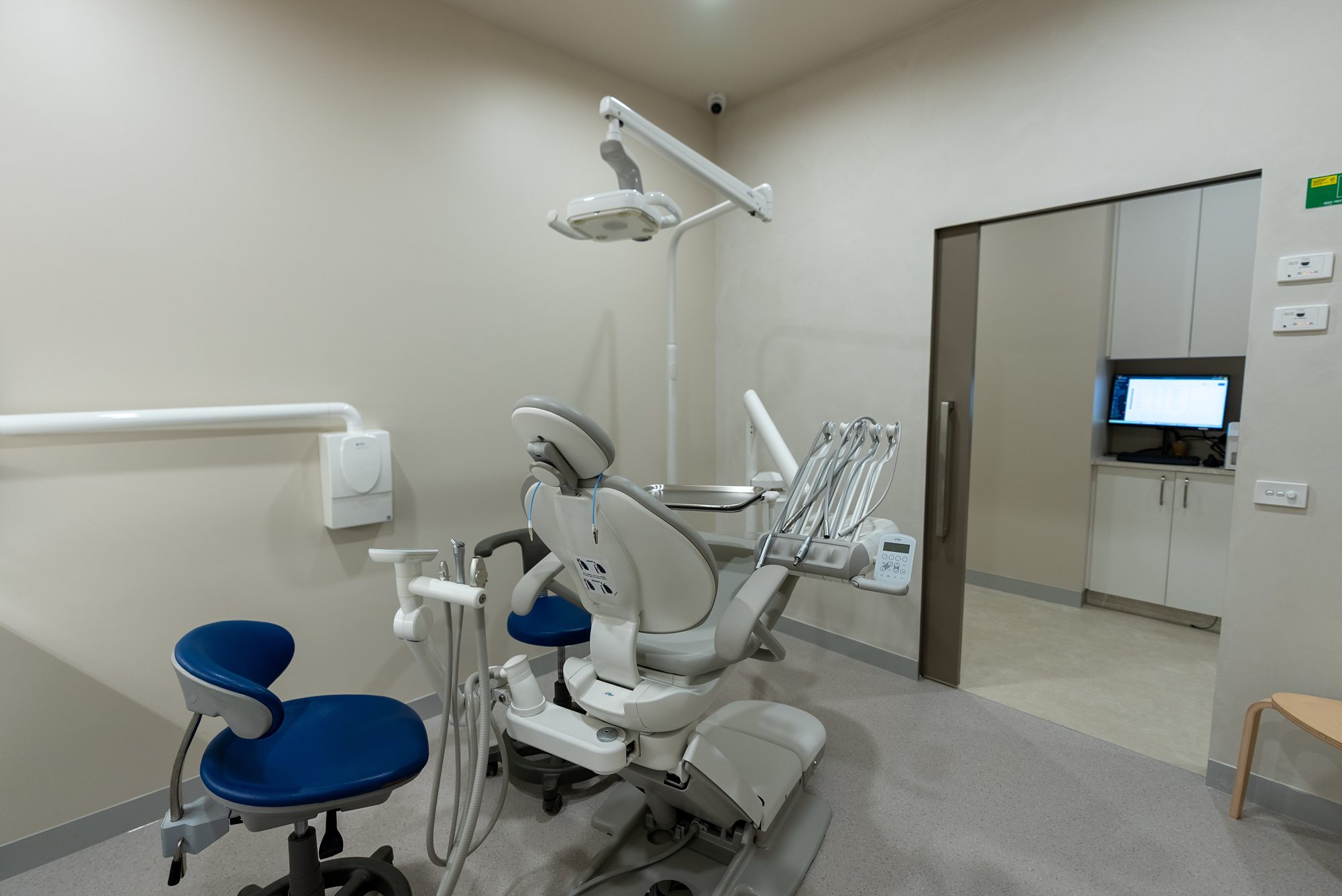
A typical plan looks like this: an exam and clean, a gum check, shade and photos recorded in our clinical photography area, then whitening once the gums have settled. Instruments are processed in a dedicated sterilisation room, and the practice is mercury-free, so any fillings we place are tooth coloured.
Questions patients ask
Should I whiten my teeth before or after a scale and clean?
After, in most cases. The clean removes plaque, calculus and surface stain so the gel can reach the enamel evenly, and it lets us check your gums first.
How long should I wait to whiten after a clean?
Around one to two weeks is common. If your gums were inflamed at the clean, we may suggest waiting until they have healed.
Will a scale and clean make my teeth whiter?
It can make them look brighter by removing surface stain, but it does not change the natural shade. For a lighter shade, whitening is needed.
Can I whiten if my gums bleed?
It is better to wait. Bleeding is a sign of inflammation, and whitening gel on inflamed gums tends to sting. We treat the gums first.
Can I have a clean and whitening on the same day?
Sometimes, if your gums are healthy and you are not prone to sensitivity, but many people are more comfortable with the two appointments apart. The teeth whitening page sets out the options.
Sources
- healthdirect: Teeth whitening
- healthdirect: Gum disease
- Australian Dental Association: Teeth Whitening
- Australian Dental Association: The Dental Team
Plan your clean and whitening at Lumi Dental
If you would like a plan for your own teeth, the team at Lumi Dental in Melrose Park can examine your teeth and gums, sort out the order and timing, and talk you through whitening options in plain terms. Current offers are listed on the current deals page. A consult and written quote follow the exam, so you know the details before you decide.
About the author

Dr James Tran is a general dentist at Lumi Dental in Melrose Park, Sydney, and is registered with the Dental Board of Australia. He holds a Bachelor of Dentistry from the University of Sydney and a Graduate Diploma in Oral Implants, is a Member of the International Congress of Oral Implantologists (MICOI), and is part of the General Dental Residency faculty. Read more about Dr James.
This article is general information and is not a substitute for advice from your own dentist after an examination. All dental treatment carries risks, and individual results vary.