


The clock matters less than the gel in the tray. Overnight gels are usually carbamide peroxide, which releases its whitening agent slowly over several hours. Daytime gels are usually hydrogen peroxide, which works quickly and is largely spent within a shorter session. Used as directed, either can lighten teeth well, so the better routine is the one that fits your sleep, your teeth and the hours you can keep a tray in for the whole course.
Written by Dr James Tran, BDent (University of Sydney), MICOI, GradDip (Oral Implants), general dentist at Lumi Dental in Melrose Park.
Slow release suits sleep, fast release suits a short session
Both gels whiten through hydrogen peroxide, which passes through the enamel and breaks down coloured molecules in the tooth. The American Dental Association notes that it can travel from the enamel and dentine to the pulp within about 15 minutes of exposure.
Carbamide peroxide is hydrogen peroxide bound to urea. The ADA explains that it releases about one third of its content as hydrogen peroxide, and CHOICE reports that a 10% carbamide peroxide gel releases about 3.5% hydrogen peroxide in the presence of water. Because that release is gradual, the gel keeps working over hours, which is why it pairs naturally with sleep.
A hydrogen peroxide gel has no such reservoir. It is active straight away, so wear times are shorter, and leaving it in much longer than instructed mostly adds contact with the gums rather than extra whitening.
Strength and time go together. The ADA states that home whitening times are set mainly by the concentration used, and cites a systematic review that found daily wear times ranging from 2 to 10 hours over courses of 6 to 28 days. In Australia, Schedule 10 of the national Poisons Standard means whitening products above 6% hydrogen peroxide (18% carbamide peroxide) may only be sold, supplied and used by registered dental practitioners, which is why higher-strength gels come only from a dental practice. Our guide to gel strengths explains the percentages, and carbamide versus hydrogen peroxide goes deeper into the chemistry.
How the two routines compare
| Overnight tray | Daytime tray | |
|---|---|---|
| Usual gel | Carbamide peroxide | Hydrogen peroxide |
| Session | While you sleep, or several hours in the evening | A shorter session at a time your dentist sets |
| Tends to suit | Sound sleepers, people used to wearing a retainer at night, sensitive teeth | Light sleepers, people who grind, mouth breathers, a strong gag reflex, shift workers |
| Sensitivity and gum irritation | Similar overall in research; often noticed on waking | Similar overall in research; often noticed soon after a session |
| Main risk to the course | Grinding damaging the tray, or gel drying out in an open mouth | Missed sessions on busy days |
On sensitivity, the ADA cites a comparative review of tray-delivered products which found that carbamide and hydrogen peroxide systems produced relatively equal levels of tooth sensitivity and gum irritation.
When overnight wear works well
Overnight whitening uses hours you are not otherwise using. You brush, seat the tray and sleep. It tends to suit people who sleep soundly, who already wear a retainer at night, or whose days are too unpredictable for a fixed session. A gentle, slow-release gel is also often preferred for teeth that are prone to sensitivity.
Two groups may struggle. People who grind heavily can damage a thin whitening tray in a few nights, and a whitening tray does not protect teeth the way a night guard does. Our post on whitening if you grind your teeth covers the options. People who sleep with their mouth open may find the gel dries out and the gums are irritated in the morning.
When daytime sessions work better
Daytime trays suit anyone who cannot sleep comfortably with a tray in. That includes light sleepers, people with a strong gag reflex, people who grind at night and shift workers whose sleep falls at odd hours. Sessions are shorter and can fit around a regular part of the day.
Consistency matters more with daytime wear. Missed sessions slow the course down, so it helps to link the session to a fixed habit, such as straight after the morning brush. Some people notice a brief twinge of sensitivity within an hour or two of taking the tray out.
How Lumi Home uses both
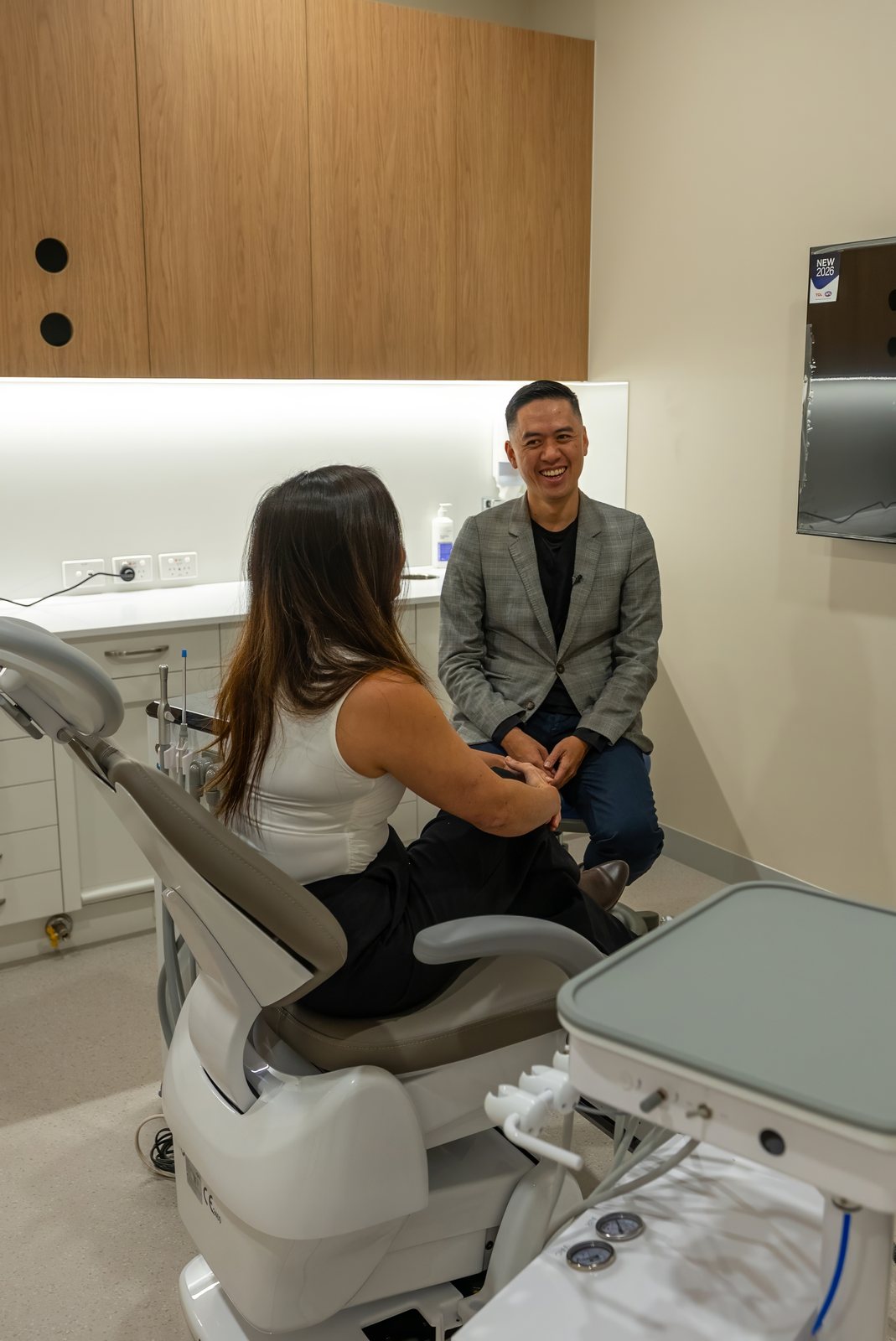
At Lumi, take-home whitening with custom trays is called Lumi Home and uses Boutique gels in two formulations: an overnight gel for teeth that are sensitive and a daytime gel for teeth that are not. Your dentist recommends one after examining your teeth and talking about your routine. Lumi Refresh and Lumi Radiance combine an in-chair session with the same take-home trays. No particular shade can be promised.
Fell asleep in a daytime tray, or took a night tray out early
Dozing off with a daytime tray in is a common slip and is rarely serious. Much of the gel's activity happens early, so the extra time mostly means longer contact with the gums. A pale, tender line along the gum edge and some extra sensitivity to cold for a day are the usual results. Remove the tray, rinse your mouth and the tray with cool water, and skip the next session if anything feels sore. Contact the practice if the gums are still sore after a couple of days.
Taking an overnight tray out in the early hours is not a problem either. Carry on the next night rather than doubling up.
Keeping sensitivity and gum irritation down
Sensitivity is a common side effect of tray whitening with either gel. The ADA reports that mild to moderate sensitivity can affect up to two thirds of people early in treatment and usually resolves by about the fourth day after treatment ends. Leeds Teaching Hospitals NHS Trust advises changing to alternate nights if teeth become very sensitive, using a sensitive toothpaste and avoiding very cold food and drink during treatment.
Gum irritation usually comes down to too much gel. CHOICE notes that custom trays need less gel than one-size trays, and the Leeds leaflet recommends a small amount in each tooth space and wiping away any excess. Our guides to whitening sensitivity and gum irritation after whitening explain what to do if either occurs.
Habits that help with either routine
- Brush before each session so the gel meets clean enamel.
- Use the amount of gel your dentist showed you, seat the tray and wipe off anything on the gums.
- Follow the wear time on your own instructions, not the time a friend used with a different gel.
- Store the gel as directed, and keep it away from children. The Leeds leaflet advises keeping it in the fridge.
- Keep your review appointment so progress and any sensitivity can be checked.
Visible change usually builds over several sessions. Our post on how take-home whitening progresses day by day sets expectations.
Before trays are made
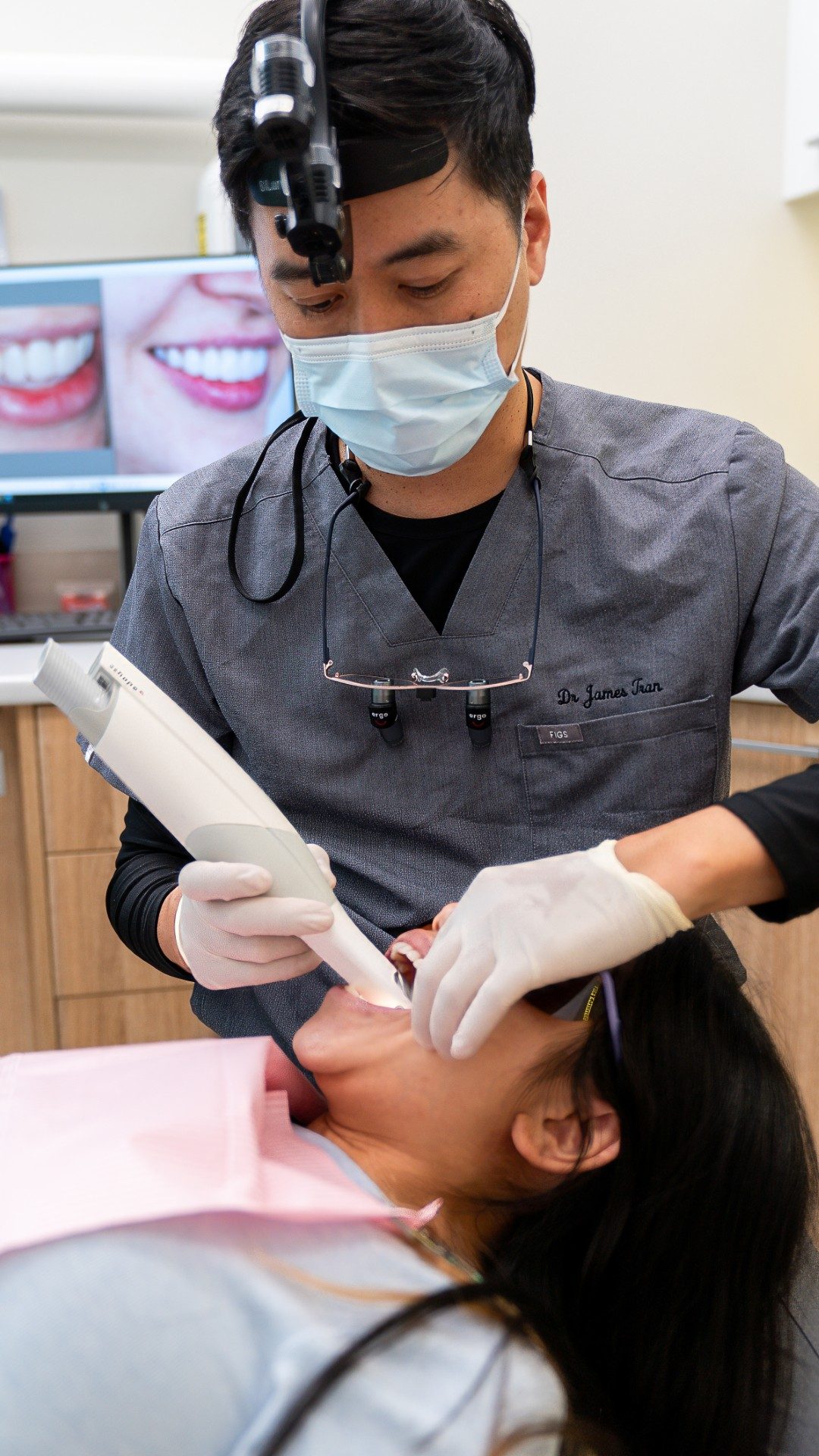
Take-home whitening at Lumi starts with an examination, because the right gel and routine depend on your enamel, any fillings or crowns, gum health and how you sleep. Clinical photographs record your starting shade, and the custom trays are made from a 3D intraoral scan. The teeth whitening page explains how a consult works.
Common questions
Can I wear my trays for eight hours?
Only if your gel is designed for overnight use and your dentist has told you to. With a daytime gel, extra hours mainly add gum irritation and sensitivity.
How many hours a day should I wear them?
It depends on the gel and its strength. Research has used anything from 2 to 10 hours a day, and your dentist sets the time for your particular gel.
Which routine whitens faster?
It varies with the gel strength and how consistently it is used. The routine you can keep up every day is usually the one that gives the most even result.
Can I switch from overnight to daytime partway through?
Possibly, but it means a different gel and wear time, so check with your dentist rather than changing on your own.
Talk to us about take-home whitening
If you are deciding between overnight and daytime trays, the team at Lumi Dental in Melrose Park can examine your teeth and match the gel and wear time to how you sleep and work. Book a free cosmetic consult or read about teeth whitening at Lumi.
Sources
- American Dental Association: Whitening (Oral Health Topics)
- CHOICE: Teeth whitening treatments from dentists, dental care and other products
- Leeds Teaching Hospitals NHS Trust: Tooth whitening, information for adult patients
- Australian Dental Association (teeth.org.au): Teeth whitening
- Australian Dental Association: Policy statement 2.2.8, teeth whitening by persons other than dental practitioners (summarises Schedule 10 of the Poisons Standard)
About the author

Dr James Tran is a general dentist at Lumi Dental in Melrose Park. He holds a BDent from the University of Sydney and a Graduate Diploma in Oral Implants, and is a Master of the International Congress of Oral Implantologists (MICOI).
This article is general information only and is not a substitute for an examination and individual advice from a registered dental practitioner. Suitability for any treatment varies from person to person.







