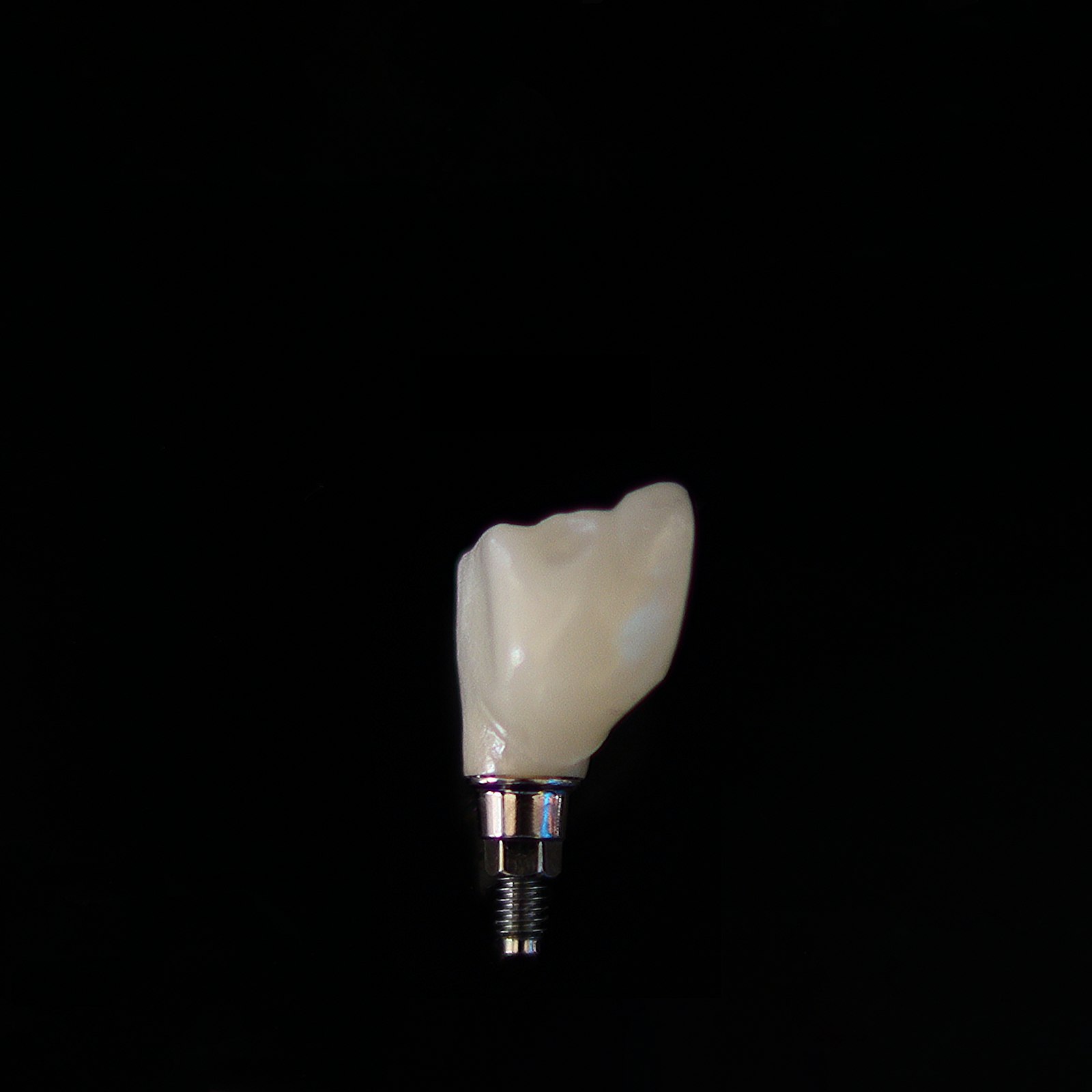

Your smile looks different in profile because a side or three-quarter view changes the light, the visible arch, and the angle your face is read from, not because your teeth themselves have changed. A front-on view shows both sides of your smile evenly lit and evenly spaced; a profile or three-quarter angle compresses one side, changes which teeth catch the light, and can make a canine, a gum line, or a small midline shift look far more noticeable than it is head-on.
Key takeaways
- A front-on photo shows the full arch evenly lit on both sides, which is why it usually looks the most balanced.
- A profile or three-quarter angle compresses one side of the smile and changes which teeth catch the light.
- Canine prominence, a gummy smile, and small midline differences often look more obvious from an angle than from the front.
- This is a photography and anatomy effect, not evidence that something has changed or gone wrong with the teeth.
- Checking the front-on view first is a quick, free way to see whether an angled photo is telling the full story.
- Where a genuine concern remains after checking the front view, a dental professional can look at it properly rather than guessing from a photo.
Why a side angle changes what you see
A front-on view is the most forgiving angle for a smile because both sides are visible at the same distance from the camera and lit in roughly the same way. Every tooth reads at a similar size and the arch looks symmetrical, because it genuinely is being shown symmetrically.
A profile or three-quarter angle removes that symmetry. The side of the face closer to the camera appears larger, catches more light, and dominates the image, while the far side compresses and falls into shadow. Teeth that look perfectly even from the front can suddenly look uneven simply because one side is being shown at a different distance and angle than the other.
Canine prominence and why it stands out from an angle
Canines sit slightly further forward and often slightly higher than the neighbouring teeth, which is normal anatomy in most smiles. From the front, that subtle difference blends in. From a three-quarter angle, the canine is often the tooth closest to the camera, so it catches more light and appears to project further than it does head-on. This is one of the most common reasons someone becomes convinced a canine looks too pointed or too far forward after seeing an angled photo, when the front view tells a calmer story.
Midline and gum line changes
A small, genuinely unnoticeable difference between where the upper and lower midlines sit can become far more visible in profile, because the angle exaggerates any horizontal offset. A gummy smile or an uneven lip line behaves the same way: the amount of gum visible on the side closest to the camera looks different to the far side, even though it is the same smile being lit differently.

This is a genuinely different effect to a flipped or altered photo
It is worth separating this from two other optical effects covered elsewhere. The article mirror selfie versus rear camera is about left-right reversal, where a mirror shows the opposite side to a photo. Profile distortion has nothing to do with flipping; it is about which angle the camera is placed at relative to a face that has not moved at all. Glasses frames and facial hair, covered in how glasses frames change how your teeth look and beard and moustache effects on your smile, involve something physically placed on or near the face. Viewing angle is a third, separate variable again, one that changes purely with where the camera stands, not what is worn or held near the mouth.
A dentist assessing a smile in person looks at the teeth from multiple angles, in consistent lighting, and can check things a photo cannot show, such as how the bite comes together and how the jaw moves. That fuller picture is very different to drawing a conclusion from a single angled photo taken in passing.
Why the front-on view is usually the fairer test
Because a front-on photo lights and frames both sides of the smile the same way, it is generally the more reliable reference point for judging symmetry, tooth position, or gum line evenness. An angled photo can be a useful and flattering way to take a photo, but it is not a neutral way to judge whether a tooth is actually out of place.
A simple habit worth adopting before assuming a flaw spotted in a side photo is real: take a plain front-on photo in even light, without tilting the head, and compare. Most concerns that show up strongly in a three-quarter selfie soften considerably or disappear entirely once viewed straight on.
This does not mean an angled photo is inherently unflattering or something to avoid. Plenty of genuinely natural-looking photos are taken from a slight angle, and most people photograph well from more than one direction. The point is narrower: an angled photo is not a reliable way to judge whether a tooth is actually crooked, prominent, or uneven, even though it can look that way at first glance.
What this means for everyday photos, not posed ones
This effect is not limited to professional portraits or posed photography. Casual snapshots taken by friends or family, often from slightly to one side rather than straight on, are one of the more common ways people first notice something in their smile that they had never seen in the mirror. A quick glance in a bathroom mirror is almost always a front-on, symmetrical view, while a phone camera in someone else's hand is rarely held at exactly that angle.
Group photos add another layer to this. Standing at the edge of a group often means the camera is angled more toward one side of the face than the other, compounding the same lighting and compression effect described above. None of this means the smile in the group photo is somehow more accurate than the one in the mirror; it simply means the group photo was taken from a less forgiving angle.

| Feature | Front-on view | Profile or three-quarter view |
|---|---|---|
| Lighting across the arch | Even on both sides | Brighter on the near side, shadowed on the far side |
| Canine appearance | Blends with neighbouring teeth | Often appears more prominent |
| Midline alignment | Small differences barely visible | Small differences can look exaggerated |
| Gum line and lip line | Reads evenly across the smile | Near side and far side can look different |
Frequently asked questions
Why does my smile look crooked in side photos but not in the mirror?
A side or three-quarter photo compresses one half of your smile and lights it differently to the other half, which can make small, normal asymmetries look more obvious than they do in a front-on mirror view.
Why does my canine tooth look bigger in some photos?
Canines naturally sit slightly forward of the neighbouring teeth. In a three-quarter angle, the canine is often the tooth closest to the camera, which makes it catch more light and appear larger or more prominent than it does head-on.
Is a three-quarter angle a good way to judge my smile?
It can be a flattering angle for a photo, but it is not a neutral one for judging symmetry or tooth position. A plain front-on photo in even light is generally a fairer comparison.
Can a dentist tell if something is actually wrong from a photo?
A photo can be a useful starting point for a conversation, but a proper assessment needs a clinical look in person, since lighting and angle can make normal features look like problems and vice versa.
Does everyone's smile look different from the side?
Yes, to some degree. Because faces are not perfectly symmetrical and cameras compress whichever side is closer, almost every smile reads slightly differently from a side angle compared with straight on.
Why does my gummy smile look worse in some photos than others?
The amount of gum visible changes with the angle of the camera, how far the lips are drawn back, and how the light falls across the lip line, so the same smile can look different from one photo to the next without anything actually changing.
Do photographers deliberately avoid awkward angles for this reason?
Many do. Photographing a subject closer to front-on, or turning the shoulders while keeping the face nearer to square with the camera, is a common way to get a more even, flattering result without changing anything about the person's actual smile.
Before assuming an angled photo is showing a real problem, it costs nothing and takes only a moment to check the same smile front-on in even light. Where a genuine concern remains after that simple check, a complimentary cosmetic consultation is a straightforward way to get an honest, in-person opinion rather than relying on a single photo. Current offers are also listed on the current deals page.
This article is general information only and is not a substitute for an in-person assessment by a dental professional.