


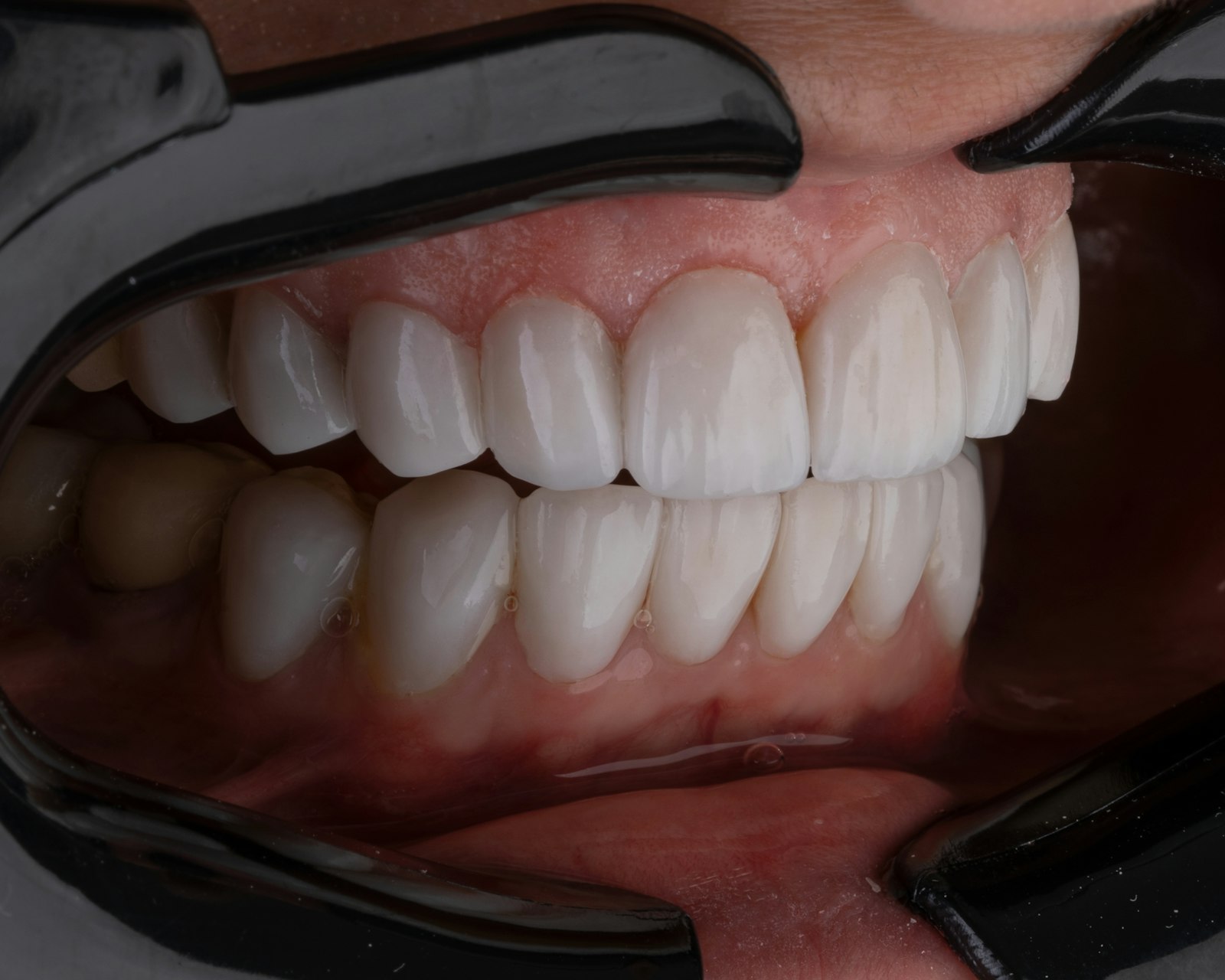
The difference in All-on-X vs All-on-4 is mostly one of naming: All-on-4 is a specific four-implant treatment concept trademarked by Nobel Biocare, while All-on-X is a generic description of a fixed full-arch bridge on however many implants your jaw needs. Both replace a whole arch of teeth with a bridge that is screwed onto implants and does not come out at home. The All-on-4 concept uses four implants per arch, with the back two tilted, often at up to around 45 degrees, to make use of the stronger bone towards the front of the jaw. In All-on-X, the "X" simply stands for the number of implants, which may be four, five, six or more.
Many websites use the two terms as if they meant the same thing. They overlap a great deal, but they are not identical, and understanding the difference can make a consultation much clearer. This guide explains where each name comes from, how the treatments compare and how the number of implants is typically chosen.
Key Takeaways
- All-on-4 is a treatment concept trademarked by Nobel Biocare that uses four implants per arch, with the two back implants angled.
- All-on-X is a non-brand term for a fixed full-arch bridge on the number of implants your bone and bite call for, commonly four to six.
- Both follow similar steps: a 3D CBCT scan, digital planning, any extractions, implant placement and, in many cases, fixed temporary teeth within about a day.
- The final bridge is usually fitted after roughly 3 to 6 months of healing and may be acrylic on a titanium bar or zirconia.
- Smoking, uncontrolled diabetes, heavy grinding and poor cleaning can raise the risk of problems, whichever name the treatment carries.
- General market ranges in Australia are often quoted at around $20,000 to $35,000 or more per arch, which vary with complexity and provider; the guide to full-arch implant costs in Sydney explains what drives the range.
Where the All-on-4 Name Comes From
The All-on-4 treatment concept was developed by Portuguese dentist Dr Paulo Malo working with Nobel Biocare, and the name is a trademark of Nobel Biocare. It describes a particular protocol rather than a general category: four implants in one arch, two placed upright near the front and two placed at an angle towards the back.
The angled back implants are the key idea in the design. In the upper jaw, the sinuses sit above the back teeth, and in the lower jaw a nerve runs through the bone towards the chin. After teeth have been missing for some time, the bone in these back areas often shrinks. Tilting the rear implants lets them run alongside these structures and anchor in the denser bone further forward, which can avoid the need for bone grafting in many patients. A fixed provisional bridge is often attached within about a day of surgery.
Because All-on-4 is a brand-associated name, practices that are not describing that specific protocol tend to use broader terms. That is where All-on-X comes in.
What All-on-X Means
All-on-X is a generic, non-brand description. It means a fixed bridge replacing a full arch of teeth, supported by however many implants are needed for that particular mouth. The "X" is the number. For one patient it may be four, for another five or six, and occasionally more.
All-on-X is the name Lumi Dental uses for its full-arch implant service. The term does not describe a different kind of implant or a different philosophy of care. It simply leaves the implant count open until the scans have been reviewed, rather than fixing it at four from the start.
A common variation is the six-implant arch, often called All-on-6. Spreading the biting load over six implants is often favoured in the upper jaw, where the bone tends to be softer, and for people who clench or grind. The comparison of All-on-6 and All-on-4 looks at that choice in more detail.
All-on-X vs All-on-4 Side by Side
| Feature | All-on-4 | All-on-X |
|---|---|---|
| What the name means | A specific four-implant full-arch treatment concept | A general description: a fixed full-arch bridge on "X" implants |
| Number of implants | Four per arch | Four, five, six or more per arch, chosen per patient |
| Angled implants | Two back implants tilted, often up to around 45 degrees | Used where the bone calls for it; implants may be upright, angled or a mix |
| Who it often suits | People with enough bone at the front of the jaw but limited bone at the back | A wider range, including softer upper jaw bone, heavy bite forces and grinders |
| Bone grafting | Designed to avoid grafting in many cases | Often avoided too, as extra or angled implants can reduce the need |
| The brand question | Trademark of Nobel Biocare, linked to its protocol | Not a brand; describes the outcome rather than a specific system |
In day-to-day practice, the treatment a patient receives under either name can look very similar. A four-implant All-on-X arch and an All-on-4 arch may be close in design. The meaningful difference is that All-on-X starts with the question of how many implants a jaw needs, rather than with a fixed number.
The Number of Implants Should Follow Your Bone, Not the Brand Name
The right number of implants depends on the height, width and density of your jawbone, the shape of your arch, the forces you put through your teeth and your general health. A name on a brochure cannot tell you any of that. A 3D cone beam CT (CBCT) scan and a clinical examination can.
Some patterns tend to come up during planning:
- Lower jaws often have dense bone at the front, so four well-placed implants may be enough.
- Upper jaws usually have softer bone and a sinus on each side, so five or six implants are often considered.
- People who grind or clench put more load on each implant, which can favour a higher count.
- Where bone has thinned a great deal, options such as a bone graft or sinus lift, or in some cases zygomatic implants with referral to a registered specialist, may be discussed.
More implants are not automatically better. Each one adds surgical time and cost. The aim is enough support for a stable, long-lasting bridge without placing more implants than the bone and bite require.
What Treatment Involves Under Either Name
Planning
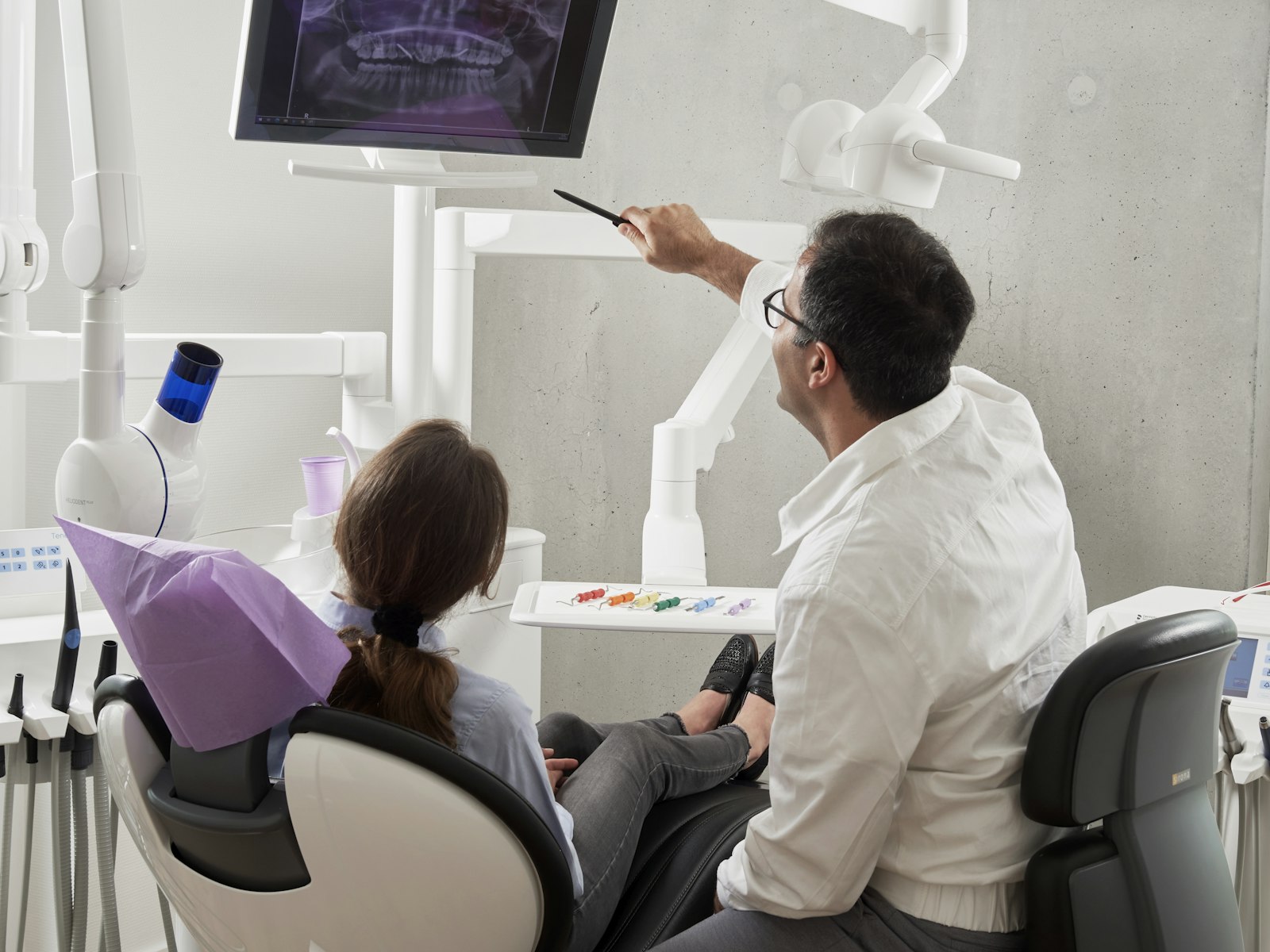
Treatment begins with a full examination, photographs, 3D intraoral scans and a CBCT scan of the jaw. From these, the implant positions are planned digitally, and the shape and size of the new teeth are worked out before surgery.
Surgery day
Any remaining teeth that cannot be kept are removed, and the implants are placed in the same appointment. In many cases a fixed temporary bridge is attached on the same day or the next day, so patients do not go home without teeth.
Healing
Over roughly 3 to 6 months, the implants fuse with the surrounding bone. A softer diet is usually advised during this time to protect the healing implants.
The final bridge
Once healing is confirmed, the final bridge is made. The two common choices are acrylic teeth on a titanium bar, which is lighter and easier to repair, or zirconia, which is very hard-wearing and resists staining. Each has trade-offs worth discussing at the planning stage.
For people already wearing a full denture, the process is much the same. The guide to converting dentures to implants covers that path.
Looking After a Full-Arch Bridge
A fixed bridge does not come out at home, so cleaning needs a different routine from natural teeth or a removable denture. Food can collect under the bridge where it meets the gum, and plaque needs to be kept off the implants in the same way it does on natural teeth.
- Brush twice daily with a soft brush, angling the bristles under the edge of the bridge.
- Use a water flosser each day to flush beneath the bridge.
- Thread super floss under the bridge and around each implant.
- Attend professional reviews, where the bridge is periodically removed by the dentist for a thorough clean and a check of the implants.
Certain factors raise the risk of complications with any full-arch treatment. Smoking slows healing and is linked with higher implant failure rates. Uncontrolled diabetes can affect healing and gum health. Grinding can overload implants and chip bridge teeth, so a night guard may be suggested. The article on dental implants and smoking explains that risk in more depth.
Common Questions
Is All-on-X the same as All-on-4?
Not exactly. All-on-4 is a trademarked four-implant concept from Nobel Biocare, while All-on-X is a general term for a fixed full-arch bridge on whatever number of implants a patient needs.
How many implants do I need for a full arch?
Most full-arch bridges are supported by four to six implants per arch. The number depends on bone volume and density, which jaw is being treated, bite forces and general health, and it is confirmed with a CBCT scan.
Will I have teeth on the day of surgery?
In many cases, yes. A fixed temporary bridge is often attached on the day of surgery or the following day, provided the implants are stable enough. The final bridge follows after healing.
How long does a full-arch bridge last?
With good home care and regular reviews, implants can last many years, though the bridge teeth may need repair or replacement over time, particularly acrylic. Catching problems early helps, and the guide to implant failure signs and what to do lists the warning signs.
Does All-on-X cost more than All-on-4?
Not necessarily. Cost depends mainly on the number of implants, the bridge material, whether grafting is needed and the complexity of the case, rather than on the name. General market ranges in Australia are often quoted at around $20,000 to $35,000 or more per arch; these vary with complexity and provider, and a written quote follows an exam.
Talk Through Full-Arch Options at Lumi Dental
If you are weighing up full-arch implants, the most useful first step is a proper assessment rather than a choice between names. The team at Lumi Dental in Melrose Park, Sydney, offers a complimentary full-arch consultation for All-on-X, covering your goals, an examination and the scans needed to work out how many implants your jaw can support. Where a case needs a registered specialist, the team refers.
You can read more about dental implants at Lumi Dental, or book a complimentary full-arch consultation to talk through your options. A written quote follows once the examination and scans are complete.


