


A birthday party lasts about three hours. The lolly bag that comes home can last a fortnight, and that is usually where the risk to teeth sits. Cake and lollies eaten together with the party food, followed by water and a proper brush at bedtime, are unlikely to do much harm on their own. A handful of lollies every afternoon for the next two weeks is a different matter.
Written by Dr James Tran, BDent (University of Sydney), MICOI, GradDip (Oral Implants), general dentist at Lumi Dental in Melrose Park.
The lolly bag usually does more harm than the party
Each time sugar reaches the teeth, plaque bacteria turn it into acid, and the enamel surface softens for a while before saliva helps it recover. One concentrated session gives the teeth one acid attack and then time to repair. Grazing on sweets through the day keeps topping up the acid, so the enamel never gets a proper break. Our article on how sugar causes tooth decay explains the process in more detail.
That makes a party oddly manageable. The sweet things tend to arrive together after the savoury food, when the mouth is already producing plenty of saliva, and then they stop. The Australian Dental Association has made a similar point in its advice to parents: occasional treats are not the main problem, repeated exposure is. The difficulty is the bag opened in the car, a few more after dinner, and the rest spread through the school week.
Hosting with fewer sugar hits
If you are running the party, the order of the food matters as much as what is on the table. Serve the savoury food first and bring out the cake and any lollies together near the end, rather than leaving open bowls of sweets out all afternoon. If there is a lolly hunt, time it just before the cake so the haul is eaten alongside everything else. Cheese cubes, crackers, fruit platters and vegetable sticks with dip can sit beside the chips, and our guide to tooth-friendly snacks for children has more ideas that still feel festive.
Jugs of cold tap water make an easy default drink. Juice and soft drink bring both sugar and acid, and sipping them over a long afternoon is harder on enamel than a small cup with the meal. Fruit juice labelled no added sugar still contains natural sugars, as our article on fruit juice, smoothies and teeth explains.
For the take-home bag, the ADA has suggested small games, toys or sports items in place of sweets. Bubbles, stickers, a small ball or a mini notebook are cheap and last longer than a lolly. One or two small chocolates with a toy is a fair middle ground.

Sorting what comes home
When a bag arrives home, it helps to sort by how long each sweet stays on the teeth rather than by how much sugar it contains. Sticky and slow-dissolving lollies linger in the grooves of the back teeth; chocolate melts and clears the mouth relatively quickly.
| Sweet | What it does to teeth | A sensible approach |
|---|---|---|
| Chocolate | Clears the mouth fairly fast | Keep a few to have with meals |
| Toffees, caramels and chewy lollies | Pack into molar grooves and around fillings | Best let go, or one after a meal with water |
| Lollipops and hard boiled lollies | Keep sugar on the teeth for many minutes; biting them can chip teeth | Best let go |
| Sour and fizzy lollies | Combine sugar with acid that softens enamel directly | Rarely, with a meal, then water |
| Sugar-free lollies and gum | No sugar to feed bacteria, though some are acidic; gum suits older children only | Fine in small amounts |
Put the keepers somewhere out of sight and offer one or two with lunch or dinner over the following days. Quietly passing on the rest is a reasonable choice.
Party night at bedtime
A glass of tap water once the party is over rinses away much of the sugar, and most Australian tap water contains fluoride. Because enamel is a little softer straight after sugar and acid, it is sensible to wait at least 30 minutes before brushing, especially after sour or fizzy lollies or soft drink.
Bedtime brushing is the step not to skip, however tired everyone is. Use a pea-sized amount of fluoride toothpaste for two minutes, and help with the back teeth, which is where lollies lodge and where children's own brushing tends to miss. Most children need an adult to help until about eight years of age. Spit out the excess rather than rinsing so the fluoride stays on the teeth overnight, and floss any back teeth that touch.
If a hard lolly breaks a tooth
Biting down on a hard lolly is a common way for children to chip a tooth. Rinse the mouth with water, keep any piece of tooth you find, and call the practice. A small chip in the enamel is rarely urgent, but a break that shows yellow dentine or makes the tooth sensitive to cold should be seen within a day or so. Our article on chipped teeth from chewing ice covers how chips are repaired, and our emergency dentist page explains how to get an urgent appointment.
Signs the sweet weeks are adding up
One party is easy to absorb. Several in a month, plus school events and well-meaning relatives, can make sugar a daily habit without anyone quite deciding it should be. About a third of Australian children aged five to six have already had decay in their baby teeth, according to the National Child Oral Health Study.
The early sign to look for at home is a dull, chalky white line along the gum edge of the teeth. At that stage the enamel is softening but has not broken down, and the process can often be stopped. A dentist or OHT may suggest fluoride varnish, which our guide to fluoride varnish for children describes, or fissure sealants on the grooves of the back teeth. Brown spots and holes come later.
What a children's check-up at Lumi covers
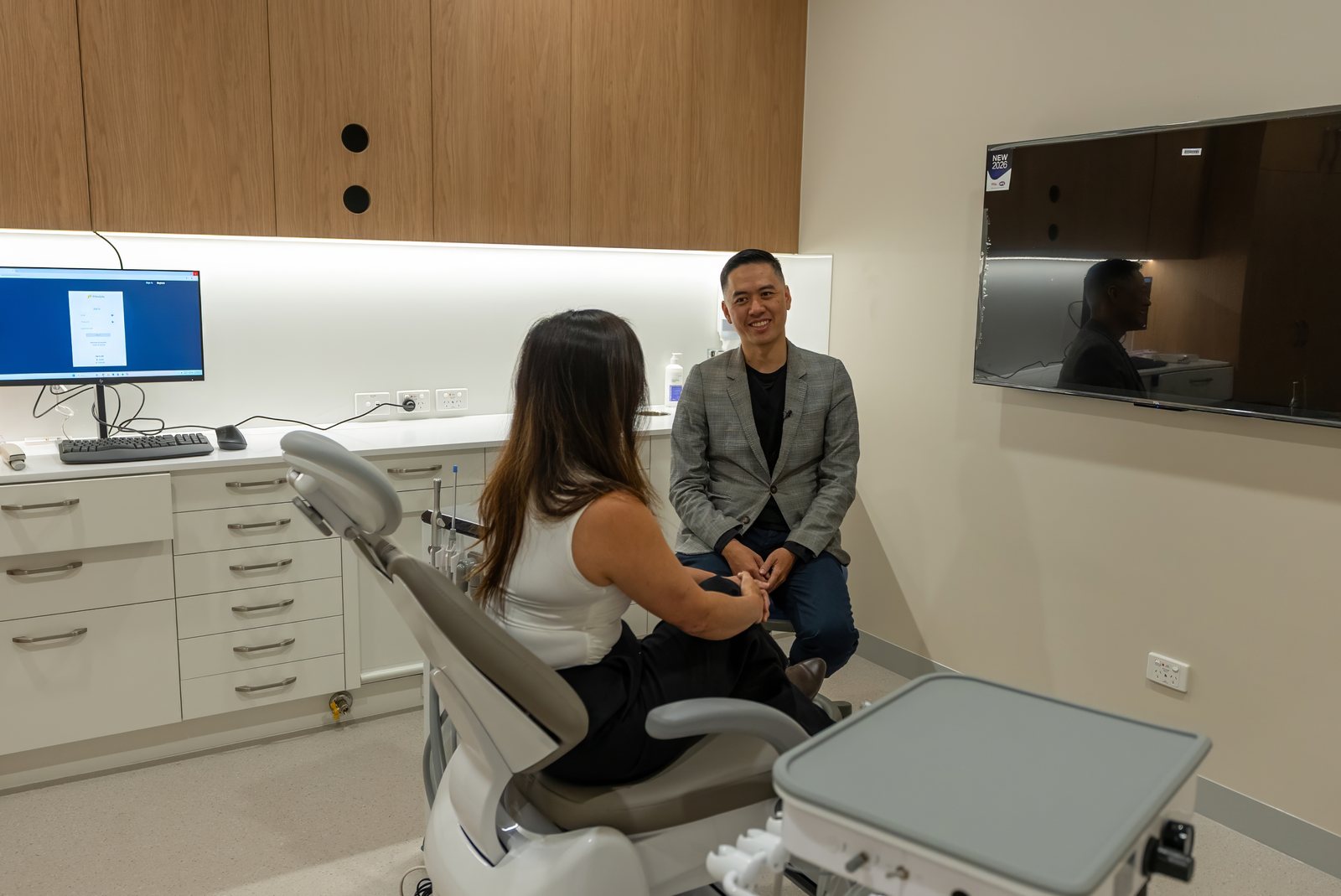
At a check-up the dentist looks for early white-spot changes along the gum line and in the grooves of the back teeth, and asks about snacks, drinks and the daily routine. Our oral health therapists provide cleans, fluoride treatments and practical advice for parents, including how to handle party season. Lumi Dental accepts the Child Dental Benefits Schedule for eligible children and can refer to a specialist paediatric dentist if a child needs care beyond a general practice. Our children's dentistry page explains what a first visit involves.
Parents also ask
Is it better to let my child eat all the lollies at once?
From the teeth's point of view, eating a moderate amount in one sitting with a meal is kinder than spreading the same lollies over several days. That does not mean the whole bag in one go, but a few after dinner beats one every hour.
Can my child brush as soon as we get home?
Rinsing with water straight away is helpful. Leave brushing for 30 minutes or so, particularly after acidic sweets or soft drink, so the softened enamel is not scrubbed.
Will the Child Dental Benefits Schedule cover a check-up?
For eligible children, the CDBS covers basic services such as examinations, cleans, fluoride and fillings up to a capped amount over two years. Our guide to the CDBS explained sets out who qualifies.
Booking a check-up
If invitations are stacking up, a check-up is an easy way to see how your child's teeth are coping. Our team in Melrose Park sees children of all ages. See the current deals page for new family offers or read about children's dentistry at Lumi Dental.
Sources
- Australian Dental Association: Beware of spooky sweets, look after your teeth, say dentists
- Raising Children Network: Dental health and dental care for kids 5 to 8 years
- Better Health Channel (Victorian Government): Dental erosion
About the author

Dr James Tran is a general dentist at Lumi Dental in Melrose Central, Melrose Park. He holds a Bachelor of Dentistry (BDent) from the University of Sydney and a Graduate Diploma in Oral Implants, and is a Master of the International Congress of Oral Implantologists (MICOI).
This article is general information only and is not a substitute for an examination and individual advice from a registered dental practitioner. Suitability for any treatment varies from person to person.








