
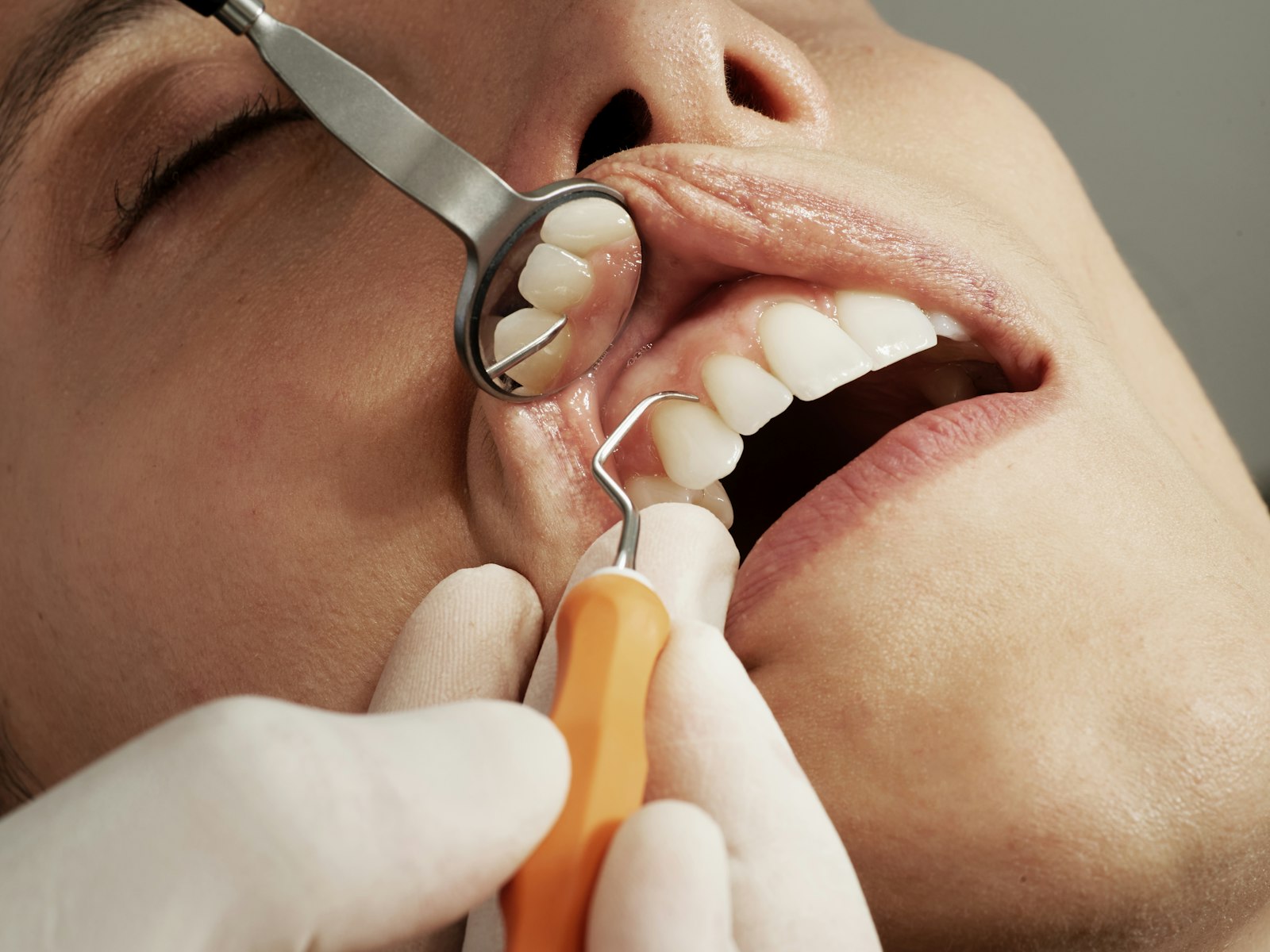

If a filling genuinely feels high, it will not wear itself down, so a bite adjustment is the fix. Filling material does not change shape to accommodate you. A restoration sitting even a fraction of a millimetre proud sends the whole force of your bite through one point, which is why the tooth can ache, feel bruised or turn sensitive to cold. Mild awareness for a day or two is common. Clear pain on biting after a few days needs a phone call.
Key takeaways
- A genuinely high restoration does not settle by itself, because the material does not wear or reshape to fit your bite.
- Very mild bite awareness often eases within a day or two as the ligament around the tooth recovers from being overloaded.
- Local anaesthetic numbs your sense of where the teeth meet, so a bite that felt fine in the chair can feel wrong an hour later.
- An adjustment is usually quick, uses blue and red marking paper and a fine bur, and often needs no anaesthetic at all.
- Pain on biting is not always a high spot. Pulp inflammation, a cracked tooth or a tooth already needing root canal treatment can feel similar.
- Full mouth occlusal equilibration is a considered, irreversible treatment. A removable splint is usually the sensible first step for grinding.
Why a fraction of a millimetre matters so much
Bite force in the back teeth is substantial. Normally that load is shared across many contact points at once. When one restoration stands proud, that tooth takes the hit alone, and the periodontal ligament, which is the shock absorbing layer between root and bone, gets bruised.
What that feels like
A dull ache, a feeling that the tooth is longer than the others, tenderness when you tap it, and often new cold sensitivity. The ache can radiate along the jaw. Some people report the tooth feels loose, which is the ligament being inflamed rather than the tooth actually moving.
Why your teeth are unusually good at detecting it
The ligament contains receptors sensitive enough to detect a particle of grit measured in tens of microns. That precision is why patients can be right about a high spot even when it is invisible to the eye.
Why it is hard to judge on the day
Anaesthetic changes your perception
Local anaesthetic dampens proprioception, which is your sense of where your teeth meet. Your lip and cheek also feel swollen and unfamiliar, so you tend to bite differently. A bite that checked out perfectly in the chair can feel obviously wrong once sensation returns an hour or two later. This is not carelessness by the dentist. It is a known limitation, and it is exactly why review appointments exist.
How dentists try to work around it
Careful checking with marking paper, asking you to tap and grind side to side, and comparing against how the neighbouring teeth meet. Even so, a small proportion of restorations need refining afterwards. Telling your dentist honestly rather than trying to be an easy patient is genuinely helpful.
| Time since the filling or crown | Usually within the normal range | Worth calling the practice |
|---|---|---|
| First few hours | Numbness fading, odd or unfamiliar bite, tender gum from the clamp or injection | Only if you cannot close your teeth together at all |
| 24 to 48 hours | Mild bite awareness, some cold sensitivity, slight tenderness on chewing | Sharp pain each time you bite, or a clear point that hits first |
| 3 to 7 days | Sensitivity easing steadily, chewing becoming comfortable | Pain unchanged or worse, tooth still feels high, avoiding chewing on that side |
| 1 to 2 weeks | Occasional twinge with very cold food, settling week on week | Ache that lingers after cold, throbbing, waking you at night, jaw or ear pain |
| Beyond 2 weeks | Tooth behaving like the rest of your teeth | Any ongoing pain on biting, new swelling, or a bad taste around the tooth |
What a bite adjustment actually involves
The appointment, step by step
You bite on thin marking paper, usually blue, then on a second colour, usually red, so the dentist can separate the contacts you make when you close from those you make sliding sideways. The marks show where the restoration is taking too much load. A fine finishing bur removes a very small amount of material, often less than the thickness of a sheet of paper. You bite again. The process repeats until the marks are even across the arch. The surface is then polished smooth, because a rough surface collects plaque and feels unpleasant to the tongue.
Does it hurt?
Usually not, and anaesthetic is often unnecessary. Only enamel or restorative material is being touched, and only a sliver of it. The appointment is typically short. Relief is often immediate, though a tooth that has been overloaded for a week may stay tender for several more days while the ligament recovers.

When the bite is not the problem
Pulpitis
A deep filling can leave the nerve inflamed. The signature is lingering pain after cold rather than pain on biting, and it can build over days. Reversible inflammation often settles. Irreversible pulpitis usually leads to root canal treatment or extraction.
A cracked tooth
Cracked tooth pain is sharp, comes on release of biting rather than on pressure, and is often triggered by chewing something hard or fibrous. It can be present before the filling was ever placed. Related situations are covered in our guide to a chipped filling and whether it is an emergency.
Something loose or unstable
A restoration that has debonded, or a temporary crown that has shifted, can create a bite that changes day to day. Our articles on a temporary crown that has come off and a tooth that feels loose but has not come out cover what to do in the meantime.
Occlusal equilibration: the wider version
What it means
Occlusal equilibration is adjusting multiple teeth so the biting load is distributed evenly across the arch, rather than refining a single new restoration. It is used in some cases of jaw joint pain, heavy wear or after extensive reconstruction.
Why it is not a first step
Removing enamel is irreversible. Full mouth equilibration is a considered, planned treatment carried out after diagnosis and record taking, not something to launch into because a tooth feels odd. Where grinding is the underlying issue, a night guard or splint is the reversible option that most clinicians will try first, and it can be stopped at any time if it is not helping. Where the bite relationship itself is the concern, orthodontics may be the more appropriate route, and our piece on overbite versus overjet explains those terms.
What it typically costs
As a general market observation rather than a quote, an occlusal adjustment is usually a short appointment and inexpensive compared with restorative work. It is also a common expectation across the profession that adjusting a restoration recently placed at the same practice is handled as part of the original treatment, at no extra charge. Confirm the arrangement with your own dentist, since policies vary. Full mouth equilibration or splint therapy are separate, larger items. You can see the current new-patient offers and ask for a written quote before anything proceeds.
Frequently asked questions
How long should a new filling feel strange?
Mild awareness for a day or two is common. If the tooth still feels high or hurts on biting after three or four days, book a review rather than waiting it out.
Will a high filling wear itself down?
No. Composite and ceramic do not reshape to suit your bite. Waiting simply means the tooth is overloaded for longer, which can prolong the tenderness and, in some cases, contribute to a crack.
Why does my tooth hurt when I bite down after a filling?
The most common reason is a high contact overloading the ligament around the root. Less commonly it can be pulp inflammation, a crack, or a filling that has not bonded properly. A dentist can usually tell the difference in a few minutes.
Does a bite adjustment need an injection?
Usually not. Only a sliver of material is removed and it is generally painless enough that anaesthetic is unnecessary. Tell your dentist if the tooth is very sensitive and they can numb it.
Can a high filling cause a root canal?
A prolonged high contact can keep a tooth inflamed and, in some cases, contribute to a pulp that does not settle. Getting it adjusted promptly reduces that risk, which is a good reason not to put off the call.
Should I keep chewing on the other side until it settles?
Favouring the other side for a couple of days is reasonable. If you are still avoiding that side after a week, the tooth is telling you something and it needs checking.
Get it checked at Lumi Dental
If a filling or crown still feels high, or biting on it is uncomfortable, do not wait for it to wear in, because it will not. The team at Lumi Dental in Melrose Park can check the contacts, adjust and polish, and rule out the other causes of pain on biting. Have a look at our current new-patient offers, or read more about general dentistry at Lumi Dental. We are open Monday to Saturday, with Sunday by appointment.
This article is general information only and is not a substitute for personal dental advice. Every mouth is different, so please see a dentist for advice about your own teeth.


