

When an implant starts to move, or the gum around it keeps swelling and bleeding, the first worry is usually whether the tooth is gone for good. In most cases a failed implant can be taken out and the gap restored again, either with a new implant or with a bridge or denture. Taking it out and putting something back are two separate decisions, though, and the second one depends on why the first implant failed and how much bone is left.
Written by Dr James Tran, BDent (University of Sydney), MICOI, GradDip (Oral Implants), general dentist at Lumi Dental in Melrose Park.
Movement means the implant has lost its hold on the bone
An implant works because bone grows tightly against its surface. Once it can be moved, that bond has been lost, and it cannot be tightened or set again. A 2024 literature review by Masaki and colleagues in the Japanese Dental Science Review states the rule plainly: implants should be removed if they are mobile or if the tooth they carry cannot be maintained, for example when the implant itself has fractured.
A wobbling tooth is not always a failed implant. Often the crown or the small screw holding it has loosened while the implant underneath is still firm, and that is a much smaller repair. Our article on a loose implant crown explains how to tell the two apart, and our guide to dental implant failure signs lists the warning signs worth acting on.
Early and late failures have different causes
Some implants never bond to the bone in the first place. These early failures show up in the weeks or months after surgery, usually before a tooth has been fitted. The Masaki review links them mainly to factors in the patient: smoking, diabetes, radiotherapy, bone quality and gum disease around the remaining natural teeth.
Late failures happen after an implant has been working for some time. The most common cause is peri-implantitis, an infection of the gum and bone around the implant, followed by fracture of the implant and implants placed in a poor position. In a 2019 review in Clinical and Experimental Dental Research, Solderer and colleagues found peri-implantitis behind 81.9% of late failures in the studies they examined.
Peri-implantitis does not automatically mean removal. The decision takes into account the person's age, how visible the tooth is, where it sits in the mouth and how much bone has been lost. Earlier, milder cases can sometimes be cleaned and managed, which our article on peri-implantitis treatment describes.
Taking an implant out is usually less involved than placing one
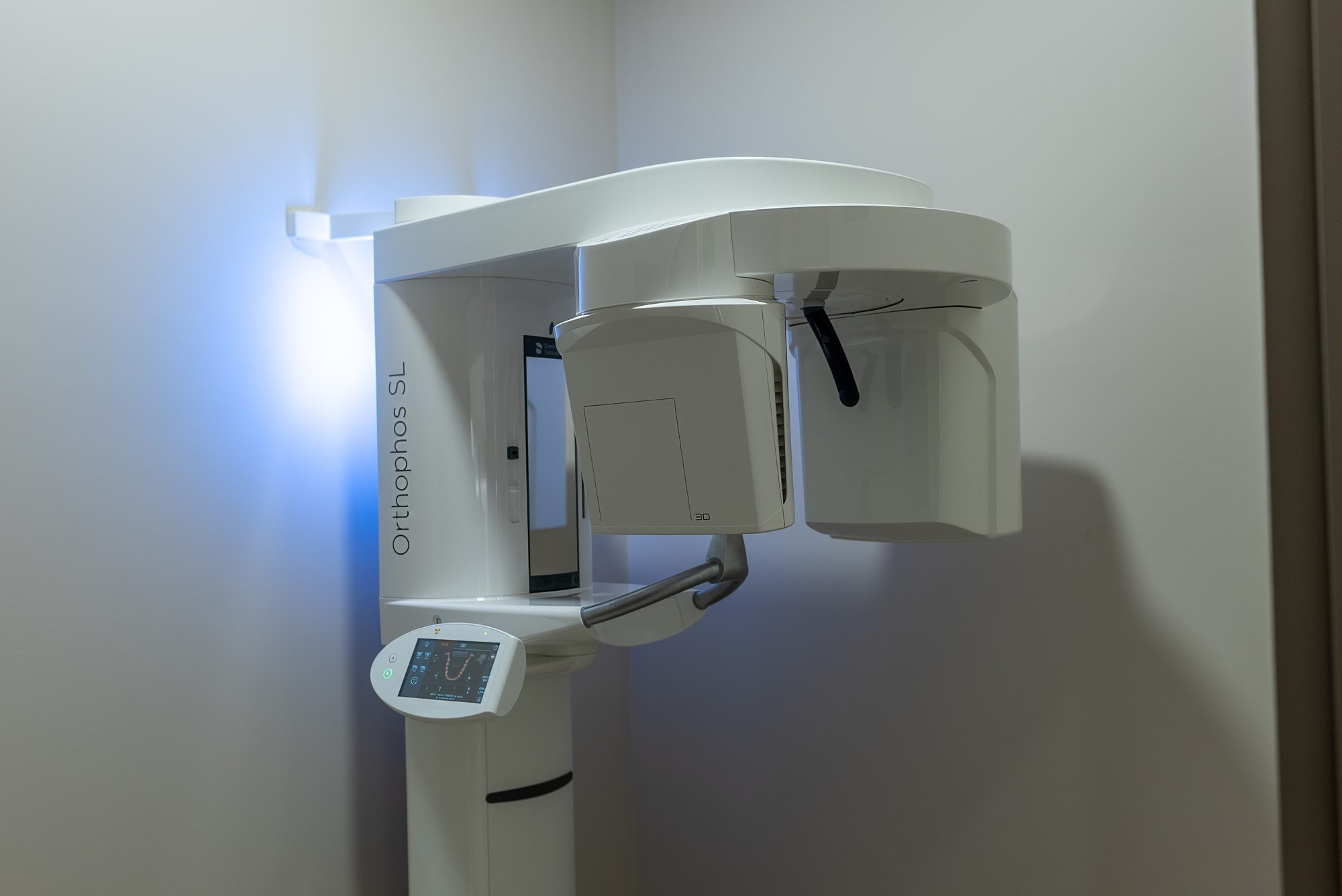
Removal is generally done under local anaesthetic, often in a single appointment. A 3D X-ray is taken beforehand so the dentist can see the nerve canal in the lower jaw, the sinus above the upper back teeth and how much bone surrounds the implant.
How the implant comes out depends on how firmly it is still held:
| Technique | What it does | Typical use |
|---|---|---|
| Lifting instruments | The implant is eased out like a loose tooth | Implants that are already mobile |
| Reverse torque | A ratchet grips the implant and unscrews it | The preferred first approach for implants still bonded to bone |
| Piezosurgery or burs | A small amount of bone around the top of the implant is released | When unscrewing alone does not free it |
| Trephine | A hollow drill cuts a ring of bone around the implant | A last resort, for example with a broken implant |
Both reviews favour reverse torque first because it disturbs the least bone. The Masaki review advises that trephines be used only when other tools cannot be, since they leave a large defect that often needs grafting, and notes that rare complications such as jaw fracture and bone infection have been reported. After the implant is out, any infected tissue is cleaned from the socket.
Bone has to recover before a second implant is considered
The hole left by an implant is wider than a tooth socket, and the bone around a failed implant is often thinned. According to the systematic review summarised by Masaki and colleagues, a new implant was generally placed four to six months after removal. Some sites need a bone graft during that time, which our article on bone grafts and sinus lifts covers.
Replacing the implant at the same visit is sometimes possible. The same review cites a study that found no significant difference in failure between immediate and delayed replacement, and notes that waiting has little advantage when there is enough solid bone for a longer or wider implant to grip firmly. Where the first implant was in the wrong position, waiting is usually better, because the old socket is rarely where the new one should go.
The waiting period is also when the cause gets dealt with. Gum disease on the other teeth is treated, blood sugar control is reviewed with your doctor if you have diabetes, and grinding is addressed, often with a night guard.
What can go back in the gap
Another implant in the same place
This is often the first choice when the bone has healed well and the reason for the failure has been controlled. The Masaki review reports that rough-surfaced implants did better than smooth ones on replacement, and that slightly wider implants tended to survive a little better.
An implant in a slightly different spot
If the original site is badly damaged, placing the implant a few millimetres away, or using two implants to support a short bridge, can sometimes avoid a large graft. The 3D scan shows whether that is realistic.
A bridge or a denture instead
Sometimes the sensible choice is to stop surgery for now. A bridge anchored to the neighbouring teeth, or a partial denture, replaces the tooth without asking damaged bone to heal around another implant, and an implant can still be considered later. Our comparison of implants, bridges and dentures sets out how they differ.
A second implant has lower odds than the first
Replacement implants do well for many people, but the numbers are lower than for first implants. The Masaki review reports a weighted survival rate of 86.3% one to five years after replacement. It also cites a separate systematic review in which survival was 88.7% for a first replacement, 67.1% for a second replacement, and 91.8% when the original implant had failed early. The Solderer review found five-year survival between 71% and 100% across the studies it included.
Much of what improves those odds is within reach. Smoking slows healing and harms the bone, and the Masaki review names smoking and grinding among the problems to check and control as far as possible before a second implant is placed. Our article on dental implants and smoking explains why. A crown designed so it can be cleaned properly, and regular maintenance visits afterwards, also matter.
Working out the cost of starting again
Because every step is optional depending on the case, the total varies a great deal. As a guide, a single implant with its crown typically costs somewhere around $4,000 to $7,000 in the Australian market, before any removal, grafting or temporary tooth. These are general market ranges, not our fees.
A written quote after an examination should list each stage separately: the 3D X-ray and scan, the removal and the method expected, any bone or gum graft, healing reviews, the new implant and its abutment, the crown, and a temporary tooth if the gap shows when you smile. It is reasonable to ask who will do each part, since difficult removals and grafts are sometimes referred to a registered specialist. If the original implant was placed elsewhere, check any written warranty and your health fund's rules before the removal rather than afterwards.
What we do when an implant is in trouble
At Lumi Dental the first step is an examination with a 3D X-ray and an intraoral scan taken at the practice, so the bone, nerve and sinus can be seen before any recommendation is made. Our oral health therapists provide gum treatment and the ongoing maintenance that helps keep implants healthy. If you have a medical condition that affects surgery, we may contact your GP or specialist before planning. More complex removals and grafts may be referred to a registered specialist. If you are anxious about treatment, Lumi offers happy gas, inhaled pain relief, oral sedation and IV sedation. You can read more about dental implants at Lumi Dental.
What patients ask about replacing an implant
Is having an implant removed painful?
It is done with local anaesthetic, so you should feel pressure rather than pain. It is often quicker than the original surgery, particularly when the implant is loose or can be unscrewed. Soreness and some swelling for a few days afterwards is common, more so if bone had to be cut or a graft placed.
How long is the wait for the new implant?
Commonly four to six months, and longer if a large graft is needed. Same-day replacement is an option only when enough firm bone remains.
Can I have another implant if I still smoke?
It may be possible, but the risk of another failure is higher. Most dentists will strongly encourage you to stop, at least around the time of surgery and healing.
Booking an implant assessment
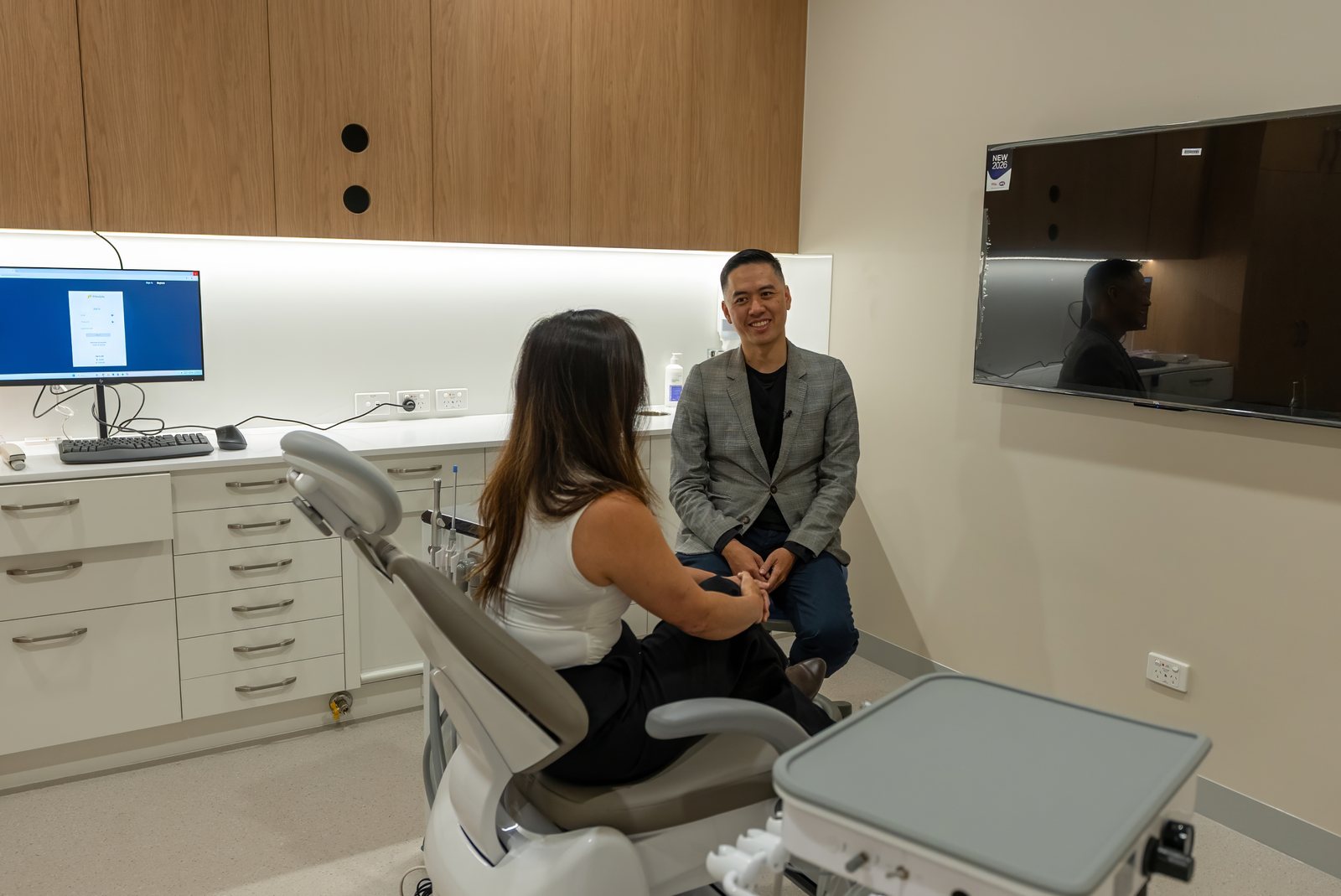
If an implant feels loose, the gum around it is sore or swollen, or you have been told it needs to come out, we can examine it, take a 3D X-ray and go through each option with you. Implant consults are free at our Melrose Park practice; see our current deals page or contact us to book.
Sources
- Masaki C and colleagues. Treatment strategies for dental implant removal: a literature review. Japanese Dental Science Review, 2024
- Solderer A and colleagues. Removal of failed dental implants revisited: questions and answers. Clinical and Experimental Dental Research, 2019
About the author

Dr James Tran is a general dentist at Lumi Dental in Melrose Park. He holds a BDent from the University of Sydney and a Graduate Diploma in Oral Implants, and is a Master of the International Congress of Oral Implantologists (MICOI).
This article is general information only and is not a substitute for an examination and individual advice from a registered dental practitioner. Suitability for any treatment varies from person to person.








