

No. If a tooth is infected, has an abscess or needs a root canal, the infection is treated first and the whitening comes afterwards, because peroxide whitening gel passes through enamel and dentine into the pulp and makes an inflamed or dying tooth more painful without fixing the problem that is darkening it. healthdirect puts the infection side plainly: a tooth abscess will not go away on its own, and antibiotics alone are not enough to treat it. The Australian Dental Association's teeth.org.au covers the colour side: discolouration from inside a tooth, including a problem with the dental pulp, needs treatment by a dentist, and whitening alone will not improve it. Here is how I sequence teeth whitening around an infected tooth, and why.
Written by Dr James Tran, BDent (University of Sydney), MICOI, GradDip (Oral Implants), general dentist at Lumi Dental in Melrose Park.
The short version
- Whitening gel does not stay on the surface. Laboratory research has reported hydrogen peroxide reaching the pulp chamber of intact teeth, and more of it through teeth with fillings.
- An inflamed pulp (pulpitis) reacts to that peroxide with sharper, longer pain.
- An abscess needs root canal treatment or extraction to remove the cause. Antibiotics settle it for a time; they do not fix it.
- The usual order: treat the infection, complete and seal the root canal, wait about two weeks, whiten, then match any final crown or bonding to the new shade.
- A root canal treated tooth may darken over the years. External whitening lightens it less reliably; internal bleaching from inside is often the better tool.
- Infection sits near the top of our guide to who should not whiten their teeth yet.
Why whitening gel and an inflamed tooth do not mix
Peroxide molecules are small enough to move through enamel and dentine to the stains inside a tooth, and they keep going. In a laboratory study of extracted upper front teeth in the Journal of Clinical and Diagnostic Research, a 30% in-chair gel left measurable hydrogen peroxide inside the pulp chamber of every intact tooth after an hour, and teeth with fillings let more through, a glass ionomer filling more than a composite one. The authors describe the pulp's response as ranging from mild, short-lived inflammation to lasting change at higher doses.
In a healthy tooth that is tolerable: the cold twinge of whitening fades within a day or two. An inflamed pulp is already swollen inside a rigid chamber with nowhere to expand, which is why pulpitis throbs, and adding an irritant through the dentine, or straight through a cavity, a crack or a leaking filling, turns that throb into something that keeps you awake. In my experience it also muddies the diagnosis, because a tooth sensitive from whitening and a tooth that is dying can feel similar for a few days. Our article on reversible and irreversible pulpitis explains how a dentist tells the two apart.
An abscess changes the timeline
healthdirect describes a tooth abscess as a swollen lump filled with pus near the root of a tooth, caused by bacteria getting in through decay, a cracked tooth, a deep filling, a failed root canal or gum disease. Treatment, in healthdirect's words, may include antibiotics to help fight the infection, although antibiotics alone are not enough, drainage of pus if there is swelling, and root canal treatment or removal of the tooth when decay or a crack is the cause. The antibiotic buys calm; the root canal or extraction removes the source. Patients I see are often surprised that the tablets are the smaller part of the plan, and that a tooth which stopped hurting on antibiotics still needs the definitive step. Our guide on what to do about an abscessed tooth covers the first 48 hours. Whitening pauses until the source is dealt with and the tooth is sealed.
The single rule: treat the infection first, whiten after
If a tooth hurts, is swollen or needs a root canal, start with the root canal and leave whitening for later. The sequence I use looks like this.
- Examination and X-ray to confirm which tooth is the problem and whether it can be saved.
- Infection control: drainage where there is swelling, antibiotics only when there are signs of spread, and the first stage of root canal treatment, removing the inflamed or dead pulp.
- Completion of the root canal and a sealed filling in the access hole, commonly over two or more visits.
- About two weeks of settling, because the ligament around the root is sore for a while.
- Whitening of the whole smile, with the treated tooth assessed on its own, since it may respond differently.
- Any crown, veneer or composite bonding last, matched to the settled shade, because whitening does not change the colour of fillings and crowns.
The sealed tooth keeps gel out of the empty pulp chamber, and the final restoration is made to the lighter shade. Our article on internal bleaching of a dark tooth picks up what happens when one treated tooth needs more help than its neighbours.
What happens to a root canal treated tooth over time
A tooth with no living pulp can slowly change colour. A review of non-vital tooth bleaching in Case Reports in Dentistry explains that bacteria, blood and other material left within the pulp chamber cause discolouration over time, which is why a front tooth sometimes turns grey years after a successful root canal. External gel works on these teeth, but less predictably, because the stain is deep in the dentine.
Internal bleaching, often called the walking bleach technique, approaches the stain from inside. The dentist reopens the access hole, protects the root filling with a glass ionomer barrier, seals a paste such as sodium perborate mixed with hydrogen peroxide or water into the empty pulp chamber, and changes it weekly until the shade is right, then fills the hole with composite. The review notes that cervical root resorption is a possible side effect, which the barrier is there to reduce, and that colour regression is common, with failure rates reported anywhere from around 10% to around 49% at two to eight years. None of this is possible while the tooth is still infected.
Whiten now, wait, or do something different?
| Situation | Whiten now? | What usually happens instead |
|---|---|---|
| Healthy teeth, surface staining, no pain | Yes, after a check-up and clean | Take-home or in-chair whitening |
| Throbbing tooth, pain on biting, kept awake | No | Root canal treatment or extraction; whiten about two weeks after sealing |
| Swelling, pus, bad taste, fever | No | Urgent appointment, drainage, root canal or extraction, antibiotics if spreading |
| Taking antibiotics, tooth settling | Not yet | Complete the root canal first; the tablets have not fixed the cause |
| Root canal done, tooth sealed, two weeks on | Yes | Whiten the smile; assess the treated tooth separately |
| One grey tooth after an old root canal | Different treatment | Internal bleaching, then external whitening if the rest need it |
Antibiotics and whitening gel
There is no known chemical interaction between the common antibiotics used for dental infections and peroxide gel, so the question is not about the tablets. It is about the tooth. If you are on antibiotics, you have an active infection, and a dentist will not whiten an active infection. The same applies to a tooth that stopped hurting by itself: silence after weeks of pain can mean the pulp has died rather than recovered. If you are whitening at home and a tooth starts to ache in a way that lasts, rather than a cold zing that fades within a day, stop the gel and book an examination.
How we approach this at Lumi Dental
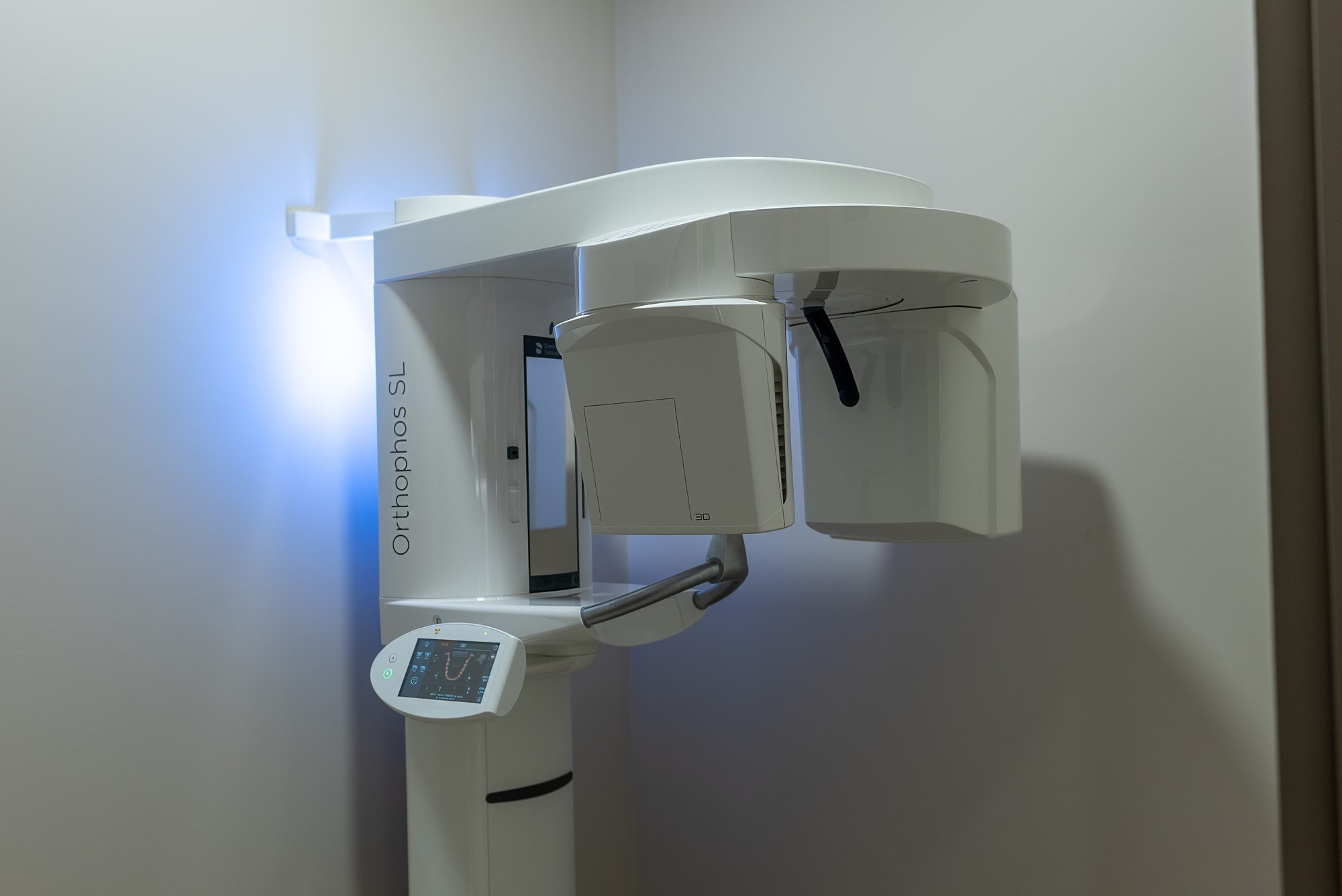
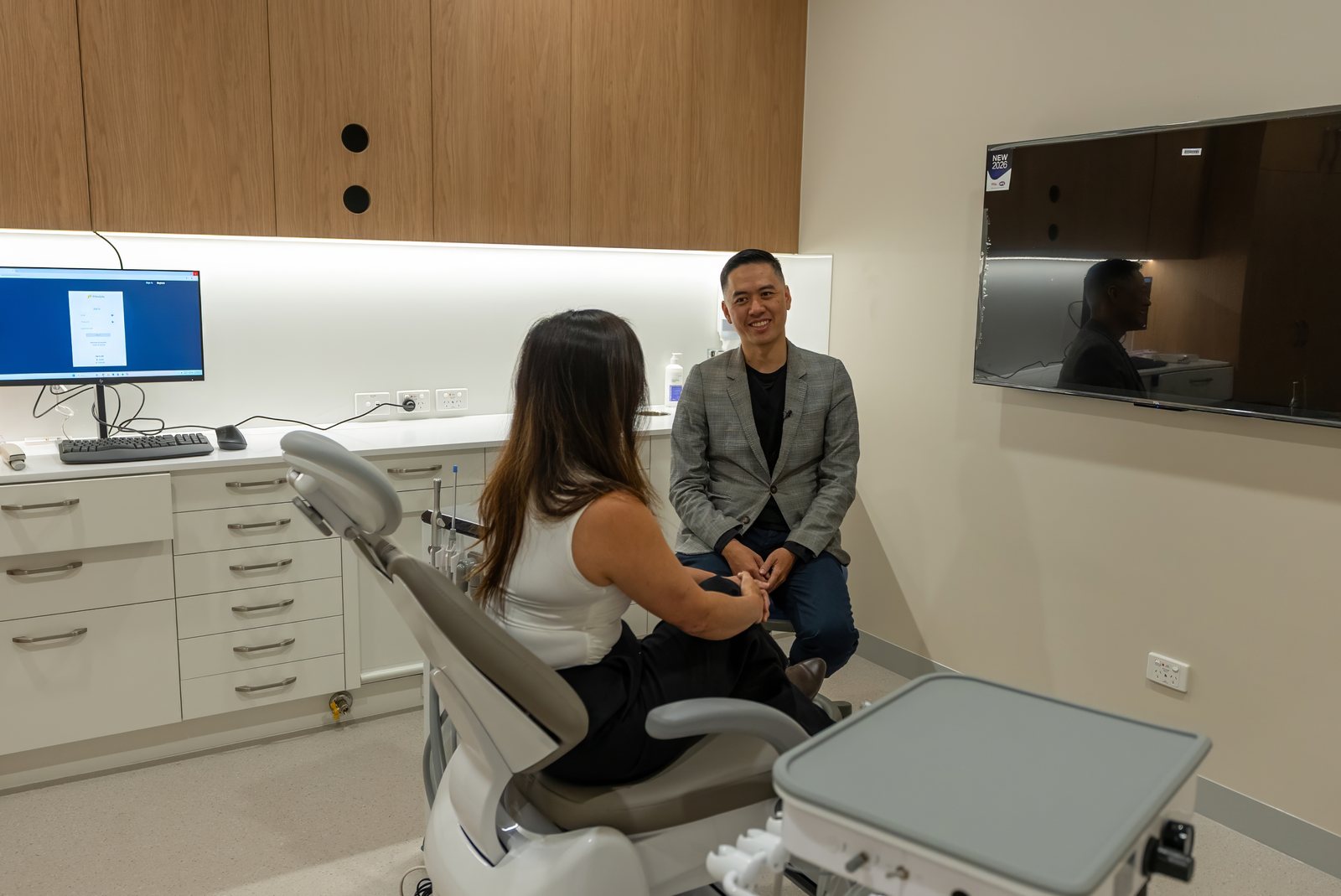
At Lumi Dental in Melrose Park, anyone who asks about whitening with a sore or dark tooth is examined by a dentist first, with in-house 3D X-ray (OPG and CBCT) when a crack, an abscess or a hidden canal needs to be seen rather than guessed. The dentist plans root canal treatment or extraction, referring to a registered specialist endodontist where the anatomy calls for it, and the emergency dentist page explains how to book for swelling or severe pain. Once the tooth is sealed and settled, whitening is planned using Lumi Home, Lumi Refresh or Lumi Radiance.
Questions patients ask
Can I whiten my teeth if I have a tooth infection?
Not until the infection has been treated. Peroxide reaches the pulp, so whitening an infected tooth adds pain and does nothing about the cause.
Can I whiten my teeth while taking antibiotics for a tooth infection?
The antibiotics are not the obstacle; the infection is. Antibiotics alone do not cure a tooth abscess, so a dentist will wait until the root canal or extraction is done. Our guide to antibiotics for a tooth infection covers what they can and cannot do.
How long after a root canal can I whiten my teeth?
About two weeks after the root canal is completed and the tooth is sealed, provided it is comfortable. Whitening before any final crown lets the crown be matched to the new shade. Our root canal treatment guide explains the stages.
Will whitening lighten a tooth that has had a root canal?
Sometimes, but less reliably than a living tooth, because the stain sits deep in the dentine. Internal bleaching usually works better for a single dark tooth, and the two methods can be combined.
Can teeth whitening kill a nerve or cause an abscess?
Dentist-supervised whitening at the regulated strengths is not known to kill a healthy nerve. It can inflame a pulp already damaged by decay or a crack, which is why an examination comes before any gel.
Toothache or a dark tooth and hoping to whiten? Complimentary cosmetic consult in Melrose Park
If a tooth is aching, swollen or has gone dark and you want a brighter smile at the end of it, the team at Lumi Dental can set the order: the tooth first, the shade second. Swelling or severe pain is an emergency appointment. For the whitening afterwards, book a complimentary cosmetic consult at Melrose Central in Melrose Park, or read about teeth whitening at Lumi Dental. Patients come to us from Ryde, Parramatta, Ermington and Rydalmere, with on-site parking.
Sources
- healthdirect: Tooth abscess
- Australian Dental Association (teeth.org.au): 4 reasons to see a dentist for teeth whitening
- PMC (Journal of Clinical and Diagnostic Research): Spectrophotometric evaluation of the pulpal peroxide levels in intact and restored teeth, an in vitro study
- PMC (Case Reports in Dentistry): Revitalizing the dull, a classic approach to nonvital tooth bleaching
About the author

Dr James Tran is a general dentist at Lumi Dental in Melrose Park. He holds a BDent from the University of Sydney and a Graduate Diploma in Oral Implants, and is a Member of the International Congress of Oral Implantologists (MICOI).
This article is general information only and is not a substitute for an examination and individual advice from a registered dental practitioner. Suitability for any treatment varies from person to person.








