
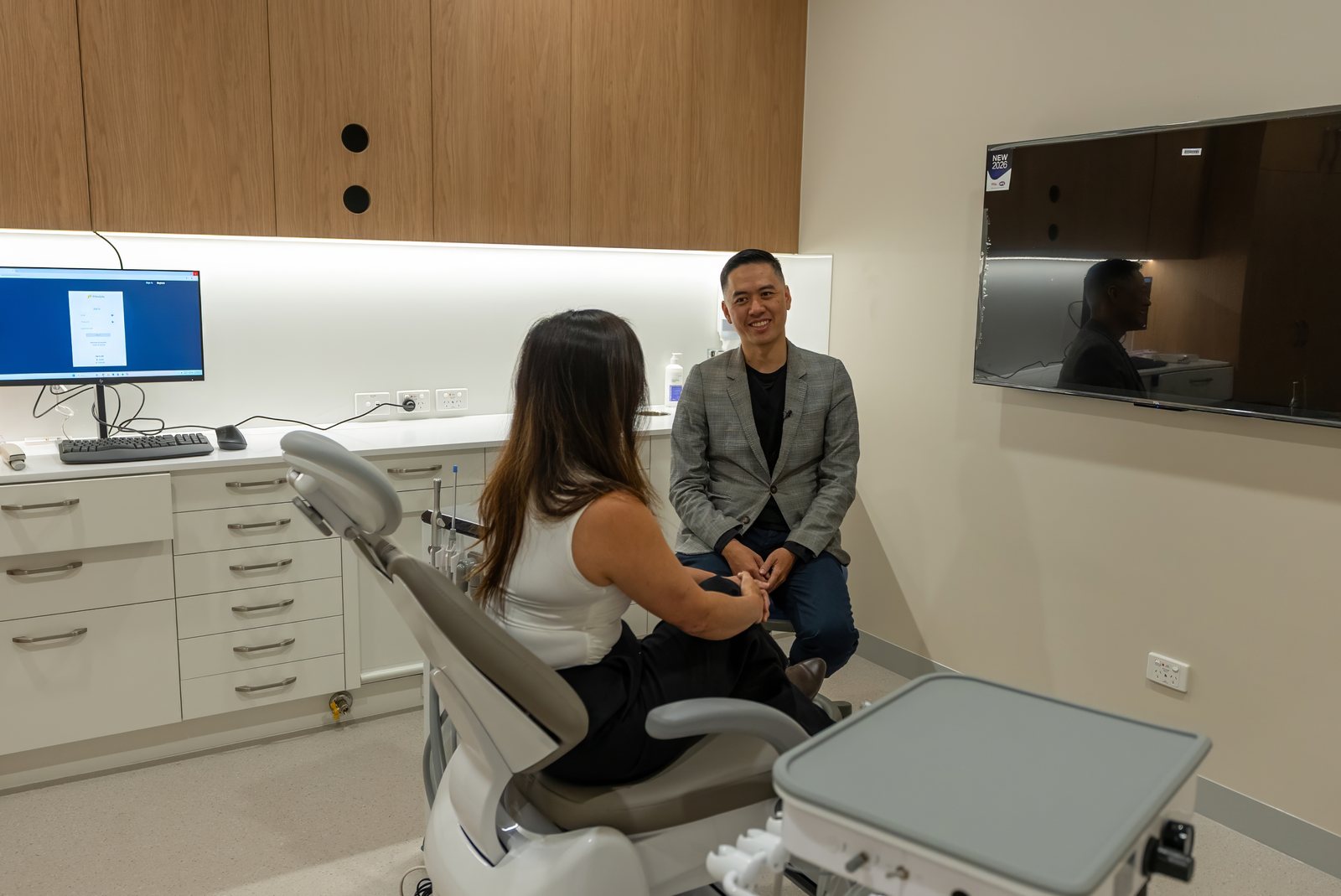

Most adults can whiten their teeth, but some should not whiten yet, and a few should do something else instead: anyone with untreated decay, active gum disease, a cold sore or mouth ulcer, anyone pregnant or breastfeeding, anyone under 18, and anyone whose front teeth carry crowns, veneers or fillings that will not change colour. Who should not whiten their teeth is really a list of things a dentist checks before the gel is handed over. The Dental Board of Australia states that products above 6% hydrogen peroxide or 18% carbamide peroxide can only be used or supplied by registered dental practitioners, and only once the patient has been assessed as suitable. In my experience that assessment changes the plan more often than people expect.
Written by Dr James Tran, BDent (University of Sydney), MICOI, GradDip (Oral Implants), general dentist at Lumi Dental in Melrose Park.
The short version
- Whitening gel lightens natural enamel only. Crowns, veneers, bonding and fillings stay the same shade and can look darker by comparison.
- Decay, cracked teeth and inflamed gums are treated before whitening, not after; see our guide to whitening with gum disease.
- Pregnancy, breastfeeding, cold sores, ulcers and being under 18 are reasons to wait, not reasons to never whiten.
- Sensitivity and gum irritation rise with gel strength and wear time, so a sensitive mouth needs a gentler plan, not a stronger gel.
- Grey or banded tetracycline stains respond slowly and unevenly; sometimes bonding or veneers are the better tool.
- If a dentist has not examined your teeth in the past year, that check comes before any whitening.
The single rule: if a dentist has not looked in the past year, that check comes before the gel
Every item on the checklist below is found at an ordinary examination, and most cannot be found any other way. A cavity between front teeth, a crack under an old filling, a bleeding gum pocket, an exposed root: none show in a bathroom mirror, and all change how whitening behaves. A salon or kiosk cannot look for them either, which is why the NHS advises that whitening from salons or with a pharmacy or online kit may harm teeth and gums. The Dental Board's guidance says a take-home product is supplied only after an appropriate assessment and examination. So the order is fixed: examination, any treatment needed, then whitening. A general dental examination doubles as the whitening assessment.
The checklist, condition by condition
This is the list I run through before any whitening. Each row has one of three answers: whiten now, wait, or do something else first.
| Condition | Whiten now, wait, or do something else first | Why |
|---|---|---|
| Healthy teeth and gums, examined in the past year | Whiten now | Only the target shade and your usual sensitivity are left to discuss |
| Untreated decay, a cracked tooth or a leaking filling | Do something else first: repair, then whiten | Gel reaches the nerve through a cavity or crack |
| Bleeding, swollen gums or diagnosed gum disease | Wait: gum therapy first, whiten once the gums are stable | Inflamed gums burn more easily, and a tray does not seal against swollen tissue |
| Cold sore, mouth ulcer or cracked lips | Wait until fully healed | Peroxide stings broken skin, and the tray rubs the sore |
| Pregnant or breastfeeding | Wait | No evidence of harm and none of safety, so Australian guidance says not to |
| Under 18 | Wait, or discuss with the dentist | Teeth are still maturing; UK guidance does not whiten anyone 17 or younger |
| Crowns, veneers, bonding or fillings on front teeth | Do something else first: plan the restorations around the new shade | Restorations do not change colour, so a mismatch is expected |
| Grey teeth, tetracycline banding or one dark tooth | Whiten with adjusted expectations, or consider bonding or veneers | Stain inside the dentine responds slowly and unevenly |
| Enamel erosion, receding gums or exposed roots | Dentist decides: often a lower strength, gel kept off the roots | Roots have no enamel to lighten and conduct cold readily |
| Teeth that are already sensitive, or whitened in the past few months | Whiten after a desensitising program, with a gentler protocol | Sensitivity tracks gel concentration and wear time |
| Expecting one flat white shade or a changed tooth shape | Talk first | Whitening lightens; it does not paint, straighten or reshape |
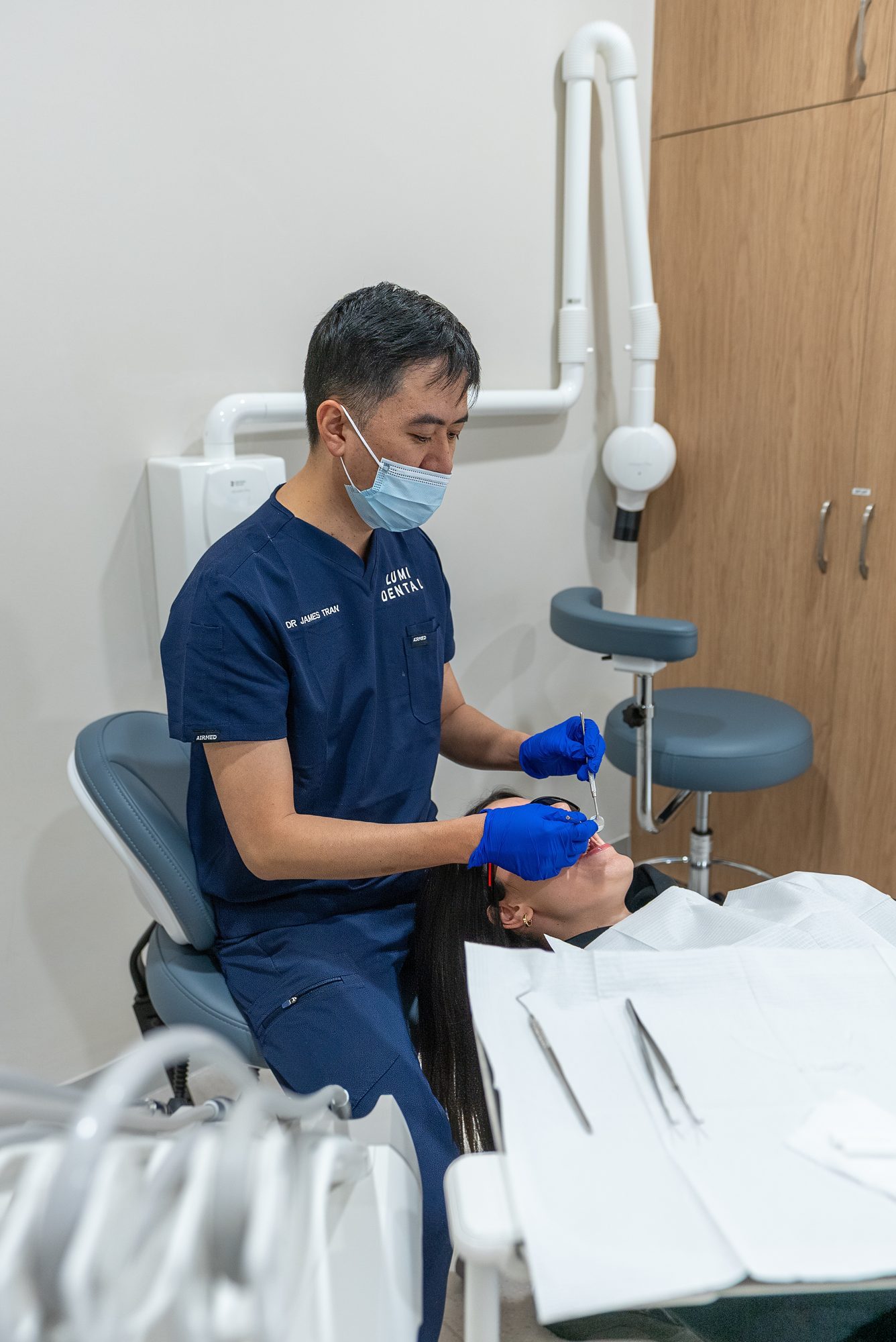
Fix first: decay, cracks, leaking fillings and gum disease
Peroxide normally passes through enamel into the dentine underneath. Through a cavity, a crack or a leaking filling it reaches the nerve far faster, and the result is sharp, lingering pain. The repair comes first. A front-tooth filling is usually placed in a provisional shade and finished once the whitening has settled, about two weeks later. Our article on whitening with cavities or untreated decay covers the sequencing.
Gums are the other half. The Australian Dental Association's teeth.org.au site lists chemical burns to the gums among the risks of whitening, and inflamed gums burn and bleed more readily than healthy ones. The practical order is a clean and, where needed, gum therapy with the oral health therapists, a review a few weeks later, then whitening.
Wait: pregnancy, breastfeeding, cold sores, ulcers and being under 18
None of these are permanent exclusions. Teeth.org.au says whitening is not recommended for women who are pregnant or breastfeeding, because there is no evidence of harm and none of safety, so it is deferred. The NHS gives the same advice and adds that whitening is not done for anyone aged 17 or younger. Teenage teeth have a larger nerve chamber and are usually already light, so sensitivity is likelier and the benefit small.
A cold sore or an ulcer is a shorter wait. Peroxide on broken skin stings, and a tray edge rubbing the sore slows healing. Once it has fully healed, usually within a couple of weeks, whitening can start.
The wrong tool: crowns, veneers, bonding and stains inside the tooth
Teeth.org.au states that whitening will not change the colour of porcelain crowns, veneers or white fillings, and a review in the Journal of Evidence-Based Dental Practice lists unacceptable colour change of restorations among the reported risks. With a front-tooth crown or bonding there are two paths: whiten to roughly the shade of the restoration and stop, or whiten to the shade you want and replace the restoration about two weeks later. Our guide to whitening veneers and crowns goes through both.
Stains inside the tooth are a different problem. The same review lists age yellowing, tetracycline staining, fluorosis, decay and a dead nerve among the intrinsic causes of discolouration. Age yellowing responds well. Tetracycline bands and grey teeth respond slowly and may never fully even out, and a single dark tooth after a knock or a root canal is often whitened from the inside instead. Our article on tetracycline and intrinsic stains explains what to expect. Whitening never changes shape, length or crowding; for those, bonding or veneers are the tool.
A modified plan: sensitivity, erosion, exposed roots and medicines
The review above reports that tooth sensitivity and mild gum irritation are the common side effects, that their degree is directly related to the peroxide concentration, the duration of treatment and the other ingredients in the gel, and that sensitivity usually appears during treatment and can last several days. Patients I see with sensitive teeth are not excluded; they start a desensitising toothpaste a fortnight beforehand, use a lower strength for shorter sessions, and whiten on alternate nights if needed.
A root surface has no enamel, so gel does not lighten it and it conducts cold straight to the nerve. The tray is trimmed to keep gel off exposed roots, and badly eroded teeth may be better restored before any whitening. Medicines matter in two ways: some dry the mouth, and with less saliva to buffer the gel, gum irritation is more likely; a few make tissue more reactive to light, which matters for an in-chair session. No medicine is stopped or changed for whitening; bring the list and the plan is adjusted around it.
How we approach this at Lumi Dental
At Lumi Dental in Melrose Park, whitening starts with a dentist's examination, X-rays where they are due, and clinical photographs that record your starting shade. Anything on the checklist is dealt with first: fillings by the dentist, a clean and gum therapy with the oral health therapists, and a review to confirm the gums have settled. Only then is a whitening option chosen. The practice offers Home, Refresh and Radiance, and the teeth whitening page explains how they differ. A written quote follows the examination, because the examination decides what is needed.
Questions patients ask
Can I whiten my teeth if I have a cavity?
Not until it is filled. Gel passing through a cavity reaches the nerve and can cause sharp, lasting pain. The filling goes in first and is shade-matched once the whitening has settled.
Is teeth whitening safe when pregnant or breastfeeding?
Australian and UK guidance both say to wait, because there is no evidence either way. Whitening keeps, so most people book it for after weaning. Our article on whitening while pregnant or breastfeeding has more detail.
Can I whiten my teeth if I have gum disease?
Not while the gums are inflamed. Gum therapy comes first, then a review a few weeks later, then whitening once the gums are stable. Whitening on swollen gums risks chemical burns and a patchy result.
Why will my crown or veneer not whiten with the rest?
Because the gel only lightens natural enamel. Porcelain and composite stay the shade they were made in, so the choice is to whiten up to that shade, or whiten further and replace the restoration afterwards.
My teeth are already sensitive. Does that rule out whitening?
Usually not. Sensitivity rises with gel strength and wear time, so the plan is adjusted: desensitising toothpaste beforehand, a lower strength, shorter sessions and alternate nights. Our guide to whitening sensitivity explains what helps.
Not sure whitening is right for you yet? Complimentary cosmetic consult in Melrose Park
If you recognise yourself in one of the rows above, an examination settles which answer applies. Book a complimentary cosmetic consult at Lumi Dental in Melrose Park, or read more about teeth whitening at the practice. Patients visit from Ryde, Parramatta, Ermington, Rydalmere and nearby, and there is on-site parking at Melrose Central.
Sources
- Dental Board of Australia: Teeth whitening products, practitioner resources
- Australian Dental Association (teeth.org.au): Teeth whitening
- NHS: Teeth whitening
- PMC (Journal of Evidence-Based Dental Practice): Tooth whitening, what we now know
About the author

Dr James Tran is a general dentist at Lumi Dental in Melrose Park. He holds a BDent from the University of Sydney and a Graduate Diploma in Oral Implants, and is a Member of the International Congress of Oral Implantologists (MICOI).
This article is general information only and is not a substitute for an examination and individual advice from a registered dental practitioner. Suitability for any treatment varies from person to person.








