
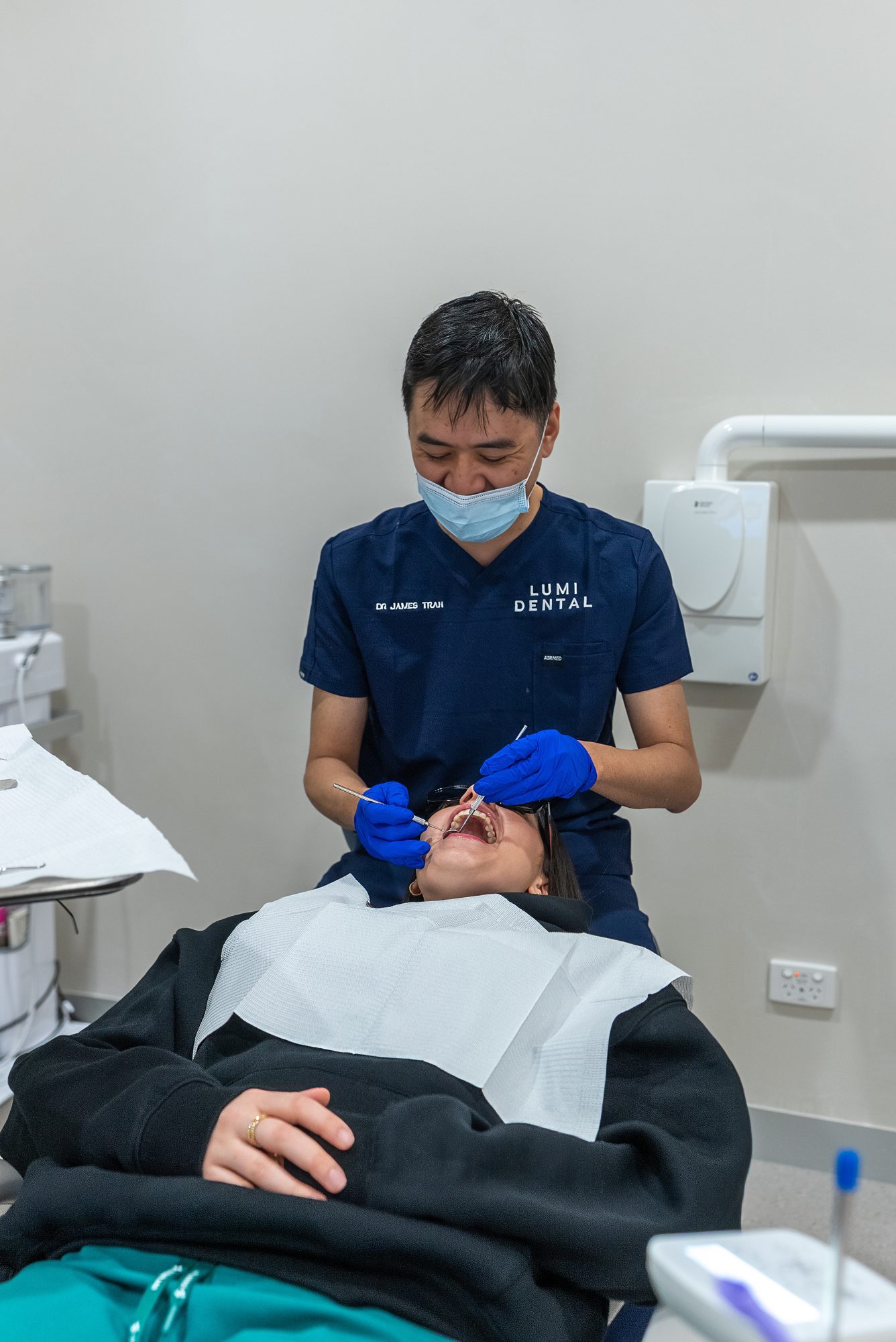

Most children with ADHD can have routine dental care comfortably when visits are short, predictable and booked at the time of day they cope best, with the dental team told in advance what helps. The Australian ADHD clinical practice guideline estimates that between 6% and 10% of Australian children and adolescents have ADHD, so most dental teams see children with ADHD regularly. This guide covers booking, what happens in the chair, medicine timing and brushing routines at home for children with ADHD at the dentist.
Written by Dr James Tran, BDent (University of Sydney), MICOI, GradDip (Oral Implants), general dentist at Lumi Dental in Melrose Park.
The short version
- Waiting, lying still and coping with noise are the hard parts of a dental visit for many children with ADHD, so plan around those.
- The single rule: book short visits at the time of day your child copes best, and tell the team beforehand what helps.
- If your child takes ADHD medicine, keep to the routine their doctor has set. Questions about dose or timing go to the paediatrician or GP.
- Research links ADHD with a higher chance of injuries to the teeth, so a mouthguard for sport is worth a conversation.
- At home, a visual checklist, a timer and brushing at the same point in the routine each day tend to work better than reminders.
- Medicine effects such as dry mouth and evening hunger are covered in our article on ADHD medication and your teeth.
Why a dental visit asks a lot of a child with ADHD
The Australian guideline describes ADHD as difficulties with attention, hyperactivity and impulsivity that are out of step with a child's age. It lists distractibility, difficulty being still in structured situations, and a tendency to act on immediate stimuli. A dental visit tests all of these: a waiting room, a chair that tilts back, bright light, instruments near the face and a request to keep still.
None of this reflects on parenting or on the child's character. Many children with ADHD are curious, energetic and observant, and the Royal Children's Hospital Melbourne encourages families to frame those traits positively rather than treating ADHD as a problem to fix. In the dental chair, curiosity can be an advantage.
The guideline also notes that anxiety is common alongside ADHD and that autism co-occurs in 20% to 50% of cases. If your child is also autistic, our guide to autism-friendly dental visits covers sensory changes in more detail.

The single rule: short visits at your child's best time
If your child copes better at some times of day than others, start by booking the dental visit for that window, and keep it short. The RCH fact sheet suggests scheduling the most important learning for a child's best concentration time, which is usually the morning. The same logic applies to a check-up.
Booking tips
- Ask for the first appointment of a morning or afternoon session, when there is less waiting.
- Ask whether a check-up and clean can be split into two shorter visits.
- If your child takes medicine, many families find visits go better while it is working. Book around the usual routine rather than changing it.
A "what helps" note for the team
A few lines sent before the visit save a lot of explaining in the room: what calms your child, what upsets them, any medicines, and whether they prefer to be warned or distracted. In my experience this note does more for a first visit than anything else a parent can bring.
In the chair: what may help
Dental teams often use an approach called tell, show, do: the dentist explains a step in simple words, shows it, perhaps on a finger, then does it. For children with ADHD this works best with short instructions and a clear end point. I usually count aloud, for example "ten more seconds", so the child knows when a step will finish.
The RCH advice for home and school translates well to the chair: brief instructions, a warning before a change, praise for small positive actions, and "first, then", as in "first we count your teeth, then you can tilt the chair".
| Challenge | What may help |
|---|---|
| Waiting | First appointment of a session; wait outside or in the car until called |
| Sitting or lying still | A fidget item in the hands, a short movement break, steps counted aloud |
| Noise and suction | Showing each tool first, a hand signal to pause, the child's own headphones where practical |
| Bright light | Sunglasses to cut the glare of the overhead light |
| Impulsive movements near instruments | Clear rules agreed at the start, a hand signal instead of grabbing, slower and shorter steps |
| Forgetting to brush | A visual checklist, a timer, brushing at a fixed point in the routine |
| Evening snacking | Planned snacks, water as the drink, brushing after the last food of the day |
Medicine, appetite and appointment timing
ADHD medicine is managed by your child's paediatrician, psychiatrist or GP, not the dentist. Please do not change a dose or skip a dose because of a dental visit. If the timing of a visit and the timing of medicine seem to clash, choose a different appointment time, or ask the prescriber if you are unsure.
Do tell the dental team the name of any medicine your child takes. Some children have less appetite during the day and are very hungry once the medicine wears off, which can mean a lot of eating in the evening. Our article on ADHD medication and your teeth explains how dry mouth and that evening rebound can affect teeth.
What research says about teeth and dental injuries
A systematic review in Special Care in Dentistry (Drumond and colleagues) looked at whether children and adolescents with ADHD have more dental injuries. Six studies were reviewed and four were combined; children with ADHD had about 1.8 times the odds of dental trauma compared with their peers. The authors rated the strength of the evidence as very low and said a causal link cannot be established, so this is a pattern to plan for, not a prediction about any one child.
In practical terms, a custom sports mouthguard is worth discussing if your child plays contact sport, and knocked or chipped front teeth should be seen promptly.
A small Swedish questionnaire study (Staberg and colleagues) of 26 parents of 31 children with ADHD found 17 parents reporting poor oral hygiene or difficulty brushing, and 14 children brushing once a day or less. Parents also felt dental staff did not always understand child neuropsychiatry, which is why the note above matters.
Home routines that tend to stick
The RCH recommends making a child's schedule visual and interactive, such as a morning and evening checklist to tick off, and setting a regular bedtime routine. Brushing fits easily onto that list. A few things that often help:
- Brush at the same point in the routine each time, for example straight after pyjamas, so it does not depend on remembering.
- Use a two-minute timer, a song, or an electric toothbrush with a built-in timer. Our guide to electric toothbrushes for kids covers when to start.
- Brush alongside your child. The RCH describes working next to a child, sometimes called body doubling, as helpful for tasks such as homework, and it works for teeth too.
- Use a points chart with small rewards, which the RCH suggests for building positive behaviours.
If brushing has become a daily battle, our article on what to do when a child won't brush has age-by-age ideas. For the evening snacking pattern, see our guide to tooth-friendly snacks for kids.
How we approach this at Lumi Dental
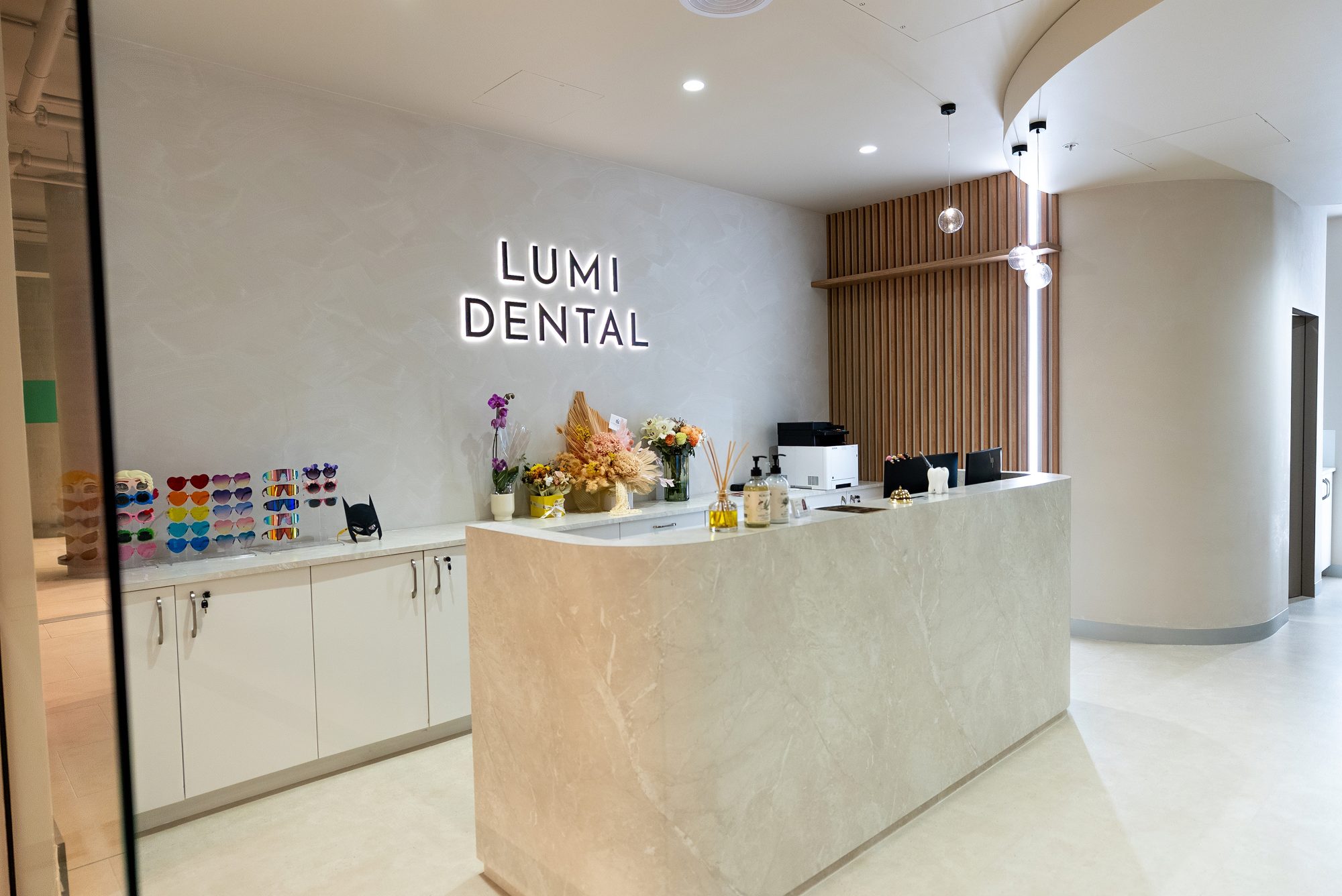
At Lumi Dental in Melrose Park, children are seen by a dentist for the examination and by an oral health therapist for cleans and prevention. When you book, let the team know what helps and ask for a shorter visit; the team at Lumi Dental can split care across more than one visit where that suits your child. Lumi Dental accepts the Child Dental Benefits Schedule for eligible children. Lumi Dental does not provide general anaesthetic and refers to a paediatric dentist or hospital service where it is needed. Read more about the children's dentist service at Lumi Dental.
Questions patients ask
Should my child take their ADHD medicine before a dental appointment?
Keep to the routine their doctor has set. Many families find it easier to book the visit at a time when the medicine is usually working. If you are unsure, ask the paediatrician or GP rather than changing anything yourself.
How can I keep my child with ADHD calm at the dentist?
Short, predictable visits help most. Book the first appointment of a session, send a short note about what helps, bring a fidget item and agree a hand signal to pause. Praise each small step.
Are children with ADHD more likely to get cavities?
The research is mixed, and where a link is reported it does not show why; diet, routine and medicine effects may all play a part. Regular check-ups, fluoride toothpaste and a fixed brushing routine are the practical answer either way.
Can my child with ADHD be put to sleep for dental treatment?
Most children manage routine care while awake with the right planning. Where a general anaesthetic is needed, Lumi Dental refers to a paediatric dentist or hospital service, as it does not provide general anaesthetic itself.
Does Medicare cover my child's dental check-ups?
Many children are eligible for the Child Dental Benefits Schedule, which covers a range of basic dental services. Our guide to the Child Dental Benefits Schedule explains who qualifies.
Book your child's check-up at Lumi Dental, Melrose Park
If your child has ADHD and a dental visit feels like a big ask, the team at Lumi Dental can plan a shorter, more predictable appointment at a time that suits your child. Read about children's dental care at Lumi Dental or check whether your child is eligible for Medicare-funded dental care through the CDBS. Families visit from Melrose Park, Ryde, Parramatta, Ermington and Rydalmere, with on-site parking at Melrose Central.
Sources
- Australasian ADHD Professionals Association: Australian ADHD Clinical Practice Guideline, Background, About ADHD
- The Royal Children's Hospital Melbourne, Kids Health Info: ADHD, advice for school and home
- Special Care in Dentistry (Drumond VZ and colleagues): Dental trauma in children and adolescents with attention-deficit/hyperactivity disorder, a systematic review and meta-analysis (PubMed)
- Swedish Dental Journal (Staberg M and colleagues): Parental attitudes and experiences of dental care in children and adolescents with ADHD, a questionnaire study (PubMed)
About the author

Dr James Tran is a general dentist at Lumi Dental in Melrose Park. He holds a BDent from the University of Sydney and a Graduate Diploma in Oral Implants, and is a Member of the International Congress of Oral Implantologists (MICOI).
This article is general information only and is not a substitute for an examination and individual advice from a registered dental practitioner. Suitability for any treatment varies from person to person.







