
Clear aligners suit most teenagers with mild to moderate crowding or spacing, provided the teen will wear them for 20 to 22 hours a day and most of their adult teeth are through. Parents asking about clear aligners for teenagers usually have two worries: will they work on a mouth that is still changing, and will my child actually wear them. Orthodontics Australia is blunt: aligners only predictably straighten teeth if worn for around 22 hours a day, and allowances have to be made for teeth still erupting. This guide covers both worries, written for Australian families rather than any one brand.
Written by Dr James Tran, BDent (University of Sydney), MICOI, GradDip (Oral Implants), general dentist at Lumi Dental in Melrose Park.
The short version
- Aligners suit mild to moderate crowding, spacing and some bite problems. Complex bites, severe rotations, impacted teeth and jaw growth problems often need braces or a specialist orthodontist.
- Treatment usually starts once most adult teeth are through, often around 12 to 14, though this varies with the child.
- Trays can leave room for second molars still coming through, and colour dots on some systems show whether they have been worn.
- Trays come out to eat and drink anything other than water, and teeth are brushed before they go back in. Our guide to cleaning clear aligners covers the routine.
- Sport, music and lost trays all have workable answers, but every hour out of the mouth slows treatment.
- A retainer afterwards is for life, whichever appliance your teen used.
Which teenagers suit aligners
Aligners move teeth with a series of plastic trays, each slightly different from the last. They are good at closing small gaps, unravelling mild to moderate crowding and tidying tilted teeth. Many mild bite problems can be managed too, often with elastics.
They are weaker at some movements. Teeth that need to be rotated a long way, badly tipped molars, teeth impacted under the gum and bites where the jaws themselves do not match are harder to control with removable plastic. Reviews comparing the two in teenagers have reported similar results for milder crowding, with braces giving more control in complex cases. If your teen's problem is in the harder group, a specialist orthodontist is the right first step, and the team at Lumi Dental refers rather than stretching aligners past what they do well.
Teeth still coming through: second molars and eruption tabs
A teenager's mouth is not finished. Second molars usually arrive in the early teens, and premolars and canines can still be settling at 12 or 13. Aligners are made from a scan taken on one day, so a tooth that erupts later would have nowhere to go if the tray were sealed over it.
Trays can be designed with an open space, sometimes called an eruption tab or eruption compensation, that leaves room for a tooth still on its way. Alternatively the plan is staged, with a refinement scan once the late teeth are through. Orthodontics Australia notes that aligners suit older teens with all adult teeth through best, and that the youngest age is usually around 11 or 12. In my experience it is often better to wait six to twelve months for a 12 year old with teeth still moving than to fight the eruption.
Will my teen actually wear them?
This question decides the outcome and deserves a frank answer at home before anyone takes a scan. Aligners need to be in the mouth for 20 to 22 hours a day, which leaves about two hours for meals, snacks and brushing. A tray that spends the school day in a pocket is not treating anything.
Compliance indicators
Some teen aligner designs include a small coloured dot on the tray that fades with hours of wear. It gives parents and the dentist a rough check at each visit, and a dot that stays bright on a tray that is "done" tells its own story.
Attachments and elastics
Most plans involve small tooth-coloured bumps bonded to a few teeth so the tray can grip and push. Some teens also wear elastics hooked between the trays to correct the bite. Both come off at the end. Our article on aligner attachments and interproximal reduction explains what they do.
Aligners work for the teen who will wear them; braces work for the teen who will not
That is the rule I give parents. Braces work regardless of motivation, at the cost of harder cleaning, food limits and a visible appliance. Aligners are kinder to gums and diet but depend on discipline. The better appliance is the one that matches your teenager.
| Consideration | Braces | Clear aligners |
|---|---|---|
| Hygiene | Harder; brackets trap plaque | Easier; trays out, brush and floss as normal |
| Diet | Avoid hard, sticky and chewy foods | No food limits, but trays out for everything except water |
| Sport | Needs a mouthguard made to fit over braces | Trays out, standard mouthguard in |
| Appearance | Visible; ceramic versions less so | Near-invisible with small attachments |
| Compliance risk | Low; fixed in place | High; depends on 20 to 22 hours of daily wear |
| Visits | Adjustments roughly every 4 to 8 weeks | Reviews every 6 to 10 weeks |

School, sport, music and lunches
Sport
For contact sport such as rugby, football or hockey, the trays come out and a standard mouthguard goes in. For non-contact sport such as swimming, running or netball, the trays stay in.
Musical instruments
Brass and woodwind players usually manage with trays in after a week or two, and some find aligners easier than braces because nothing sharp sits against the lip. Taking the trays out for a performance is reasonable as long as it is the exception.
School and lunches
Trays out to eat, teeth brushed or at least rinsed well, trays back in. Water is the only drink with trays in; juice, soft drink and flavoured milk stain the plastic and trap sugar against the teeth.
Lost aligners
Orthodontics Australia lists lost or broken aligners as a common problem with younger patients; lunch napkins are the usual culprit. Many providers include a few replacements in the fee. If a tray goes missing, move to the next tray if it fits, or back to the previous one if it does not, and call the practice. Our guide to lost or damaged aligner trays covers the steps.
How long it takes, refinements and retainers
Healthdirect gives 1 to 3 years as the usual span for orthodontic treatment; mild crowding sits at the shorter end and bite correction at the longer. Most plans need at least one refinement: a fresh scan and extra trays to finish movements that did not track. Our article on aligner refinements explains why they are routine rather than a sign something went wrong.
When treatment ends, a retainer begins, and this part is not optional. Teeth drift back and teenagers keep growing, so a fixed wire behind the front teeth, a removable retainer at night, or both, becomes a long-term habit. Budget for retainers and occasional replacements as part of treatment.
When to start and who provides them
Most teenagers start once most adult teeth are through, often around 12 to 14. An earlier check at 7 to 10 is still worth having, because some jaw growth and space problems are easier to manage before the growth spurt.
In Australia, aligners are provided by general dentists with training in the system they use and by specialist orthodontists. Healthdirect notes that many general dentists provide some orthodontic treatment, and that treatment should always be by a registered practitioner rather than a mail-order kit. Cost depends on how far the teeth move, how many trays are needed and whether refinements and retainers are included, so ask for a written quote that lists them. A free aligner consultation is the simplest way to find out where your teen sits.
How we approach this at Lumi Dental
The team at Lumi Dental provides clear aligners for teenagers and adults as part of general dental care in Melrose Park. A consultation starts with an examination of the teeth, gums and bite, a 3D intraoral scan rather than putty impressions, and X-rays where needed. We talk through wear time with the teen directly, because they are the one doing the work, and complex bites and growth problems are referred to registered specialists. Younger siblings can see the children's dentist at Lumi Dental, and the practice accepts the Child Dental Benefits Schedule for eligible children. Read more about clear aligners at Lumi Dental.
Questions patients ask
Are clear aligners suitable for a 14 year old?
Often, yes. By 14 most adult teeth are through apart from second molars and wisdom teeth, and mild to moderate crowding can be treated. The deciding factors are bite complexity and whether the teen will wear the trays.
How do I know if my teen is wearing them?
Some trays carry a colour dot that fades with wear, and the fit of each new tray tells the dentist whether the previous one was worn. If a new tray will not seat, hours have been missed.
What if my teen has braces-level problems but wants aligners?
Then the honest advice is braces or a specialist opinion. Aligners stretched beyond what they do well take longer, need more refinements and may still not finish the job. Our article on early orthodontic treatment for children explains the growth problems that usually need a specialist.
Can they play contact sport?
Yes. Trays come out and a mouthguard goes in for contact sport. For non-contact sport the trays can stay in.
Do they need a retainer afterwards?
Yes, for the long term. Teeth move back without one, and teenagers are still growing. Our guide to retainer types and how long to wear them covers the options.
Book a free aligner consultation for your teenager at Lumi Dental
If you are weighing up clear aligners for a teenager, the team at Lumi Dental in Melrose Park can examine and scan their teeth and give a plain answer on whether aligners, braces or a specialist referral fits best. Book a free aligner consultation or read more about clear aligners at Lumi Dental. Families visit from Ryde, Parramatta, Ermington, Rydalmere and nearby suburbs.
Sources
- Orthodontics Australia: Clear aligner treatment for teens
- Orthodontics Australia: Can children have clear aligner treatment?
- healthdirect: Orthodontic treatments
- Better Health Channel: Orthodontic treatment
About the author
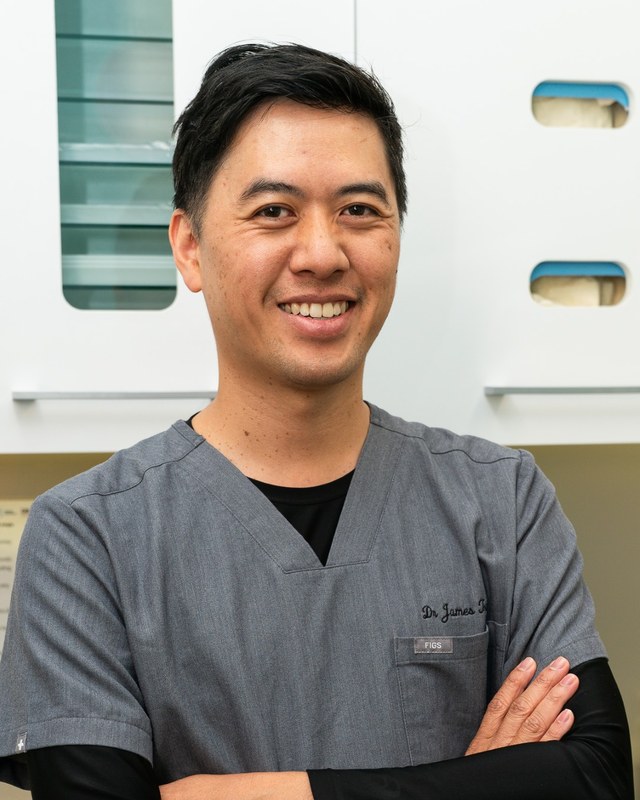
Dr James Tran is a general dentist at Lumi Dental in Melrose Park. He holds a BDent from the University of Sydney and a Graduate Diploma in Oral Implants, and is a Member of the International Congress of Oral Implantologists (MICOI).
This article is general information only and is not a substitute for an examination and individual advice from a registered dental practitioner. Suitability for any treatment varies from person to person.