
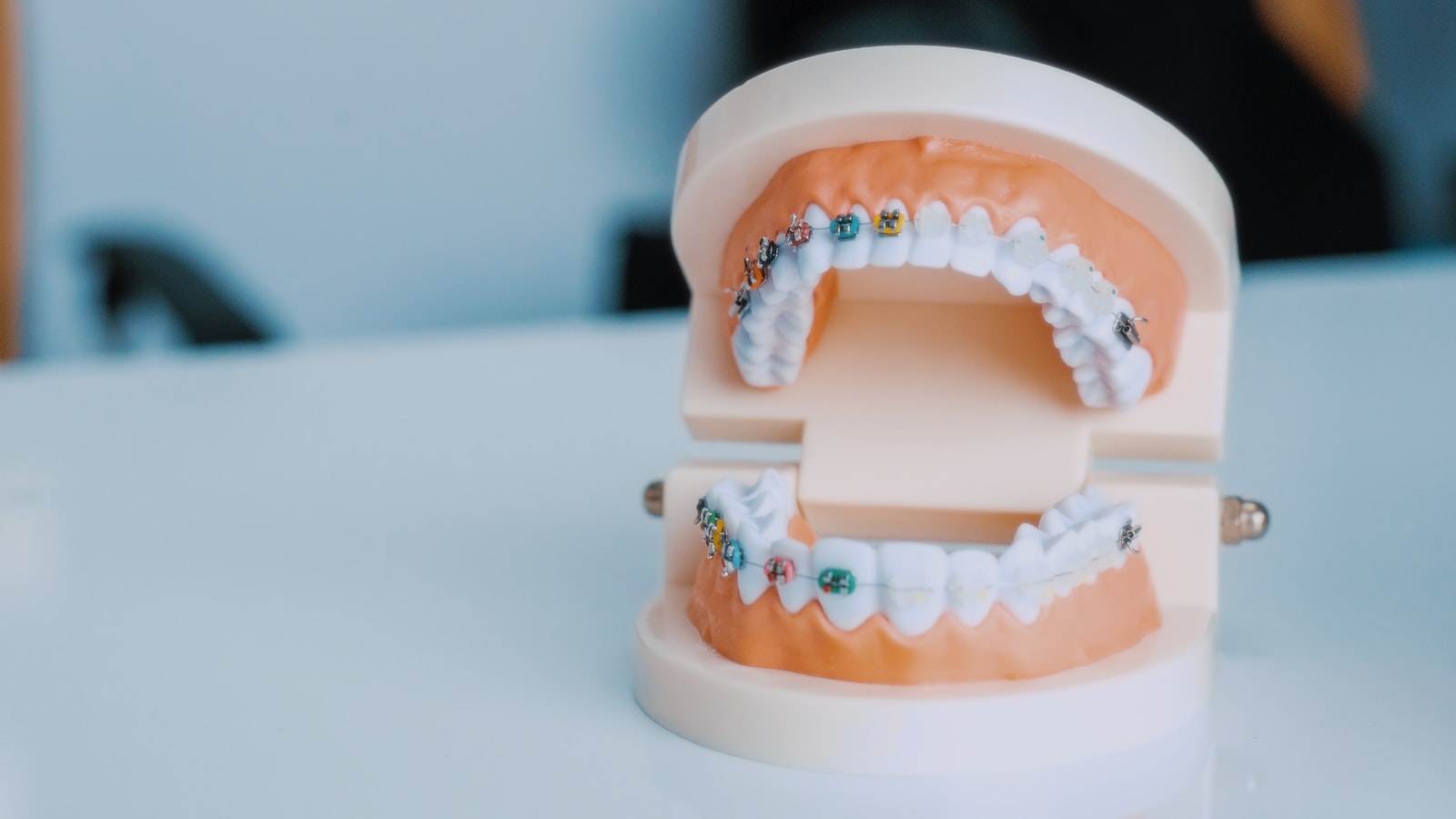

A dental bridge is a fixed option cemented permanently onto neighbouring teeth or an implant, while a partial denture is removable, and the better choice usually depends on how many teeth are missing, the health of the surrounding teeth, and how you feel about a removable appliance. Both are well established ways to replace one or more missing teeth, and neither is universally "better", the right one depends on your situation.
Key takeaways
- Bridges are fixed in place and don't come out, while partial dentures are removable for cleaning and sleeping.
- Bridges generally require shaping down the healthy teeth next to the gap to hold the crowns, a permanent change.
- Partial dentures don't require cutting down healthy teeth, but typically cost less and don't last as long as a bridge.
- Bridges tend to last roughly a decade or more with good care, partial dentures usually need replacing sooner.
- Neither option stops the jawbone gradually changing shape under the gap the way a dental implant can.
- A dental implant is often worth discussing as a third option, since it avoids preparing neighbouring teeth and can support the bone.
The one question that decides most cases
Before comparing cost or appearance, there's one question worth asking first: are you willing to have your healthy neighbouring teeth prepared, meaning shaped down, to hold a bridge? If the answer is no, a partial denture, or potentially a dental implant, is usually the more sensible direction. If the answer is yes, and those neighbouring teeth are strong enough to support it, a bridge becomes a reasonable option to weigh up properly. Almost everything else in this decision, cost, lifespan, day-to-day feel, flows from that one trade-off.
How a bridge works
A traditional fixed bridge replaces a missing tooth by anchoring a false tooth, called a pontic, between two crowns that are cemented onto the teeth either side of the gap. Those neighbouring teeth need to be shaped down to make room for the crowns, which is a permanent, irreversible change, even if those teeth were previously healthy and cavity-free. Once fitted, a bridge functions much like natural teeth. It doesn't come out, there's no daily insertion or removal, and most people adjust to eating and speaking with it quickly.
How a partial denture works
A partial denture is a removable appliance with one or more replacement teeth attached to a frame that clips onto your remaining natural teeth, often using small metal or tooth-coloured clasps. It comes out for cleaning and typically at night, and doesn't require any healthy teeth to be cut down or altered. Some people find the idea of a removable appliance inconvenient, others find it reassuring precisely because nothing permanent is done to their natural teeth. If you're weighing up a partial against a full denture, our guide on full vs partial dentures covers that distinction, and our article on partial denture clasps, metal vs tooth-coloured goes into how the clasp style can affect appearance and fit.
Comparing the two directly
| Factor | Dental bridge | Partial denture |
|---|---|---|
| Fixed or removable | Fixed, cemented in place | Removable |
| Impact on neighbouring teeth | Requires shaping down adjacent healthy teeth | No shaping of neighbouring teeth required |
| Typical cost tier | Higher, given lab work and two crowns involved | Generally lower upfront cost |
| Typical lifespan | Roughly a decade or more with good care | Usually shorter, often needs replacing sooner |
| Day-to-day care | Brush and clean as with natural teeth, plus under the pontic | Remove daily for cleaning, plus clean remaining natural teeth |
| Stability when chewing | Generally very stable, functions like natural teeth | Can feel less stable than a fixed option |
When a bridge tends to make more sense
A bridge is often a good fit when the teeth either side of the gap already have large fillings or existing crowns, meaning less healthy tooth structure is being sacrificed by the preparation. It also suits people who strongly prefer a fixed solution and don't want to deal with a removable appliance day to day, and situations where there's only one tooth missing with strong, well positioned teeth on either side to support the bridge.
When a partial denture tends to make more sense
A partial denture is often the better direction when the neighbouring teeth are completely healthy and untouched, since avoiding unnecessary preparation of sound teeth protects them long term. It also suits people replacing multiple missing teeth across an arch, where a bridge may not be practical or possible, budget-conscious situations where a lower upfront cost matters, and people who'd simply rather not have anything permanently cemented onto their natural teeth. If a partial denture ever gets damaged, it's worth knowing what to do, our guide on what to do with a broken denture has the practical steps.
The option both of these skip over: a dental implant
It's worth knowing that a dental implant is a third path that avoids the main downside of each option above. An implant doesn't require shaping down neighbouring teeth like a bridge does, and unlike a partial denture, it's fixed in the jaw rather than resting on the gum, which also means it can help support the bone in that area rather than the bone gradually changing shape underneath the gap over time, the way it can under a denture or a bridge's false tooth. Implants generally involve a higher upfront cost and a longer treatment timeline, since the jawbone needs time to integrate with the implant. Our detailed comparison, implant vs bridge vs denture, walks through all three side by side if you'd like the fuller picture before deciding.
Cost for any of these options depends heavily on individual factors like materials, the number of teeth involved and the complexity of the case. Our general guide on dental crown cost gives a sense of the cost building blocks involved in a bridge, since a bridge is essentially built from crowns joined together. This article is general information and isn't a substitute for an individual dental assessment, since the right option genuinely depends on your specific mouth.
Frequently asked questions
Can a partial denture be upgraded to a bridge or implant later?
Often yes, a partial denture can be a reasonable starting point while you decide on a longer-term option, though it's worth discussing your longer-term plan with your dentist so any future treatment isn't complicated by the interim choice.
Does a bridge feel like a natural tooth?
Most people adjust to a bridge quickly and describe it as feeling close to a natural tooth, since it's fixed in place and doesn't move during eating or speaking.
Is a partial denture noticeable when I smile or talk?
It depends on the design. Tooth-coloured clasps and a well fitted frame can make a partial denture quite discreet, while some designs are more visible. This is worth discussing directly with your dentist during planning.
What are partial dentures usually made from?
Common materials include cobalt chromium metal frameworks and acrylic, each with different strengths around durability, comfort and cost. Our article on cobalt chromium vs acrylic partial dentures compares the two.
How many teeth need to be missing before a bridge isn't an option?
There's no fixed number, but bridges generally work best replacing one or a small number of adjacent missing teeth with strong neighbouring teeth. Larger gaps or multiple gaps across an arch often point towards a partial denture or implants instead.
Do I need to remove a partial denture every night?
Many dentists recommend removing a partial denture overnight to give the gums a rest and to clean it properly, though individual advice can vary depending on your situation.
Choosing between a bridge and a partial denture comes down to your specific teeth, gap and priorities. The team at Lumi Dental can talk you through what suits your mouth best. Check our current deals or find out more on our general dentistry page.


