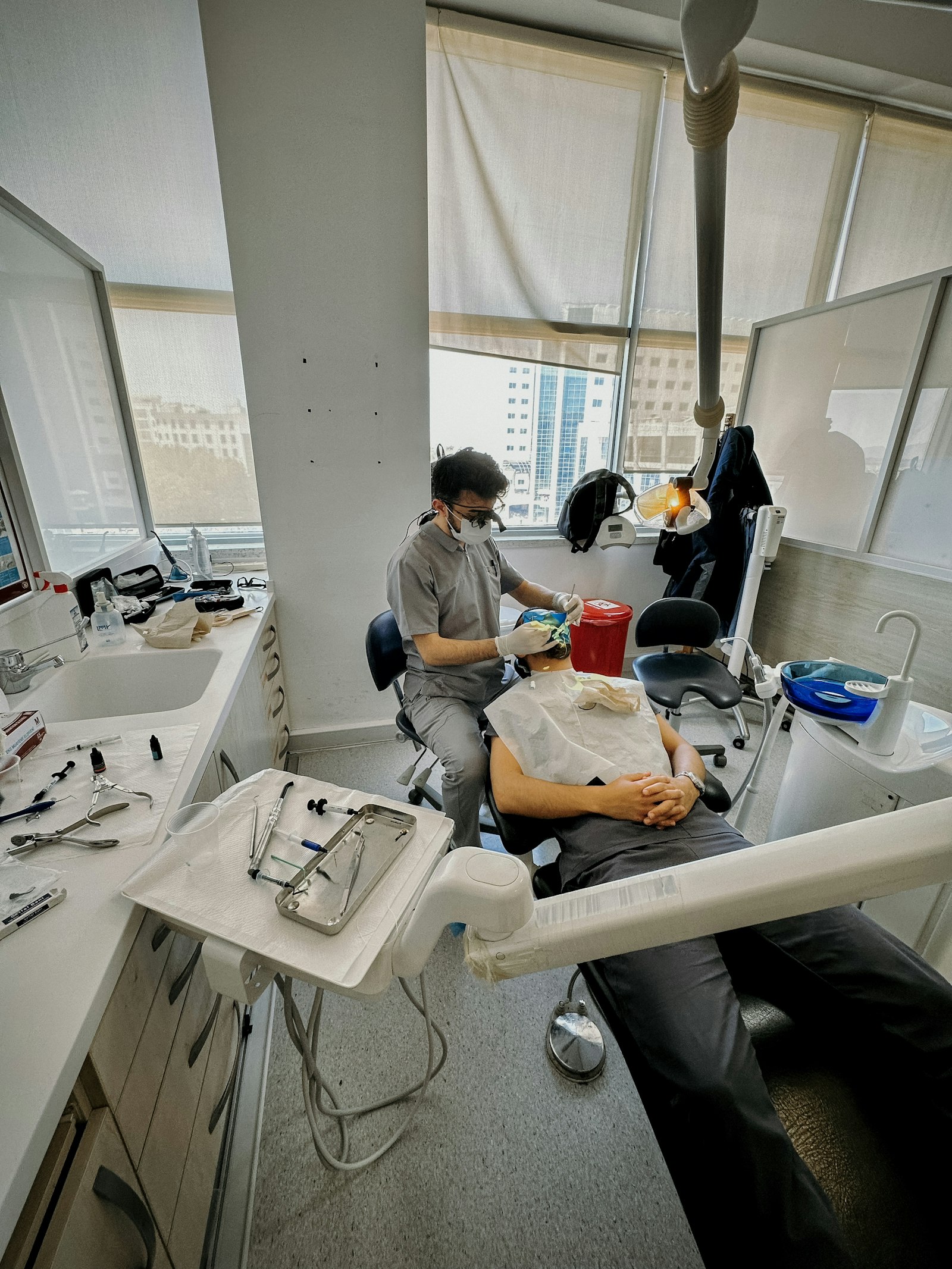

Dental care for veterans, DVA funded and billed straight to the department, runs on one rule that is worth knowing before anything else: a provider who accepts your Veteran Card agrees to accept the DVA fee as full payment and cannot charge you a gap fee. That rule takes away the part of a dental visit most people find stressful, which is not knowing what the bill will be. Everything else about the system takes a little more explaining, because what is funded depends on which card you hold, which part of the fee schedule the treatment sits in, and whether the dentist has to write to DVA before starting.
The Department of Veterans Affairs publishes its own fee schedule for dental services, and claims are processed by Services Australia on the department behalf. Dental care sits inside a much larger health arrangement. In its 2024 to 2025 reporting, DVA recorded more than 200,000 clients receiving health care and support services, and more than 165,000 veterans and family members supported through compensation.
Key takeaways
- A Veteran Gold Card funds a range of dental services needed to meet a clinical need, for all conditions, whether or not they are service related.
- A Veteran White Card funds dental treatment only in relation to the accepted condition or conditions listed on the card.
- Providers who accept the card accept the DVA fee as full payment. There is no gap fee for funded treatment.
- The dental fee schedule is split into Schedule A, B and C. Schedule A is routine and preventive and generally needs no prior approval. Schedule B needs prior financial authorisation. Schedule C is higher cost treatment subject to a monetary limit.
- Periodic oral examinations are funded once every six months, and more often only if the provider tells DVA it is clinically necessary and gets approval first.
- There is no good published Australian research on veteran oral health, so be sceptical of any page that quotes a tidy percentage.
Gold Card and White Card do different jobs
The two cards look similar in the wallet and behave very differently at the front desk.
The Veteran Gold Card
With a Gold Card, DVA funds a range of dental services necessary to meet a clinical need, across all conditions, regardless of whether the problem has anything to do with service. In everyday terms that means an examination, a clean, radiographs, fillings, extractions and dentures are the sorts of items that sit inside the arrangement, subject to the schedule rules below. It does not mean an open cheque book. Items still have to be clinically justified, some still need approval first, and cosmetic work is a separate matter entirely.
The Veteran White Card
A White Card is narrower. It funds treatment only in relation to the accepted condition or conditions printed on the card. If your accepted condition has nothing to do with your mouth, your routine dental care is not funded through the card. If you hold a White Card and you are not sure whether your dental problem connects to an accepted condition, that is a question for DVA rather than for the dental practice, because the practice can only see what you tell them.
The no gap rule, and what it actually protects you from
DVA states in its provider guidance that by accepting a Veteran Card, the provider agrees to accept the DVA fee as payment in full and cannot charge the patient a gap. This is the single most useful thing to understand about the arrangement. In ordinary private dentistry, a quoted fee and a health fund rebate are two different numbers and the patient pays the difference. Under DVA there is no difference to pay for funded treatment.
The practical catch is the word funded. If a treatment falls outside what your card covers, or if approval was needed and was not obtained, the item is not a DVA item at all and normal private fees apply. That is why the conversation at the booking stage matters more than the conversation in the chair.

Schedule A, B and C, in plain language
The DVA Fee Schedule of Dental Services groups items into three schedules, and this structure explains almost every delay veterans run into.
Schedule A
Routine and preventive items. Examinations, cleans, radiographs and simple restorative work generally sit here, and they generally do not need prior approval. If your visit is a check up and a clean, you are almost certainly in Schedule A and nothing needs to be sent anywhere first.
Schedule B
Items that require prior financial authorisation for all entitled persons. The dentist has to contact DVA and obtain approval before treating, otherwise the claim cannot be made. This is not the practice being slow. It is a condition of claiming.
Schedule C
Higher cost treatment, subject to a monetary limit set by the department. Approval and planning matter most here, and treatment is usually staged and quoted to DVA in advance.
Which items sit in which schedule changes with each schedule release, so any list you read online, including this one, dates quickly. Ask the practice to check your specific item on the day rather than relying on an article.
What to check before you book
| Card or schedule | What dental is funded | What to check before the appointment |
|---|---|---|
| Veteran Gold Card | A range of dental services necessary to meet a clinical need, for all conditions, service related or not | That the practice accepts Veteran Cards, and that your card details and address with DVA are current |
| Veteran White Card | Dental treatment only in relation to the accepted condition or conditions listed on the card | Which conditions are actually accepted, and whether your dental problem is linked to one of them |
| Schedule A items | Routine and preventive care, generally without prior approval | When your last funded examination was, because of the six month rule |
| Schedule B items | Funded, but prior financial authorisation is required for all entitled persons | That the practice has sent the request and had a decision back before you attend |
| Schedule C items | Higher cost treatment, subject to a monetary limit | Whether the plan has been costed and approved, and what happens to any part that falls outside the limit |
How often you can have an examination and a clean
Periodic oral examinations are limited to one every six months. That limit can be exceeded, but only where the provider advises DVA that more frequent examination is clinically necessary and seeks prior approval. If you have active gum disease, a dry mouth, or a history that means six months is too long a gap, say so early so the practice can put the case to DVA rather than discovering the problem at the claim stage.
If you want to know what actually happens in that appointment and how the timing is decided, our guide on how often you should see the dentist goes through the reasoning in more detail.
What we honestly know about veterans and oral health
Very little, in Australia. There is no good published Australian epidemiology on veteran oral health, and any page that tells you a specific percentage of Australian veterans have gum disease is making it up or borrowing a number from somewhere else.
The most quoted study in this space is Israeli. It was a cross sectional study of 100 veterans with combat related post traumatic stress disorder compared with 103 controls, published in the Journal of Clinical Medicine in 2022. Severe periodontal disease was found in 62.5 percent of medicated veterans, 21.7 percent of non medicated veterans and 15.5 percent of controls. Those are striking numbers, and they need three caveats. It is a single study in one country. Cross sectional means everything was measured at one moment, so it cannot show what caused what. And the difference between medicated and non medicated veterans hints that the medicines, the illness severity, or both, are doing some of the work.
What is not in doubt is the mechanism that makes the finding plausible. Dry mouth is a well recognised side effect of many antidepressants used in post traumatic stress management, and reduced saliva raises the risk of both decay and gum disease. If you are on one of those medicines, our article on antidepressants and your teeth explains what to watch for, and the piece on dry mouth and how it is managed covers the practical side. Never stop or change a prescribed medicine because of your mouth. Tell your dentist and your doctor instead.
One point worth clearing up, because it comes up often: DVA describes its funded treatment for bruxism as mental health focused and delivered by a psychologist or psychiatrist, rather than as a standalone dental item. If you grind your teeth, ask DVA directly what is available to you rather than assuming.

If you do not have a card, or your treatment is not funded
Plenty of veterans and family members fall outside the card arrangements, or hold a White Card for a condition unrelated to their teeth. The public system is one option, but it is slow. The Australian Institute of Health and Welfare reported average public dental waiting times ranging between 139 and 641 days across New South Wales, Victoria, Queensland, Western Australia and South Australia in its October 2024 update on oral health and dental care. That spread is wide.
If cost is the obstacle, it is worth reading our plain explanation of dental payment plans and how people afford treatment, and our breakdown of what health insurance actually covers for dental in Australia, which is a very different set of rules from the DVA one described here.
Practical steps for the booking call
A few minutes on the phone saves a lot of frustration.
- Ask the practice whether they can accept your Veteran Card before you book, and say which card you hold.
- Have the card with you at the appointment, not just the number written down.
- If you hold a White Card, know your accepted conditions.
- Ask whether anything in the proposed plan needs prior approval, and if so, book the treatment visit after the decision comes back.
- If you are unsure about your own entitlement, the DVA Health Provider Line on 1800 550 457 handles eligibility questions.
- Bring a current list of your medicines. It changes what a dentist looks for.
Common questions
Does my DVA Gold Card cover the dentist?
A Gold Card funds a range of dental services necessary to meet a clinical need, for all conditions, whether or not they relate to service. It is not unlimited. Items still have to be clinically justified, and some need prior financial authorisation before the dentist starts.
What dental work is covered under a DVA White Card?
Only treatment in relation to the accepted condition or conditions listed on the card. If your accepted condition is unrelated to your mouth, routine dental care generally will not be funded through the card. DVA can tell you exactly what is accepted on your record.
Do I have to pay a gap fee with a DVA card at the dentist?
No. By accepting the Veteran Card, the provider agrees to accept the DVA fee as payment in full for funded treatment and cannot charge a gap. The exception is treatment that falls outside what your card funds, which is not a DVA item at all and is quoted privately.
How do I find a dentist that accepts DVA?
Ring the practice and ask directly whether they accept Veteran Cards, since not every practice does and arrangements change. If you want confirmation of your own eligibility first, the DVA Health Provider Line on 1800 550 457 is the number to use.
How often can I get a check up and clean on DVA?
Periodic oral examinations are funded once every six months. More frequent examinations are possible where the provider advises DVA that it is clinically necessary and obtains approval beforehand, which is common for people with active gum disease or a dry mouth.
Booking at Lumi Dental
Lumi Dental is at Shop LG16, Melrose Central, 35 Hope St, Melrose Park, and the practice is open Monday to Saturday, with Sunday by appointment. If you hold a Veteran Card, ask the practice whether they can accept it before you book, so there are no surprises on the day. If you are attending as a private patient, there is a new patient special for first visits, and you can see what it includes on the current deals page. General check ups, cleans and everyday treatment are described on the general dentistry page, or you can get in touch through the contact page.
This article is general information only. It is not personal dental, medical or financial advice, and entitlements change with each fee schedule release. Check your own position with DVA and talk to your dentist about your own circumstances.