


Many children start school within a year or so of their first adult molars coming through, and those teeth arrive at the back of the mouth without a baby tooth falling out to signal them. A dental check in the lead-up to kindergarten is the moment to find them, look for decay hiding between the baby molars, and set up brushing for the years ahead. NSW Health recommends a child's teeth be checked by their first birthday, regularly after that, and again before school starts.
Written by Dr James Tran, BDent (University of Sydney), MICOI, GradDip (Oral Implants), general dentist at Lumi Dental in Melrose Park.
Book it a term ahead
A check a few months before school starts leaves time to deal with anything found without rushing. If early decay turns up between two back teeth, or a new molar has deep grooves that would benefit from a sealant, it can be managed calmly over the holidays rather than fitted into the first busy weeks of term. A relaxed, uneventful visit also helps if a playground accident brings your child in later on. If your child has not been to a dentist before, our guide to the first dental visit explains what that appointment involves.
Molars that arrive without a gap
Parents tend to watch for wobbly front teeth. The first adult molars, often called six-year molars, come in quietly behind the last baby molar on each side, top and bottom, usually around age six. Nothing falls out first, so many families do not realise they are there.
For several months these teeth sit lower than their neighbours, partly covered by gum. A toothbrush skims over them, food packs into their grooves, and those grooves are among the deepest in the mouth. That combination makes them vulnerable to decay soon after they appear. At the check, the dentist looks for them, shows you where they are, and considers whether a fissure sealant would help once they are far enough through. Our article on six-year molars has tips for brushing them.
Decay that hides between baby molars
The back baby molars sit in tight contact with each other and need to last until around age ten to twelve. Decay often starts where they touch, out of sight of a parent with a torch and sometimes of the dentist's mirror too.
For this reason, two small X-rays of the back teeth are sometimes suggested. In an Australian study of schoolchildren, bitewing X-rays found far more decay between the baby molars than looking alone (Newman and colleagues, Australian Dental Journal, 2009). Whether they are needed depends on the child: back teeth that touch tightly and a diet with frequent sweet snacks make them more worthwhile, while spaced teeth and low risk mean they can usually wait. Our article on dental X-rays for kids explains how that decision is made.
Early decay found this way can often be stopped without drilling, using fluoride varnish and fewer sugary snacks. At home, lifting your child's top lip once a month to look for chalky white lines along the gum is a simple habit between visits.
Bite, habits and enamel
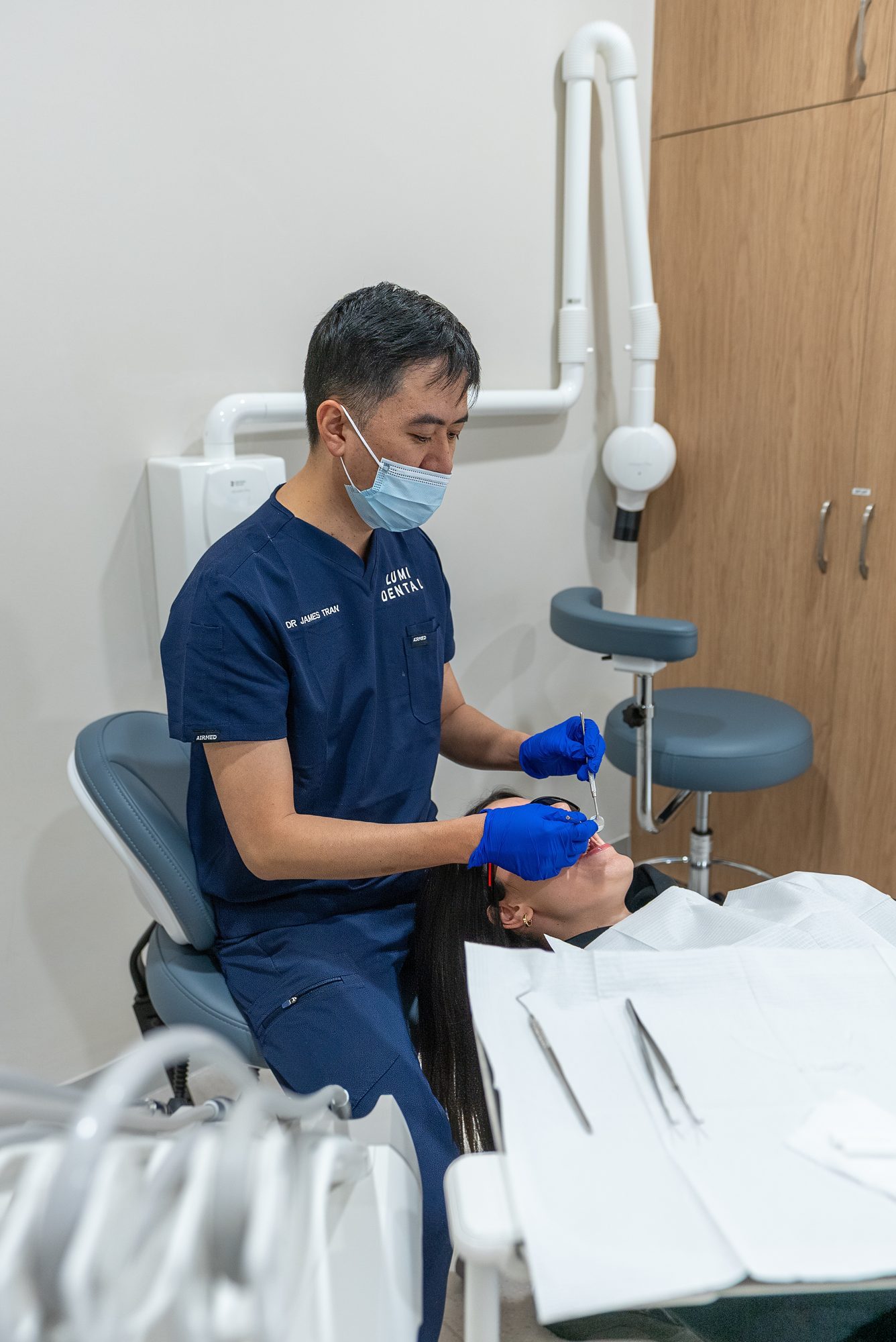
At five, the dentist also notes how the top and bottom teeth meet. Crossbites, a gap between the front teeth when biting together, crowding and spacing are recorded. Most of these need nothing yet and are watched as the adult teeth arrive.
Sucking habits matter here. Most children give up a thumb, finger or dummy somewhere between two and four. One that continues past school entry can push the front teeth forward and open the bite, so the dentist may offer some ideas for easing it out. Mouth breathing and snoring are also worth mentioning.
Enamel is checked for white, cream or brown patches and rough or pitted areas. Weaker enamel can be sensitive and tends to decay faster, so finding it early helps plan extra protection. The gums give a fair picture of how brushing is going: red, puffy gums that bleed show where plaque is being left behind.
Preparing for playground knocks
School brings monkey bars, scooters and sport. The dentist may point out if your child's front teeth stick out or are not covered by the lips, since those teeth are more easily injured. It also helps to know the key difference for knocked-out teeth: a baby tooth should never be put back in, but an adult tooth should be replanted or kept in milk and seen by a dentist straight away.
Two more years of help with brushing
NSW Health advises brushing morning and night with a pea-sized amount of fluoride toothpaste, spitting out without rinsing, and helping your child brush until about eight. Five-year-olds should hold the brush and have a go, but a parent's second pass at night is what keeps the back teeth clean.
School is also the first long stretch of the day when a parent is not overseeing food. Many lunchbox staples carry more sugar than they appear to, including dried fruit, muesli bars, flavoured yoghurt, flavoured milk and juice. Water as the main drink and sweet foods kept to lunchtime rather than snacked on all day both help. Our guide to a tooth-friendly school lunchbox suggests practical swaps.
Paying for it: the CDBS and the school dental program
The Child Dental Benefits Schedule is a federal program covering a range of general dental services for eligible children, up to a capped amount over two calendar years. NSW Health sets out eligibility as being aged 0 to 17 at some point in the calendar year, eligible for Medicare, and in a family receiving Family Tax Benefit Part A or another listed government payment. There is nothing to register for, and the remaining balance can be checked through myGov or Medicare. The CDBS does not cover orthodontic or cosmetic treatment, or dental care provided in hospital. When using it at a private practice, NSW Health suggests asking beforehand whether there will be any out-of-pocket cost. Our article on the CDBS explained goes through the details.
The NSW Health Primary School Mobile Dental Program visits participating schools. With consent, it provides an examination, X-rays where needed, a clean, fluoride varnish and fissure sealants where indicated, at no cost to parents. Every Medicare-eligible child in NSW can also use free public dental services. These are useful safety nets, though not every school takes part, the van keeps its own schedule, and urgent problems such as toothache or injuries are handled through the local public dental service rather than the school visit. A regular family dentist offers continuity, with check-ups at an interval suited to the child's risk, which for many children is at least once a year.
Who your child sees at Lumi Dental
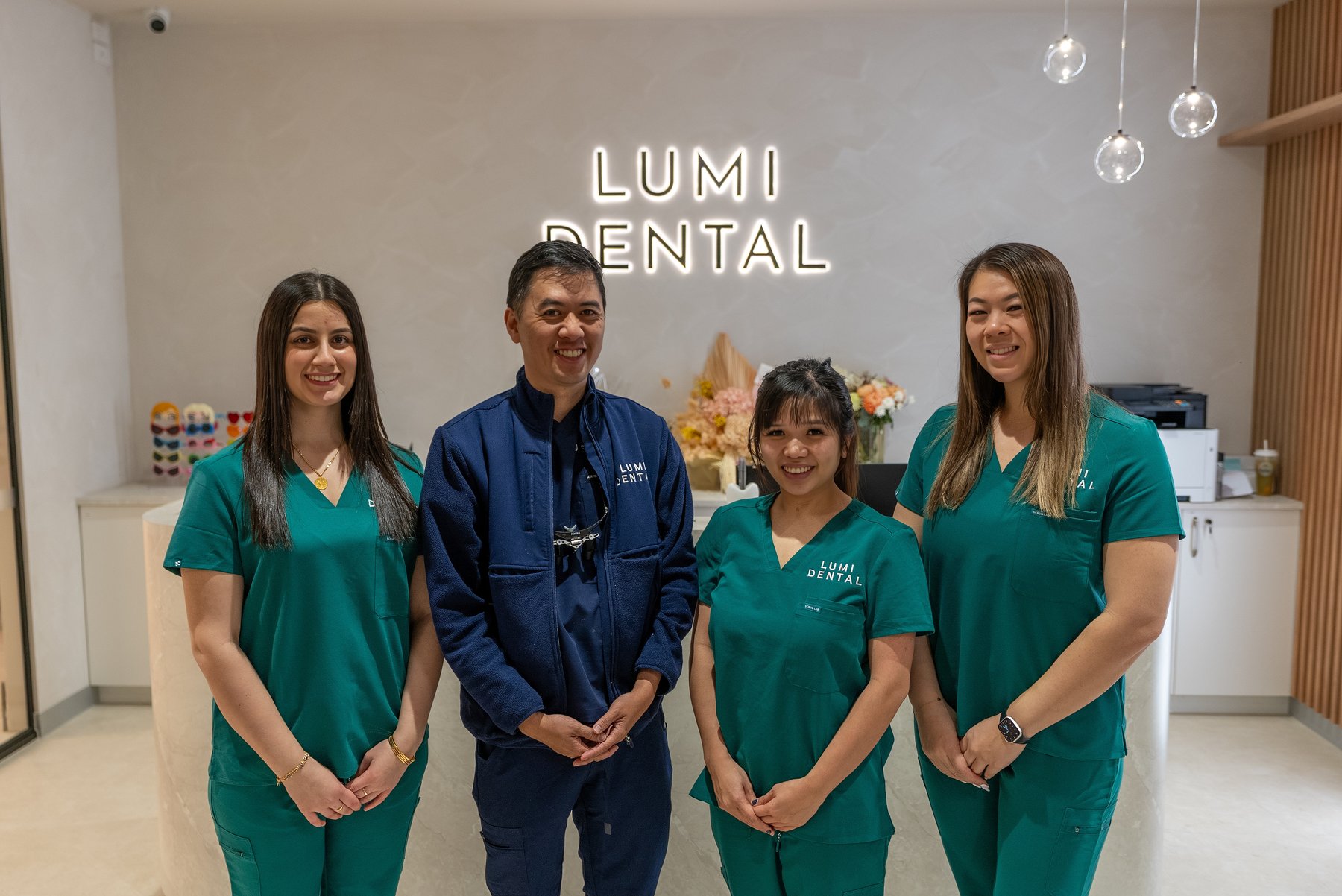
A child's school-entry check at Lumi Dental is done by a dentist or oral health therapist, with small X-rays taken only when the back teeth cannot otherwise be seen properly. Our oral health therapists provide the clean and fluoride varnish and go through brushing with the parent. The practice accepts the Child Dental Benefits Schedule for eligible children. A child with extensive decay, additional needs, or who cannot manage treatment in the chair may be referred to a paediatric dentist or hospital service. You can read more about children's dentistry at Lumi Dental.
Common questions before kindergarten
Is the check before school free?
It often can be. Eligible children can use the CDBS at a private practice, and all Medicare-eligible NSW children can access public dental services or the school program where their school takes part. Contact us and we can check your child's eligibility.
Does my five-year-old need X-rays?
Only if the back teeth touch so closely that the dentist cannot see between them, or there are signs of decay. When needed, two small X-rays are typical.
Should my child see a paediatric dentist or a family dentist?
A family dentist suits most children starting school. Paediatric dentists are registered specialists with additional university training, and they often see very young or very anxious children and those with complex medical or dental needs. Our article on paediatric dentists and family dentists can help you decide.
Getting ready for the first term
Before school starts, our team at Lumi Dental in Melrose Park can check your child's teeth, find those new molars and help set up brushing for the school years. See if your child can use the Child Dental Benefits Schedule, read about children's dentistry, or view our current offers.
Sources
- NSW Health: Healthy mouths for kids under 5
- NSW Health: Primary School Mobile Dental Program frequently asked questions
- NSW Health: Dental care for children in the NSW Health Primary School Mobile Dental Program
- NSW Health: Child Dental Benefits Schedule (CDBS)
- Australian Government Department of Health: About the Child Dental Benefits Schedule fact sheet
- Newman B and colleagues. Clinical detection of caries in the primary dentition with and without bitewing radiography. Australian Dental Journal, 2009
- Arraj GP and colleagues. The association of overjet size and traumatic dental injuries: a systematic review and meta-analysis. Dental Traumatology, 2019
About the author

Dr James Tran is a general dentist at Lumi Dental in Melrose Central, Melrose Park. He holds a Bachelor of Dentistry (BDent) from the University of Sydney and a Graduate Diploma in Oral Implants, and is a Master of the International Congress of Oral Implantologists (MICOI).
This article is general information only and is not a substitute for an examination and individual advice from a registered dental practitioner. Suitability for any treatment varies from person to person.








