

A dental implant after a failed root canal is an option when the tooth cannot be kept, but retreating the root canal or a small root-end surgery called an apicoectomy are usually weighed first. Most root canals hold up well. The Better Health Channel says about 90 to 95 per cent of people who have root canal treatment can expect a functional tooth afterwards. When one does fail, the decision comes down to whether the tooth is still worth saving, and that depends on what the X-rays and a 3D scan show.
Written by Dr James Tran, general dentist at Lumi Dental, Melrose Park. BDent (University of Sydney), Graduate Diploma in Oral Implants.
The short version
- A failing root canal can cause pain on biting, a gum bump or swelling, or it may show up only on an X-ray.
- Retreatment and apicoectomy try to keep your own tooth. Extraction and an implant replace it.
- Complex retreatment and apicoectomy are usually done by an endodontist, a registered specialist, after referral.
- A 3D X-ray shows the bone and the extent of the infection, which is what decides whether an implant is realistic.
- Timing after extraction varies, and our guide on how long to wait before an implant explains the usual stages.
Signs a root canal may be failing
Patients usually describe it as the old tooth "coming back". A dull ache when chewing. Tenderness when you tap on it. A small pimple on the gum that drains, settles and returns. Sometimes a bad taste, or a tooth that has slowly turned grey.
Just as often, there are no symptoms. The first sign is a dark area at the root tip on a routine X-ray, which tells us the bone around the root is being worn away by a low-grade infection.
The causes are fairly predictable. A canal that was missed or could not be fully cleaned. New decay under an old crown that has let bacteria back in. A crack running down the root. Our article on what happens after a failed root canal goes through these in more detail. Facial swelling, fever or difficulty swallowing need to be seen the same day, because the infection may be spreading.
Three ways forward
Retreating the root canal
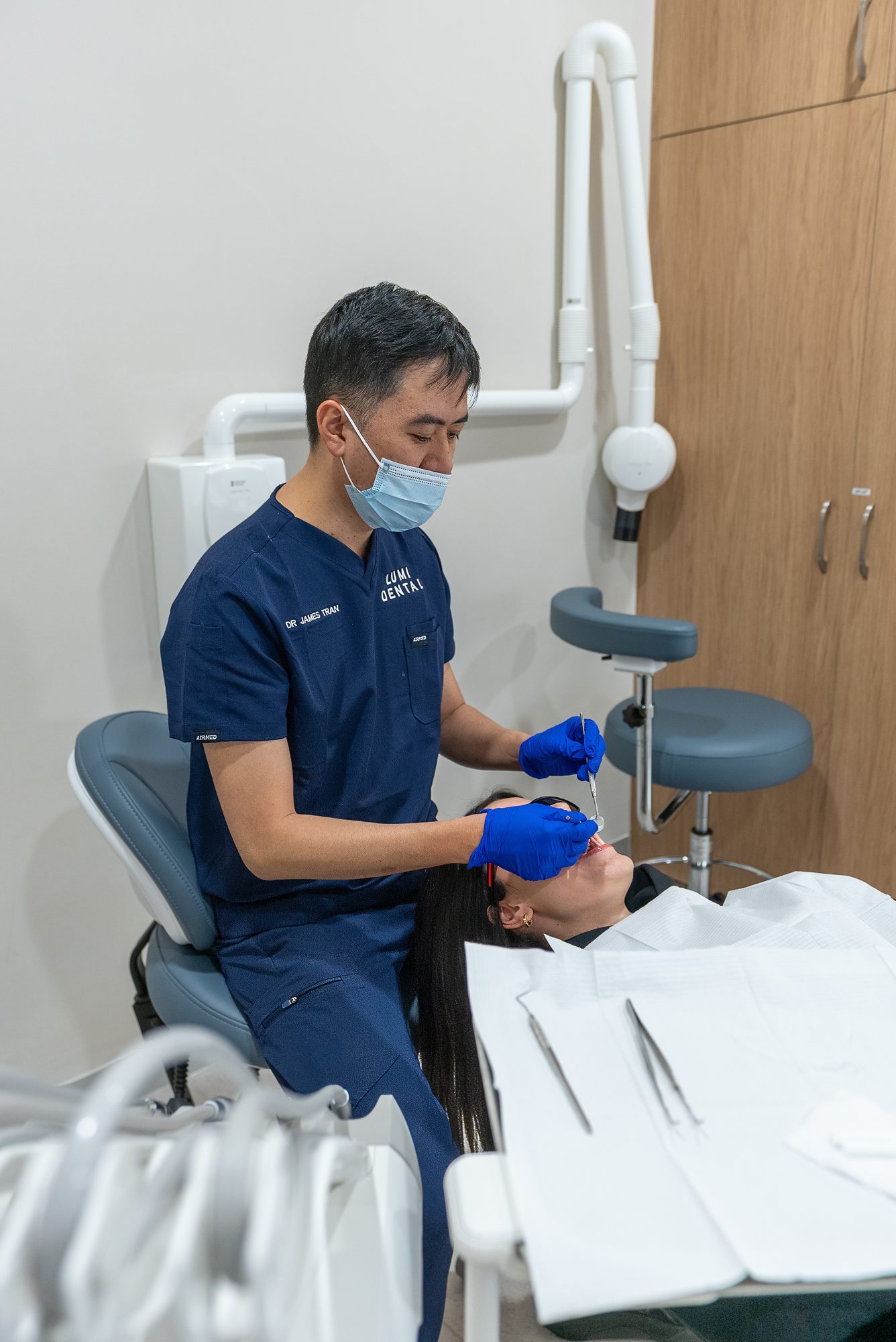
Retreatment means going back into the tooth, removing the old root filling, cleaning the canals again and resealing them. It keeps your own tooth and avoids surgery on the bone. It makes sense when there is still plenty of sound tooth, no crack and a canal that can be reached. Our root canal retreatment guide explains the process.
Apicoectomy
An apicoectomy is a small operation through the gum. The last few millimetres of the root tip are removed along with the infected tissue, and the end of the root is sealed. It is usually considered when retreatment is not possible, for example because a post or a well-made crown would have to be destroyed to get back in, or when retreatment has already been tried.
Both complex retreatment and apicoectomy are usually carried out by an endodontist. Endodontics is one of the dental specialties recognised by the Dental Board of Australia, and in Australia the title specialist is reserved for dentists on the Board's specialist register. I refer these cases to an endodontist rather than doing them myself. Our comparison of an endodontist and a general dentist for root canal care explains when referral is common.
Extraction and a dental implant
Some teeth cannot be saved. A crack running below the gum line, too little tooth left to hold a crown, or heavy bone loss around the root all point the same way. healthdirect notes that in some cases root canal treatment will not be enough to treat a significant infection and the tooth will need to be removed. The gap can then be filled with an implant, a bridge or a denture.
| Option | Usually considered when | What to weigh up |
|---|---|---|
| Retreatment | Enough sound tooth, no crack, canals that can be reached | Keeps your tooth with no bone surgery. Success depends on the canal shape and the crown on top. |
| Apicoectomy | Retreatment is not possible or has not cleared the infection | Minor surgery, usually by an endodontist on referral. The tooth still needs a sound crown or filling. |
| Extraction and implant | The tooth cannot be restored or keeps failing | Needs enough healthy bone and a healing period. Does not rely on the teeth either side. |
| Extraction and bridge or denture | An implant is not suitable or not preferred | A bridge means shaping the neighbouring teeth. A denture rests on the gum and comes out. |
If there is enough tooth and no crack, start with saving it
That is the simplest rule I can give. A natural tooth that can be properly retreated or treated with an apicoectomy is usually worth keeping. If those options have been tried, or the tooth is cracked through the root or too broken down to restore, it is time to plan a replacement rather than repeat treatment that is unlikely to hold.
A common question at consults is "why not just go straight to an implant?" Implants are a good option for the right site, but they are not a natural tooth, and they need healthy bone and good gum care to last. The order can change after imaging, which is why nobody should give you a firm answer before an exam and a scan.
What a 3D X-ray shows that a normal X-ray does not
A standard X-ray is a flat picture. It shows the root filling and roughly where the infection sits, but it cannot show the width of the bone or exactly how close the root is to the sinus or the nerve canal in the lower jaw.
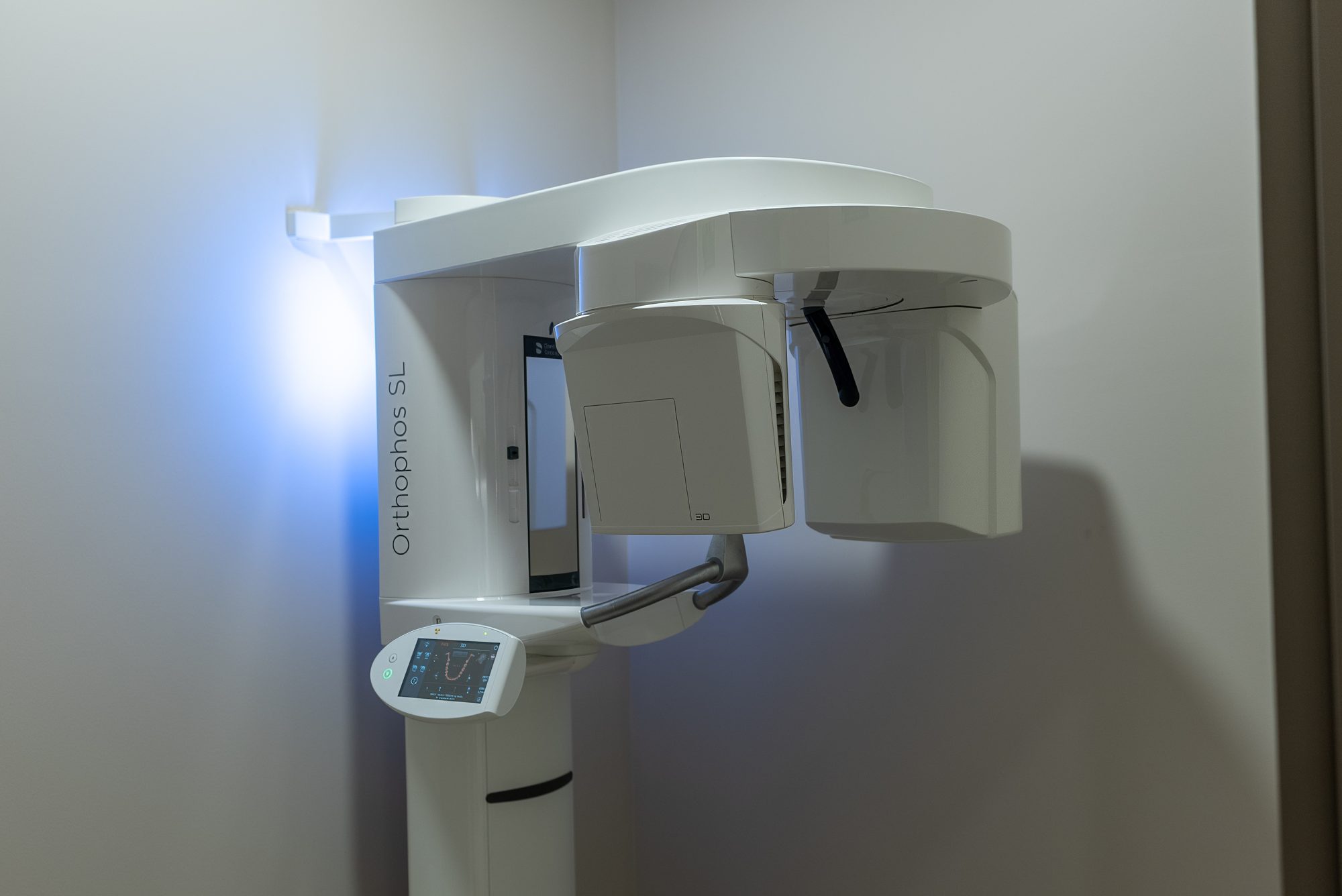
A 3D X-ray takes less than a minute while you stand still in the machine. On screen, I can scroll through the bone in slices from any angle. That shows whether a crack is likely, how much bone the infection has destroyed and whether there would be enough left to hold an implant firmly. If the bone is thin, a bone graft at the time of extraction or later may be discussed, and that decision is made after the scan has been reviewed.
Timing: when can an implant go in?
The common approach is staged. The tooth is removed gently to protect the surrounding bone, the infected tissue is cleaned out and the site is left to heal. Healing before an implant is often quoted as a few weeks to several months, depending on how much bone was lost and whether a graft was placed.
In some cases the implant can go in at the same visit as the extraction, which is called immediate placement. It is only considered when the infection is well controlled and enough bone remains to hold the implant firmly. After a long-standing infection that has eaten into the bone, a staged approach is usually safer. Our guide to timing between extraction and implant sets out the stages.
If you are weighing up the replacement itself, our comparison of implants, bridges and dentures lays out the upkeep and trade-offs of each.

How we assess this at Lumi Dental
I am a general dentist with a Graduate Diploma in Oral Implants. My role in these cases is to work out whether the tooth can be saved, refer to a registered endodontist when retreatment or an apicoectomy is the better path, and place an implant when the tooth cannot be kept and the site is suitable.
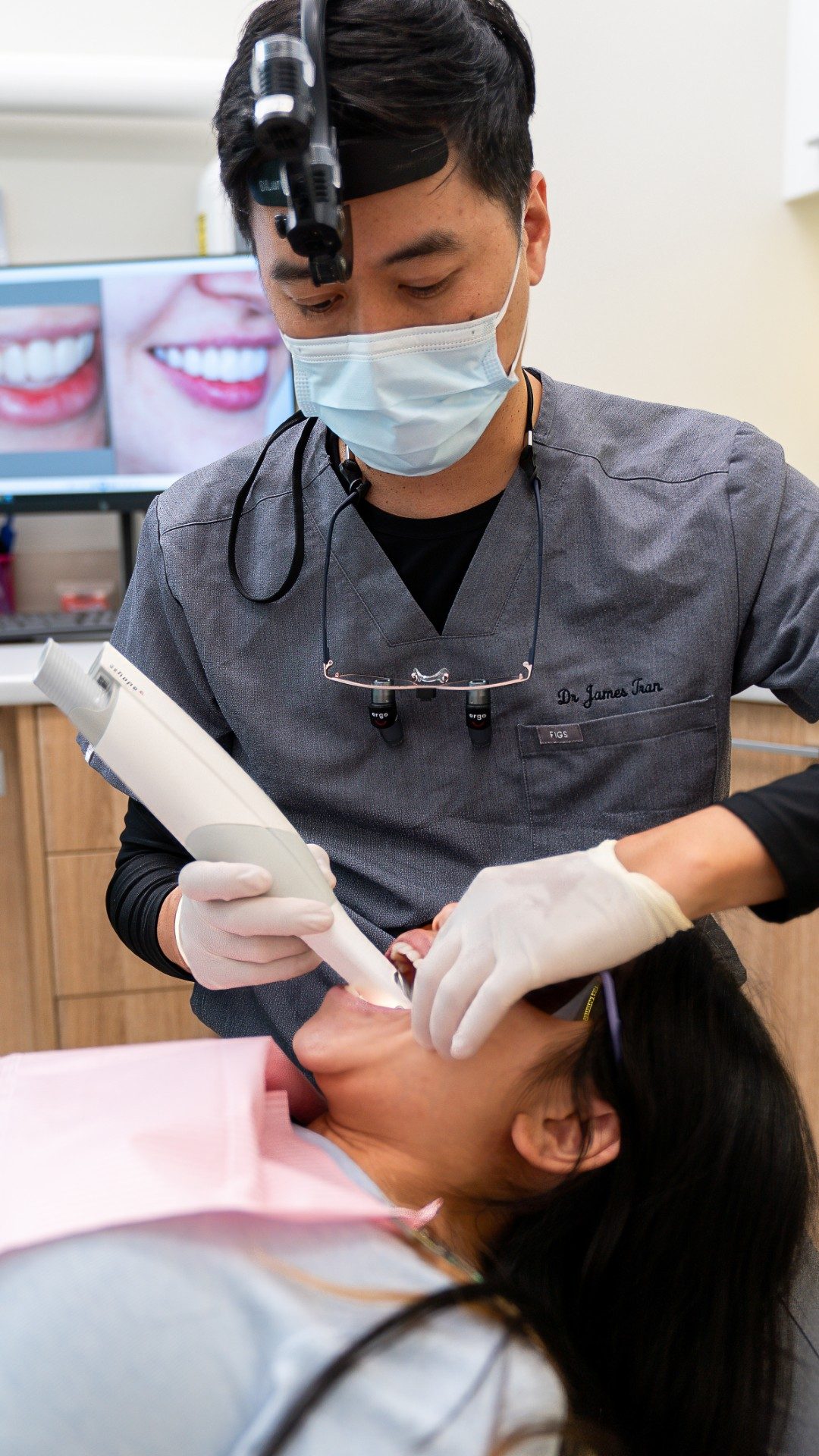
Assessment uses the Orthophos 3D X-ray unit at the practice for OPG and 3D scans, and in-house 3D intraoral scanning to record the teeth and bite. Instruments are processed in a dedicated sterilisation room. For people who are anxious about surgery, IV sedation is available at the practice. You can read more about the technology used at Lumi Dental and our dental implant service.
Questions patients ask
Can I get a dental implant after a failed root canal?
Often, yes, once the tooth has been removed, the infection has cleared and there is enough healthy bone. An exam and a 3D X-ray confirm whether the site is suitable.
Should I retreat the root canal or have the tooth taken out?
If there is enough sound tooth and no crack, retreatment is usually considered first. If the tooth is cracked through the root or cannot be restored, extraction and replacement is more sensible.
How long after extraction can an implant be placed?
Healing is often quoted as a few weeks to several months. Immediate placement is possible in selected cases where the infection is controlled and the bone is sound.
Does a failed root canal damage the jawbone?
It can. A long-standing infection at the root tip slowly wears away the surrounding bone, which is why a 3D X-ray is used before planning an implant and a bone graft is sometimes needed.
Who does an apicoectomy?
Usually an endodontist, a registered specialist, after referral from your general dentist. Lumi Dental refers to registered specialists when a case needs one.
Sources
- healthdirect: Root canal treatment
- Better Health Channel: Root canal treatment
- Dental Board of Australia: Specialist registration
Book a free implant consult in Melrose Park
If you have a root-filled tooth that is sore again, or has been flagged on an X-ray, you can book a free implant consult at Lumi Dental at Melrose Central, Melrose Park. We will look at the tooth, review any X-rays you have and talk through whether saving it or replacing it makes more sense, with a written plan after the exam and imaging. Arrange a time through our contact page. Outcomes vary between patients.
About the author
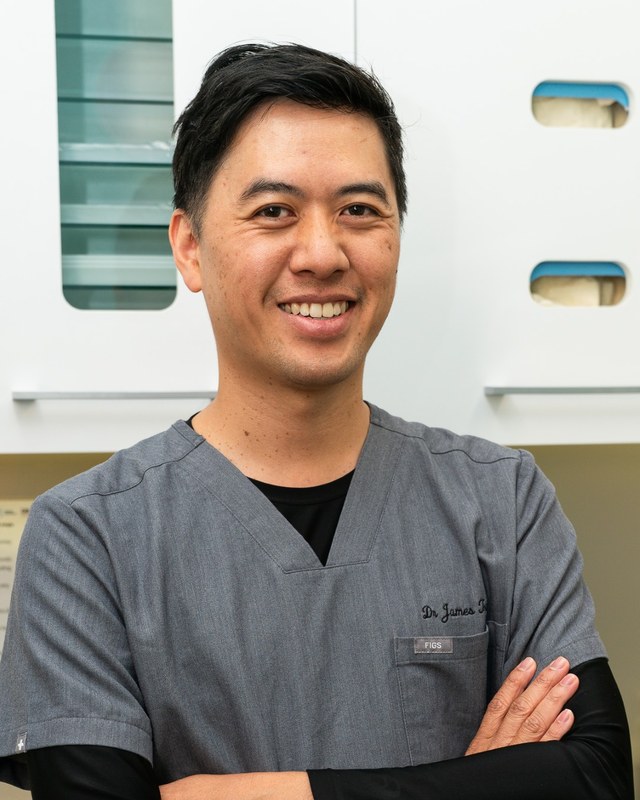
Dr James Tran is a general dentist at Lumi Dental in Melrose Park, Sydney, and is registered with the Dental Board of Australia. He holds a Bachelor of Dentistry from the University of Sydney and a Graduate Diploma in Oral Implants, is a Member of the International Congress of Oral Implantologists (MICOI), and is part of the General Dental Residency faculty. Read more about Dr James.
This article is general information and is not a substitute for advice from your own dentist after an examination. All dental treatment carries risks, and individual results vary.


