

Dental implants are often possible with COPD or asthma, and the most useful step is to plan surgery for a period when your breathing is stable, not during or soon after a flare-up or chest infection. Implant surgery is usually done under local anaesthetic with you awake, so how comfortably you can breathe in the chair matters as much as the bone. A note for dentists in Australian Prescriber, written by an Australian Dental Association adviser, points out that people with asthma can have an attack during dental treatment, and that planning should cover what happens if one starts.
Written by Dr James Tran, BDent (University of Sydney), MICOI, GradDip (Oral Implants), general dentist at Lumi Dental in Melrose Park.
The short version
- COPD or asthma is not usually a reason on its own to rule out a dental implant. Control and timing are what count.
- The single rule: book surgery for a stable stretch, and bring your reliever inhaler, and your oxygen if it is prescribed, to every appointment.
- Many people breathe more easily sitting more upright, with shorter sessions and planned breaks.
- Sedation slows breathing, so it needs a medical review first and may not suit more advanced COPD.
- Steroid inhalers can lead to oral thrush; our article on asthma inhalers and oral health covers the rinse and spacer habits that help.
- Keep taking every breathing medicine as prescribed. Your dentist does not stop or change it.
Why breathing matters during implant surgery
Placing an implant means working in the space you breathe through. You lie back, a water spray cools the drill, and your cheeks are held aside for a while. For someone whose lungs already work hard, that can bring on breathlessness or coughing.
Lung Foundation Australia describes COPD as a lung condition that causes breathlessness, a cough that keeps coming back, more phlegm, tiredness and more chest infections. Asthma airways narrow in response to triggers and then settle. Both can be well controlled for long periods and both can flare, and that pattern shapes an implant plan.
The Australian Prescriber note adds that sedatives and large doses of local anaesthetic can briefly reduce breathing, and that respiratory disease on its own is not a reason to avoid the adrenaline in many dental local anaesthetics.
The single rule: plan around a stable period
If your breathing is at its usual baseline, start with the normal implant assessment. If you are in a flare-up, getting over a chest infection, or have just finished a course of steroid tablets, start with your GP or respiratory physician and set a surgery date once you have settled.
Lung Foundation Australia explains that a COPD flare-up is when symptoms get worse quickly, usually over a few days, and is often caused by an infection, frequently a virus, or by something in the air that irritates the lungs. Implant placement is elective, so there is rarely a reason to operate in that window.
In my experience, surgery goes most comfortably when it is booked for a time when the chest is usually quiet. If you do not feel right on the day, moving the appointment is always an option.
In the chair: position, water spray and breaks
Sitting more upright
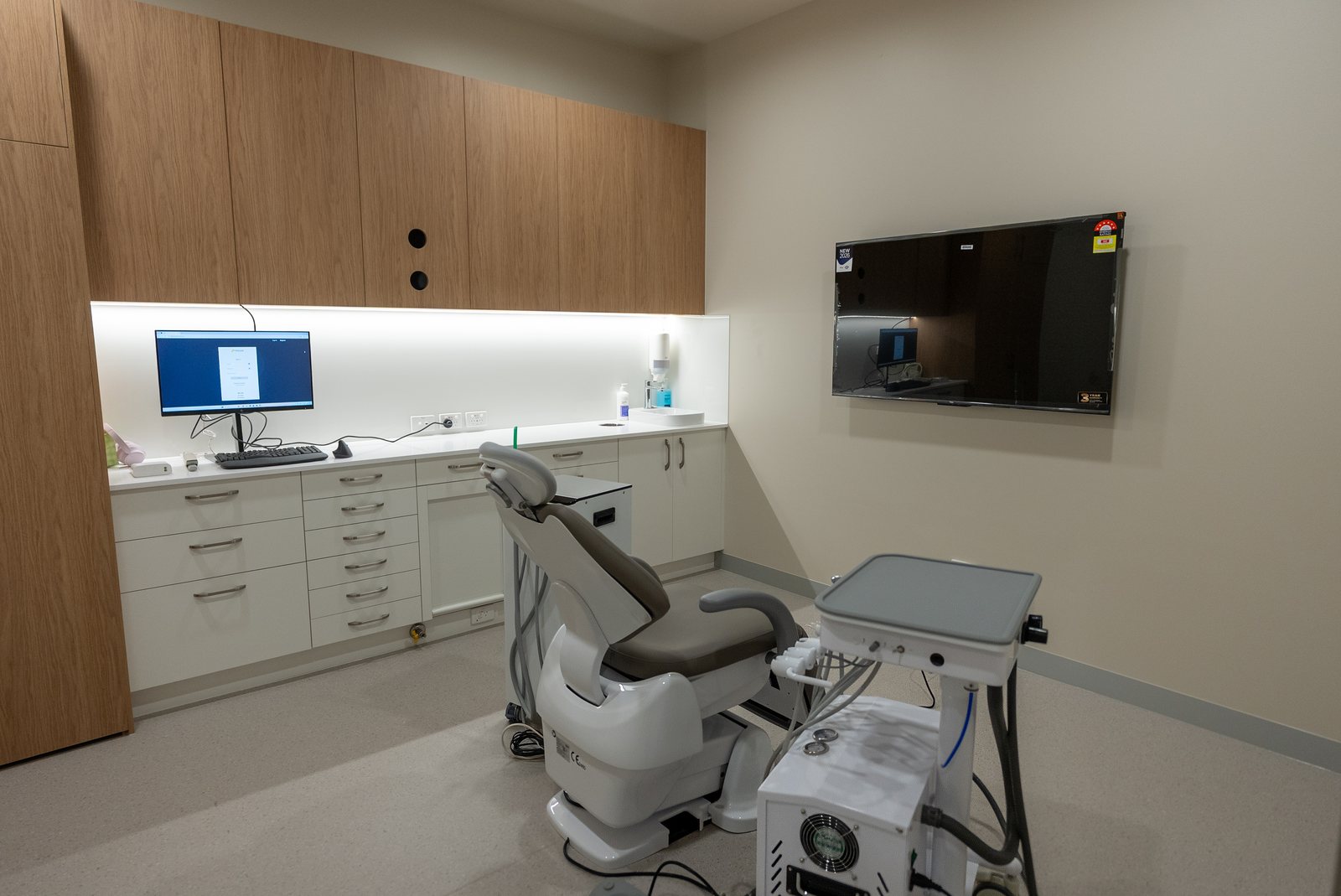
Australian Prescriber advises that people with COPD be placed in a position of comfort, without being too far reclined. Most implant work can still be done with the chair set partway up.
Water spray and mouth breathing
Many people with a chest condition breathe partly through the mouth, and water spray can make that harder. The assistant keeps suction close, and the dentist pauses whenever you raise a hand.
Shorter sessions
Larger plans can sometimes be split into shorter visits. I usually build in pauses to sit up, cough and take a breath.
Oxygen
If you use home oxygen, bring it and the settings your doctor has given you. Australian Prescriber notes that supplemental oxygen can reduce the stress of treatment for people with COPD.
Sedation, general anaesthetic and your lungs
IV sedation leaves you relaxed and drowsy while you keep breathing on your own. Our guide to IV sedation for dental implant surgery explains how it works and how breathing is monitored.
Sedative medicines slow breathing, which matters more when the lungs are already working hard. A review in Anesthesia Progress on sedation for people with COPD reports that a chronic cough, breathlessness at rest, or being unable to lie flat suggest more advanced disease, and that such patients may not be suited to sedation in a dental clinic. It also advises that inhaled COPD medicines be continued around the procedure, and that nitrous oxide be avoided in moderate to severe COPD.
So sedation is never assumed. If you would like it, the team may write to your respiratory physician first, and for some people local anaesthetic alone, with breaks, is the safer plan. Lumi Dental does not provide general anaesthetic itself and refers where it is needed.
Inhalers, steroid tablets and healing
Inhaled steroids and thrush
Preventer inhalers that contain a steroid leave some medicine on the tongue and throat, which can make oral thrush more likely. Rinse and spit after your preventer as your pharmacist has shown you, and mention any white patches or soreness at your review.
Courses of steroid tablets
Long or repeated courses of steroid tablets for flare-ups can affect bone, healing and the body's response to the stress of surgery, so I ask how many courses you have had and when the last one finished. Our article on dental implants with long-term steroids explains those effects in more detail. Any decision about your steroid medicine stays with your doctor.
Smoking history
Current smoking affects how gums and bone heal around an implant, as our article on getting dental implants if you smoke explains.
Asthma triggers in a dental setting
The Australian Asthma Handbook lists several triggers that can turn up around a dental visit.
- Stress and strong emotion. Some people report flare-ups in response to stress. Tell the team if you feel anxious.
- Cold drinks and cold water. Symptoms after cold drinks are commonly reported, so mention it if cold sets you off.
- Aspirin and anti-inflammatory tablets. These can trigger symptoms in people with aspirin-exacerbated respiratory disease. If an anti-inflammatory has ever made your breathing worse, the pain relief plan after surgery will avoid that group.
- Sulfites. The Handbook estimates that around 3 to 10% of people with asthma are sensitised to sulfites. A literature review in the Journal of Dental Anesthesia and Pain Medicine notes that a sulfite preservative is used in local anaesthetics that contain a vasoconstrictor, while describing allergic reactions to dental anaesthetic as rare. If you have reacted to sulfites, the team can choose an anaesthetic with that in mind.
What to tell the team or bring
| Item | Why it helps |
|---|---|
| Your reliever inhaler and spacer | Kept within reach for the whole appointment |
| Your asthma or COPD action plan | Shows your usual baseline and what to do if symptoms change |
| Oxygen and the settings from your doctor | So oxygen in the chair matches your prescription |
| Recent flare-ups, chest infections or hospital stays | Helps set a surgery date in a stable period |
| Steroid courses in the past couple of years | May affect healing and planning around surgery |
| Reactions to aspirin, anti-inflammatories or sulfites | Shapes the choice of anaesthetic and pain relief |
| Your GP or respiratory physician's details | So the team can write to them before planning |
After surgery: sleeping propped up, coughing and the site
Most people are advised to keep the head raised for the first nights after implant surgery to limit swelling, which often suits a chest condition anyway. Our article on how to sleep after dental implant surgery has practical tips on pillows and position.
If you cough up phlegm, spit gently in the first days and keep using your inhalers as prescribed. If your breathing worsens, follow your action plan and contact your doctor; call 000 for severe breathlessness.
How we approach this at Lumi Dental
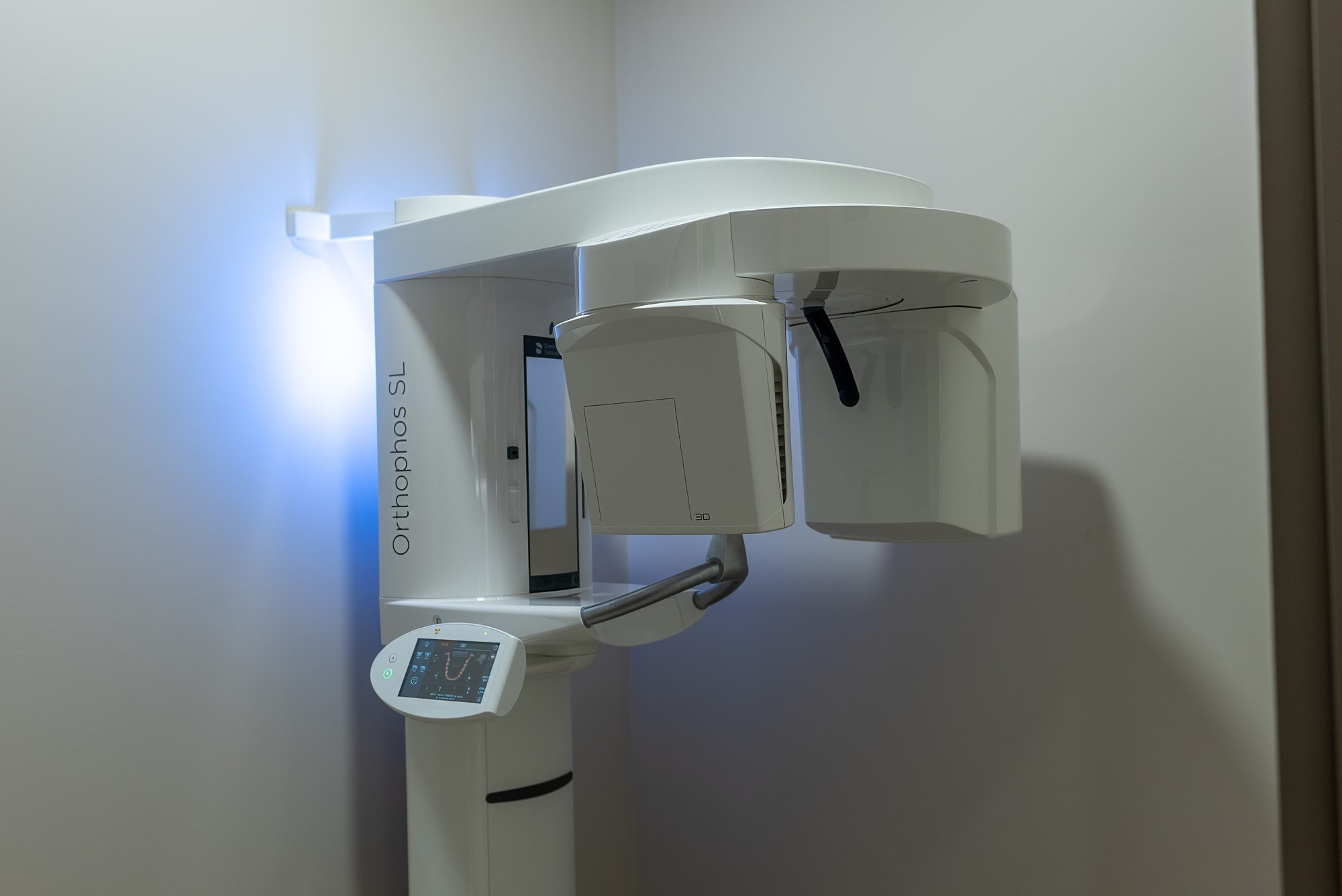
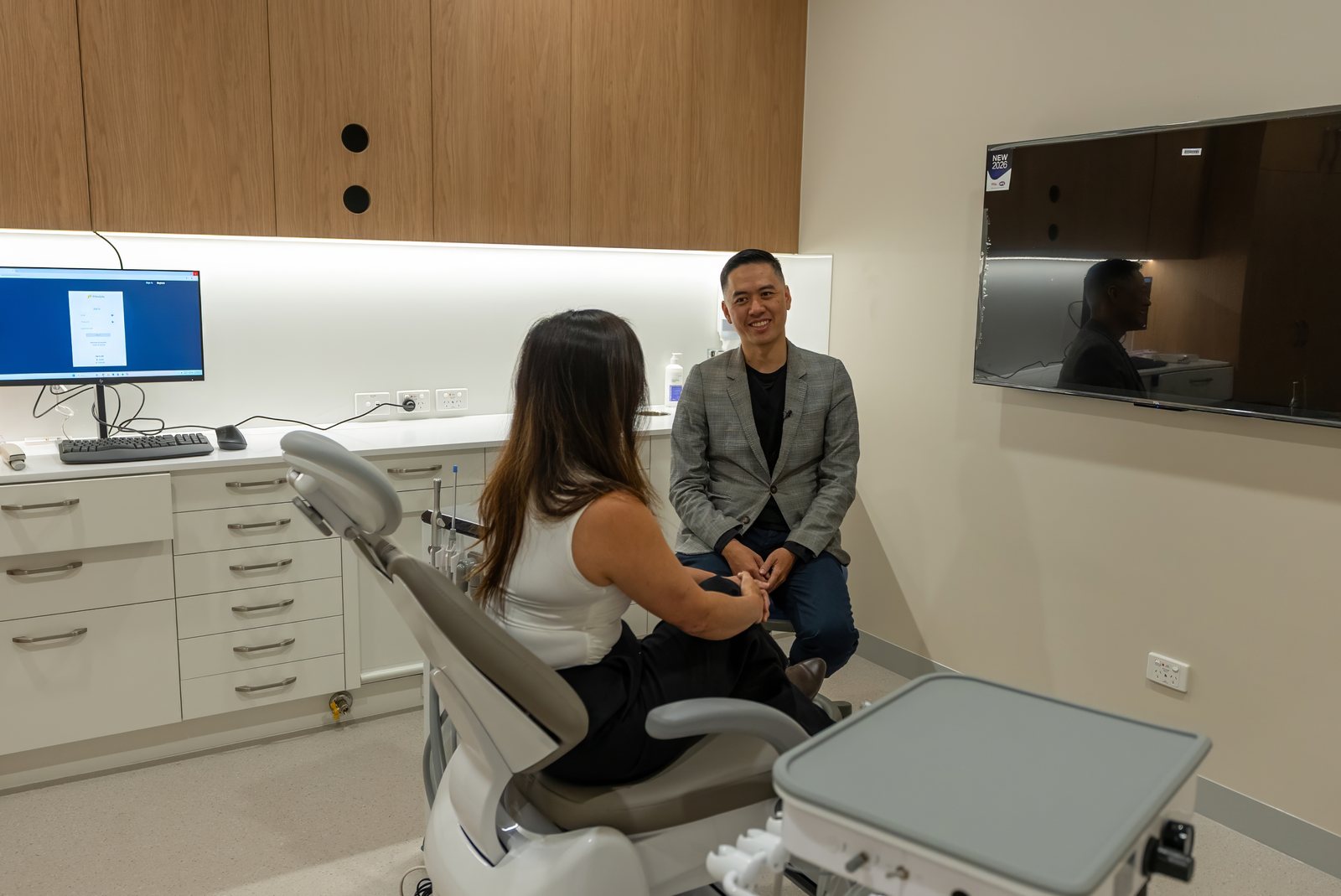
At Lumi Dental in Melrose Park, a dentist reviews your medical history and breathing medicines, examines your mouth and takes a 3D X-ray in house where needed to measure the bone. Where a lung condition is not settled, or sedation is being considered, the team at Lumi Dental writes to your GP or specialist before planning surgery. Appointments can be set with the chair more upright and with breaks built in. IV sedation is available at the practice after medical review; Lumi Dental does not provide general anaesthetic itself and refers where it is needed. Complex cases are referred to a registered specialist.
Questions patients ask
Can I get dental implants if I have COPD?
Often, yes, if your breathing is stable and you can sit comfortably in the chair for the length of the procedure. The plan may use a more upright position, shorter sessions and a letter to your doctor first.
Should I use my inhaler before dental surgery?
Take your usual inhalers as prescribed, and follow your action plan about using your reliever before the visit if it advises that. Bring the reliever with you either way.
Is IV sedation safe for someone with asthma or COPD?
It can be for some people, but it slows breathing, so it needs a medical review first and may not suit more advanced COPD. If you do have it, plan for someone to take you home; our guide to time off work and driving after sedation explains why.
Can the anaesthetic set off my asthma?
Reactions to dental local anaesthetic are rare. If you know you react to sulfites, tell the team so they can choose an anaesthetic with that in mind.
What if I get a chest infection before my implant appointment?
Call to move the appointment. Surgery is usually rebooked once your doctor is happy that your breathing is back to its baseline. Contact Lumi Dental to reschedule.
Considering an implant? Complimentary implant consult in Melrose Park
If you live with COPD or asthma and are thinking about replacing a tooth, the team at Lumi Dental can review your history, examine your mouth and plan surgery around a stable period with your doctor's input. Contact Lumi Dental to book a complimentary implant consult, or read more about dental implants in Melrose Park. Patients visit from Ryde, Parramatta, Ermington and Rydalmere, with on-site parking at Melrose Central.
Sources
- Australian Prescriber (Woods RG): Dental implications, Basic tests of respiratory function
- National Asthma Council Australia, Australian Asthma Handbook: Asthma triggers
- Lung Foundation Australia: Symptoms of COPD
- Anesthesia Progress (Chino K, Ganzberg S): Office-Based Sedation/General Anesthesia for COPD Patients, Part II (PMC)
About the author

Dr James Tran is a general dentist at Lumi Dental in Melrose Park. He holds a BDent from the University of Sydney and a Graduate Diploma in Oral Implants, and is a Member of the International Congress of Oral Implantologists (MICOI).
This article is general information only and is not a substitute for an examination and individual advice from a registered dental practitioner. Suitability for any treatment varies from person to person.








