

An autoimmune condition or long-term steroid use rarely rules out dental implants on its own; what changes is how carefully the surgery is planned, who is written to first, and how closely the implant is looked after once it is in. A systematic review and meta-analysis pooling 62 publications and 1,751 implants in immunocompromised patients reported survival of around 88.75% at two years or longer for people with autoimmune disease, and could not detect a significant effect of immune compromise on survival overall. This article explains what dental implants with autoimmune conditions or long-term steroids involve, condition by condition, and what I ask before planning surgery.
Written by Dr James Tran, BDent (University of Sydney), MICOI, GradDip (Oral Implants), general dentist at Lumi Dental in Melrose Park.
The short version
- Research has reported implant survival in autoimmune patients from around 76% to 100% depending on the condition, most of them close to general-population figures.
- Three things matter more than the diagnosis: how well controlled the condition is, which medicines you take for it, and how dry your mouth is.
- Long-term corticosteroids can thin bone, slow healing, raise infection risk and raise blood sugar. None of these is a veto; each is planned around.
- Never stop or change a steroid, methotrexate or biologic for a dental appointment on your own. Any change is the prescriber's decision.
- Rheumatoid arthritis has been linked to more bone loss around implants over time, so maintenance visits matter more, not less.
- If you also take a bisphosphonate or denosumab for steroid-related bone loss, read our guide to dental implants and osteoporosis medication as well.
The rule: the condition rarely rules implants out; control, medicines and dry mouth decide
An implant succeeds when bone grows onto its surface, the gum seals around its neck, and both stay clean for years. Autoimmune disease and its treatment can interfere at each step: inflammation and immune medicines affect bone turnover and wound healing, steroids and some disease-modifying drugs dampen the response to bacteria, and conditions such as Sjogren's syndrome dry the mouth that is supposed to protect the implant. So the questions I ask are not "do you have lupus" but "how active is it, what are you taking, and how is your saliva".
What the research says about implant survival
The meta-analysis above found no significant effect of immunocompromised conditions on survival and advised careful risk stratification before surgery, though it noted that Crohn's disease showed a significant effect on early implant failure. A later systematic review of 14 observational studies and 2,657 autoimmune participants reported survival from 76.4% to 100% across conditions, lowest in a study of active oral lichen planus. Patients with rheumatoid arthritis showed significantly more marginal bone loss around implants than controls, while people with type 1 diabetes or Sjogren's syndrome did not differ significantly. The authors concluded that survival is favourable but that rheumatoid arthritis and diabetes may raise bone-loss risk, so tailored planning and follow-up are essential.
Two cautions: these are mostly small retrospective studies, and reporting of immune medicines was too inconsistent to analyse.
Long-term steroids: what prednisolone does to bone, healing and infection
Bone
The Better Health Channel lists osteoporosis as one of the main side effects of long-term corticosteroid treatment: steroids interfere with the cells that build bone and reduce calcium absorption from the gut. For an implant, that can mean softer bone at placement and slower consolidation afterwards, which is why a 3D X-ray earns its keep and why I sometimes plan a longer healing period before the implant is loaded.
Healing, infection and blood sugar
Corticosteroids increase susceptibility to infection and are associated with thin skin and slower healing. In the mouth that means gentler surgery, closer suture review and a lower threshold for a post-operative check. Steroids can also raise blood sugar and, over time, lead to diabetes; poor control slows healing further, so your GP's recent results are part of the plan.
Never stop a steroid for a dental appointment
Suddenly stopping a corticosteroid can be dangerous, because long-term use suppresses the body's own cortisol production. The dentist never asks you to stop or change the dose; if a prescriber wants a short adjustment around surgery, that is their call and their instruction. Our guide to prednisone, oral corticosteroids and your mouth covers the day-to-day effects.
Methotrexate, biologics and other immune medicines
Biologics such as TNF inhibitors can only be prescribed by a specialist such as a rheumatologist, and methotrexate is usually managed by the same team. Arthritis Australia notes that a biologic carries an increased risk of infection, with minor infections sometimes lasting longer than usual, and that treatment may be postponed if you are planning surgery, a decision made with the prescriber rather than the dentist. Most patients I see continue their medicine unchanged for a single implant, with surgery timed within the dosing cycle on the prescriber's advice.
Condition by condition: what changes in planning
| Condition or medicine | What the evidence suggests | What changes in planning |
|---|---|---|
| Rheumatoid arthritis | Survival comparable; more bone loss around implants over time | Gum therapy first if needed, shorter recalls, written liaison about methotrexate or biologics |
| Lupus (SLE) | Limited data, mostly case series; survival reported as comparable | Confirm the disease is stable; check steroid dose and any kidney or clotting issues with the treating doctor |
| Sjogren's syndrome | No significant difference in bone loss; more gum inflammation in some reports | Dry-mouth plan, high-fluoride toothpaste, closer hygiene recalls |
| Crohn's disease and IBD | Linked to more early failures in the pooled review | Plan during remission, check nutrition and vitamin D, allow longer healing |
| Type 1 diabetes | No significant difference in bone loss found, though the authors flag diabetes as a possible risk | Recent blood sugar results from the GP before booking surgery |
| Oral lichen planus (active) | Lowest survival in the autoimmune review | Settle the lesions first; avoid placing implants through active areas |
| Long-term corticosteroids | Thinner bone, slower healing, higher infection risk | 3D X-ray, longer healing, bone-medicine check for MRONJ risk, never stop the steroid |
What the team writes to your GP or specialist about
Before planning surgery, the team at Lumi Dental writes to your GP or specialist. The letter asks specific questions rather than for a blanket clearance: the dose and duration of any steroid, which immune medicines you take and how often, whether a bisphosphonate or denosumab has ever been prescribed for bone protection, recent blood sugar and blood count results, and whether the prescriber wants any timing adjustment. Bring your medicine list and the names of your treating doctors to the first visit.
Dry mouth, gum health and keeping the implant
An implant that integrates well can still be lost years later to peri-implantitis, the gum and bone infection around an implant. Dry mouth makes that more likely, and Sjogren's syndrome, many immune medicines and steroids all reduce saliva. Immune-dampening medicines can also mute the usual warning signs of gum inflammation, so maintenance for these patients is built around measurement rather than symptoms: probing depths and X-rays at set intervals with the hygiene team, not waiting for soreness. Our guide to Sjogren's syndrome and dry mouth goes into the detail.
When I would say not yet
Some situations call for a deferral rather than a refusal: a flare under active treatment or a recent change in immune medicine, a steroid course still being tapered, active oral lichen planus or ulcers at the planned site, untreated gum disease, blood sugar the GP is still working on, or a bisphosphonate or denosumab history that needs a proper MRONJ conversation first. The implant waits for the condition to settle. Our guide to who is not suitable for dental implants sets out the firmer limits.
How we approach this at Lumi Dental
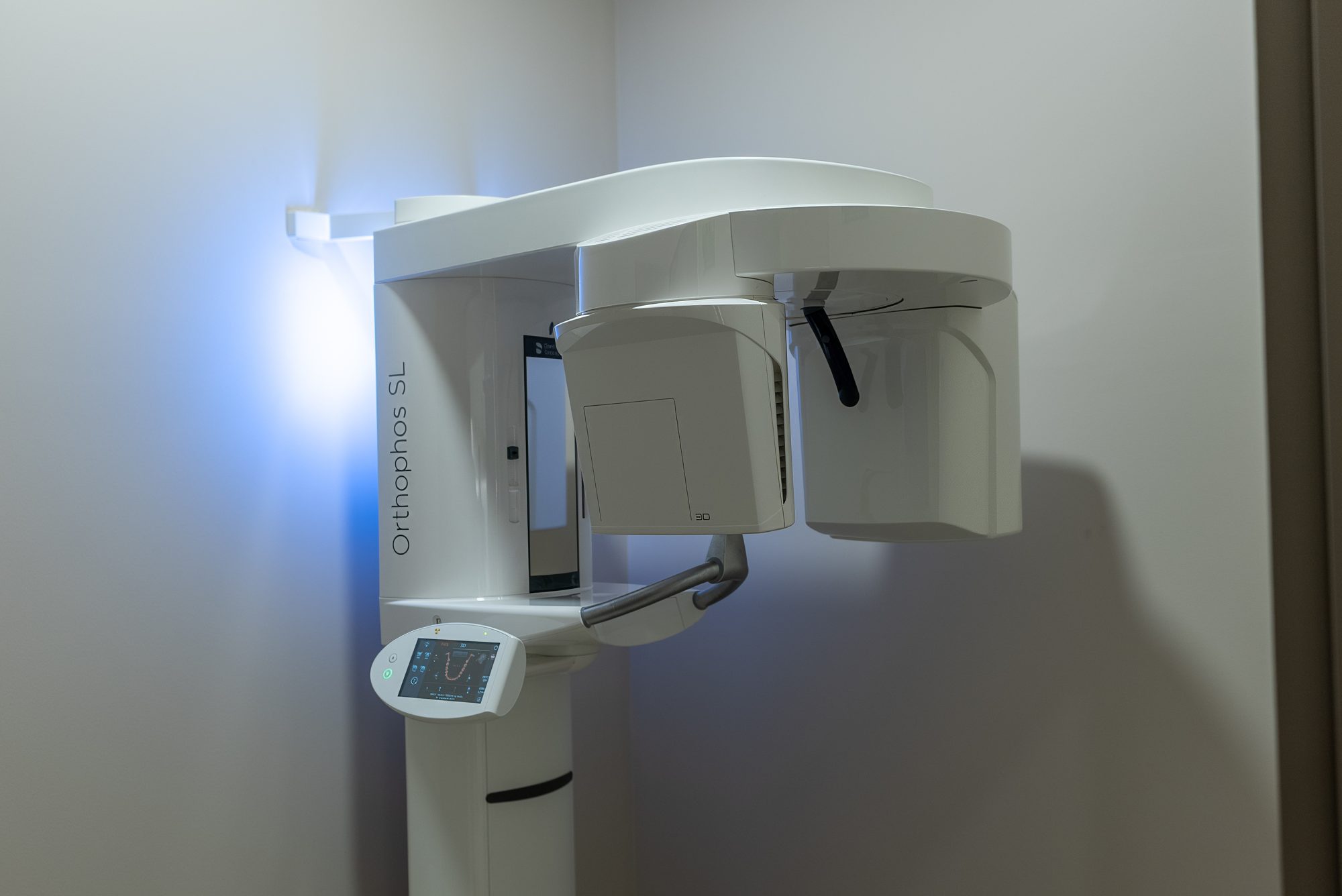
At Lumi Dental in Melrose Park, implant planning for anyone with an autoimmune condition or long-term steroid use starts with an examination by a dentist, a full medicine list, and a 3D X-ray (CBCT) taken in-house to measure bone volume and density. The team then writes to your GP or specialist before planning surgery and does not proceed until the reply is in. Healing periods are set by the bone and the medical picture rather than a standard timetable. Lumi Dental does not provide general anaesthetic itself and refers where it is needed, though IV sedation is available at the practice. The hygiene team of oral health therapists provides gum therapy before surgery and maintenance afterwards; see our technology for the imaging used.
Questions patients ask
Can you get dental implants if you have an autoimmune disease?
Usually, yes. Research has reported implant survival in autoimmune patients broadly comparable to the general population. Suitability depends on how active the disease is, what you take for it and the health of your gums and bone, which is why planning starts with a letter to your treating doctor.
Can you have dental implants while taking prednisone or prednisolone?
Often, yes, with adjustments. Long-term steroids thin bone and slow healing, so the plan typically includes a 3D X-ray, a longer healing period before the tooth is attached, and close follow-up. Any dose change is your prescriber's decision.
Do I need to stop methotrexate or my biologic before implant surgery?
Not on your own, and often not at all. Arthritis Australia notes a biologic may be postponed around surgery, but that is a decision for your rheumatologist. The team at Lumi Dental writes to the prescriber and times the surgery on their advice. Our article on rheumatoid arthritis and gum disease explains why gum health comes first.
Does lupus affect dental implants?
The data are limited and mostly from small case series, which report survival comparable to other patients when the disease is stable. Planning focuses on the steroid dose, any kidney or clotting involvement, and dry mouth.
Is Crohn's disease a problem for dental implants?
It can be. The pooled review linked Crohn's disease to more early implant failures, so surgery is planned during remission, with attention to nutrition, vitamin D and any steroid or biologic use. Our guide to Crohn's disease, IBD and oral health covers the wider picture.
Living with an autoimmune condition and considering implants? Complimentary implant consult in Melrose Park
If you live with an autoimmune condition or take long-term steroids and are wondering whether implants are realistic, the team at Lumi Dental in Melrose Park can examine you, take a 3D X-ray and write to your GP or specialist before any surgery is planned. Contact Lumi Dental to book a complimentary implant consult, or read more about dental implants at Lumi Dental. Patients visit from Ryde, Parramatta, Ermington, Rydalmere and nearby suburbs.
Sources
- PMC: Dental implants in immunocompromised patients: a systematic review and meta-analysis (International Journal of Implant Dentistry)
- PMC: Success rate of dental implants in patients with autoimmune disorders: a systematic review and meta-analysis
- Better Health Channel: Hormones, cortisol and corticosteroids
- Arthritis Australia: Things to consider when taking a biologic
About the author

Dr James Tran is a general dentist at Lumi Dental in Melrose Park. He holds a BDent from the University of Sydney and a Graduate Diploma in Oral Implants, and is a Member of the International Congress of Oral Implantologists (MICOI).
This article is general information only and is not a substitute for an examination and individual advice from a registered dental practitioner. Suitability for any treatment varies from person to person.








