
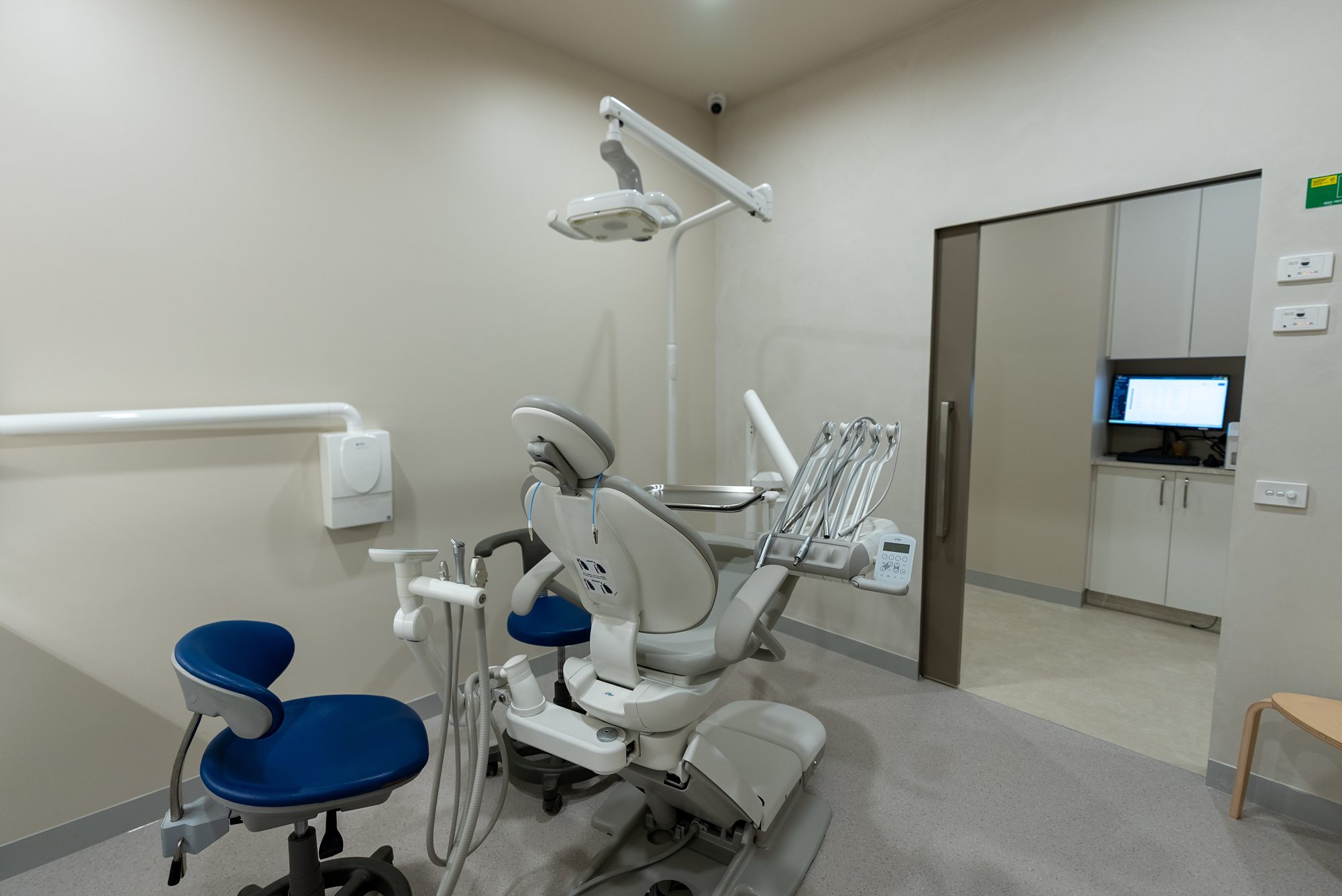

IV sedation for dental implant surgery means a sedative is given through a small cannula in your hand or arm so that you are deeply relaxed, drowsy and usually remember very little, while local anaesthetic still numbs the surgical site and a trained team monitors your breathing, oxygen and blood pressure throughout. It is not a general anaesthetic: you keep breathing for yourself and can respond to a voice. In Australia only dentists whose registration is endorsed for conscious sedation by the Dental Board may use the technique, and the national guideline on procedural sedation asks for six hours without solid food beforehand and a responsible adult to take you home. This guide walks through the planning visit, the night before, the chair and the first day at home.
Written by Dr James Tran, BDent (University of Sydney), MICOI, GradDip (Oral Implants), general dentist at Lumi Dental in Melrose Park.
The short version
- IV sedation suits the longer implant appointments: several implants at once, bone grafting or a sinus lift, and full-arch surgery.
- You are sedated, not asleep. The Dental Board defines conscious sedation as a depressed level of consciousness in which you can still respond to spoken commands or a light touch.
- Fasting is standard: the ANZCA guideline says no solids for six hours before IV sedation, with clear fluids encouraged until two hours before.
- Someone must take you home and stay with you. No driving, alcohol, machinery or legal decisions for 24 hours.
- Common after-effects are drowsiness, patchy memory, nausea and a bruise where the cannula sat.
- For the wider picture of sedation at the dentist, start with our IV sedation dentistry guide.
The rule: if you would rather not remember it, ask at the planning visit, not on the day
Sedation is arranged, not improvised. It needs your medical history reviewed, a fasting window, an escort, a day off and usually a longer appointment. In my experience the patients who have the smoothest day raised sedation when the implant plan was being drawn up. Deciding in the waiting lounge on the morning usually means rebooking.
Why implant surgery and sedation go together
Most single implants are placed under local anaesthetic alone. What makes sedation attractive is duration and complexity. Several implants, graft material, a sinus lift, or removing failing teeth and placing a full arch in one session can mean well over an hour with your mouth open, hearing the drill and feeling pressure even though nothing hurts. Sedation turns that into a hazy, short-seeming stretch most people do not clearly remember.
The other reason is anxiety. Better Health Channel lists conscious sedation among the options for severe dental anxiety, alongside nitrous oxide, oral anxiety medication and general anaesthesia. Our comparison of dental sedation options for anxious adults sets those side by side.
What IV sedation is, and what it is not
Better Health describes it well: medication is given through a drip into a vein of the arm or hand, you are relaxed and may drift into a light sleep but can respond to verbal prompts, and it is provided by a dental sedationist (a dentist with advanced sedation training) or an anaesthetist, at a dental practice with additional equipment or in a hospital. The NHS leaflet we cite adds that many patients have some memory loss for the sedated period, though not everyone does.
A general anaesthetic is different in kind: you are fully unconscious, an anaesthetist manages your airway, it happens in hospital, and recovery is longer. Lumi Dental does not provide general anaesthetic itself and refers where it is needed, though IV sedation is available at the practice. Our guide to dental treatment under general anaesthetic covers when that referral makes sense.
Who may provide IV sedation in Australia
The Dental Board of Australia is clear: only dentists whose registration is endorsed for conscious sedation may use the technique, whatever the route or drug, and to keep the endorsement a dentist must complete an approved course in dental sedation and medical emergencies before each renewal. The endorsement appears on the public practitioner register.
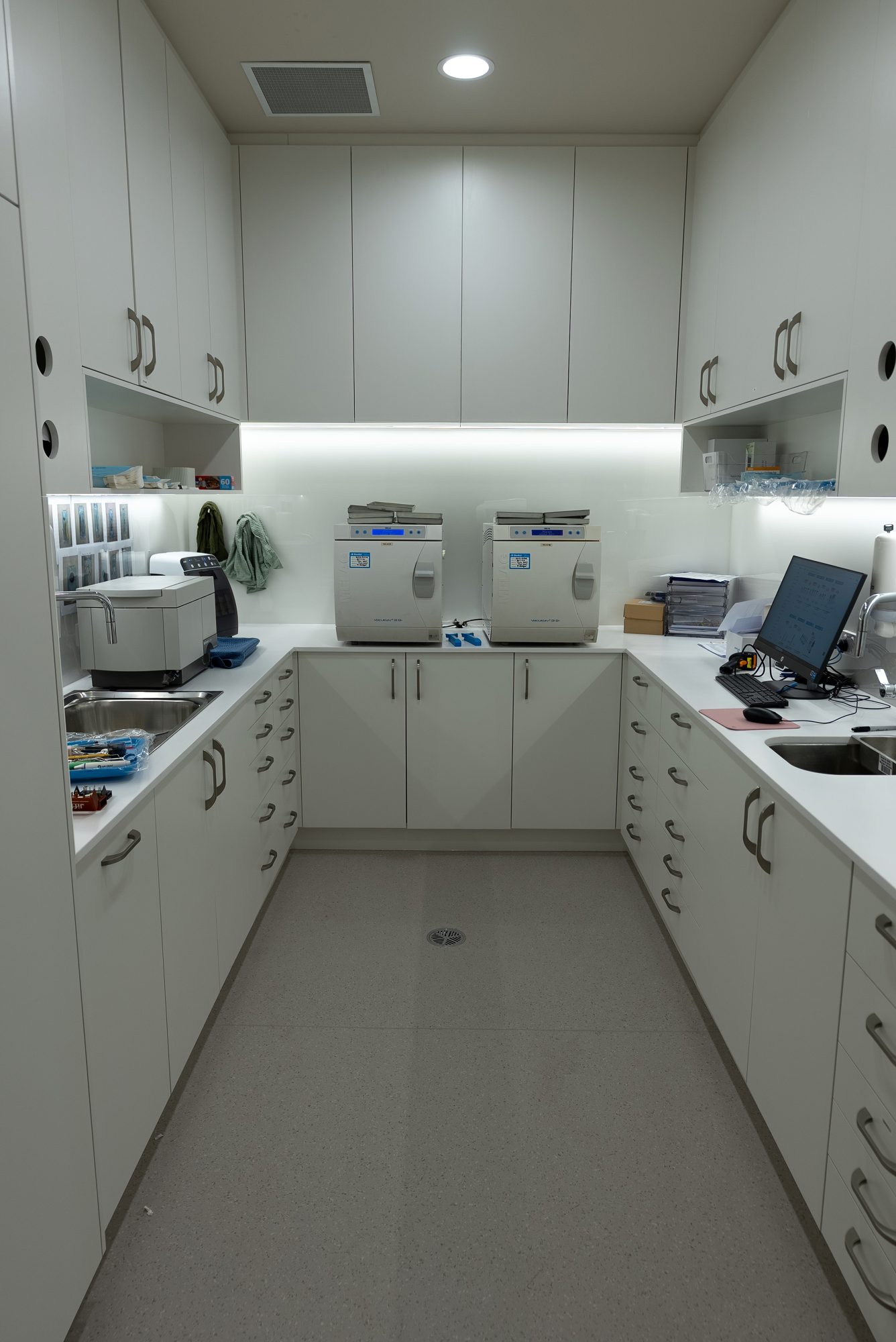
The ANZCA guideline on procedural sedation sets the clinical floor: continuous pulse oximetry that alarms, regular monitoring of pulse and blood pressure, and, where agents such as propofol are used, one practitioner present whose sole job is maintaining and monitoring the sedation. Discharge must be authorised by the practitioner responsible.
| Option | Local anaesthetic only | IV conscious sedation | General anaesthetic |
|---|---|---|---|
| Where | Dental chair | Equipped dental practice or hospital | Hospital or day surgery |
| Awareness | Fully awake | Drowsy; responds to voice | Unconscious |
| Memory of the surgery | Complete | Often little or none | None |
| Who provides it | The dentist | Endorsed dentist or anaesthetist | Anaesthetist, with the dentist operating |
| Fasting | Not usually | No solids six hours; clear fluids to two hours | As directed by the anaesthetist |
| Escort and driving | Can drive home | Responsible adult; no driving 24 hours | Responsible adult; longer recovery |
| Typical implant use | Single implant | Several implants, grafts, full arch, anxious patients | Complex or medical cases by referral |
| At Lumi Dental | Yes | Yes | No; referred where needed |
Before the day
The planning visit
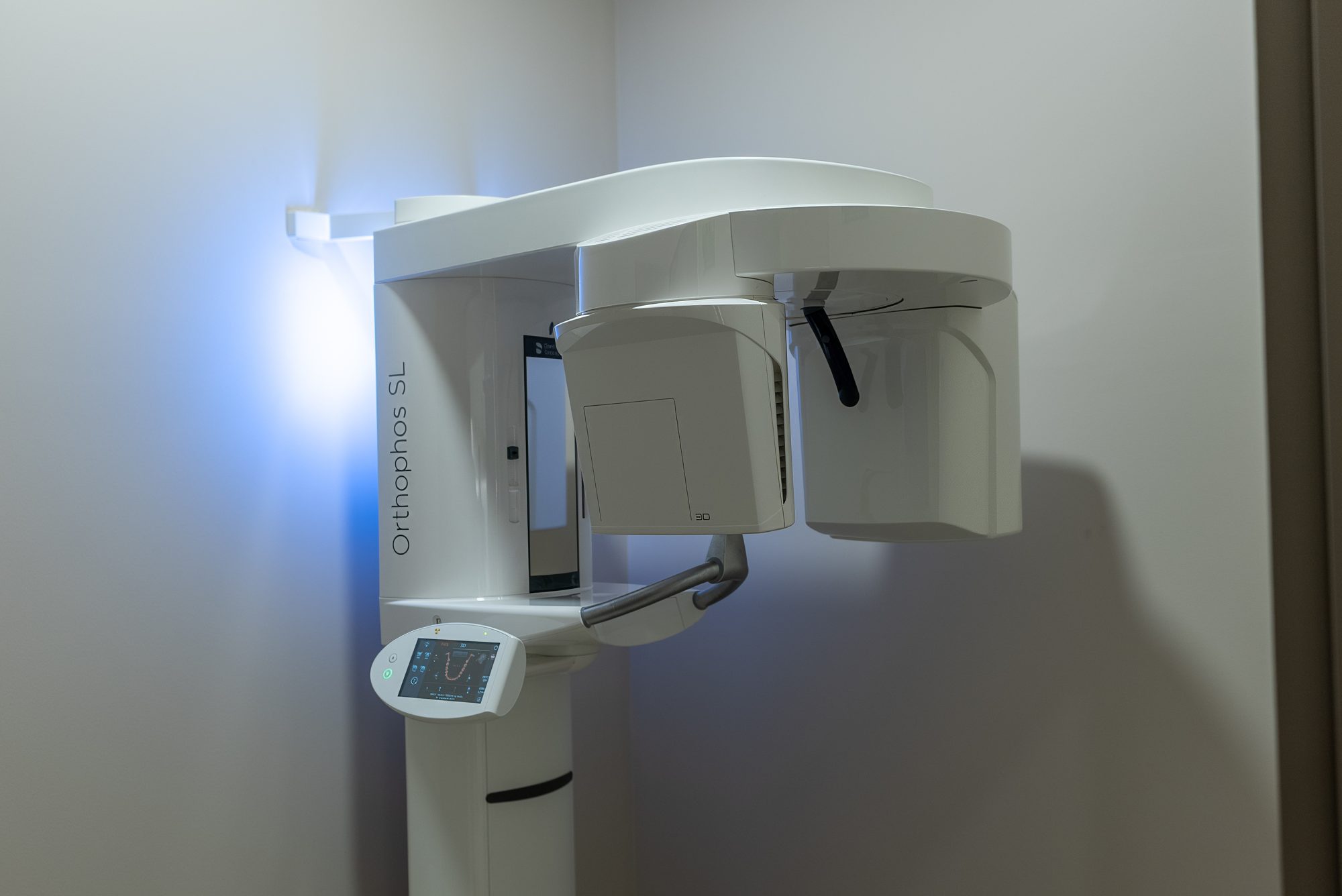
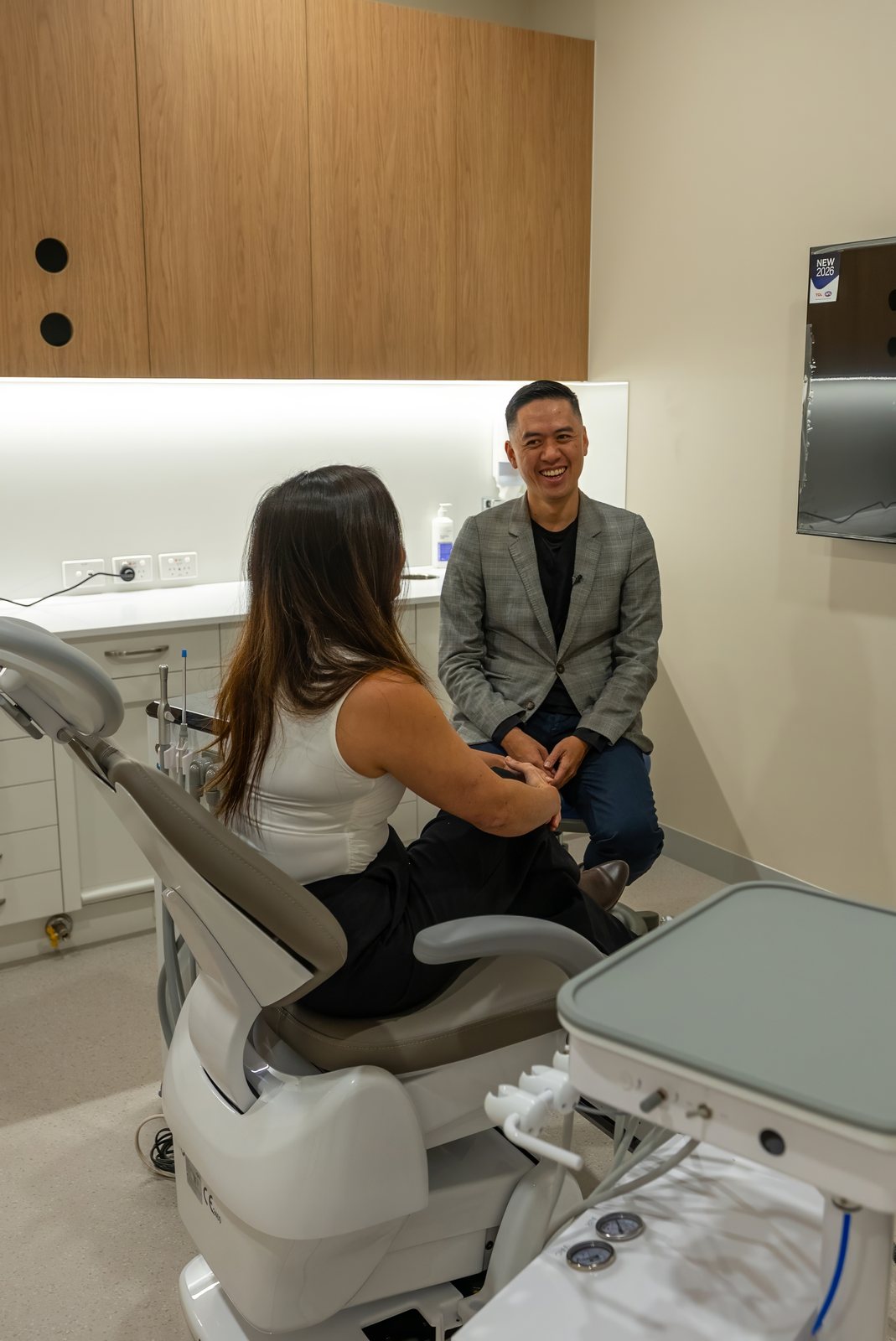
Implant planning already involves a 3D X-ray and a scan of your mouth. Adding sedation means a careful run through your medical history, every medicine and supplement you take, and whether you may be pregnant or breastfeeding. For medically complex patients the team at Lumi Dental writes to your GP or specialist before planning surgery. You leave with written instructions.
The night before and the morning
The ANZCA guideline is specific: no solid food for six hours before intravenous sedation, with clear liquids encouraged up to two hours before. The NHS leaflet adds the practical points: no alcohol beforehand, bring your medication list, wear flat shoes, and skip nail varnish because it interferes with the oxygen clip. Confirm your escort and block out the next day. Our article on time off work and driving after sedation explains why 24 hours is the usual figure.
In the chair
Expect the monitors first: a finger clip for oxygen and pulse, and a blood pressure cuff. The cannula goes into the back of your hand or forearm; the NHS leaflet describes a sharp scratch, after which the needle is withdrawn and only a soft plastic tube stays. The sedative is given in small amounts and builds over a few minutes into warmth and heaviness.
Local anaesthetic is still given once you are sedated, because sedation relaxes you but does not numb you. You may hear voices or feel pressure, but few patients I see can give an account of it afterwards, and most are surprised how much time has passed. Throughout, a team member watches the monitors and you, not the surgery.
Afterwards: recovery and the first 24 hours
You stay in a recovery area until the practitioner responsible authorises discharge into the care of a responsible adult, with written instructions that ANZCA says should cover eating, pain relief, and avoiding legally binding decisions, driving and machinery. You go home by car or taxi, not public transport.
For the rest of that day, expect to be sleepy, unsteady and forgetful. The NHS leaflet lists what to avoid for 24 hours: driving, cycling, machinery, alcohol, sleeping tablets, work or study, signing documents or posting online, and being responsible for children. Your lips and cheeks will also be numb from the local anaesthetic for a few hours, so eat carefully. Sedation does not change how the site heals; swelling, stitches and diet follow the usual course in our implant surgery recovery timeline.
Risks, and who may not be suitable
The NHS leaflet lists the common effects: drowsiness, memory loss, dizziness or confusion, nausea, bruising at the cannula site, and a dip in blood oxygen from shallow breathing, which is why you are monitored throughout. Rare effects include vomiting and allergy to the sedative. Better Health notes that some conditions and medications mean IV sedation is not suitable, and the ANZCA guideline flags pregnancy and obstructive sleep apnoea as carrying a higher risk of regurgitation regardless of fasting. All of this is decided at the planning visit, with your doctor's input where needed.
How we approach this at Lumi Dental
At Lumi Dental in Melrose Park, IV sedation is available for implant surgery, from a single implant through to All-on-X full-arch treatment. Whether it suits you is settled at the implant planning visit, after a dentist has examined you, taken the 3D X-ray and intraoral scan in house and reviewed your medical history. Lumi Dental does not provide general anaesthetic and refers where it is needed. Read more about IV sedation at Lumi Dental.
Questions patients ask
Will I be asleep during implant surgery with IV sedation?
Not fully. Conscious sedation, as the Dental Board defines it, leaves you able to respond to spoken commands or a light touch, so you may drift in and out of a light sleep. Most people remember little afterwards.
Can I eat or drink before IV sedation?
Follow your written instructions. The ANZCA guideline asks for no solid food for six hours before intravenous sedation, with clear fluids such as water encouraged up to two hours before. Arriving having eaten usually means the sedation cannot go ahead.
How long after IV sedation can I drive?
Not for 24 hours. Judgement and reaction time stay impaired well after you feel awake, so a responsible adult takes you home and you stay off the road and alcohol until the next day.
Is IV sedation safe for dental implant surgery?
In healthy adults, under an endorsed dentist or anaesthetist with proper monitoring, it is widely used and the common effects are minor: drowsiness, nausea and a bruise. Your medical history and medicines decide whether it suits you.
Do full-arch implants need a general anaesthetic?
Not necessarily. Full-arch surgery is long, and many patients have it under IV sedation; general anaesthetic in hospital is reserved for cases where medical or other factors call for it, and Lumi Dental refers those. Our full-arch treatment timeline shows where the surgical day sits.
Nervous about implant surgery? Complimentary implant consult in Melrose Park, with IV sedation available
If the thought of implant surgery holds you back, the team at Lumi Dental in Melrose Park can talk through sedation at a complimentary implant consult. Contact Lumi Dental to book, or read about dental implants, IV sedation dentistry and All-on-X full-arch implants at the practice. Patients visit from Ryde, Parramatta, Ermington, Rydalmere and nearby suburbs.
Sources
- Dental Board of Australia: Conscious sedation (registration standard and endorsement)
- Australian and New Zealand College of Anaesthetists: PG09(G) Guideline on procedural sedation
- Better Health Channel: Dental anxiety and phobia (sedation options)
- NHS (The Rotherham NHS Foundation Trust): Information about dental care using intravenous (IV) sedation for adult patients
About the author

Dr James Tran is a general dentist at Lumi Dental in Melrose Park. He holds a BDent from the University of Sydney and a Graduate Diploma in Oral Implants, and is a Member of the International Congress of Oral Implantologists (MICOI).
This article is general information only and is not a substitute for an examination and individual advice from a registered dental practitioner. Suitability for any treatment varies from person to person.








