
If you want someone to look at your mouth and fit you with a new denture, you need a dental prosthetist (or a dentist), not a dental technician. Both work with dentures, which is why people mix them up, but only one of them treats patients. Queensland Health puts it simply: dental prosthetists are registered dental practitioners with the Dental Board of Australia, and dental technicians are not.
The rest of this article explains what each person does, how they train, and who to contact when a crown or denture does not feel right.
Technicians make things; they do not treat people
A dental technician carries out the laboratory work behind crowns, bridges, veneers, dentures, mouthguards and retainers. They receive a prescription from a dentist or prosthetist, along with an impression or a digital scan and instructions about shape and shade, and turn that into the finished piece. The work may involve traditional casting and layering of porcelain and acrylic, or digital design followed by milling or 3D printing.
It is skilled work. A technician has to understand how teeth meet, how materials behave and how a restoration will look in a smile, usually without ever meeting the person who will wear it. Queensland Health's careers information describes technicians as helping to make prosthetic devices without seeing patients.
Because technicians are not registered dental practitioners, they do not examine patients, diagnose problems, discuss treatment choices or adjust an appliance in someone's mouth. Those are clinical tasks for a registered practitioner. Responsibility for the clinical result rests with the dentist or prosthetist who examined you and prescribed the work. A similar principle applies to dental assistants, another unregistered role, which we cover in what a dental assistant can and cannot do.
Prosthetists are registered and see patients directly
A dental prosthetist is a registered dental practitioner who assesses patients, designs and makes dentures and certain other appliances, and fits them. Queensland Health describes prosthetists as dental technicians who have completed further study so they can work directly with patients, and lists the qualifications as an Advanced Diploma of Dental Prosthetics or a bachelor's degree in dental prosthetics or oral health with a prosthetics major.
That further study is what changes the role. It adds clinical training in examining the mouth, recording how the jaws relate, and fitting and adjusting dentures on real patients. As registered practitioners, prosthetists also carry the same professional obligations as other dental practitioners, including continuing professional development and professional indemnity insurance. You can book directly with a prosthetist for full or partial dentures. Our article on what a dental prosthetist can and cannot do goes through their scope in more detail.
Diagnosing and treating decay, gum disease and other problems with the natural teeth sits outside a prosthetist's usual scope, so if something like that is found, they refer you to a dentist.
The key differences at a glance
| Dental technician | Dental prosthetist | |
|---|---|---|
| Registered with the Dental Board of Australia | No | Yes |
| Treats patients | No | Yes, for dentures and some other appliances |
| Works from | A prescription from a dentist or prosthetist | Their own examination of the patient |
| Usual workplace | A dental laboratory | A clinic |
| Listed on the public register of practitioners | No | Yes |
Every dental practitioner works within their training
The Dental Board of Australia's scope of practice standard says registered dental practitioners may only perform treatment they have been educated and trained in and are competent in. It also says they must not direct anyone else, registered or not, to perform treatment outside that person's education or competence. In practice, that means a technician builds the appliance and a registered practitioner handles everything that happens in the mouth.
Other members of the dental team have their own scope. A dentist diagnoses and treats disease, prescribes crowns and bridges, and handles more complex work. An oral health therapist focuses on prevention, gum health and some restorative care, explained in our guide to what an oral health therapist can do.
How a crown gets from your mouth to the bench and back
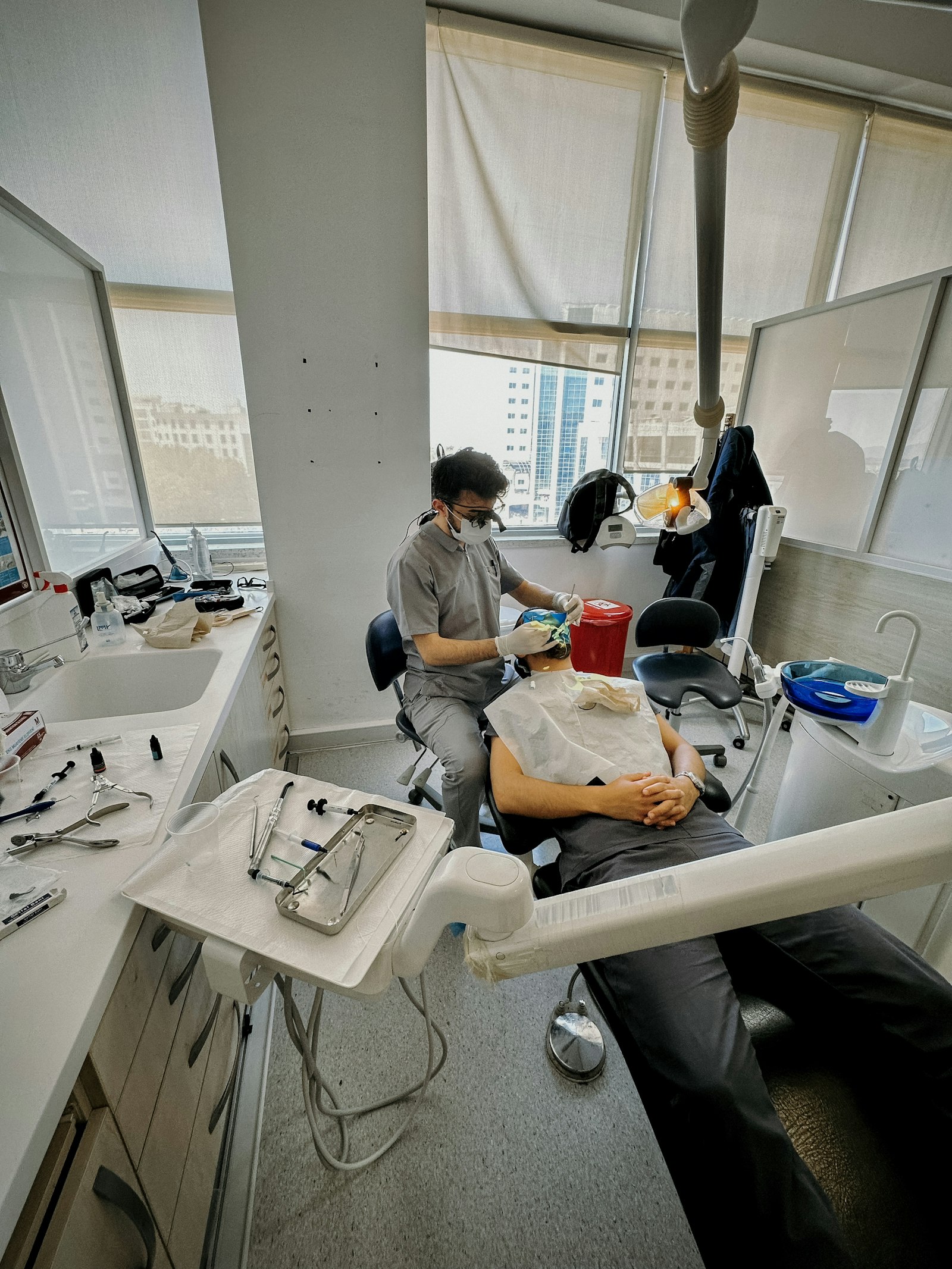
Most lab-made restorations follow the same path. The clinical steps happen in the chair: a dentist examines you, prepares the tooth, records it with an impression or a 3D scan and writes a prescription. The technical steps happen at the lab, where the technician shapes the crown to that prescription. The finished piece then comes back to the dentist, who checks the fit and the bite and cements it.

Lumi Dental has an in-house lab, so for some work the clinical and laboratory teams are in the same building and can talk through shade or fit questions directly. Our article on how your crown is made in the dental laboratory describes the bench side in more detail.
When something is not right, go back to who fitted it
If a crown feels high, a denture rubs or an appliance is loose, contact the practitioner who prescribed and fitted it rather than the laboratory. They can check what has changed, adjust it if that is enough, or arrange a remake with the lab. Adjusting anything in your mouth is a clinical task, even when the same lab made the piece. A sore under a denture that has not healed within 2 to 3 weeks should be checked by a dentist.
Common questions
Can a dental technician fit or adjust my denture?
No. Technicians are not registered dental practitioners and do not treat patients. A dentist or dental prosthetist fits and adjusts dentures.
Is a prosthetist the same as a technician?
No. Many prosthetists trained as technicians first, but further study and registration allow them to treat patients directly. A technician works only from a prescription.
How can I check if someone is registered?
Search the Ahpra public register of practitioners by name. It shows whether a person is registered, their division, such as dentist or dental prosthetist, and any conditions on their registration. Dental technicians do not appear on it because the role is not registered.
If you have a question about a crown, denture or other restoration and are not sure who should look at it, the team at Lumi Dental can examine it and explain your options. Current new patient offers are listed on our current deals page. This article is general information and does not replace individualised advice from a registered practitioner who has examined your mouth.