
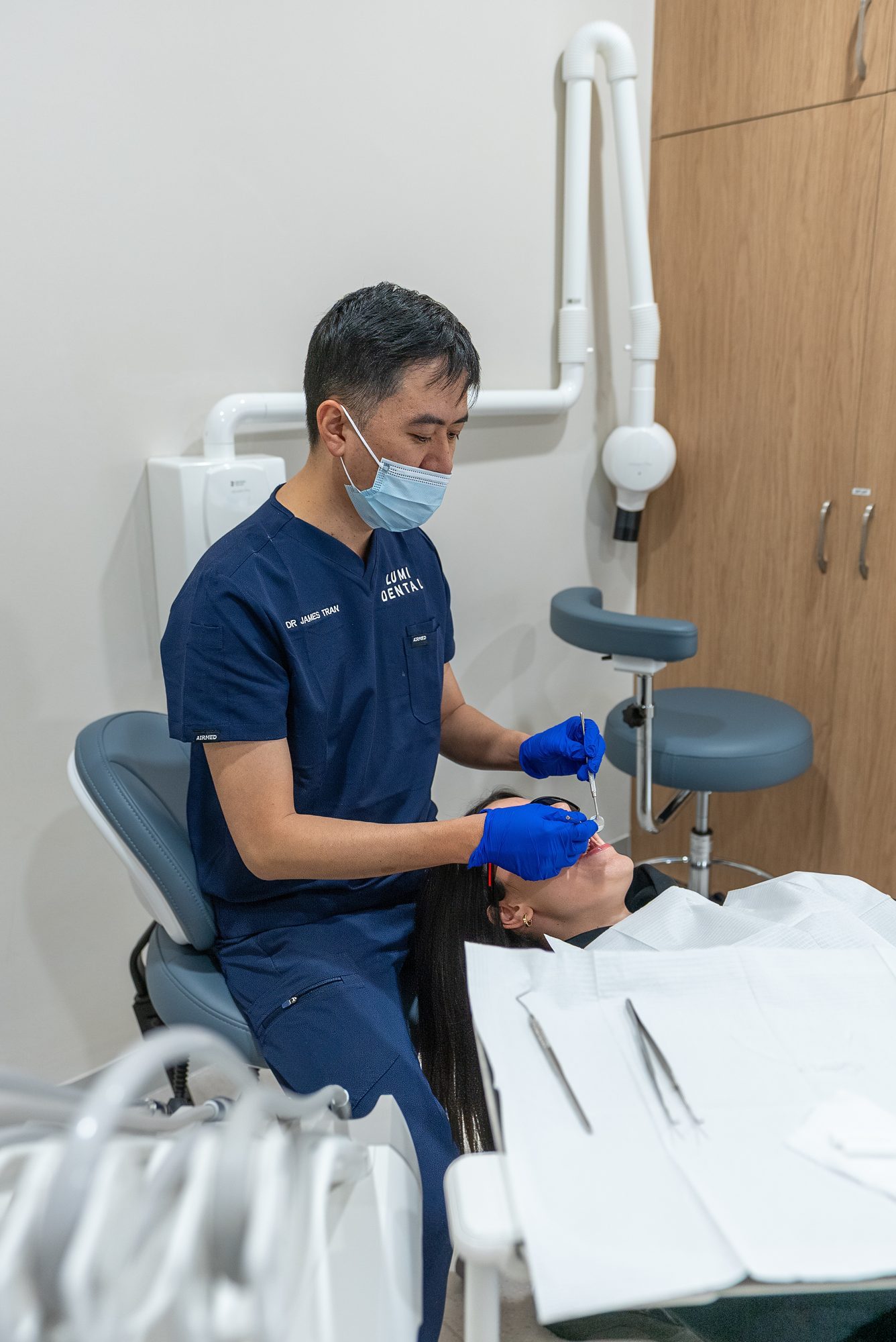

If you wear dentures and have swallowing difficulty (dysphagia), the speech pathologist decides what is safe to eat and drink, and the dentist's job is to make sure your dentures fit well enough to chew whatever texture has been prescribed. The two jobs overlap more than people expect, because loose or missing dentures can make chewing and swallowing harder. Speech Pathology Australia estimates that 50 to 60% of people in residential aged care have swallowing difficulties, and that around 40% of stroke survivors live with persistent dysphagia. This guide to dentures and dysphagia is written for wearers and for the family members and carers who help at mealtimes.
Written by Dr James Tran, BDent (University of Sydney), MICOI, GradDip (Oral Implants), general dentist at Lumi Dental in Melrose Park.
The short version
- The single rule: the speech pathologist sets the food and fluid textures, and the dentist makes sure the dentures can manage them. Neither replaces the other.
- Coughing at meals, a wet or gurgly voice, food left in the cheeks and very long meals are signs worth reporting to a GP.
- Well-fitting dentures usually help swallowing, so most people wear them at meals unless the speech pathologist advises otherwise.
- A loose denture, especially a small partial, is worth checking promptly. Swallowed or inhaled dentures are uncommon but can be serious.
- Dry mouth from medicines makes both swallowing and denture grip harder. Our article on dentures and dry mouth explains why.
- Daily mouth and denture cleaning matters more, not less, when swallowing is unsafe.
What dysphagia is and who it affects
Healthdirect describes dysphagia as the medical term for difficulty swallowing, which includes problems with drinking, chewing, eating, controlling saliva and taking oral medicines. It lists stroke, Parkinson's disease, motor neurone disease (MND), dementia, cerebral palsy and multiple sclerosis among the conditions that can cause it, along with head, neck and throat cancers and the scarring or nerve damage that cancer treatment can leave behind. Swallowing can also change gradually with age.
Many of the same people wear dentures, and dentures do the first stage of swallowing: chewing food into a soft mouthful the tongue can move back.
Signs of swallowing trouble at meals
A fact sheet from the Aged Care Quality and Safety Commission lists signs that someone may be having difficulty swallowing, including:
- coughing or throat clearing, or a wet, gurgly voice
- tiring during meals, or taking a long time to finish
- food remaining in the mouth or cheeks after eating
- repeated chest infections or unexplained weight loss
- poorly fitting dentures, which the sheet notes can cause choking or lead to poor chewing
The Stroke Foundation notes that food or drink can go into the lungs without any coughing, which it calls silent aspiration. If you notice these signs, talk to the GP, who can refer to a speech pathologist for a swallowing assessment.
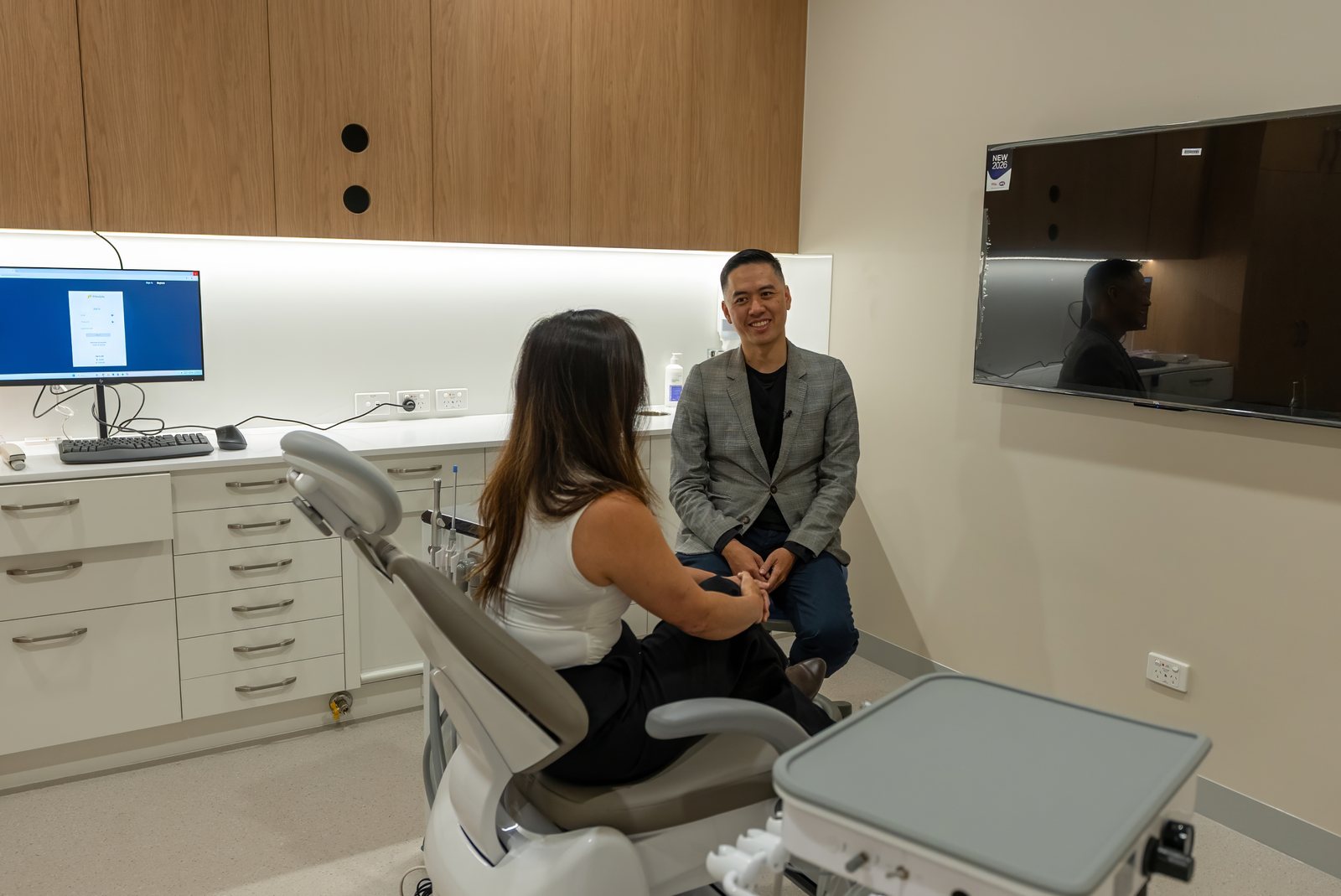
The single rule: the speech pathologist sets the texture, the dentist sets the fit
The Aged Care Quality and Safety Commission describes speech pathologists as the professionals who assess swallowing and prescribe strategies, which may include texture modified food and drinks. A dietitian helps make sure nutrition is still met.
What the IDDSI levels mean
Speech Pathology Australia's aged care guidance expects modified diets to follow the International Dysphagia Diet Standardisation Initiative (IDDSI) framework. IDDSI explains that it is a continuum of 8 levels, numbered 0 to 7: drinks are described at levels 0 to 4 and foods at levels 3 to 7. IDDSI also states that the clinician recommends foods and drinks for each person based on a comprehensive assessment.
Where the dentist fits in
The dentist does not choose your IDDSI level, and a new or relined denture is not a reason to change it on your own. The dentist makes sure the dentures are stable and able to chew the textures on your plan; if chewing improves, the speech pathologist decides whether a review is due.
How dentures affect chewing and swallowing
Research in people with dysphagia is limited. A study in Geriatrics and Gerontology International filmed swallowing X-rays in 27 older inpatients with dysphagia and well-fitting dentures, average age 86. Without their dentures, more residue was left in the throat and food took longer to pass through. It is a small study, but it supports keeping well-fitting dentures in at meals for many people. The speech pathologist may advise otherwise for some, for example if a denture is too loose to control.
Loose full dentures
When a denture rocks, the tongue and cheeks work to hold it still instead of moving food. In my experience, carers often notice this first as food pocketing on one side or a denture that drops when the person talks. A reline refits the inner surface to the gums; our comparison of denture relines and new dentures explains when each makes sense. Denture adhesive can help for a short time, but it does not correct the fit.
Small partial dentures
Small partials carry a specific risk. A review in the Ear, Nose and Throat Journal gathered 85 reported cases of swallowed or inhaled dentures over 10 years. Complications were recorded in 37.6% of patients, and they were more likely when symptoms lasted over a day or removal was delayed beyond 4 days. These are case reports, so they say nothing about how often it happens, but the message is clear: get a loose partial checked, and if one goes missing during a meal, seek medical advice the same day. If there is choking or trouble breathing, call triple zero (000).
Implant overdentures for stability
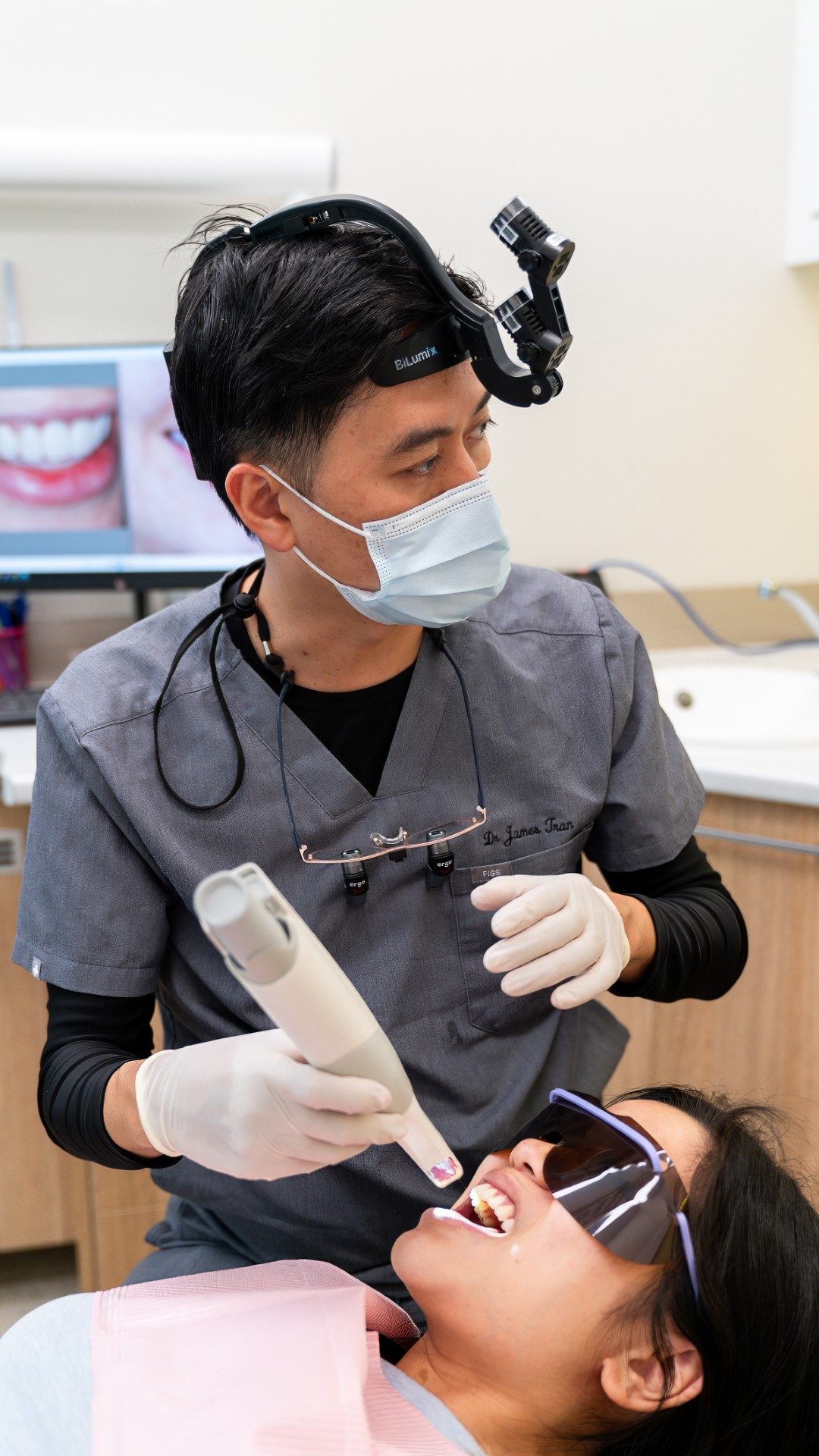
For some people, two or more implants under a lower denture hold it more firmly than suction and adhesive, which may make chewing easier. It is not right for everyone: implants involve surgery, need a medical review first, and the attachments need daily cleaning by the wearer or a carer. Our guide to implant-retained overdentures explains how they work.
Mouth care, dry mouth and chest infections
Healthdirect notes that dysphagia can lead to aspiration, where food or drink goes into the airways, and that aspiration can lead to pneumonia. Mouth bacteria travel with it, which is why daily brushing and denture cleaning matter so much when swallowing is unsafe. Our article on oral care in residential aged care covers what a good plan includes.
Dry mouth makes everything harder, because saliva helps form a mouthful and is also the film a full denture sits on. Many medicines reduce it; the GP or pharmacist manages them.
Progressive conditions
With MND, Parkinson's disease or dementia, swallowing can change over months. I usually suggest doing any denture work while visits are still easy, rather than waiting. Our guide to mouth care with motor neurone disease describes planning visits early.
Situations and who to ask
| Situation | Ask the dentist | Ask the speech pathologist |
|---|---|---|
| After a stroke | Whether the dentures still fit now that the face and bite have changed | What is safe to eat and drink, and whether dentures go in at meals |
| Loose full denture | Whether a reline or new denture is needed | Whether to stay on the current texture until it is fixed |
| Small partial denture | Whether it is secure, or should be redesigned or left out | Whether it is safe to wear while eating |
| On minced or puréed food | Whether the dentures are comfortable and stable | Whether dentures help or are needed at meals |
| Dry mouth | Decay protection and denture grip | Strategies for moistening food and mouth care |
| Progressive condition | Doing denture work early while visits are easier | How often to review the swallow |
| Lives in aged care | Denture labelling and regular checks | The written mealtime plan for staff and family |
After a stroke, our guide to oral care for stroke survivors covers brushing with one hand and dentures that feel loose.

How we approach this at Lumi Dental
At Lumi Dental, a dentist checks how your dentures fit and talks through relines, new dentures or implant overdentures where they may help. Bring your mealtime plan or IDDSI levels, a medicines list and, if possible, the person who helps at meals. If swallowing has not been assessed, the team suggests seeing your GP, who can refer to a speech pathologist. Where implants are considered, the team at Lumi Dental writes to your GP or specialist before planning surgery. Read more about general dentistry at Lumi Dental.
Questions patients ask
Should you wear dentures when eating if you have dysphagia?
Usually yes, if they fit well, as research suggests they can help food move through the throat. The speech pathologist may advise otherwise for some people.
Can loose dentures cause choking?
They can. Aged care guidance notes poorly fitting dentures can cause choking or poor chewing, so have a loose denture checked soon.
What is IDDSI?
It is an international framework of 8 levels, 0 to 7, used to describe drink thickness and food texture. Drinks sit at levels 0 to 4 and foods at 3 to 7. Your speech pathologist sets the levels for you.
Can a dentist fix swallowing problems?
No. A dentist can improve how dentures fit and chew, but swallowing is managed by a speech pathologist, usually through a GP referral. Our guide to dentures in a dry mouth covers one common reason dentures slip.
What should I do if a partial denture goes missing during a meal?
Seek medical advice the same day, because case reviews link delays with more complications. If there is choking or difficulty breathing, call triple zero (000).
Need dentures checked or replaced? Book a denture consult in Melrose Park
If you or someone you care for has swallowing difficulty and dentures that feel loose or sore, the team at Lumi Dental can check the fit and plan the next step around the speech pathologist's advice. Contact Lumi Dental to book a denture consult, or read about dental implants in Melrose Park if a more stable option is worth discussing. Patients visit from Ryde, Parramatta, Ermington and Rydalmere, with on-site parking at Melrose Central.
Sources
- Speech Pathology Australia: Communication and swallowing/mealtime support needs, guidance material for the aged care quality standards
- Aged Care Quality and Safety Commission: Supporting safe and enjoyable mealtimes for people with swallowing difficulties
- Geriatrics and Gerontology International: Effect of dentures on pharyngeal swallowing function in patients with dysphagia (PubMed)
- Ear, Nose and Throat Journal (Daniels and colleagues): A 10-Year Review of the Complications Caused by Ingested and Aspirated Dentures (PubMed)
About the author
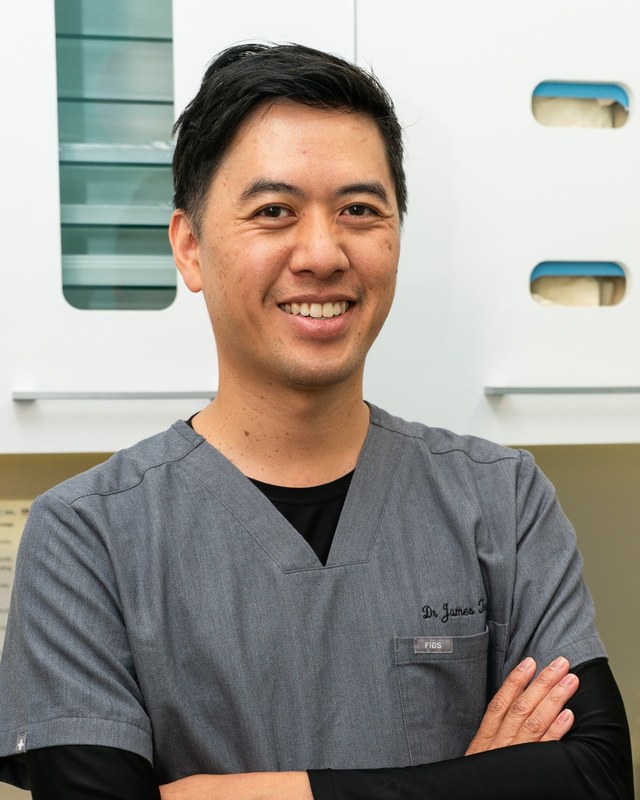
Dr James Tran is a general dentist at Lumi Dental in Melrose Park. He holds a BDent from the University of Sydney and a Graduate Diploma in Oral Implants, and is a Member of the International Congress of Oral Implantologists (MICOI).
This article is general information only and is not a substitute for an examination and individual advice from a registered dental practitioner. Suitability for any treatment varies from person to person.







