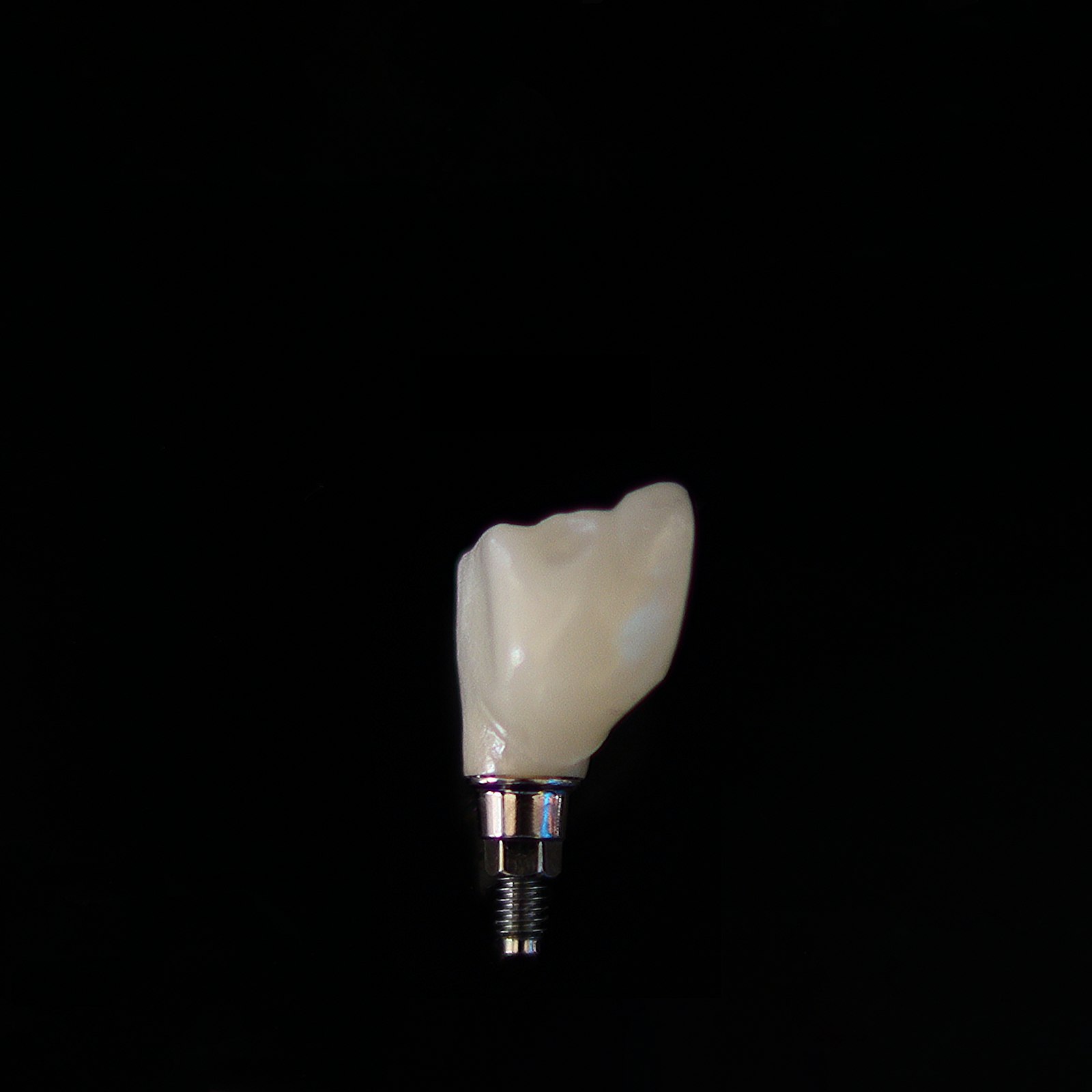

Two implants in the front of the lower jaw can turn a lower denture that floats into one that stays put. That is the core idea of an implant-retained overdenture, often called a snap-in denture. It is still a removable denture that you take out to clean, but it clicks onto attachments on the implants instead of resting on the gums alone.
It is a well-studied treatment, and it sits between a conventional denture and a fixed implant bridge in cost, surgery and upkeep.
Why two implants became the benchmark for lower dentures
In 2002, a group of experts meeting at McGill University published a consensus statement that a two-implant overdenture should be the first choice of treatment for a lower jaw with no teeth (Feine and colleagues, International Journal of Oral and Maxillofacial Implants, 2002). A second statement from York in 2009 supported this, concluding that satisfaction and quality of life were significantly higher with these dentures than with conventional ones, with much of the evidence coming from randomised trials. A 2012 review in the Journal of Dentistry (Thomason and colleagues) summarised both statements, which describe the two-implant overdenture as a minimum standard that should be enough for most people, not the most advanced option available.
The lower jaw is where it matters most. A lower denture has a narrow ridge to sit on and the tongue moving against it, so it is the one most people find loose. Our article on why lower dentures fit worse than upper dentures explains why.
How the denture clips on
After the implants have healed, small attachments are fitted to them. Some are low studs that a nylon insert in the denture snaps over; others are a bar joining the implants, with clips on the underside of the denture. The denture seats firmly on these and lifts off when you unclip it. Our guide to overdenture attachments compares the stud, ball and bar styles.

How it compares with a denture and a fixed bridge
| Option | Held by | Removable at home | Typical market range per arch |
|---|---|---|---|
| Conventional full denture | Gums and suction | Yes | About $1,000 to $5,000 |
| Implant-retained overdenture (lower, two implants) | Attachments on implants | Yes | About $7,500 to $10,000 |
| Fixed full-arch implant bridge | Screws into four or more implants | No, dentist removes it at reviews | About $15,000 to $35,000 or more |
These are general typical Australian market ranges, not Lumi Dental fees. Upper overdentures usually need more implants, often four, and cost more. Grafting adds to any quote.
A fixed full-arch bridge, sometimes called All-on-X, is the step beyond an overdenture. It has no plate and does not come out at home, which some people prefer, but it needs more implants and a larger budget. An overdenture can also be a stepping stone, since more implants can sometimes be added later. If a fixed arch interests you, read about full-arch implants at Lumi.
Who tends to suit an overdenture
- People with a loose lower full denture who want it to stay in place.
- People who would like implant support but prefer fewer implants, a lower cost or a removable option that is easy to clean.
- People whose bone or health makes a fixed bridge harder to plan.
A 3D X-ray shows whether there is enough bone, and whether grafting would be needed first.
From placement to the finished denture
The implants are placed under local anaesthetic. Healthdirect describes bone growing around an implant over about three months, and during that time your existing denture is usually adjusted so it sits comfortably over the healing sites. Once the implants are ready, the attachments are fitted, and the denture is either converted or remade to clip on.
After that, clean the denture and the attachments every day, take it out overnight, and have the clips checked at reviews, because the nylon parts wear and are replaced from time to time. The denture may also need relining as the gums change. Our guide to implant aftercare covers the routine.
What patients ask about overdentures
How many implants are needed?
Two is the usual minimum for a lower jaw. Upper overdentures commonly use more, often four, because the upper jaw usually needs more support.
Can my current denture be used?
Sometimes, if it fits well and there is room for the attachments. A new denture is often made so everything lines up.
Will I still need to take it out at night?
Yes, in most cases. It comes out to be cleaned and is usually left out overnight so the gums can rest.
Will it feel like natural teeth?
It feels much steadier than a conventional denture, but it is still a removable denture. A fixed bridge is the closer match to natural teeth.
If a loose lower denture is making eating or speaking hard, Lumi Dental can assess your bone and talk through overdenture and fixed options. A free implant consult is listed on our offers page, and our dental implants page explains more about implant treatment at Lumi.
This article is general information and not a substitute for an individual dental assessment.