

You can walk through airport security with a dental implant the same way you did before you had one. An implant is a small, non-magnetic piece of titanium or ceramic sitting inside the jawbone, which is far less metal than a walk-through detector is set up to notice. The body scanners now used at many Australian airports look for objects on the surface of the body, not inside the jaw.
Written by Dr James Tran, BDent (University of Sydney), MICOI, GradDip (Oral Implants), general dentist at Lumi Dental in Melrose Park.
An implant is a very small amount of metal
A dental implant has three parts. The fixture is the threaded post placed in the bone. The abutment is a short connector. The crown is the visible tooth. The fixture is about the size of a small screw, a few millimetres across and roughly a centimetre long, and is usually made from a titanium alloy. Some fixtures are zirconia, a ceramic that contains no metal. Crowns are generally porcelain or zirconia, and only some older-style crowns have a thin metal layer inside. Our guide to the parts of a dental implant describes each one.
Two properties make an implant unremarkable at screening. Its mass is tiny compared with a hip or knee replacement, and titanium is not attracted to a magnet the way the steel in a belt buckle is. Our comparison of titanium and zirconia implants covers the two materials in more detail.
Research on larger hardware points the same way
Few studies have tested dental implants at airports directly, but there is useful evidence on bigger surgical hardware. In a small experimental study published in Revista Brasileira de Ortopedia (Reis and colleagues, 2024), two volunteers walked through a standard airport metal detector with orthopaedic implants attached to their bodies. None of the plates and screws used to fix broken bones set it off, whether made of steel or titanium. Every hip replacement did, and one of two knee replacements did.
Those fixation plates and screws are much larger than a dental implant. If they pass unnoticed, a single titanium fixture in the jaw is very unlikely to trigger an archway.
Three kinds of screening, three different questions
The archway
A walk-through metal detector creates a changing magnetic field. Metal passing through disturbs that field, and the machine alarms when the disturbance passes a set threshold. Bigger, denser and more magnetic objects cause a bigger disturbance, and the sensitivity setting differs between machines and airports.
The body scanner
The Department of Home Affairs describes body scanners as the Government's preferred screening method. ARPANSA, the national radiation safety agency, explains that the millimetre wave scanners used in Australia rely on non-ionising radio waves, that clothing appears translucent to them, and that the energy they release is much lower than a mobile phone's. They are designed to find items worn or carried on the body. They do not image bone, so an implant inside the jaw is not part of what they look for. ARPANSA also notes that X-ray backscatter scanners have never been used to screen passengers in Australia.
The hand-held wand
If another item sets off an alarm, an officer may pass a hand-held metal detector over you. Because a wand is held close to the face, it is more sensitive to small amounts of metal than the archway. This is where a removable partial denture with a cast metal frame, or several crowns with metal cores, could occasionally register.
Some dental work is more noticeable than others
| Dental item | Metal involved | Likely experience at screening |
|---|---|---|
| Single titanium implant with a ceramic crown | Very small, non-magnetic | Not expected to be noticed by the archway or body scanner |
| Zirconia implant | None or very little | Not expected to be picked up by a metal detector |
| Full-arch implant bridge with a titanium bar | More titanium, still a low mass | Rarely noticed; a wand close to the face might register it |
| Crowns with a metal core | Thin metal layer under the porcelain | Occasionally noticed by a wand, unlikely at the archway |
| Partial denture with a cast metal frame | Larger metal plate and clasps | The dental item most likely to register, and still uncommon |
A metal-framed partial denture is removable, so if a wand keeps sounding near your mouth you can offer to take it out and show it. Our article on metal and tooth-coloured denture clasps explains the different frame options.
When it is worth speaking up before screening
If a dental implant is the only hardware in your body, there is no need to prepare anything. Mention it if an officer asks or an alarm sounds. If you also have a hip or knee replacement, a pacemaker, an insulin pump or another medical device, tell the officer before screening begins and bring any supporting letter you have. Home Affairs asks travellers to tell the officer about any prosthetic, medical device or medical equipment before screening and says a doctor's letter or medical ID card can help officers choose the right screening method, so declaring a dental implant is always fine, even if it is rarely needed.
What Australian screening rules allow
Screening is compulsory to enter the secure area of an Australian airport, and Home Affairs states that you cannot choose how you are screened. If you are selected for the body scanner, you cannot opt out; if you refuse, you will not be allowed through the screening point.
If an alarm is triggered, you may be screened again, and officers may use a hand-held metal detector, a frisk search or explosive trace detection. For a frisk search you will be asked for consent, and you can ask for an officer of the same gender, a private room and a support person. Home Affairs says screening officers should not remove, try to remove or interfere with any medical device.
If an officer asks about your teeth
Alarms are often caused by something forgotten in a pocket, a belt or shoes, so check those first. If you are asked about implants, describe what you have and where, for example "a dental implant on the upper left". A letter from your dentist stating the implant material and position is not required, though it does no harm to carry one. There is no need to remove a crown, and a denture only needs to come out if an officer asks.
Two related questions often come up. An implant is generally compatible with MRI scanning, but you should still tell the radiographer; our article on dental implants and MRI safety explains why. Flying soon after implant surgery is about healing, not screening, and is covered in our guide to exercise, alcohol and flying after implant surgery. If you are flying in from another state for treatment, our page on travelling to Sydney for dental treatment covers how visits can be planned.
Your implant details are in your record
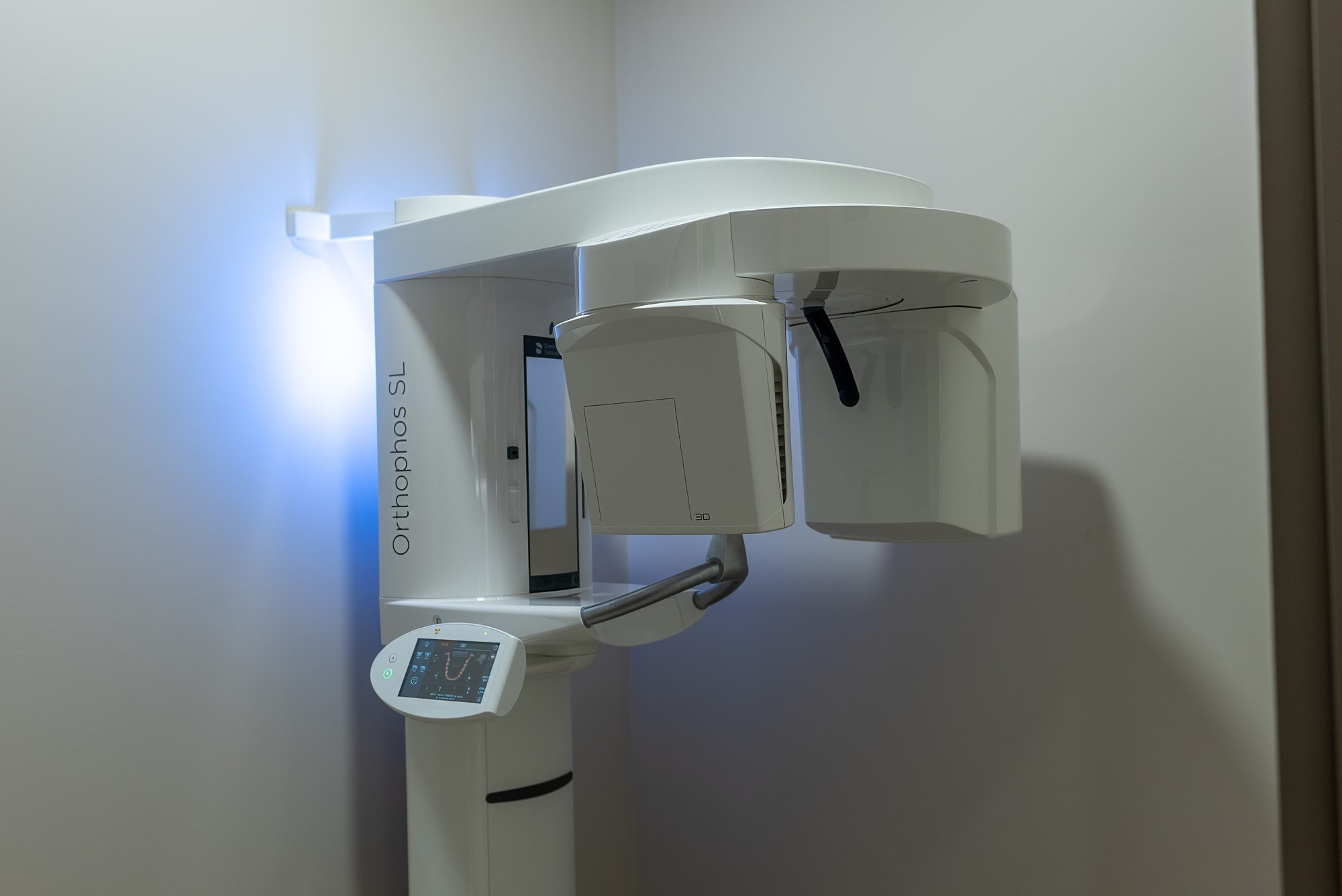
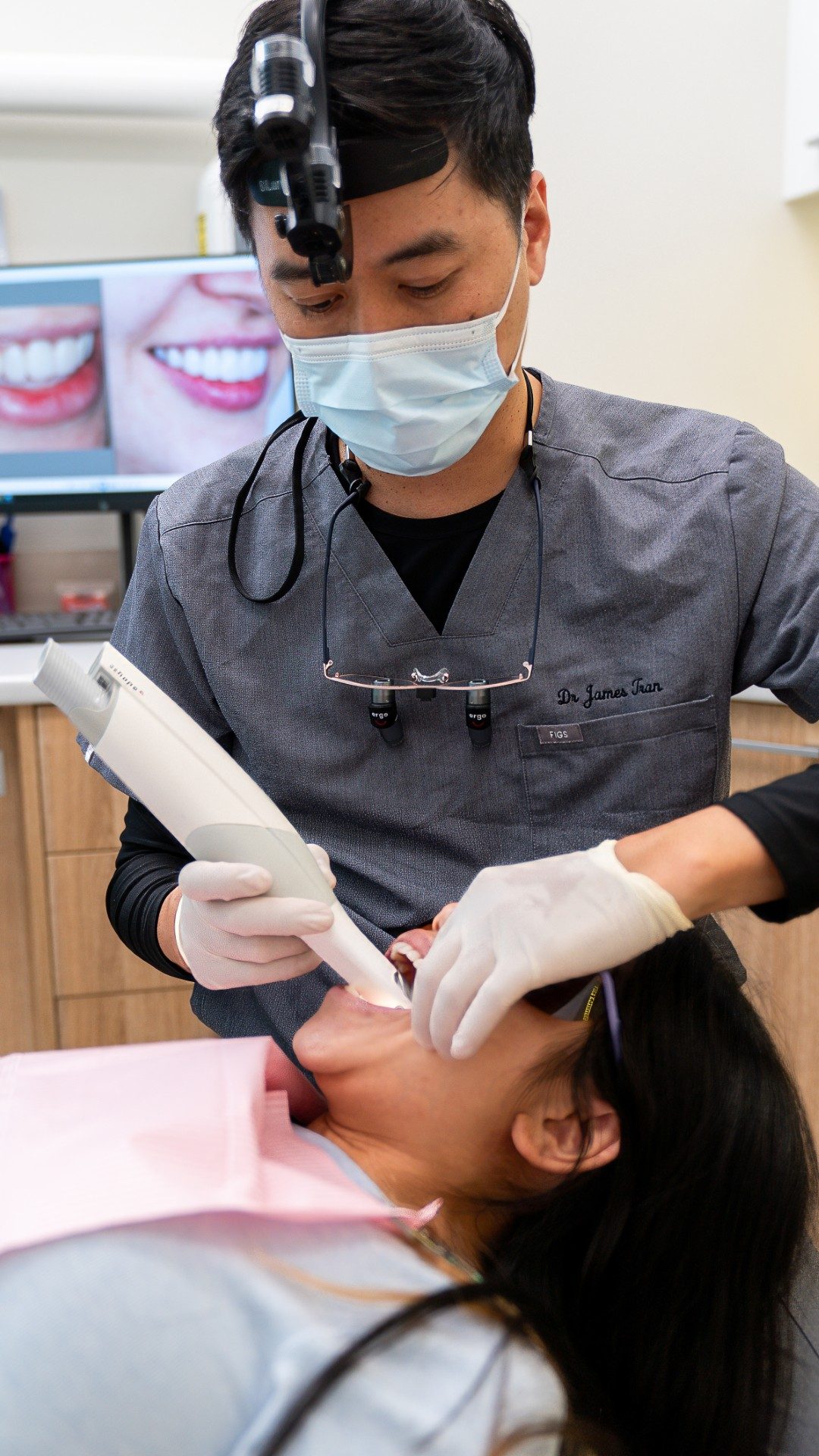
At Lumi Dental, implants are planned by a dentist using the in-house 3D X-ray and an intraoral scan, and the implant system, size and position are recorded in your notes from the start. If you would like a short letter for travel or before a future MRI, ask the team. You can read more about dental implants at Lumi, full-arch implants at Lumi and the imaging on our technology page.
What patients ask about implants and airports
Will a full mouth of implants set off the detector?
It is unlikely. A full-arch bridge on several implants carries more metal than one implant but still much less than a hip replacement, the kind of hardware that reliably alarms in testing. A wand held close to the face is the only device likely to pick it up.
Do I need a card or letter?
No. Supporting documents help officers choose a method for medical devices, but a dental implant does not usually change how you are screened. If you would like a letter anyway, ask your dentist.
Is the body scanner safe with an implant?
Yes. ARPANSA states that body scanners pose no known health risk to passengers, and they do not affect a dental implant. If a dental problem does come up while you are away, our guide to a dental emergency while travelling overseas explains what to do.
If you are considering an implant, or have one and would like a check before a long trip, contact Lumi Dental in Melrose Park to book a free implant consult.
Sources
- Department of Home Affairs (TravelSECURE): Security screening at airports
- Department of Home Affairs (TravelSECURE): People with special circumstances
- ARPANSA: Airport passenger screening and health
- Reis IGN and colleagues. Doctor, will my surgical hardware set off metal detector in the airport? Revista Brasileira de Ortopedia, 2024
About the author

Dr James Tran is a general dentist at Lumi Dental in Melrose Park. He holds a BDent from the University of Sydney and a Graduate Diploma in Oral Implants, and is a Master of the International Congress of Oral Implantologists (MICOI).
This article is general information only and is not a substitute for an examination and individual advice from a registered dental practitioner. Suitability for any treatment varies from person to person.








