


Matcha can stain your teeth, but the stain is usually lighter and more superficial than the stain from coffee or black tea, and most of it sits on plaque rather than on the enamel itself. So does matcha stain teeth? Yes, a little, and mostly where cleaning is poor. The Australian Dental Association lists coffee, tea and red wine as major causes of staining through pigments called chromogens that attach to enamel, and green tea carries fewer of the dark ones.
Written by Dr James Tran, BDent (University of Sydney), MICOI, GradDip (Oral Implants), general dentist at Lumi Dental in Melrose Park.
The short version
- Matcha does stain, but less than coffee, black tea or red wine, because green tea is unoxidised and has fewer of the dark tannin pigments.
- Matcha's fine leaf particles and chlorophyll cling to plaque and rough spots, so the green-grey tinge shows up where brushing is missed.
- A matcha latte with milk may stain less than plain matcha; sweetened iced matcha adds sugar and acid, which is a bigger problem than the colour.
- Rinse with water afterwards, use a straw for iced versions, and wait 30 to 60 minutes before brushing after anything acidic.
- Surface stain lifts with a professional clean, often with air polishing. Colour inside the tooth needs whitening, as our guide to stain removal versus whitening explains.
- Green tea polyphenols have been studied for gum health with early, mixed results; do not count on matcha as treatment.
Why matcha stains less than coffee or black tea
Tea stain comes from tannins, a family of polyphenols that bind to the protein film on the tooth surface and to plaque. Black tea leaves are allowed to oxidise before drying, and that oxidation produces the dark red-brown compounds, theaflavins and thearubigins, that give black tea its colour and most of its staining power. Green tea leaves are heated soon after picking, which stops oxidation, so those darker pigments are largely absent. That is the usual explanation for why green tea stains less, and it matches what I see in patients who drink a lot of it.
Where the matcha stain actually sits
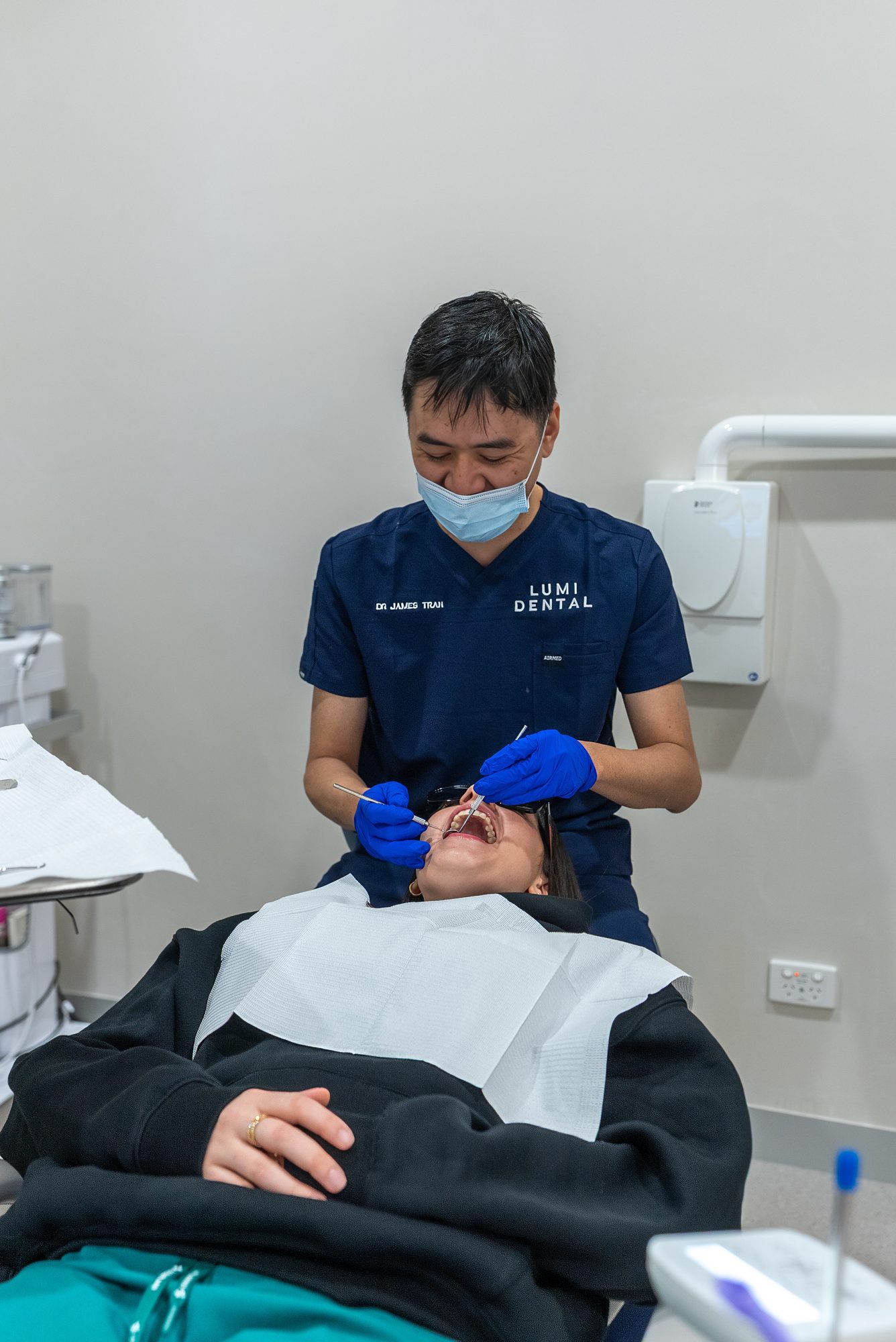
Matcha differs from steeped green tea in one way that matters: you drink the whole ground leaf. Its fine particles and chlorophyll settle into anything rough or sticky, which in the mouth means plaque, the edges of old fillings, chipped enamel and the gumline. Patients I see with a matcha tinge usually have it along the gum margin of the lower front teeth and between the back teeth, exactly where plaque collects. The enamel underneath is usually fine. Remove the plaque and most of the colour goes with it.
Lattes, iced matcha and sweetened versions
Most matcha drunk in Sydney is a latte, and the milk changes the picture. Casein, the main milk protein, binds tannins, so less tannin may be free to attach to the tooth. The evidence is modest, but a matcha latte probably stains less than plain matcha, and in my experience that holds for black tea with milk too.
The bigger issue with cafe matcha is what else is in the cup. Iced matcha is often sweetened with syrup, and some versions are built on a fruit or lemonade base. Plain matcha is only mildly acidic and gentle on enamel. Add sugar and the drink feeds plaque bacteria; add a citrus or soft drink base and it becomes acidic enough to soften enamel, as healthdirect describes for fruit juices and soft drinks. Sipped over an afternoon, that is a decay and erosion risk, and staining is the least of it.
How matcha compares with other drinks
This table is a general guide, not a laboratory ranking. Stain risk depends on how much and how often you drink, how long it sits on the teeth, and how well plaque is controlled.
| Drink | Main staining compounds | Typical stain type | Stain risk |
|---|---|---|---|
| Matcha | Catechins, chlorophyll, fine leaf particles | Green-grey surface film on plaque and rough areas | Low to moderate |
| Steeped green tea | Catechins | Light yellow surface stain | Low |
| Coffee | Tannins, roasted pigments | Yellow-brown surface stain that builds over time | Moderate to high |
| Black tea | Theaflavins, thearubigins, tannins | Brown surface stain, often heavier than coffee | High |
| Red wine | Anthocyanins, tannins, plus acid | Purple-grey stain on softened enamel | High |
| Cola | Caramel colour, plus phosphoric acid | Yellowing as enamel erodes; stain is secondary | Moderate, erosion risk high |
| Kombucha | Tea tannins, plus fermentation acids | Light stain; acid is the main concern | Low to moderate, erosion risk high |
Our article on coffee and tea staining covers the heavier offenders in more detail, and sparkling water, kombucha and vinegar explains why acid, not colour, is the thing to watch in fermented drinks.
Keeping the colour off at home
None of this requires giving up matcha. Rinse with plain water after you finish; it clears particles before they settle. For iced matcha, a straw keeps most of the drink past the front teeth. Do not brush straight after an acidic drink: healthdirect advises waiting at least 30 minutes, because enamel stays softened for around 20 to 30 minutes after acid. Plain matcha is mild enough that this matters less, but a sweetened or citrus-based matcha counts as acidic, so 30 to 60 minutes is a sensible gap.
Brush twice a day with fluoride toothpaste, angled into the gumline, and clean between the teeth daily, because that is where the matcha film lives. A whitening toothpaste can lift some surface stain through mild abrasives, though it does nothing for colour inside the tooth. Our guide to stopping coffee stains gives the same routine with coffee in mind.
Matcha stains plaque more than it stains teeth: keep plaque off and the colour mostly stays off
Coffee and black tea stain the tooth surface directly and build up over years. Matcha mostly colours what is already sitting on the tooth. The Australian Dental Association describes plaque as a sticky layer of bacteria that forms on the teeth and hardens into calculus if it is not cleaned away, and calculus holds stain stubbornly. A patient with clean, smooth teeth who drinks two matchas a day will usually look fine. A patient with calculus along the lower front teeth will pick up colour from anything green, brown or red.
Professional cleaning, air polishing and whitening
A professional clean removes plaque and calculus that brushing cannot, and the ADA says most people may need one every six or twelve months. For tea and matcha stain, the hygiene team often follows the scale with air polishing, a fine powder and water spray that lifts surface stain from grooves and between teeth without scratching enamel. Our page on air polishing for stain removal explains what it feels like.
If the teeth still look yellow after a clean, the colour is inside the tooth and no amount of scrubbing changes it. That is what whitening is for. The ADA notes that stains inside a tooth are very difficult to remove by treating the outside, which is why the order matters: clean first, judge the colour, then decide on teeth whitening if you want to go lighter. Our guide to intrinsic versus extrinsic staining helps you work out which you have.
Green tea and gum health: what the research says
Green tea catechins, including EGCG, have been studied for their effect on the bacteria involved in gum disease and on inflammation. Laboratory work and some small clinical studies have reported reduced bacterial growth and modest improvements in gum measurements, and reviews have called the results promising. I would read that cautiously. The studies are small, the doses and forms vary, and nothing in them replaces brushing, interdental cleaning and professional care. Enjoy matcha if you like it; it is not a treatment, and sweetened versions cancel any benefit.
How we approach this at Lumi Dental
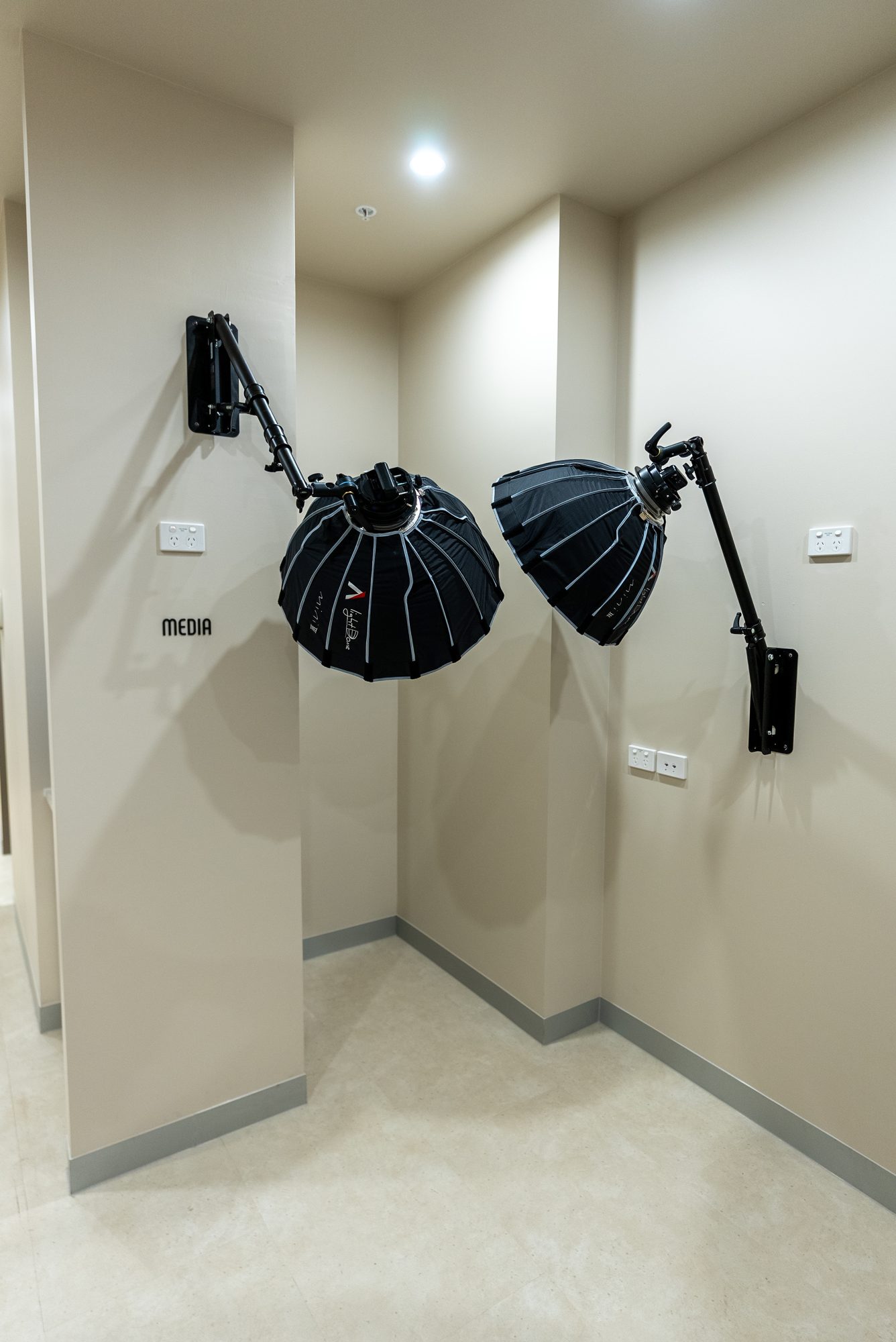
At Lumi Dental in Melrose Park, the dentist examines the teeth and works out whether discolouration is sitting on the surface or inside the tooth, which decides the plan. Surface stain from matcha, tea or coffee is handled by the hygiene team, who are oral health therapists, with a scale and clean and air polishing where it suits. Shade photographs are taken in the practice's photography studio so any change is measured rather than guessed. If the colour is intrinsic and you want it lighter, in-chair and take-home whitening are both available. Routine care starts with a check-up with a general dentist in Melrose Park.
Questions patients ask
Does matcha stain teeth more than coffee?
No, usually less. Coffee carries more dark tannins and roasted pigments that bind to enamel, while matcha's stain is lighter and tends to sit on plaque. Heavy drinkers with poor plaque control can still pick up a green-grey tinge.
Is matcha better than coffee for your teeth?
For staining, probably yes, and plain matcha is only slightly acidic. A sweetened iced matcha with syrup is worse for teeth than a plain black coffee, because sugar and acid do more damage than colour.
Should you brush your teeth after drinking matcha?
Rinse with water straight away and brush at your usual times. If the matcha was sweetened or on a citrus base, wait 30 to 60 minutes before brushing.
Can a dentist remove matcha stains?
Yes. Matcha stain is extrinsic, so a professional clean with air polishing usually removes it in one visit. If the teeth still look dull afterwards, the colour is inside the tooth and whitening is the next step to discuss.
Does green tea whiten teeth or protect them?
Green tea does not whiten teeth. Its polyphenols have been studied for effects on gum bacteria with early, mixed results, but drinking it does not make teeth whiter, and it can add a light stain of its own.
Book a clean and stain check at Lumi Dental
If your teeth have picked up a tinge from matcha, tea or coffee, a scale and clean with air polishing at Lumi Dental in Melrose Park is the first step, and shows whether any remaining colour needs teeth whitening. New patients can ask about the new patient offer on our current deals page. Patients visit from Melrose Park, Ryde, Parramatta, Ermington, Rydalmere and nearby suburbs.
Sources
- Australian Dental Association (teeth.org.au): Teeth staining
- healthdirect: Dental erosion
- Australian Dental Association: Professional teeth cleaning factsheet
About the author

Dr James Tran is a general dentist at Lumi Dental in Melrose Park. He holds a BDent from the University of Sydney and a Graduate Diploma in Oral Implants, and is a Member of the International Congress of Oral Implantologists (MICOI).
This article is general information only and is not a substitute for an examination and individual advice from a registered dental practitioner. Suitability for any treatment varies from person to person.







