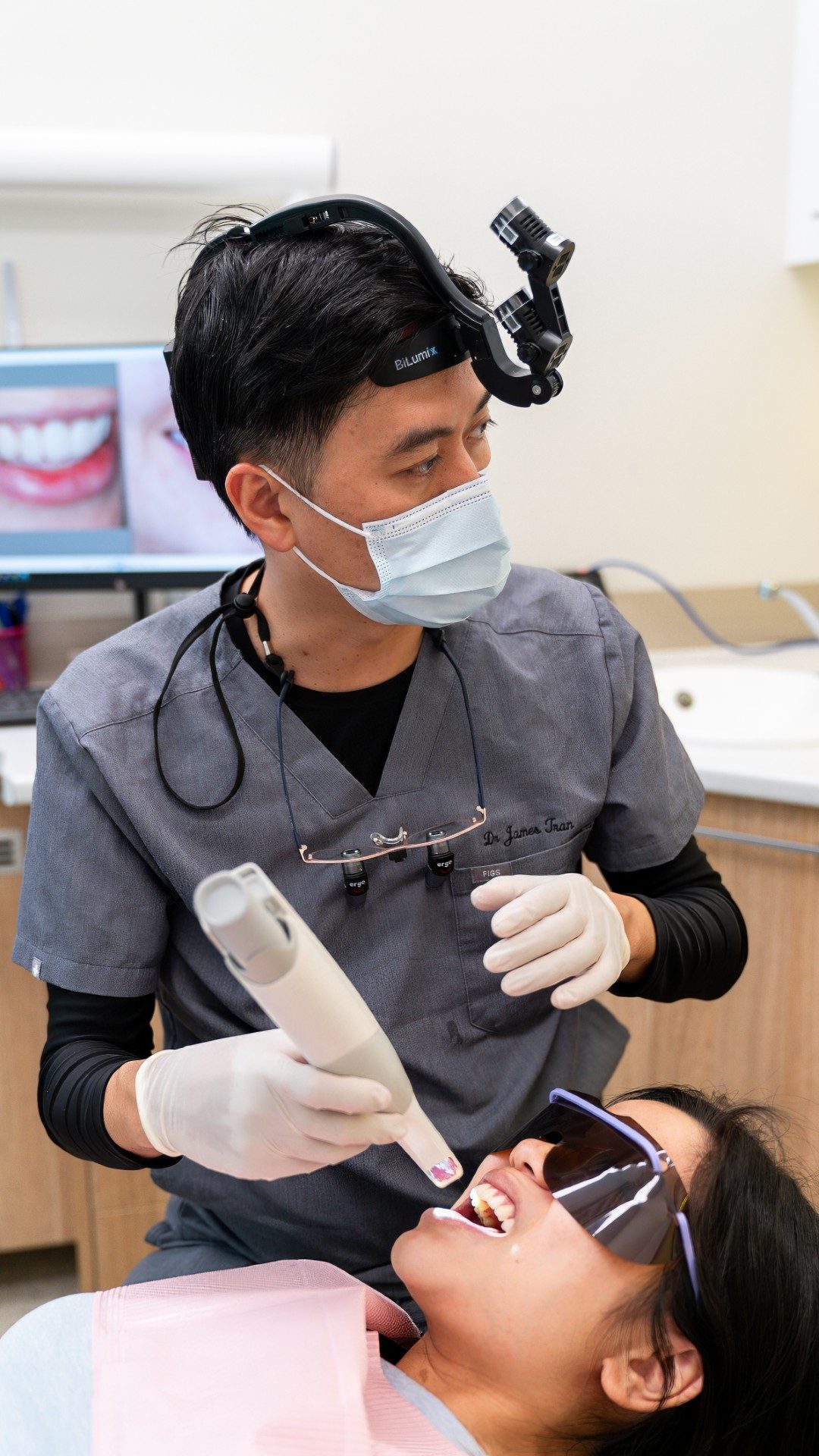

The first week in clear aligners is usually the most noticeable week of the whole treatment: expect tight, tender teeth for two or three days, a slight lisp that fades, and a new routine of removing the trays to eat and cleaning before they go back in. Patients I see often ask whether what they are feeling is normal, so this guide walks through the first week in clear aligners day by day. A systematic review on PubMed Central reported that aligner pain peaked within 24 hours, eased by day 3 and was minimal by one week.
Written by Dr James Tran, BDent (University of Sydney), MICOI, GradDip (Oral Implants), general dentist at Lumi Dental in Melrose Park.
The short version
- Wear time is usually 20 to 22 hours a day. Trays come out for eating and for any drink other than plain water.
- Soreness peaks in the first 24 hours of each new set and settles over two or three days.
- A mild lisp is common early and typically fades as the tongue adjusts; see our guide to a lisp from braces or aligners.
- Brush your teeth and rinse the aligners before they go back in. Hot drinks warp the plastic; coloured drinks stain it.
- Attachments feel rough to the tongue at first, and chewies help seat each new tray.
- Sharp edges cutting the cheek, a tray that will not seat, swelling or severe pain are not normal: call the practice.
Why the first week feels the way it does
An aligner is made slightly ahead of where the teeth sit now, so a new tray presses on the teeth and the ligament around each root answers with a short burst of inflammation. That is the ache, and it is strongest when you bite together, so many people notice it most at breakfast on day 2.
A randomised trial on PubMed Central compared pain over the first week in adults fitted with conventional braces, self-ligating braces and clear aligners: pain in every group was highest at 24 hours and lowest by day 7, and the aligner group reported the least pain throughout. Invisalign is the best-known brand, but in my experience the first week feels much the same with any brand, because the mechanics are the same.
Your first week in clear aligners, day by day
| Day | What you may feel | What to do |
|---|---|---|
| Day 1 (fitting day) | Pressure as the trays go in, a full feeling, extra saliva, a slight lisp. | Bite on the chewies for a few minutes. Leave the trays in. Drink plain water. Starting a set at bedtime lets you sleep through the tightest hours. |
| Day 2 | Usually the sorest day. Teeth tender to bite on, especially at the front. | Soft foods. Simple pain relief as the packet directs if needed. Keep the trays in. |
| Day 3 | Tenderness easing. Lisp improving. Cheek or tongue may rub on an edge. | Talk and read aloud. A little orthodontic wax on any edge that rubs. |
| Days 4 and 5 | Trays go in and out more easily. Eating out feels manageable. | Settle the routine: case in your bag, travel toothbrush, brush before trays go back in. |
| Days 6 and 7 | Little or no soreness. Trays feel looser than on day 1 because the teeth have moved into them. | Check the trays seat fully with no gaps at the edges. Change sets when your plan says to. |
The cycle repeats in a milder form with each new set, weekly or fortnightly depending on your plan.
Wear time: 20 to 22 hours a day, from day one
Orthodontics Australia puts the target at 20 to 22 hours a day, with each aligner worn for at least a week before moving on, and notes that falling short can lengthen treatment. The habit that matters most in week one is simple: the trays go straight back in once you have eaten and brushed. Leaving them out for an afternoon because the teeth are sore makes the next insertion harder and restarts the soreness.
Soreness and simple relief
Most people need nothing more than soft food for a day or two. If the ache bothers you, an over-the-counter pain reliever taken exactly as the packet directs is reasonable for the first day or two of a new set; our article on ibuprofen versus paracetamol for tooth pain explains how the two differ and who should avoid each. Biting gently on the chewies seats the tray and, for many people, eases the pressure. A sharp edge that catches the cheek or tongue should not be tolerated for a week: wax covers it for now, and the team can smooth it at the practice. Removing trays gets easier too; I usually suggest starting at the back on one side and working forward with the pads of the fingers rather than fingernails.

Speech: the lisp that worries people most
The trays add a thin layer of plastic over the teeth, and the tongue briefly loses its map. The result is a soft lisp on "s" and "z" sounds. The systematic review mentioned earlier lists speech changes among the reported effects of aligner treatment, and it typically settles within days. Talking more, not less, is the remedy: read aloud, make the phone calls, and do not take the trays out to speak. If a lisp persists beyond a couple of weeks, raise it at your review, since an edge sitting too far onto the gum can sometimes be trimmed.
Eating and drinking: the rules in one place
- Trays out for all food, including snacks. Food trapped under a tray sits against the teeth for hours.
- Plain water is the only drink with trays in. Orthodontics Australia warns that juice, soft drink and sports drink taken with aligners in trap sugar and acid against the enamel, and that hot liquids can warp the plastic.
- Brush before the trays go back in. If you cannot brush, rinse your mouth and the trays with water, and brush as soon as you can.
- Store trays in their case, never in a serviette. Wrapped trays end up in the bin with the lunch.
Cleaning routine for the first week and beyond
Clean the aligners twice a day when you brush your teeth, and rinse them under cool or lukewarm water whenever they come out. Orthodontics Australia suggests a soft brush with a little gentle liquid soap, or a denture-cleaning tablet used as the packet directs. Hot water is the one thing to avoid. The teeth need more attention too: plaque held under a tray for 22 hours a day invites white spot marks, so brush after every meal and floss each night. Our guide to cleaning clear aligners covers products to use and to skip.
Attachments, chewies and the rough-tongue phase
Most plans include attachments: small tooth-coloured bumps of composite bonded to selected teeth so the aligner can grip and rotate them. On day 1 they feel like gravel to the tongue; by the end of the week most people have stopped noticing them. They matter because the tray must seat over them fully, and a tray riding high on an attachment is not moving that tooth. Chewies, small soft cylinders you bite on for a few minutes after inserting, push the aligner down over every tooth and attachment.
What is not normal, and when to call
Most first-week complaints pass on their own. A short list does not, and deserves a phone call rather than a week of waiting:
- A tray that will not seat after a few days of chewies, with a visible gap between the aligner edge and the biting edge of a tooth. Our guide to an aligner tray that is not fitting explains the likely reasons.
- A sharp edge cutting the cheek, lip or tongue, or an ulcer that is not healing.
- Severe pain, pain getting worse after day 3, or one tooth that is very tender to touch or looks darker than its neighbours.
- Swelling of the gum or face, a bad taste, or a tooth that feels loose rather than tender.
- A cracked or missing aligner, or an attachment that has come off. Our article on a lost or damaged aligner tray explains what to do.
How we approach this at Lumi Dental
At Lumi Dental in Melrose Park, aligner treatment begins with an examination and a 3D intraoral scan, so the plan is built on a digital model of the teeth. The practice has 3D X-ray and 3D printing in-house; our technology page describes the equipment. At the fitting appointment a dentist checks that the first trays seat fully, shows you how to insert and remove them, places any attachments and sends you home with chewies and plain instructions for the week ahead. Cases that need a specialist orthodontist are referred to one.
Questions patients ask
How long do clear aligners hurt when you first get them?
Usually two to three days. Research pooled in a systematic review found pain peaked within 24 hours, eased by day 3 and was minimal by a week.
Can I take my aligners out if they hurt?
You can, but it tends to prolong the soreness, because the teeth drift back slightly and the next insertion restarts the pressure. Keep them in, eat soft food, and call if the pain is severe or getting worse.
Why do I have a lisp with my aligners?
The plastic changes where the tongue meets the teeth, so "s" sounds soften. It typically clears within days. Talking and reading aloud speeds it up.
Can I drink coffee with aligners in?
No. Hot drinks can distort the plastic and coffee stains it. Take the trays out, drink the coffee, rinse or brush, and put them back in.
What do aligner attachments do, and will people see them?
Attachments give the aligner something to grip so it can rotate or lift a tooth. They are tooth-coloured and only slightly visible up close. Our article on aligner attachments and IPR explains why some teeth get them and others do not.
Thinking about clear aligners? Complimentary aligner consult in Melrose Park
If you are weighing up aligners, the team at Lumi Dental in Melrose Park can help. Book a complimentary aligner consultation to find out whether your teeth suit aligner treatment, or read more about clear aligners at Lumi Dental. Patients visit from Ryde, Parramatta, Ermington, Rydalmere and nearby suburbs.
Sources
- PubMed Central: Adverse effects of removable orthodontic aligners, a systematic review with single-arm meta-analysis
- PubMed Central: Comparison of pain levels in patients treated with 3 different orthodontic appliances, a randomized trial
- Orthodontics Australia: Clear aligners
- Orthodontics Australia: How to clean and take care of your clear aligners
About the author
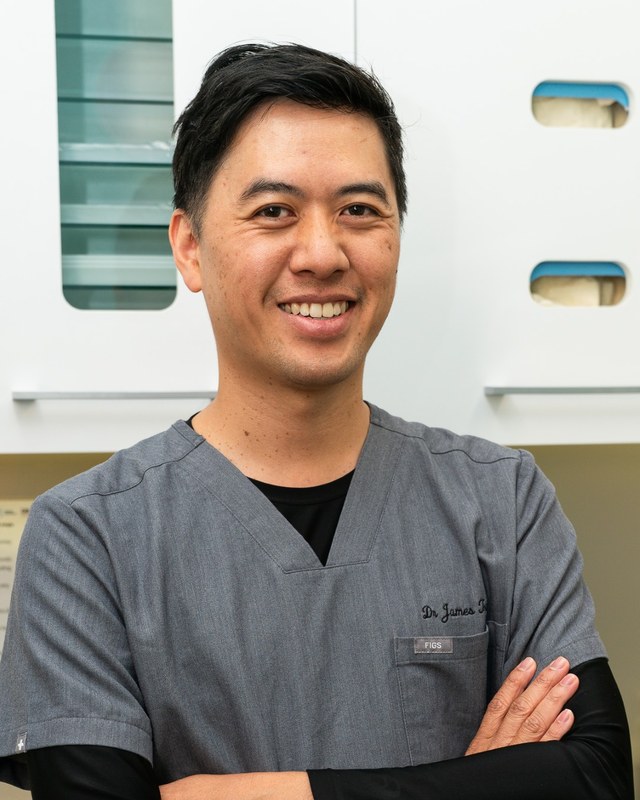
Dr James Tran is a general dentist at Lumi Dental in Melrose Park. He holds a BDent from the University of Sydney and a Graduate Diploma in Oral Implants, and is a Member of the International Congress of Oral Implantologists (MICOI).
This article is general information only and is not a substitute for an examination and individual advice from a registered dental practitioner. Suitability for any treatment varies from person to person.