For most people with a hearing aid, a dental visit involves no device risk at all, only choices about comfort, feedback and how you will follow instructions. A cochlear implant is different because part of it sits under the skin, so a few pieces of equipment, and one in particular, are worth flagging with the dental team before treatment starts. Treating the two as the same device is where most confusion comes from.
Hearing aids: a comfort decision rather than a safety one
A hearing aid is an external amplifier worn in or behind the ear. Routine dental equipment is not known to damage it, so whether it stays in is up to you. The trouble is that it amplifies everything, including the scaler, the drill and the suction. Lying back also shifts how the aid sits, and a bib, the headrest or a gloved hand near your ear can bounce sound back into the microphone and set off whistling feedback.
Many people keep their aids in for the examination and discussion, then switch them off or take them out for cleaning or drilling, and put them back before the dentist explains what comes next. You may also be asked to remove them for some X-rays, along with earrings and glasses, so they do not show up on the image. If an aid comes out, ask for a case or a small container rather than leaving it on the chair arm or in a pocket.
A cochlear implant has a part under the skin
A cochlear implant has an internal receiver and electrode surgically placed under the skin behind the ear, and an external sound processor held over it by a magnet. The processor can be taken off like a hearing aid. The internal part cannot, and that is the part that makes certain equipment a question.
The most direct study on dental equipment is still a laboratory experiment by Roberts and colleagues, published in the Journal of Endodontics in 2002. An implant placed in a cadaver was exposed to an electric pulp tester, an apex locator, an electrocautery unit and an electrosurgery unit used inside the mouth, and a second implant in a skull was exposed to 50 panoramic X-rays. The risk of damage was negligible for everything except the electrosurgery unit run at a high setting, which destroyed the implant's circuitry.
A 2022 review of dental care for people with sensory impairment in the British Dental Journal (Ahmed, Bradley and Fenesan) draws similar lines. It lists cone beam CT, panoramic and digital X-rays and electric pulp testing as safe, says diathermy should not be used, and suggests the patient's cochlear implant team be consulted before ultrasonic scaling.
Electrosurgery is the item to flag
Cochlear's own device information states that monopolar electrosurgical instruments must not be used on the head or neck of a person with one of its implants. Electrosurgery is not part of a routine check-up or filling, but it can be used in some gum and soft tissue procedures, so the implant needs to be on your record well before any surgery is planned.
The size of the risk is debated. A 2024 study in Otolaryngology Head and Neck Surgery (Dornhoffer and colleagues) pooled published cases, hospital records and manufacturer data and estimated the risk of monopolar electrosurgery to be very low, except when used very close to the implant. That research has not changed the manufacturer's instruction, so dental teams follow the manufacturer.
X-rays and 3D scans are generally fine
Dental X-rays, panoramic images and cone beam CT scans are considered safe with a cochlear implant. The British Dental Journal review suggests keeping the external speech processor at least 50 centimetres away during X-rays, and preferably out of the room, so expect to be asked to take it off and put it aside briefly. You will not be able to hear during that short time, which is one reason to agree on signals first.
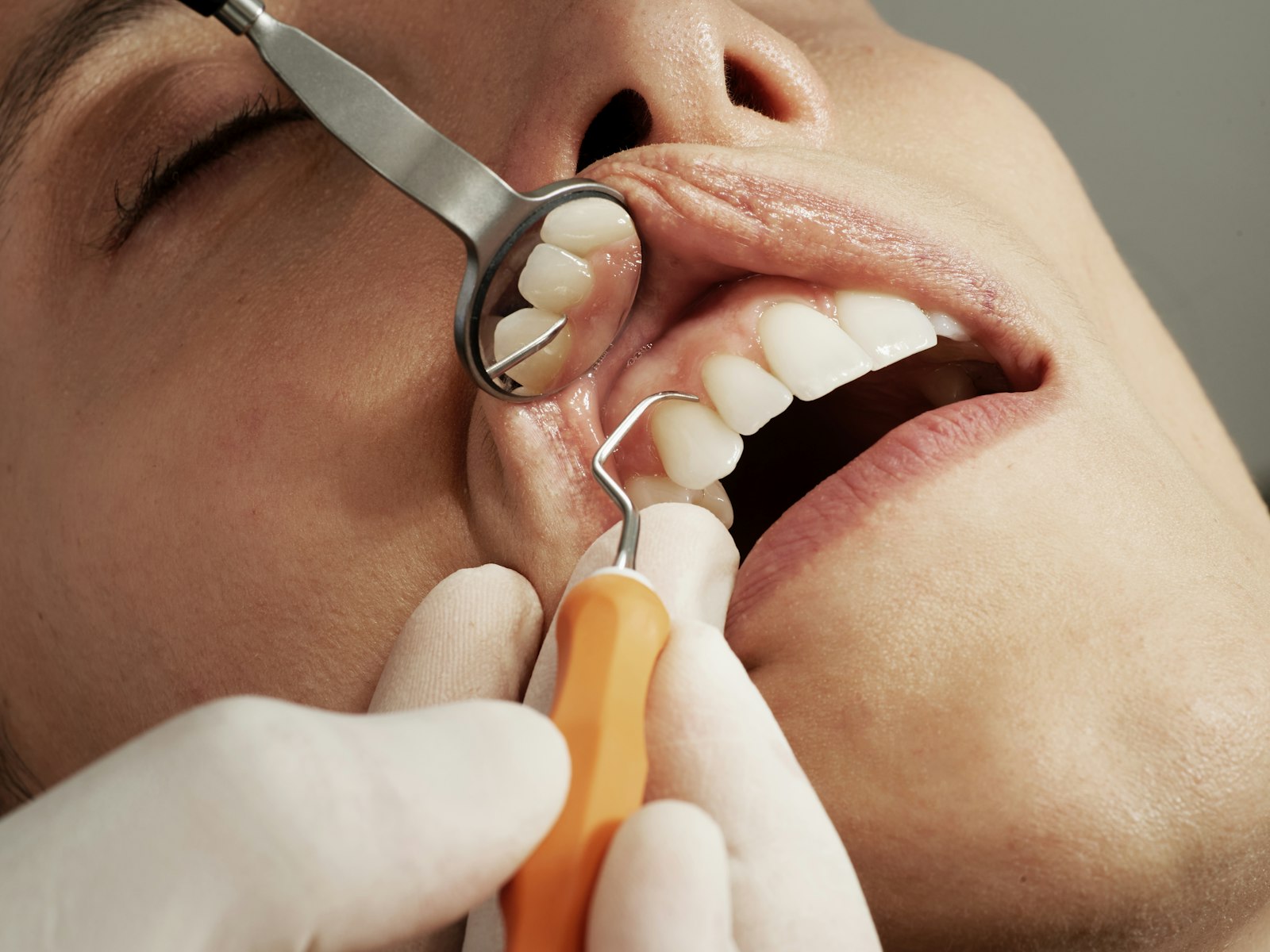
Cleaning with an ultrasonic scaler
Ultrasonic scalers vibrate rapidly to break up tartar, and some guidance treats them with caution near cochlear implants. There is no clinical evidence that scaling damages the implant itself; the concern is interference with the processor and its sound. The practical approach is to check with your implant team, take the processor off as a precaution if advised, or ask for the clean to be done with hand instruments instead. Our article on what happens at a scale and clean describes each step and the sounds involved.
Happy gas soon after implant surgery
Lumi offers relative analgesia, often called happy gas. Nitrous oxide moves into closed air spaces such as the middle ear, and the British Dental Journal review advises checking with the implant team before using it in someone who has had a recent implant. If you have had implant surgery recently and are considering happy gas, tell us so the timing can be confirmed with your team.
If you are ever referred for an MRI
Cochlear's MRI guidelines describe its Nucleus implants as MR Conditional, which means some scans are possible under set conditions that depend on the model and the scanner strength, while the external processor must not go into the scanner. Some models need the internal magnet removed for stronger scanners. Anyone referring you for an MRI, including imaging of the jaw joint, should contact your implant centre first.
How common equipment compares
| Equipment | Cochlear implant | Hearing aid |
|---|---|---|
| Drill (handpiece) and suction | No known device risk; noise only | Feedback and amplified noise; many people switch off |
| Ultrasonic scaler | Check with your implant team; processor off or hand scaling | Comfort choice |
| X-rays, panoramic images, cone beam CT | Considered safe; processor set aside | May be removed so it does not show on the image |
| Electric pulp tester | Negligible risk in laboratory testing | No concern |
| Electrosurgery | Monopolar not to be used on the head or neck | No concern |
Noise travels through bone as well as air
Switching off a hearing aid or removing a processor does not make a dental visit silent. When a scaler tip or drill touches a tooth, vibration passes through the tooth and jaw bone to the inner ear, bypassing the ear canal. People are often surprised by this, and it helps to know in advance so the sound is not alarming.

Agree on signals before your device comes off
The awkward part of removing a device is the period afterwards, when you cannot hear a request to close a little or a warning that water is coming. A few minutes at the start sorts out most of it. Agree on one signal for stop, usually a raised hand, and make sure the dentist will stop straight away rather than finish the step. A second signal for needing a break or wanting to talk is useful too.
Ask for a run-through of the whole appointment before the device comes out, a tap on the shoulder or a hand in your view before anything new happens, and aftercare instructions in writing. Tell the team which side hears better so they can speak from that side and stay where you can see their face. Mentioning the device when you book lets the appointment be planned around the noisy parts.
For the wider picture on communication access, our article on dental visits with a sensory impairment goes further, and if you use Auslan or need a language interpreter, see our guide to interpreters and language support at the dentist. If the noise is part of a broader worry about dental visits, our piece on managing dental anxiety may help.
Common questions from hearing device users
Will the drill or scaler damage my hearing aid?
Dental equipment is not known to damage hearing aids. The issue is noise and feedback. If you are worried about the aid being knocked or dropped, take it out and put it in its case.
Can I have a scale and clean with a cochlear implant?
Yes. Check with your implant team about the ultrasonic scaler, remove the processor if they advise it, or ask for hand scaling.
Do I need to tell the dentist about my implant for a routine check-up?
Yes. Even if nothing in the visit affects it, having it on your record means it is considered before any X-ray, sedation or surgery in future.
If you wear a hearing device and would like the appointment planned around it, mention it when you contact the practice so we can allow extra time. Our team at Lumi Dental in Melrose Park lists any offers on the current deals page.
This article is general information only and is not personal advice. Cochlear implant guidance is specific to the device model, so check with your implant centre or audiologist about your own implant.